
Science
News

22 May 2007
Universiti Putra Malaysia (UPM)
Internet-based ecotourism site rating expert system

21 May 2007
Nature Publishing Group
Glitter of gold traps microparticles, Gene copy number and risk of autoimmunity, A red-letter day for brain connectivity, Skin barrier formation and caspase-14, Control of all fates, The dual role of BRCA2 in DNA repair,
Deciphering the histone code
21 May 2007
International Development Research Centre (IDRC)
An IDRC-supported peer-to-peer mentoring program helps bring science journalists in the Middle East and Africa closer to the professional mainstream.
16 May 2007
Nature Publishing Group
Summaries of newsworthy papers in Nature on 17 May 2007: Planetary science: Enceladus' daily grind; Infectious diseases: Global early-warning system needed; Immunology: The good news about herpes infection; Materials: Silicon in a spin; Infectious diseases: West Nile virus wreaks havoc for birds and Unexpected biodiversity springs from the depths
13 May 2007
Nature Publishing Group
Summaries of newsworthy papers that will be published online on 13 May 2007 in Nature research journals including: Nanotubes sort out their left and right, Gene combinations influence AIDS progression, Another immune evasion strategy by HIV and Protein structures from micrograms of material

11 May 2007
University of the Philippines Diliman
A study shows that the traditional fish/shrimp paste condiment, or bagoong, of the Philippines contains the beneficial omega-3 fatty acids. In its analysis, it was found that among the samples of bagoong, shrimp paste has the highest omega-3 content.
09 May 2007
Nature Publishing Group
Summaries of newsworthy papers published in Nature on 10 May 2007 including: Genetics: Marsupial genome sequenced; Planetary science: Extrasolar planet mirror ball; Oceanography: Oceanic short circuit; Materials: Lithium superconducts without pressure; Gender-specific differences fuel biodiversity
09 May 2007
NAM S&T Centre
The Centre for Science and Technology of the Non-Aligned and Other Developing Countries (NAM S&T Centre) has two Fellowship schemes aimed at supporting the deserving young scientists in developing countries.
09 May 2007
Tokyo University of Science
The office is affiliated with the Japan Society for Promotion of Science (JSPS) San Francisco Center and located near the UC Berkeley. TUS continues to promote international collaboration in education and research with the advanced research universities.

09 May 2007
Asia Research News
The Asian Institute of Technology (AIT), an international institution of higher learning, is looking for a News and Media Specialist who will be responsible for writing, editing and disseminating news stories about AIT through web and print media. The deadline for applications is 15 May 2007.
07 May 2007
Nature Publishing Group
Summaries of newsworthy papers in Nature and Nature research journals published online on 07 May 2007. Including: Yeast that smell? – Nature Chemical Biology; Turning up autophagy – Nature Chemical Biology; Tuberculosis bacteria blunt immunity – Nature Immunology; Immune responses tailored to specific pathogens – Nature Immunology

07 May 2007
International Rice Research Institute
A major international initiative is being launched to try to boost the income of the world’s millions of poor rice farmers and at the same time provide consumers with more nutritious, better tasting food.

04 May 2007
International Institute for Environment and Development (IIED)
The International Institute for Environment and Development has published a short guide to ways forestry can contribute to poverty reduction and sustainable development.
04 May 2007
International Institute for Environment and Development (IIED)
The Research and Media Network is an online social network intended to be of value to journalists, scientists, press officers and others who communicate about research - whether on health, environment, water, energy, agriculture, sustainable development or communications.
04 May 2007
University of the Philippines Diliman
A faster and more effective way of applying titanium nitride coating on industrial tools developed by Dr. Henry J. Ramos of the University of the Philippines’s National Institute of Physics (UP-NIP) was awarded a Taiwan Patent on March 16, 2007.
02 May 2007
Nature Publishing Group
Summaries of newsworthy papers published in Nature on 03 May 2007 including: Neuroscience: Mapping functional brain anatomy, Planetary science: Measuring Martian ice, Seismology: A new class of earthquake, Physics: Noisy magnets, Chemistry: Super-heavy elements stay with the group, Ecology: The water of life

02 May 2007
The World Academy of Sciences (TWAS)
Trieste, Italy, 26 April 2007. An eminent Mexican biologist, whose research helped to spur the creation of the first genetically modified plants, and an internationally renowned Indian chemist, whose innovative laboratory techniques have led to the synthesis of more than 50 natural products, have been awarded the Trieste Science Prize for 2007.
30 Apr 2007
The World Academy of Sciences (TWAS)
The G8, a network of the world's largest industrialized countries, and the United Nations Educational, Cultural and Scientific Organization (UNESCO) will hold a World Forum on Education, Research and Innovation in Trieste, Italy, 10-12 May.
29 Apr 2007
Nature Publishing Group
Summaries of newsworthy papers published online in Nature and Nature Research journals on 29 April 2007 including: Plastic power, A gel to absorb solvent spills, Recovering from amblyopia, The wisdom of youth, New player in inflammatory ‘shut down’, Ancient diversity, Standards for the analysis of metagenomes.
27 Apr 2007
Nature Publishing Group
Variation in the gene called CDKAL1 is associated with risk of developing type 2 diabetes, according to a study to be published online this week in Nature Genetics.
26 Apr 2007
International Development Research Centre (IDRC)
The IDRC Digital Library provides full access over the Internet to IDRC’s rich research archive. In addition to making information more freely available, this initiative provides IDRC-funded researchers with a much-needed outlet to publish and showcase their work.
26 Apr 2007
International Rice Research Institute
Los Baños, Philippines – World-class scientific facilities continue to play an increasingly important role in helping poor nations overcome poverty and food insecurity as well as handle new challenges such as the impact of climate change.
26 Apr 2007
Nature Publishing Group
The T-cell leukaemia virus targets cell proteins to promote tumour growth, A newly discovered gene controls the lateral growth of rice plants, Silkworm silk can be as strong as spider silk if spun out quickly by artificial reeling and many more.
25 Apr 2007
Nature Publishing Group
Being breastfed as an infant does not help prevent people becoming overweight later in life, according to a study published online this week in the International Journal of Obesity.
25 Apr 2007
Nature Publishing Group
Summaries of newsworthy papers include Ocean science: A natural approach, Reducing the risk of severe adverse drug reactions, Swift study into wing shape, Weighing at the nanoscale, Invasive species thrive on hard times and finally… The perfect pint?

25 Apr 2007
Keio University
Prof. Keiichi Fukuda of Keio University and others found that Sema3a, a type of intravital protein, is the key in determining the density and patterning of cardiac sympathetic innervation. Sema3a controls arrhythmia through sympathetic innervation patterning and unexplained sudden deaths may include cases of genetic defects of Sema3a.
22 Apr 2007
Nature Publishing Group
Summaries of newsworthy papers that will be published online on 22 April 2007 in Nature and Nature Research Journals, including: Enzyme curtails allergic reaction to chitin, Magnetic imaging enters the nanoworld, Catalysts under the microscope, The immune system and susceptibility to cancer, Engineering diverse sets of drug sensitive proteins.
22 Apr 2007
NAM S&T Centre
Lightning is a natural hazard that causes serious economical losses and personal injuries and deaths in many parts of the world. The International Roundtable on Lightning Protection is designed with the view of meeting and addressing various issues related to lightning protection.
19 Apr 2007
Keio University
Pioneering neuroscientists from Japan and UK will present their latest research in London on April 27th. Keio University scientists will discuss their work in brain damage repair, the birth of new adult cells, aquaporin and their implications for spinal cord injuries, Alzheimer's disease and mental disorders and much more. Admission is free.
18 Apr 2007
Nature Publishing Group
In the week of the first round of France’s presidential elections, Nature takes a unique look at what the incoming president will mean for French research.
Giants in history

Chinese-American physicist Tsung-Dao Lee (24 November 1926 – 4 August 2024) was awarded the Nobel Prize for Physics in 1957 together with Chen-Ning Yang for their work challenging the symmetry law in subatomic particles. They were the first Chinese Nobel prize winners, with Lee becoming the second-youngest laureate. Born in Shanghai, he went to the United States on scholarship and studied under another Nobel winner, Enrico Fermi.

Turkish astrophysicist Dilhan Eryurt (29 November 1926 – 13 September 2012) conducted research on how the sun affects environmental conditions on the moon.
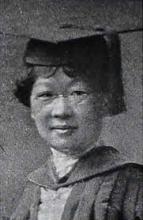
Chinese biochemist Chi Che Wang (1894 - 1979), one of the first Chinese women to study abroad, advanced to prominent research positions at American institutions including the University of Chicago and the Northwestern University Medical School.
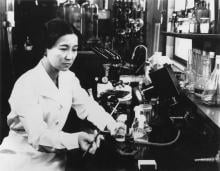
Ruby Sakae Hirose (1904 – 1960) was a Japanese-American scientist whose research contributed significantly to our understanding of blood clotting, allergies and cancer.
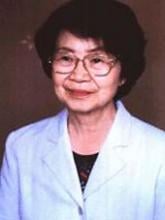
Chinese electron microscopy specialist Li Fanghua (6 January 1932 – 24 January 2020) facilitated the high-resolution imaging of crystal structures by eliminating interference.
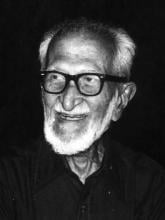
Sálim Moizuddin Abdul Ali (12 November 1896 – 20 June 1987), commonly referred to as the Birdman of India, was the first person to conduct systematic surveys of birds from across India.
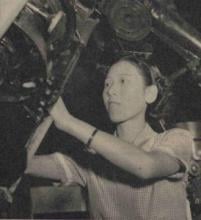
Haisako Koyama (1916 – 1997) was a Japanese solar observer whose dedication to recording sunspots – cooler parts of the sun’s surface that appear dark – produced a sunspot record of historic importance.
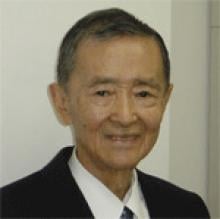
Michiaki Takahashi (17 February 1928 – 16 December 2013) was a Japanese virologist who developed the first chickenpox vaccine.
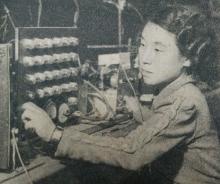
Toshiko Yuasa (11 December 1909 – 1 February 1980) was the first Japanese female physicist whose research on radioactivity shed light on beta decay – the process in which an atom emits a beta particle (electron) and turns into a different element.

Angelita Castro Kelly (1942-2015) was the first female Mission Operations Manager (MOM) of NASA. She spearheaded and supervised the Earth Observing System missions during its developmental stage.
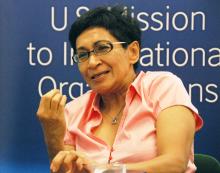
Malaysia’s first astrophysicist, Mazlan binti Othman (born 11 December 1951) was instrumental in launching the country’s first microsatellite, and in sending Malaysia’s first astronaut, Sheikh Muszaphar Shukor, into space.

Bibha Chowdhuri (1913 – 2 June 1991) was an Indian physicist who researched on particle physics and cosmic rays. In 1936, she was the only female to complete a M.Sc. degree at the University of Calcutta.

Meemann Chang (born 17 April 1936) is a Chinese palaeontologist who studied the fossils of ancient fish to understand the evolution of life. By examining fossils, she uncovered new insights on how vertebrates, animals with a backbone, migrated from the sea and became adapted to live on land.
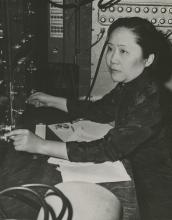
Chien-Shiung Wu (31 May 1912 – 16 February 1997) was an experimental physicist who made several important contributions to nuclear physics. Wu worked on the Manhattan Project – a top-secret program for the production of nuclear weapons during World War II and helped to develop a process for separating uranium into U235 and U238.
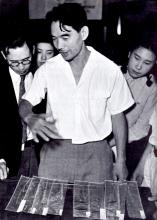
Hitoshi Kihara (1893 – 1986) was one of the most famous Japanese geneticists of the 20th century. One of his most significant contributions was identifying sex chromosomes (X and Y) in flowering plants.
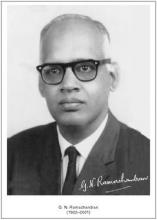
Gopalasamudram Narayanan Ramachandran (8 October 1922 – 7 April 2001) is best known for developing the Ramachandran plot to understand the structure of short chains of amino acids, known as peptides.
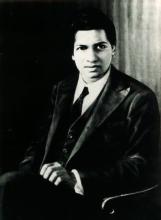
Srinivasa Ramanujan (22 December 1887 – 26 April 1920) was a math prodigy and widely considered one of India’s greatest mathematicians. Despite having almost no formal training in mathematics, he made substantial contributions to mathematical analysis, number theory, infinite series and continued fractions.
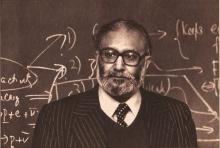
Mohammad Abdus Salam (29 January 1926 – 21 November 1996) was a theoretical physicist and the first Pakistani to receive a Nobel Prize in science.
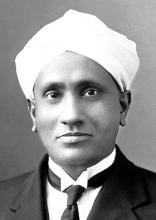
Sir Chandrasekhara Venkata Raman (7 November 1888 – 21 November 1970) was an Indian physicist who performed ground-breaking research in the field of light-scattering.

Mathematician Maryam Mirzakhani (12 May 1977 – 14 July 2017) was the first and only woman and Iranian to date to win the Fields Medal in 2014 for her work on curved surfaces.
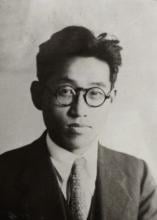
Joo-myung Seok (November 13, 1908 – October 6, 1950) was a Korean butterfly entomologist who made important contributions to the taxonomy of the native butterfly species in Korea.
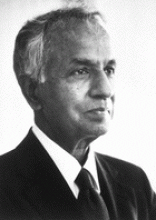
Subrahmanyan Chandrasekhar (19 October 1910 – 21 August 1995) was an Indian astrophysicist who studied the structure and evolution of stars.
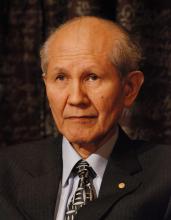
Osamu Shimomura (27 August 1928 – 19 October 2018) was a Japanese organic chemist and marine biologist who dedicated his career to understanding how organisms emitted light.
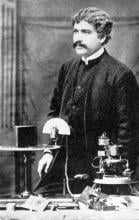
Sir Jagadish Chandra Bose (30 November 1858 – 23 November 1937) was a scientist and inventor who contributed to a wide range of scientific fields such as physics, botany and biology.
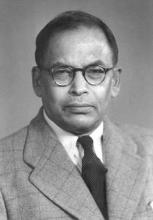
Meghnad Saha (6 October 1893 – 16 February 1956) was an Indian astrophysicist best known for formulating the Saha ionization equation which describes the chemical and physical properties of stars.
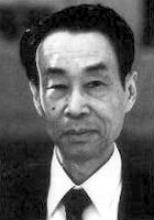
Motoo Kimura (13 November 1924 – 13 November 1994) was a Japanese theoretical population geneticist who is best remembered for developing the neutral theory of molecular evolution.

Chika Kuroda (24 March 1884 – 8 November 1968) was a Japanese chemist whose research focussed on the structures of natural pigments.
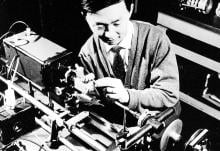
Charles Kuen Kao (Nov. 4, 1933 to Sept. 23, 2018) was an engineer who is regarded as the father of fibre optics. His work in the 1960s on long distance signal transmission using very pure glass fibres revolutionized telecommunications, enabling innovations such as the Internet.
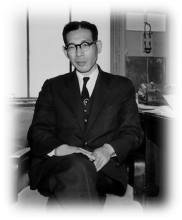
The field of solid-state ionics originated in Europe, but Takehiko Takahashi of Nagoya University in Japan was the first to coin the term ‘solid ionics’ in 1967. ‘Solid-state ionics’ first appeared in 1971 in another of his papers, and was likely a play on ‘solid-state electronics’, another rapidly growing field at the time.
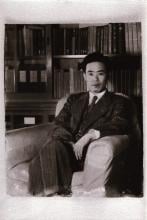
Japanese physicist Ukichiro Nakaya (1900-1962) made the world’s first artificial snowflakes. He started his research on snow crystals in the early 1930s at Hokkaido University, where there is an unlimited supply of natural snow in winter. By taking over 3,000 photographs, he established a classification of natural snow crystals and described their relationship with weather conditions.
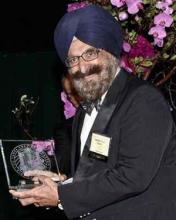
Physicist Narinder Singh Kapany (31 October 1926 – 4 December 2020) pioneered the use of optical fibres to transmit images, and founded several optical technology companies. Born in Punjab, India, he worked at a local optical instruments factory before moving to London for PhD studies at Imperial College. There, he devised a flexible fibrescope to convey images along bundles of glass fibres.
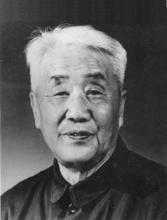
Chinese palaeontologist, archaeologist and anthropologist Pei Wenzhong (January 19, 1904 – September 18, 1982) is regarded as a founder of Chinese anthropology.
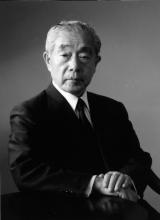
Japanese chemist Kenichi Fukui (4 October 1918 – 9 January 1998) was the first Asian scientist to be awarded the Nobel Prize in Chemistry. Together with Roald Hoffman, he received this honour in 1981 for his independent research into the mechanisms of chemical reactions.
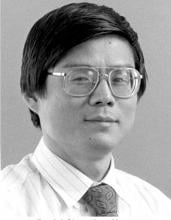
South Korean theoretical physicist Daniel Chonghan Hong (3 March 1956 – 6 July 2002) achieved fame in the public sphere through his research into the physics of popcorn.
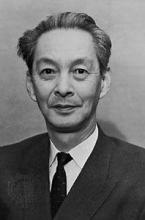
Shinichiro Tomonaga (31 March 1906 – 8 July 1979), together with Richard Feynman and Julian Schwinger, was awarded the Nobel Prize in Physics in 1965, for their contributions to advance the field of quantum electrodynamics. Tomonaga was also a strong proponent of peace, who actively campaigned against the proliferation of nuclear weapons and promoted the peaceful use of nuclear energy.
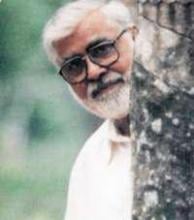
Known as Mr. Natural Rubber, chemist and researcher B. C. Shekhar (17 November 1929 – 6 September 2006) introduced a number of technical innovations that helped put Malaysia’s natural rubber industry on the world map.

Lin Lanying (7 February 1918 – 4 March 2003) was a Chinese material engineer remembered for her contributions to the field of semiconductor and aerospace materials. Lanying was born into a family who did not believe in educating girls and she was not allowed to go to school.
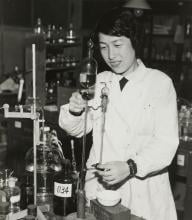
Japanese geochemist Katsuko Saruhashi developed the first method and tools for measuring carbon dioxide in seawater