Asia Research News monitors the latest research news in Asia. Some highlights that caught our attention this week are a way to avoid biopsies by catching free-floating DNA, a large dip in the Earth’s surface under the Indian Ocean, and how people who brush their teeth before bed seem to have healthier hearts.
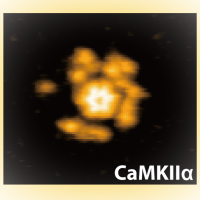
Researchers at Kanazawa University report in Science Advances high-speed atomic force microscopy experiments that show the structural and chemical changes in an enzyme thought to play a vital role in modulating the strength of neural connections.
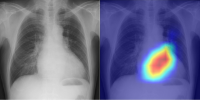
Osaka Metropolitan University scientists have successfully developed a model that utilizes AI to accurately classify cardiac functions and valvular heart diseases from chest radiographs. The Area Under the Curve, or AUC, of the AI classification showed a high level of accuracy, exceeding 0.85 for almost all indicators and reaching 0.92 for detecting left ventricular ejection fraction—an important measure for monitoring cardiac function.
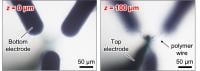
A new method for connecting neurons in neuromorphic wetware has been developed by researchers from Osaka University and Hokkaido University. The wetware comprises conductive polymer wires grown in a three-dimensional configuration, done by applying square-wave voltage to electrodes submerged in a precursor solution. The voltage can modify wire conductance, allowing the network to be trained. This fabricated network is able to perform unsupervised Hebbian learning and spike-based learning.
Daegu Gyeongbuk Institute of Science and Technology (DGIST)
04 Jul 2023
- DGIST’s Research Capacity Shines with 7th Global Ranking in Citations per Paper by Faculty Members
- Securing 9th Place Overall in Korea and 2nd in Daegu-Gyeongbuk Region, Following Postech
- DGIST Sets a Strong Precedent as a New University with Global Recognition, Showcasing Remarkable Research Capabilities and Educational Excellence
Daegu Gyeongbuk Institute of Science and Technology (DGIST)
04 Jul 2023
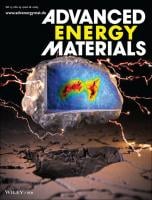
- DGIST-Chungnam National University Team Creates Real-Time Digital Twin Multiphysics Model for Predicting Electrochemical and Mechanical Properties of Micro-Particles for the First Time
- Cover Paper Recognition: Chosen by Prominent Journal Advanced Energy Materials
Daegu Gyeongbuk Institute of Science and Technology (DGIST)
04 Jul 2023
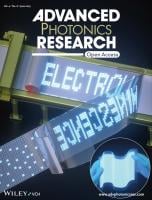
- A research team led by Dr. Byeong-dae Choi at the Division of Electronics & Information System, DGIST, greatly improved the efficiency of electroluminescent devices by applying silver nanofilms.
- This opens up the possibility of developing affordable digital film signage.
Daegu Gyeongbuk Institute of Science and Technology (DGIST)
04 Jul 2023
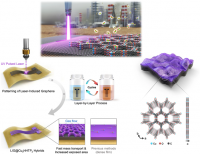
- A research team led by Professor Hyuk-jun Kwon, a DGIST Professor, successfully developed a graphene-metal organic framework hybrid structure with hierarchical porosity
- A technology capable of detecting extremely low concentrations of nitrogen dioxide at the level of one billionth in real-time... Expected to be applied to next-generation healthcare devices
Daegu Gyeongbuk Institute of Science and Technology (DGIST)
04 Jul 2023
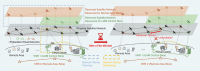
- Joint research team of DGIST Professor JeongHo Kwak and KAIST Professor Jihwan Choi develops a network slicing planning and handover technique for next-generation 6G low LEO satellite networks
- This work is expected to contribute to various services using satellite networks in the era of 6G satellite networks in the future such as Starlink and OneWeb
Daegu Gyeongbuk Institute of Science and Technology (DGIST)
04 Jul 2023
- Principal Researcher Jinhyo Yun’s team at the DGIST publishes a comparative study on South Korea and Italy using the commons as a business model in one of the top international journals
- This work opens new prospects in sustainable capitalism
Daegu Gyeongbuk Institute of Science and Technology (DGIST)
04 Jul 2023
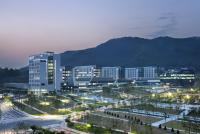
□ DGIST (President Kuk Young) celebrated the opening of the DGIST AI-SW Education and Research Center on Thursday, April 25. This momentous event took place at the “Daegu Smart City Center” in Suseong Alpha City, Daegu, and was graced by esteemed attendees, including President Kuk Young of DGIST and Lee Jong-hwa, Vice Mayor for Economic Affairs, Daegu Metropolitan City.
Daegu Gyeongbuk Institute of Science and Technology (DGIST)
04 Jul 2023
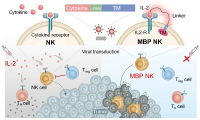
- Professor Minseok Kim’s team at the DGIST confirmed the excellent anticancer effects of the NK cell therapy product that can self-activate in preclinical trials with CT Cells
- This work is expected to be applied in various fields as a next-generation anticancer therapy using NK cells
Daegu Gyeongbuk Institute of Science and Technology (DGIST)
04 Jul 2023
DGIST (academia), Samsung C&T Corporation (industry), and MFR (research) entered into an MOU to conduct joint research on high-tech construction automation
The use of veterinary antibiotics is not uncommon in the fields of animal husbandry and fisheries to speed up growth and prevent disease. However, residual antibiotics may damage human gut microbiota, promote antibiotic resistance, and even delay the growth and development of brain cells, posing hazards to human health.
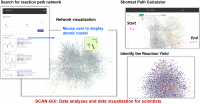
A new online platform to explore computationally calculated chemical reaction pathways has been released, allowing for in-depth understanding and design of chemical reactions.
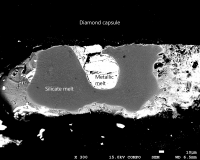
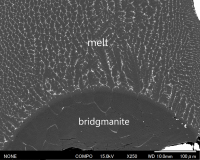
An international research team has discovered that a subduction zone’s age affects the ability for it to recycle water between the Earth’s surface and its inner layers. The more mature the subduction zone, the bigger the water storage capacity.
Comprising over 750 rock shelters — of which over a hundred are painted — the Bhimbetka caves are perhaps the earliest known repository of art in South Asia. These prehistoric paintings illustrate hunting scenes as well as scenes of collective rituals and processions. Although their purposes remain unknown, Bhimbetka paintings provide immense historical information about humans, animals and their relationship with nature and culture.
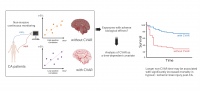
A group of researchers at Osaka University used a noninvasive method to evaluate Cerebrovascular Autoregulation (CVAR) in patients after out-of-hospital cardiac arrest. The mortality rate increased significantly with the duration of time that CVAR was undetectable.
It has been suggested that CVAR, a function that is normally present in the normal state, may be impaired after cardiac resuscitation. However, the relationship between CVAR function and patient prognosis has been unclear.
Asia Research News monitors the latest research news in Asia. Some highlights that caught our attention this week are whether octopuses have dreams, an app that can tell you if your cat is in pain, and interchangeable arms for cyborg dancing.
Topological materials’ unique properties make them a great choice for making next-generation devices. In order to exploit them, it was thought that crystalline materials, where atoms are highly ordered, were needed. But now, a research group has verified that even amorphous materials, where atoms are loosely arranged, can have these special properties.
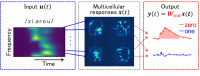
The brain is a highly efficient, sophisticated information processing system. To achieve maximum efficiency, it can store reservoirs of interconnected nodes that transform input signals into a more complex representation. This has inspired a theoretical computational model known as reservoir computing. A research team has recently harnessed this model to analyze the computational capabilities of an artificially cultured brain composed of neurons derived from the cerebral cortex of rats.
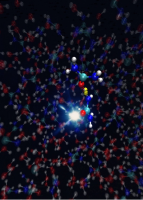
New technological development has provided further clues about the origins of life on Earth. An international research group invented an innovative X-ray spectroscopy approach that enabled them to recreate the chemical reactions occurring in liquids at the femtosecond level (a quadrillionth part of a second). They used this to examine ureas—an organic compound that underwent ionization to form some of the building blocks of life.
Kavli Institute for the Physics and Mathematics of the Universe (Kavli IPMU)
28 Jun 2023
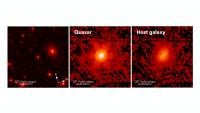
For the first time, the James Webb Space Telescope has revealed starlight from two massive galaxies hosting actively growing black holes – quasars – seen less than a billion years after the Big Bang.
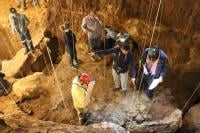
New findings from a cave in northern Laos add to a growing body of evidence that modern humans arrived in Southeast Asia over 80,000 years ago, tens of thousands of years earlier than previously thought.
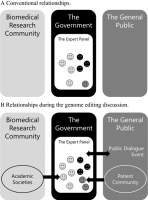
Researchers from Osaka University analyzed discussions on research governance of human genome editing in the Expert Panel on Bioethics in Japan and identified the positive roles played by related research communities, the government, and the general public in the policy-making process. It is expected to provide more effective and practical guidance for countries and organizations seeking to work with diverse stakeholders in the governance of emerging medical technologies.
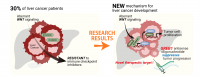
Researchers from Osaka University have revealed the mechanism by which increased signaling through a pathway associated with a molecule called Wnt leads to the development of liver cancer. They identified a gene called GREB1 as a target of Wnt specifically in liver cancer. This gene alters the function of a protein called HNF4α, leading to the development of cancer. They also showed that treatment of mice with antisense oligonucleotides against GREB1 had significant anti-cancer effects.