A Hong Kong Baptist University (HKBU) collaborative research team has synthesised a nanoparticle named TRZD that can perform the dual function of diagnosing and treating glioma in the brain. It emits persistent luminescence for the diagnostic imaging of glioma tissues in vivo and inhibits the growth of tumour cells by aiding the targeted delivery of chemotherapy drugs.
We don’t know much about the Earth’s inner core because recreating its conditions in a laboratory setting remains fraught with difficulties. Based on tracking seismic waves, scientists theorize that the area in and around the core comprises mostly of iron. But the values extracted from these indicators differ from how pure iron typically behaves.
Most metal and alloys possess a high elastic strain rate at the micro level. But this changes when they are in their bulk shape, as they are for everyday engineering applications. Now, a research group has developed a bulk copper-based alloy boasting the largest tensile elastic strain at room temperature to date.
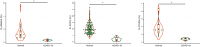
The research team investigated the role of D-amino acids in severe viral infection. Mouse models of influenza A and COVID-19 infection and patients with severe COVID-19 demonstrated reduced D-amino acid levels in the blood. Supplementation with D-alanine mitigated body weight reduction in IAV model mice and improved survival in COVID-19 model mice. D-amino acids may represent potential biomarkers and therapeutic agents for the treatment of severe viral infection.
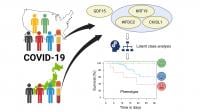
Researchers led by Osaka University identified plasma proteins associated with critical pathogenesis in COVID-19. Using a novel blood proteomics method, the researchers evaluated two discovery cohorts and one validation cohort of patients with COVID-19 and healthy volunteers. Cell adhesion proteins WFDC2, GDF15, CHI3L1, and KRT19 were shown to be associated with disease severity in patients with COVID-19, and may serve as potential targets for therapies to treat COVID-19 infection.
Asia Research News monitors the latest research news in Asia. Some highlights that caught our attention this week are a new planet that orbits a dying star, a map of all the airborne microbes, and the potential to protect our organs by hibernating during surgery.
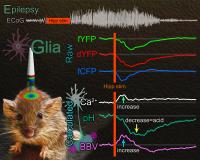
Researchers at Tohoku University have shown that astrocytes in the mouse brain exhibit an acid response with intensified epileptic seizures. The astrocytes’ acid response could lead to the amplification of excitatory neuronal signals and be the underlying drive for generating plasticity for epileptogenesis.
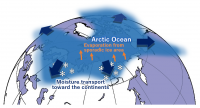
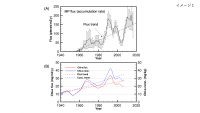
A new model explains that water evaporating from the Arctic Ocean due to a warming climate is transported south and can lead to increased snowfall in northern Eurasia in late autumn and early winter. This information will allow for more accurate predictions of severe weather events.
Every child matters, and educational experiences when young, often leave an impression on people for the rest of their lives. For Dr Chrysa Keung, Assistant Professor of Department of Education Policy and Leadership (EPL) at The Education University of Hong Kong (EdUHK), the development of children from socioeconomically disadvantaged backgrounds is a key focus of her work. Her aim is to help young children develop positive thinking from an early age.
Four years of online training, fellowships and support for research on digital rights gets underway as the second phase of the Knowledge for Democracy Myanmar (K4DM) initiative launches in Bangkok on November 25, 2022.
Giants in History: Through her iconic stories featuring fictional scenes from the history of the Philippines, language teacher and academic Genoveva Matute (3 January 1915 – 21 March 2009) helped strengthen the Filipino identity.
Professor Chua Chee Kai and Associate Professor Yuen Chau, from the Engineering Product Development pillar at SUTD join the list of Highly Cited Researchers™ (HCR) 2022.
An Osaka Metropolitan University study found that differences in culture affect when Japanese and American university students feel comfortable providing social support. The researchers found that Japanese university students were less likely than American students to offer assistance to a close friend or family member unless they had been explicitly asked for help, even when they knew that the person needed assistance.
New study finds that "HUG Your Baby" — a program developed to help parents understand their baby’s behavior — could help reduce postpartum depression in mothers.
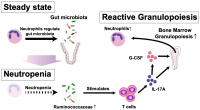
Intestinal bacteria composition is crucial to driving the recovery of neutrophils counts in the blood of mice following treatments such as stem cell transplants or chemotherapy.
Theory-guided development of an easier, more versatile process for synthesizing unsymmetric ligands provides new avenues of exploration in transitional metal catalysis.
In early November, Lingnan University (LU) hosted a special event which ran alongside the prestigious THE Global Sustainable Development Congress at the University of Glasgow.
Practised in only three countries in the world, the process of making double Ikat is intricate and demands a degree of mathematical precision while weaving the textile on the loom.
Asia Research News monitors the latest research news in Asia. Some highlights that caught our attention this week are the discovery that rats enjoy music like we do, a microrobot that can tickle small insects, and how dinosaurs’ flight differs from birds.
Exploring virtual human-agent relationships, A fly protein gives clue for human cancers, Rare earth elements formed in neutron star mergers 💥, One-stop process for hydrogen production. Read all in the November's Editor's Choice plus Upcoming event K4DM KNOWLEDGE MARKETPLACE – Bangkok 2022: Exchanging Ideas for a Democratic Myanmar.
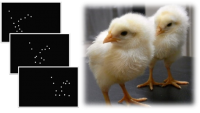
Disturbed transmission via nicotinic acetylcholine receptors in chick fetuses impairs the hatchlings’ preference for animate objects—similar to what is seen in autism spectrum disorder in humans.
Osaka University researchers simplified the process of producing soft microrobots powered by biomolecular motor muscles by 3D-printing the constituent modules, including actuators and grabbers, in situ. This work may lead to significant advances in scalable production and microsurgery.
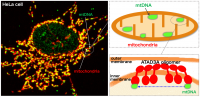
Researchers led by Osaka University have shown that a molecule known as ATAD3A is essential for the movement of genetic material inside cellular substructures called mitochondria. Appropriate distribution of this DNA, organized into “nucleoid” structures, is key for the generation of energy by the “respiratory chain” protein complex.
In a study recently published in the Journal of Extracellular Vesicles, researchers from Kanazawa University use high-speed microscopy to capture the dynamics of nanosized sacs released from cells.
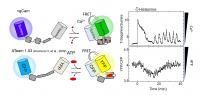
Researchers from SANKEN (The Institute of Scientific and Industrial Research) at Osaka University have genetically engineered a protein to emit the shortest-wavelength fluorescence light reported to date. They did this by optimizing the interactions between the fluorescence center (chromophore) and its surroundings, in a manner that differs from previous reports. The resulting fluorescence emission was bright and stable over a useful range of pH values.