Scientists have uncovered new details of how ice forming below the ocean surface in Antarctica provides cold dense water that sinks to the seabed in an important aspect of global water circulation.
Osaka Metropolitan University researchers conducted a study of human mobility to find effective lifestyle changes that enable people to exist with the novel coronavirus COVID-19, while maintaining social and economic activities. They found that restricting the human mobility in specific areas according to the state of the pandemic, rather than uniformly controlling human mobility, could be effective in reducing the number of new COVID-19 infections.
Daegu Gyeongbuk Institute of Science and Technology (DGIST)
19 Oct 2022
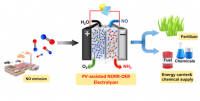
- Design and development of a hybrid core–shell electrocatalyst that converts air pollutants nitric oxide (NO) into ammonia (NH3).
- A strategy to ensure the stability of an electrocatalyst during the NO gas reduction process.
Daegu Gyeongbuk Institute of Science and Technology (DGIST)
19 Oct 2022
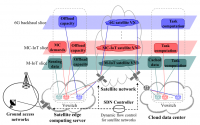
- A joint research team led by Professor Jeongho Kwak of DGIST and Professor Jihwan Choi of KAIST developed efficient edge-computing offloading and network-slicing techniques for next-generation LEO satellite networks.
- This technology, which has drawn Elon Musk's attention, is expected to be used for high-speed streaming and computing services in communication-isolated areas during the era of “future satellite networks.”
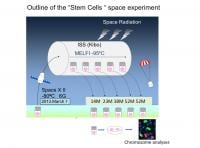
A long-term experiment aboard the International Space Station has tested the effect of space radiation on mouse embryonic stem cells. Their findings will contribute to helping scientists better assess the safety and risks related to space radiation for future human space flights. The findings are published in the journal Heliyon.
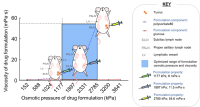
When a cancer spreads, the invasion of tumor cells into the lymph nodes present various barriers to effective treatment. Harnessing a lymphatic drug delivery system, where drugs are injected directly into sentinel lymph nodes under ultrasound guidance, a collaborative research group has developed a novel drug formulation that enhances the therapeutic response of carboplatin, a commonly used chemotherapy medication.
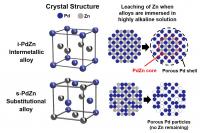
Osaka Metropolitan University researchers have created intermetallic alloy nanoparticles of palladium and zinc with an alternating arrangement of zinc and palladium atoms. The intermetallic alloy is more corrosion-resistant than substitutional alloys while retaining the electrocatalytic properties of both metals, which could be useful for developing new non-precious metal electrocatalysts.
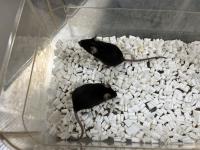
Researchers develop a ground-breaking model to estimate bait vaccination effectiveness in wild animals based on the proportion of immunized animals in a population and the number of vaccine applications.
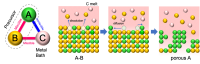
Hydrogen, a clean fuel, is incredibly dense in energy—three times more than diesel or gasoline. Its ability to power a sustainable future has been hindered by a lack of high performing catalysts. Now, a collaborative research group has developed nanoporous molybdenum-based intermetallic compounds that could address this conundrum.
Researchers from Hokkaido University and Toppan have developed a method to detect build-up of amyloid β in the brain, a characteristic of Alzheimer’s disease, from biomarkers in blood samples.
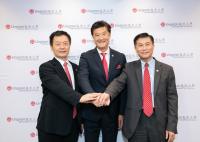
The Council of Lingnan University (LU) in Hong Kong approved today (17 October) the recommendation of its Search Committee to appoint Prof S Joe Qin, who is a world-leading data science expert, as the next President for a period of five years.
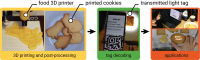
Researchers from Osaka University have developed a way of printing edible QR codes—a kind of barcode—within cookies, meaning that the tag is embedded within the food itself. Crucially, the tag doesn’t change the flavor or outer appearance of the cookie, and can be read using a backlight while the cookie remains intact. This new method has great commercial potential for improving food safety and traceability in an environmentally friendly way.
Good hand hygiene has been found to be an effective way to prevent the spread of infectious organisms and the most important defence against disease, but studies have shown that many parents have inadequate knowledge, reporting skills, and parenting practices related to seasonal influenza. Previous research has shown a positive relationship between parents’ and children’s health practices.
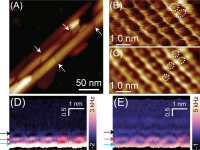
Chemists in Japan, Canada and Europe have uncovered flaws in the surface structure of cellulose nanocrystals—an important step toward deconstructing cellulose to produce renewable nano-materials relevant to biochemical products, energy solutions, and biofuels.
The National Health Innovation Centre, Singapore (NHIC) has launched a Clinical Innovation and Adoption Initiative to nurture promising healthtech projects for adoption and scaling across healthcare clusters in Singapore.
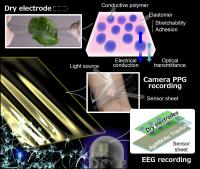
Researchers from Osaka University have developed a skin-like device to measure brain activity via electroencephalography, which uses electrodes to measure electrical activity on the scalp (reflecting underlying brain activity). The device has other useful applications, such as measuring heart rate and blood oxygen levels. Wearable devices that can remotely assess brain health in everyday settings are likely to improve healthcare for millions of people worldwide.
Researchers from Osaka University have developed a computational analysis tool called CAPITAL for comparative analysis of single-cell RNA sequencing data with complicated branching trajectories. As cells undergo a dynamic process, they can be placed on a “pseudotime trajectory” to analyze the gene expression changes throughout the process.
The Malaysia Technology Expo (MTE) 2022: SDG International Innovation Awards & Expo (SDGIIAE) returns for its 2nd edition and the awards encourage the development of innovative solutions for local and global challenges.
Researchers from Osaka University have found that the Vibrio cholerae colonization factor TcpF forms a flower-shaped trimer to specifically bind to the minor pilus protein TcpB resulting in secretion by the type 4 pilus secretion system into the extracellular space. This finding could help lead to the development of a novel anti-adhesive drug that selectively interrupts the TcpF-TcpB interaction, which may replace antibiotics in the treatment of cholera.
A new material is set to provide us with faster and higher resolution displays. Hokkaido University researchers could explain what makes this material so special, opening the door to its application and further development.
Asia Research News monitors the latest research news in Asia. Some highlights that caught our attention this week are shrinking mangroves, a wind harvester that can generate electricity using a breeze, and a new supercontinent 300 million years from now.
Osaka Metropolitan University scientists have created a novel thermoresponsive polymer by adding divalent cations to polymers and water solvents. They also succeeded in controlling thermoresponsive properties by changing the type and mixing ratio of ionic species. This new polymer type is expected to be applied as an analytical reagent for ion-sensing devices and as a material for drug delivery systems.
The project will apply Indonesia’s Institut Teknologi Bandung's (ITB) specialized expertise in chemical reaction engineering to probe optimization of ammonia firing. Target set on achieving cleaner power generation in Indonesia, based on demonstration testing with H-25 gas turbine.
Giants in History: Japanese chemist Takamine Jokichi (3 November 1854 – 22 July 1922) founded the Tokyo Artificial Fertilizer Company, where he isolated a starch-digesting enzyme (named takadiastase) from the fungus Aspergillus oryzae.
Osaka University researchers developed a power generation system based on osmotic flow of ions through a membrane riddled with tiny nanopores. By optimizing the size and distribution of the pores, the team demonstrated a way to obtain clean energy from the oceans.