

Peer Reviewed
News

31 May 2024
Singapore University of Technology and Design
To overcome issues associated with real-life testing, SUTD researchers successfully demonstrated the use of digital twin technology within robot simulation software in assessing a robot’s suitability for deployment in simulated built environments.

30 May 2024
The University of Osaka
Research collaboration between Osaka University and Otsuka Pharmaceutical Co., Ltd. revealed that deletion of mRNA endonuclease Regnase-1 promoted NK cell anti-tumor activity via OCT2-dependent transcriptional up-regulation of Ifng mRNA. Associated with the deletion of Regnase-1 in NK cells, NK cells showed a high expression of OCT2 and CXCR6 in those that escaped from mRNA decay from Regnase-1, and they contributed to the transcriptional regulation of Ifng and NK cell persistence inside the tumor microenvironment, respectively. The loss-of-function strategy targeting Regnase-1 potentially enhances the production of cytotoxic proteins such as IFN-γ, granzymes, and perforin. This approach also promotes NK cell infiltration and persistence within the tumor, thereby facilitating the development of effective anti-tumor immunotherapy against solid tumors.

30 May 2024
The University of Osaka
Researchers from Osaka University probed the transit of cations across a nanopore membrane for the generation of osmotic energy. The team controlled the passage of cations across the membrane using a voltage applied to a gate electrode. This control allowed the cation-selective transport to be tuned from essentially zero to complete cation selectivity. The findings are expected to support the application of blue energy solutions for sustainable energy alternatives worldwide.

30 May 2024
The University of Osaka
Researchers from Osaka University combined computer simulations and transmission electron microscopy experiments to better understand the ordering mobility and formation of microstructure domains in Fe3Al alloy. They were able to correlate structural changes with heat treatment to understand how particular mechanical behavior can be achieved. This is expected to allow the superelastic properties of Fe3Al to harnessed for the 3D printing of construction materials for absorbing seismic activity.

29 May 2024
Singapore University of Technology and Design
An SUTD professor and his collaborators propose a new tree-inspired one-time password scheme that provides security and privacy while supporting changing user environments.
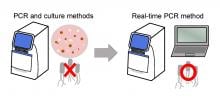
23 May 2024
Osaka Metropolitan University
Novel real-time PCR method might become diagnostic tool targeting emerging bacterium responsible for food poisoning outbreaks

22 May 2024
The University of Osaka
Researchers from Osaka University have found that a specific pattern of brain activity, known as “sharp-wave ripples,” is associated with thoughts that wander from the present situation. This activity begins in the hippocampus, a crucial brain region for memory formation and recall, and is linked to more vivid and less desirable thoughts. A better understanding of the relationship between sharp-wave ripples and these kinds of thoughts might be helpful for treating related conditions.

21 May 2024
The University of Osaka
Researchers at Osaka University analyzed data from the Japan Gerontological Evaluation Study and found that socioeconomic status (SES) transitions affect dementia risk. Specifically, upward SES mobility is greater associated with reduced dementia risk and extended healthy aging with dementia-free lifespan, while downward mobility increases risk. The study of 9,186 participants found that lifestyle, comorbidities, and social factors mediate this relationship, highlighting the importance of SES in cognitive health and preventing dementia.
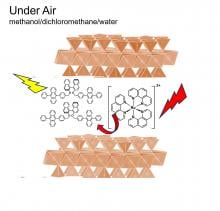
21 May 2024
Ehime University
Achievement of stereoselective up-conversion processes using a chiral donor/acceptor pair in the presence of synthetic saponite
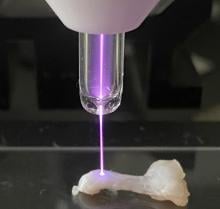
21 May 2024
Osaka Metropolitan University
Promising results of helium plasma jet therapy on rats after surgery widen scope of method’s medical applications

20 May 2024
Daegu Gyeongbuk Institute of Science and Technology (DGIST)
DGIST-Yonsei University-Korea University Collaborative research team has developed a suture-type electronic component that can wirelessly monitor vital signs in the body
This new technology is expected to be easily applicable in orthopedic/medical rehabilitation, including personalized rehabilitation
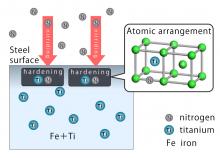
20 May 2024
Osaka Metropolitan University
Calculations consider how a dozen metals such as titanium combine with nitrogen or carbon to form bonds

20 May 2024
The University of Osaka
Researchers from Osaka University found that the tyrosine kinase Csk plays a crucial role in regulating germinal center B cell signaling. Csk deletion in a mouse model led to increased ROS production and apoptosis, thereby inhibiting B cell affinity maturation.

19 May 2024
Daegu Gyeongbuk Institute of Science and Technology (DGIST)
- The DGIST·Kookmin University joint research team identifies triboelectricity as a source of soft mechanoluminescent complex and proposes a mechanism for light emission
- Emits bright light even under light stress and is durable; increased expectation for new applications upon identifying the cause

19 May 2024
Daegu Gyeongbuk Institute of Science and Technology (DGIST)
An oblong-shaped receiver significantly increases the amount of charge harvested from ultrasound-based wireless power transfer

19 May 2024
Daegu Gyeongbuk Institute of Science and Technology (DGIST)
- Ensure price competitiveness and reliability by using the phenomenon of dye reacting with beta rays instead of expensive semiconductors and carbon isotope treatment technology for anodes
- Provide a power technology that has been available for decades without the need for recharging. It excels in the era of on-device and AI, being more cost-competitive and efficient than traditional betavoltaic cells
- Published the findings in the Journal of Power Sources, one of the most prestigious international journals in the field of electrical and electronic engineering
16 May 2024
Hiroshima University
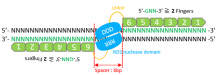
Genome editing is making inroads into biomedical research and medicine. By employing biomolecule modeling tools, a Japanese research team is accelerating the pace and cutting the cost of zinc finger nuclease (ZFN) technology, a primary gene editing tool.
16 May 2024
Osaka Metropolitan University
Naturally derived antioxidants improve growth of yeast strain in presence of ethanol

16 May 2024
Institute of Industrial Science, The University of Tokyo (UTokyo-IIS)
Researchers at the Institute of Industrial Science, The University of Tokyo, enhance land surface maps to identify sloping landscapes in which vegetation changes are associated with slight elevation and water gradients.

16 May 2024
Tohoku University
A team of researchers has made significant strides in understanding metal–nitrogen–carbon (M–N–C) catalysts, offering alternatives to expensive platinum-group-metal (PGM) catalysts and a pathway to a greener future.
15 May 2024
Hokkaido University
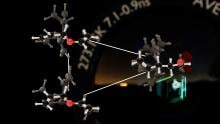
New research employs shutter speed analogies to validate 55-year-old theory about chemical reaction rates.
14 May 2024
Osaka Metropolitan University
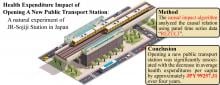
Time series data and causal impact algorithm reveal the effectiveness of a new transit station over a four-year period

13 May 2024
Hiroshima University
Researchers undertook a study of older adults to examine the connection between a sense of economic insecurity and a person’s participation in social activities.
13 May 2024
Kanazawa University
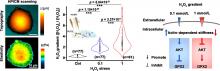
In a recent study published in the multidisciplinary academic journal Science Bulletin, a semi-monthly high-caliber peer-reviewed research outlet covering a broad range of natural sciences and high-tech fields, researchers from the Nano Life Science Institute (WPI-NanoLSI) at Kanazawa University utilized hopping probe scanning ion conductance microscopy (HPICM) and highly sensitive platinum-functionalized nanoelectrodes to conduct an in-depth investigation of the dynamic response of individual living colorectal cancer Caco-2 cells to changes in intracellular and extracellular hydrogen peroxide (H2O2) gradients, specifically focusing on eustress, at the single-cell level and in real-time. Their findings hold promise for innovative therapies against cancer and H2O2-related inflammatory diseases.

13 May 2024
The University of Osaka
Researchers from Osaka University have used a novel combination of short-read and long-read RNA sequencing to identify the different isoforms of genes expressed in the crustacean Daphnia magna. Males and females are genetically identical, but using this technique the team revealed genes that switch the predominant isoform in a sex-dependent manner. This study contributes to our understanding of Daphnia’s sexual dimorphism and helps further advance technologies in crustacean aquaculture.

10 May 2024
Kanazawa University
Researchers at Nano Life Science Institute (WPI-NanoLSI), Kanazawa University report in Nano Letters how the use of high-speed atomic force microscopy helps to understand the crucial role played by certain biomolecules in DNA wrapping dynamics.
09 May 2024
Institute of Industrial Science, The University of Tokyo (UTokyo-IIS)
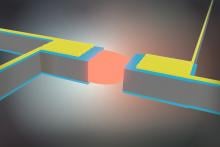
Researchers at The University of Tokyo demonstrate enhanced radiative heat transfer across a gap between two micro-sized silicon plates by coating them with a layer of silicon dioxide, which may significantly improve heat management of computers.
09 May 2024
Tohoku University
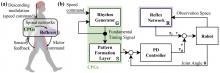
Walking and running is notoriously difficult to recreate in robots. Now, a group of researchers has overcome some of these challenges by creating an innovative method that employs central pattern generators - neural circuits located in the spinal cord that generate rhythmic patterns of muscle activity - with deep reinforcement learning. The method not only imitates walking and running motions but also generates movements for frequencies where motion data is absent, enables smooth transition movements from walking to running, and allows for adapting to environments with unstable surfaces.
08 May 2024
Singapore University of Technology and Design
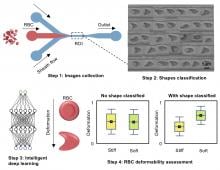
Using image-based deep learning and dynamic shape classification techniques, SUTD researchers developed a novel method of checking red blood cell deformability that is less invasive, more cost-effective, more sensitive, and has higher throughput.
07 May 2024
The University of Osaka
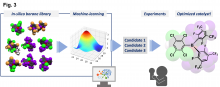
Researchers from Osaka University developed an in silico library comprising 54 potential triarylborane catalysts for the functionalization of amino acids and peptides with molecular hydrogen as a reductant. This library, together with chemometric machine learning, was used to identify the best candidates. Based on this process, an optimal catalyst was identified and found to promote the alkylation of aniline derivatives with exceptional functional group tolerance and produce only water as a coproduct.
Events
Sorry, no events coming up for this topic.
Researchers
Sorry, no researchers coming up for this topic.
Giants in history
Sorry, no researchers coming up for this topic.