
Peer Reviewed
News
16 Jan 2024
Ehime University
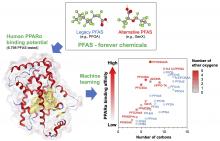
7000 forever chemicals (PFAS) and human PPARa binding properties predicted using AI technology
16 Jan 2024
The University of Osaka
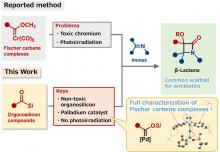
Researchers from Osaka University have simplified the operation of an important class of chemical transformation: synthesis of beta-lactams, the intricate scaffold of many antibiotics. Their experimental protocol minimizes the toxicity that is a common feature of similar Fischer-carbene synthetic methodologies, and was used to synthesize the scaffold of the thienamycin antibiotic in high yield. This work is an important advancement in sustainable chemistry that should benefit drug development and other chemical syntheses.
15 Jan 2024
The University of Osaka
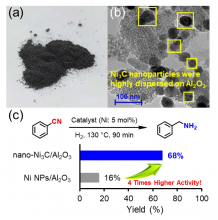
Researchers from Osaka University and collaborating partners have helped minimize the cost of an important class of chemical transformations: converting nitriles into primary amines. Their experimental protocol uses a cheap nickel catalyst instead of an expensive noble metal, is convenient to conduct, and works for a broad range of starting materials. This work is an important advance in sustainable chemistry that might help lower the cost of producing nylon and many other everyday products.
12 Jan 2024
Tohoku University
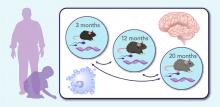
Much is known about the added complication to pregnancy when it comes to the age of the mother, but recent studies show that the age of the father can also heighten the risk of neurodevelopmental disorders. A team of researchers has explored the impacts of paternal aging on microRNAs, the molecules that play a crucial role in regulating gene expression.
12 Jan 2024
Tohoku University
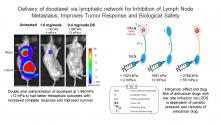
Tohoku University researchers have unveiled a new approach to treating lymph node metastasis. The process invovled administering anticancer drugs directly into the lymph nodes, producing better outcomes and lessening the side effects commonly associated with cancer treatment.
11 Jan 2024
Institute of Industrial Science, The University of Tokyo (UTokyo-IIS)
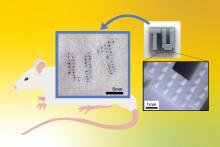
Researchers at the Institute of Industrial Science, The University of Tokyo create customizable polymer molds to produce cost-effective arrays of microneedles that can be used to uniquely identify pets with alphanumeric symbols instead of tags or collars.
11 Jan 2024
The University of Osaka
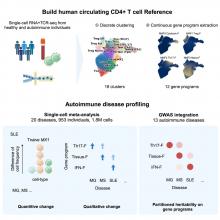
Researchers from Osaka University found that CD4+ T cells can be classified into 18 categories and 12 distinct gene programs, and that characteristic changes in CD4+ T cell profiles are associated with autoimmune disease, sex, and aging. Analysis of these distinctive immune cell profiles could be used to predict autoimmune disease in the future, paving the way for precision medicine.
11 Jan 2024
The University of Osaka
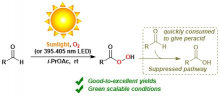
Researchers from SANKEN (The Institute of Scientific and Industrial Research), at Osaka University, Shizuoka Institute of Science & Technology, and collaborating partners have resolved a problem that has limited the environmental sustainability of peracid synthesis. By judicious choice of the solvent and light input, approximately room-temperature autoxidation of aldehydes proceeds in a manner that results in industrially useful peracids or carboxylic acids. This work is an important advance in green chemistry that will help minimize the carbon footprint of the chemical industry.
10 Jan 2024
The University of Osaka
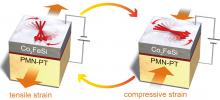
A research team from Osaka University, The University of Tokyo, and Tokyo Institute of Technology revealed the microscopic origin of the large magnetoelectric effect in interfacial multiferroics composed of the ferromagnetic Co2FeSi Heusler alloy and the piezoelectric material. They observed element-specific changes in the orbital magnetic moments in the interfacial multiferroic material using an X-ray Magnetic Circular Dichroism (XMCD) measurement under the application of an electric field, and they showed the change contributes to the large magnetoelectric effect. The findings provide guidelines for designing materials with a large magnetoelectric effect, and it will be useful in developing new information writing technology that consumes less power in spintronic memory devices. The research results will be shown in an article, “Strain-induced specific orbital control in a Heusler alloy-based interfacial multiferroics” published in NPG Asia Materials.

10 Jan 2024
Duke-NUS Medical School
Novel findings from a preclinical head-to-head comparison show that administering a COVID-19 vaccine as a nasal spray rather than a subcutaneous injection enhances the body’s long-term immune memory, thereby increasing the vaccine’s overall effectiveness. This research could pave the way for a COVID-19 vaccination strategy that depends on fewer boosters to achieve the same level of protection against SARS-CoV-2 viruses.
09 Jan 2024
Hiroshima University
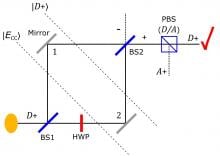
What actually happens is much weirder, and may help us understand more about quantum mechanics
09 Jan 2024
Hokkaido University
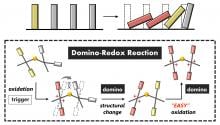
Transmitting an effect known as a domino reaction using redox chemistry has been achieved for the first time.

09 Jan 2024
The University of Osaka
Researchers from Osaka University and collaborating partners have, via reductive amination, resolved a problem that has limited the applicability of carboxylic acids to alkylamine production. Their experimental protocol is environmentally sustainable, simple and convenient to conduct, and works for a broad range of starting materials. This work is an important advance in green chemistry that might help minimize the environmental footprint of synthesizing a class of molecule that's used to manufacture many everyday products.
04 Jan 2024
The University of Osaka
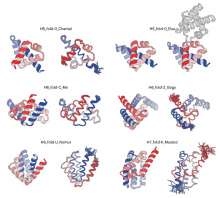
A team of researchers has developed an innovative method to design complicated all-α proteins, characterized by their non-uniformly arranged α-helices as seen in hemoglobin. Employing their novel approach, the team successfully created five unique all-α protein structures, each distinguished by their complicated arrangements of α-helices. This capability holds immense potential in designing functional proteins.
01 Jan 2024
The University of Osaka
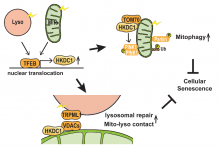
Researchers from Osaka University have shown that a protein called HKDC1 is a new target of another protein, TFEB, and plays key roles in maintaining the stability of both mitochondria and lysosomes. HKDC1 is essential for mitophagy to remove damaged mitochondria, and mediates mitochondria–lysosome contact, which is critical for lysosomal repair. The role of HKDC1 in maintaining the stability of these organelles counteracts cellular senescence, revealing HKDC1 as a potential therapeutic target for age-related diseases.
28 Dec 2023
Tohoku University
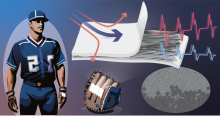
An international research group has engineered a novel high-strength flexible device by combining piezoelectric composites with unidirectional carbon fiber. The new device transforms kinetic energy from the human motion into electricity, providing an efficient and reliable means for high-strength and self-powered sensors.
28 Dec 2023
Tohoku University
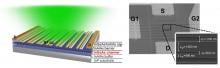
Researchers have developed a high-speed, high-sensitivity terahertz-wave detector operating at room temperature, paving the way for advancements in the development of next generation 6G/7G technology.
26 Dec 2023
The University of Osaka
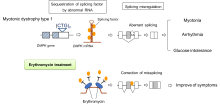
In a phase 2 trial, researchers from Osaka University have found that erythromycin, a commonly used antibiotic, has acceptable safety and tolerability profiles in patients with myotonic dystrophy type 1. This common form of muscular dystrophy currently has no cure, and the research team is hopeful that phase 2b and 3 trials will further reveal the efficacy of erythromycin as a treatment—at least in some patients.
26 Dec 2023
The University of Osaka
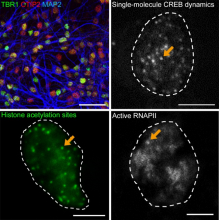
Researchers from Osaka University and Shenzhen Bay Laboratory found that neuronal activity induces gene expression at sites of acetylation by promoting the emergence of cAMP response element binding protein (CREB), CREB binding protein (CBP), and RNA polymerase II. These proteins are targeted to the appropriate sites by CBP-mediated histone acetylation at activity-dependent gene loci.
26 Dec 2023
Daegu Gyeongbuk Institute of Science and Technology (DGIST)
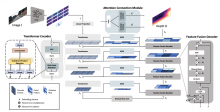
- Professor Sunghoon Im's team at DGIST has developed depth-sensing technology that can be reliably used in diverse environments by analyzing the relationship between the neural network structure and distance sensing in autonomous driving.
- The new technology is expected to contribute to the development of a wide range of AI fields, such as autonomous driving, which must be performed safely in various urban settings and weather conditions
26 Dec 2023
Daegu Gyeongbuk Institute of Science and Technology (DGIST)
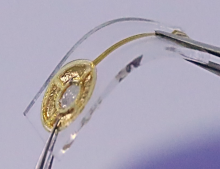
- Professor Kyung-In Jang’s research team at DGIST has developed a complex taste sensor that mimics the gustatory system and detects saltiness, sourness, bitterness, and sweetness in real-time.
- It is expected to be applied in various fields, including the food, cosmetics, and medicine industries
25 Dec 2023
Kavli Institute for the Physics and Mathematics of the Universe (Kavli IPMU)
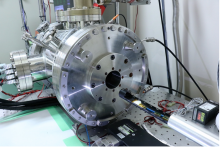
Kavli IPMU researchers are part of a team that has shown it is possible to image small animal tissue clearly to several hundred micrometers using multi-probe imaging.
25 Dec 2023
Hokkaido University
Researchers employ common plastics to kickstart radical chain reactions, creating a way to reuse plastic waste while improving process safety and efficiency.

22 Dec 2023
Osaka Metropolitan University
Researchers from Osaka Metropolitan University assessed the correlation between human mobility restrictions and the medical costs associated with lifestyle-related diseases during the COVID-19 pandemic in Japan. A cross-sectional study revealed that an increase in walking and public transit use was associated with reduced medical costs of lifestyle diseases. These findings implicate governments to take measures other than restricting walking and public transit during pandemics and emphasize the importance of walkable cities.

21 Dec 2023
Osaka Metropolitan University
Scientists at Osaka Metropolitan University have developed an efficient, non-invasive, and pain-free method to generate canine-induced pluripotent stem cells (iPSCs). They identified six reprogramming genes that can boost canine iPSC generation by 120 times compared to conventional methods using fibroblasts. The iPSCs were created from urine-derived cells without the need for feeder cells, an impossible feat until now. Their findings are expected to advance regenerative medicine and genetic disease research in veterinary medicine.
21 Dec 2023
The University of Osaka
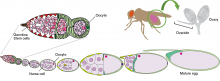
A research group led by Osaka University and University of Hawaii Manoa found that in female fruit flies, microorganisms enhance reproductive function, boosting the number of cells that form eggs and the number of mature eggs. This is done by controlling the release of hormones to speed up cell division in the ovaries, and limiting programmed cell death. These findings could improve reproductive medicine and could aid the development of new methods to enhance fertility.
21 Dec 2023
Tohoku University
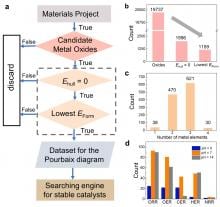
Identifying low-cost metal oxide electrocatalysts is essential to help us wean ourselves off fossil fuels. Yet doing so is a time-consuming process, with lots of trial and error required. A group of researchers has explored how data mining can be employed to help speed up this process.
21 Dec 2023
The University of Osaka
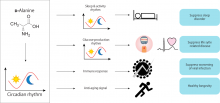
Researchers from Osaka University have shown that the rare D-form of the amino acid alanine shows a clear circadian rhythm, and is able to affect the circadian clock and regulate gluconeogenesis, a method of glucose release, in the kidney. D-alanine upregulates genes linked to both gluconeogenesis and the circadian rhythm through the circadian transcriptional network. D-alanine is linked to many metabolic and immunological diseases, and this mechanistic insight could potentially lead to novel therapeutic approaches.
21 Dec 2023
Osaka Metropolitan University
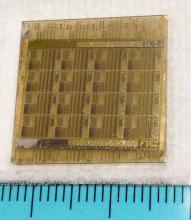
A research team at Osaka Metropolitan University has fabricated a gallium nitride (GaN) transistor using diamond, which of all natural materials has the highest thermal conductivity on earth, as a substrate, and they succeeded in increasing heat dissipation by more than two times compared with conventional transistors. The transistor is expected to be useful not only in the fields of 5G communication base stations, weather radar, and satellite communications, but also in microwave heating and plasma processing.
21 Dec 2023
The University of Osaka
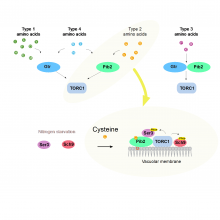
Researchers from Osaka University have discovered how amino acids activate a key cell, TORC1, which is a master regulator in living organisms that controls whether cells grow or recycle their contents in yeast. Notably, the team found that the amino acid cysteine is sensed by a protein called Pib2 and that the two bind together to trigger TORC1. This is important because faulty TORC1 has been linked to disease such as cancer.
Events
Sorry, no events coming up for this topic.
Researchers
Sorry, no researchers coming up for this topic.
Giants in history
Sorry, no researchers coming up for this topic.