

Peer Reviewed
News
25 Jan 2024
Science Media Center Taiwan
Taiwan: Researchers from National Chung-Hsing University, Taiwan, have made a discovery in the fight against Zika virus. Their study, published in the journal “Communication Biology,” reveals that people who have previously been exposed to dengue virus and Japanese encephalitis virus may have acquired immunity against Zika virus. This finding may shed new light on vaccine strategies in countries where these viruses are common.
23 Jan 2024
The University of Osaka
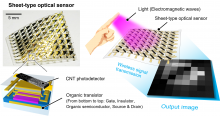
Researchers from SANKEN (The Institute of Scientific and Industrial Research), at Osaka University developed an optical sensor consisting of carbon nanotube photodetectors and organic transistors formed on an ultrathin, flexible polymer film. A wireless system reads the images from the sensor. Experiments showed the sensor has high sensitivity, a wide bandwidth, and robustness to extreme deformation such as bending and crumpling. This sensor has high potential for use in applications such as non-destructive imaging, non-sampling liquid quality evaluation, wearable devices, and soft robotics.
23 Jan 2024
Tohoku University
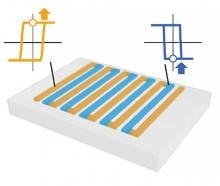
Scientists are eager to harness the unique electrical properties of topological magnets for advancing thermoelectric materials. A collaborative research group has successfully induced positive and negative polarities, unlocking the potential for generating thermoelectric energy from materials with topological magnet properties.
23 Jan 2024
Tohoku University
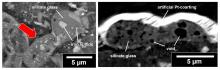
The Hayabusa2 mission that collected samples from the asteroid Ryugu has provided a treasure trove of insights into our solar system. After analyzing samples further, a team of researchers have unearthed evidence that cometary organic matter was transported from space to the near-Earth region.
22 Jan 2024
Hokkaido University
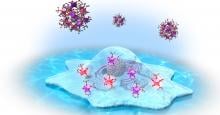
A water-soluble, luminescent europium complex enables evaluation of malignancy grade in model glioma tumor cells.
22 Jan 2024
Tohoku University
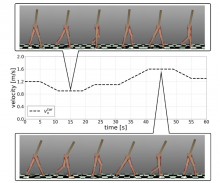
We may not think about it while doing it, but our nervous system is directing our bones, joints, muscles, tendons, and more to move as efficiently as possible at varying speeds. Replicating this in robots is notoriously difficult. But now, Tohoku University researchers have created a model that makes this possible, thanks in large part to an innovative algorithm.
19 Jan 2024
Hokkaido University
Temperature-controlled, reversible shifting of molecular gear motion in a solid crystal opens new possibilities for material design.

19 Jan 2024
Academia Sinica
A recent paper published in the journal Astronomy & Astrophysics presents new images from the 2018 data that reveal a familiar ring the same size as observed in 2017. This bright ring surrounds a deep central depression, “the shadow of the black hole,” as predicted by general relativity. Excitingly, the peak brightness of the ring has shifted by about 30º counter clockwise compared to its position in 2017, which is consistent with our theoretical understanding of the variability of the turbulent material around black holes.
18 Jan 2024
Osaka Metropolitan University
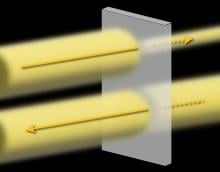
A research group led by Osaka Metropolitan University has discovered significant nonreciprocal optical absorption of LiNiPO4, referred to as the optical diode effect, in which divalent nickel (Ni2+) ions are responsible for magnetism, by passing light at shortwave infrared wavelengths used in optical communications. Furthermore, they have uncovered that it is possible to switch the optical diode effect by applying a magnetic field. This is a step forward in the development of an innovative optical isolator that is more compact and can control light propagation, replacing the conventional optical isolators with complex structures
18 Jan 2024
Kanazawa University
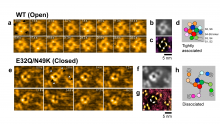
Researchers at Nano Life Science Institute (WPI-NanoLSI), Kanazawa University report in Nature Communications a high-speed atomic force microscopy study of the structural dynamics of sodium ion channels in cell membranes. The findings provide insights into the mechanism behind the generation of cell-membrane action potentials.
18 Jan 2024
Tohoku University
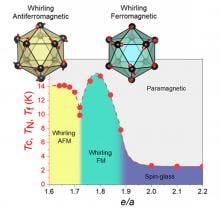
Non-Heisenberg-type approximant crystals have many interesting properties and are intriguing for researchers of condensed matter physics. However, their magnetic phase diagrams, which are crucial for realizing their potential, remain completely unknown. Now, for the first time, a team of researchers has constructed the magnetic phase diagram of a non-Heisenberg Tsai-type 1/1 gold-gallium-terbium approximant crystal. This development marks a significant step forward for quasicrystal research and for the realization of magnetic refrigerators and spintronic devices.
17 Jan 2024
Kanazawa University
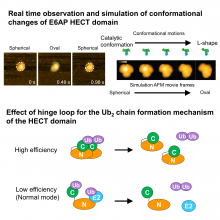
Researchers at Nano Life Science Institute (WPI-NanoLSI), Kanazawa University report in Nano Letters how the flexibility of a protein hinge plays a crucial role in the transfer of proteins in key cell processes.
17 Jan 2024
The University of Osaka
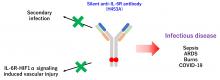
Researchers from Osaka University have discovered a novel treatment to relieve cytokine release syndrome (CRS), a life-threatening inflammation triggered by a serious infection or severe burn. Treatment with a short-acting antibody reduces the inflammatory effects of interleukin-6, a key cytokine in CRS while avoiding the side effects associated with previous longer-acting therapies.
16 Jan 2024
The University of Osaka
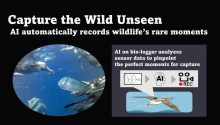
Researchers from Osaka University developed a bio-logger for seabirds that enables long-term observation of rare behaviors. The bio-logger employs low-power depth sensors and accelerometers to identify rare behavior using a light-weight outlier detection model and records the behavior in a 5-min video. Observations using the bio-loggers on Streaked Shearwaters revealed novel aspects of head-shaking and foraging strategies. This approach will enable a wider range of animal behaviors in various environments to be observed.
16 Jan 2024
The University of Osaka
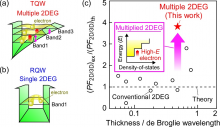
Researchers from Osaka University and collaborating partners have improved the efficiency of heat-to-electricity conversion in gallium arsenide semiconductor microstructures. By judicious spatial alignment of electrons within a two-dimensional electron gas system with multiple subbands, one can substantially enhance the power factor compared with previous iterations of analogous systems. This work is an important advance in modern thermoelectric technology and will benefit the global integration of the Internet of Things.
16 Jan 2024
Ehime University
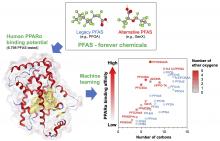
7000 forever chemicals (PFAS) and human PPARa binding properties predicted using AI technology
16 Jan 2024
The University of Osaka
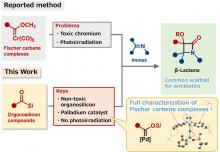
Researchers from Osaka University have simplified the operation of an important class of chemical transformation: synthesis of beta-lactams, the intricate scaffold of many antibiotics. Their experimental protocol minimizes the toxicity that is a common feature of similar Fischer-carbene synthetic methodologies, and was used to synthesize the scaffold of the thienamycin antibiotic in high yield. This work is an important advancement in sustainable chemistry that should benefit drug development and other chemical syntheses.
15 Jan 2024
The University of Osaka
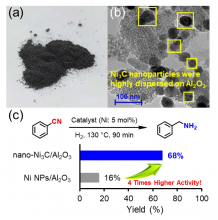
Researchers from Osaka University and collaborating partners have helped minimize the cost of an important class of chemical transformations: converting nitriles into primary amines. Their experimental protocol uses a cheap nickel catalyst instead of an expensive noble metal, is convenient to conduct, and works for a broad range of starting materials. This work is an important advance in sustainable chemistry that might help lower the cost of producing nylon and many other everyday products.
12 Jan 2024
Tohoku University
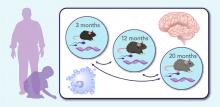
Much is known about the added complication to pregnancy when it comes to the age of the mother, but recent studies show that the age of the father can also heighten the risk of neurodevelopmental disorders. A team of researchers has explored the impacts of paternal aging on microRNAs, the molecules that play a crucial role in regulating gene expression.
12 Jan 2024
Tohoku University
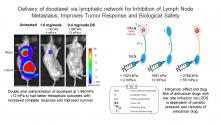
Tohoku University researchers have unveiled a new approach to treating lymph node metastasis. The process invovled administering anticancer drugs directly into the lymph nodes, producing better outcomes and lessening the side effects commonly associated with cancer treatment.
11 Jan 2024
Institute of Industrial Science, The University of Tokyo (UTokyo-IIS)
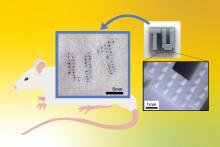
Researchers at the Institute of Industrial Science, The University of Tokyo create customizable polymer molds to produce cost-effective arrays of microneedles that can be used to uniquely identify pets with alphanumeric symbols instead of tags or collars.
11 Jan 2024
The University of Osaka
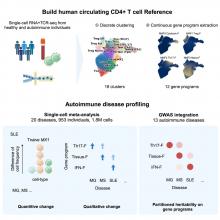
Researchers from Osaka University found that CD4+ T cells can be classified into 18 categories and 12 distinct gene programs, and that characteristic changes in CD4+ T cell profiles are associated with autoimmune disease, sex, and aging. Analysis of these distinctive immune cell profiles could be used to predict autoimmune disease in the future, paving the way for precision medicine.
11 Jan 2024
The University of Osaka
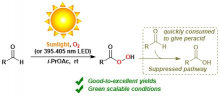
Researchers from SANKEN (The Institute of Scientific and Industrial Research), at Osaka University, Shizuoka Institute of Science & Technology, and collaborating partners have resolved a problem that has limited the environmental sustainability of peracid synthesis. By judicious choice of the solvent and light input, approximately room-temperature autoxidation of aldehydes proceeds in a manner that results in industrially useful peracids or carboxylic acids. This work is an important advance in green chemistry that will help minimize the carbon footprint of the chemical industry.
10 Jan 2024
The University of Osaka
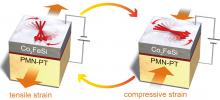
A research team from Osaka University, The University of Tokyo, and Tokyo Institute of Technology revealed the microscopic origin of the large magnetoelectric effect in interfacial multiferroics composed of the ferromagnetic Co2FeSi Heusler alloy and the piezoelectric material. They observed element-specific changes in the orbital magnetic moments in the interfacial multiferroic material using an X-ray Magnetic Circular Dichroism (XMCD) measurement under the application of an electric field, and they showed the change contributes to the large magnetoelectric effect. The findings provide guidelines for designing materials with a large magnetoelectric effect, and it will be useful in developing new information writing technology that consumes less power in spintronic memory devices. The research results will be shown in an article, “Strain-induced specific orbital control in a Heusler alloy-based interfacial multiferroics” published in NPG Asia Materials.

10 Jan 2024
Duke-NUS Medical School
Novel findings from a preclinical head-to-head comparison show that administering a COVID-19 vaccine as a nasal spray rather than a subcutaneous injection enhances the body’s long-term immune memory, thereby increasing the vaccine’s overall effectiveness. This research could pave the way for a COVID-19 vaccination strategy that depends on fewer boosters to achieve the same level of protection against SARS-CoV-2 viruses.
09 Jan 2024
Hiroshima University
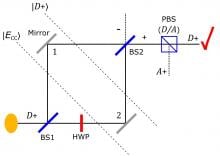
What actually happens is much weirder, and may help us understand more about quantum mechanics
09 Jan 2024
Hokkaido University
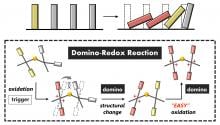
Transmitting an effect known as a domino reaction using redox chemistry has been achieved for the first time.

09 Jan 2024
The University of Osaka
Researchers from Osaka University and collaborating partners have, via reductive amination, resolved a problem that has limited the applicability of carboxylic acids to alkylamine production. Their experimental protocol is environmentally sustainable, simple and convenient to conduct, and works for a broad range of starting materials. This work is an important advance in green chemistry that might help minimize the environmental footprint of synthesizing a class of molecule that's used to manufacture many everyday products.
04 Jan 2024
The University of Osaka
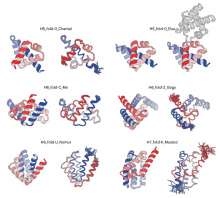
A team of researchers has developed an innovative method to design complicated all-α proteins, characterized by their non-uniformly arranged α-helices as seen in hemoglobin. Employing their novel approach, the team successfully created five unique all-α protein structures, each distinguished by their complicated arrangements of α-helices. This capability holds immense potential in designing functional proteins.
01 Jan 2024
The University of Osaka
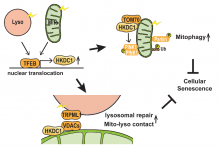
Researchers from Osaka University have shown that a protein called HKDC1 is a new target of another protein, TFEB, and plays key roles in maintaining the stability of both mitochondria and lysosomes. HKDC1 is essential for mitophagy to remove damaged mitochondria, and mediates mitochondria–lysosome contact, which is critical for lysosomal repair. The role of HKDC1 in maintaining the stability of these organelles counteracts cellular senescence, revealing HKDC1 as a potential therapeutic target for age-related diseases.
Events
Sorry, no events coming up for this topic.
Researchers
Sorry, no researchers coming up for this topic.
Giants in history
Sorry, no researchers coming up for this topic.