
Peer Reviewed
News
03 Nov 2023
Daegu Gyeongbuk Institute of Science and Technology (DGIST)
- DGIST student chosen as a 2023 Google PhD Fellow to provide one-on-one research mentoring and scholarship
- DGIST student selected among 5 students from Korea, out of 67 students worldwide
03 Nov 2023
Daegu Gyeongbuk Institute of Science and Technology (DGIST)
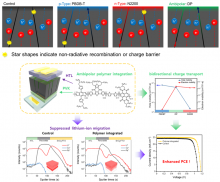
- A research team led by Professor Jong-min Choi at the Department of Energy Science and Engineering, DGIST, collaborated with a research team of Professor Bum-joon Kim’s research team at the Department of Chemical and Biomolecular Engineering, KAIST, to develop bipolar polymers, which can improve the efficiency and stability of perovskite solar cells
- Developed a process that can repair defects and maximize multifunctionality with the double introduction of bipolar polymers
03 Nov 2023
Daegu Gyeongbuk Institute of Science and Technology (DGIST)
- An enhanced control technology for robotic upper and lower limbs has been developed through the development of a new type of hybrid bionic nerve interface that integrates a regenerative peripheral nerve interface (RPNI) and a peripheral nerve interface (PNI)
- The technology is expected to play an important role in the neuroprosthetic rehabilitation of amputee patients and the peripheral nerve interface
- The study’s results have been published in the esteemed academic journal “Advanced Science”
03 Nov 2023
Daegu Gyeongbuk Institute of Science and Technology (DGIST)
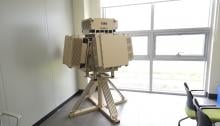
- A demonstration was held on September 21 at the Goheung Drone Center in Goheung-gun, Jeollanam-do
- This anti-drone radar, developed only with domestic technology, has the world’s highest level of technology... K-defense proudly making its inroads in the world

03 Nov 2023
Daegu Gyeongbuk Institute of Science and Technology (DGIST)
- It’s Sensor successfully develops industrial high precision sensor technology applicable to medical surgery
- Clebrain provides a service called PianoKiwis, a sheet music learning platform based on sound recognition

03 Nov 2023
Daegu Gyeongbuk Institute of Science and Technology (DGIST)
- Battery and future energy experts, including LG Energy Solution, SK Materials, and EcoPro, gather at DGIST in Daegu!
- Research exhibitions, recruitment counseling, and infrastructure tour to be held with the academic conference as an opportunity for research and people-to-people exchanges

03 Nov 2023
Daegu Gyeongbuk Institute of Science and Technology (DGIST)
- Will participate in the “2023 Korea International Future Auto & Mobility Expo” and present DGIST’s research results and achievements in the field
- Will embark fully fledged on R&D projects for future mobility technologies from the year after next…the first step in the long journey of the “grand transformation of the mobility industry” for local enterprises and businesses
03 Nov 2023
Daegu Gyeongbuk Institute of Science and Technology (DGIST)
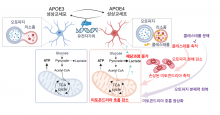
- Confirmed the link between cholesterol accumulated in lysosomes and decreased mitochondrial respiration due to the APOE4 genotype and proposed a possible reason that explains a decline in brain function
- Research results published in Cell Reports
03 Nov 2023
Daegu Gyeongbuk Institute of Science and Technology (DGIST)
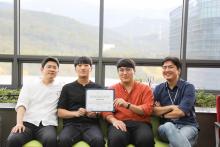
- Sang-woo Nam and Dong-ju Choi, students on Professors Jae-sok Yu and Sang-yoon Han’s research team, have been chosen as Student Paper Competition finalists at the IEEE International Ultrasonics Symposium.
- They successfully developed an innovative photonic semiconductor-based ultrasound sensor using the quantum properties of light, paving the way for extremely high-sensitivity quantum ultrasound sensors.
03 Nov 2023
Daegu Gyeongbuk Institute of Science and Technology (DGIST)
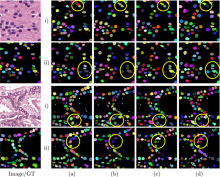
- Professor Park’s research team at DGIST successfully develops AI for pathological image analysis that can accurately segment overlapping cell nuclei using only rough labels
- Improved efficiency in diagnosing diseases and predicting the prognosis of patients by analyzing the microenvironment of pathological images... published in MICCAI, a top journal in the field of artificial intelligence
03 Nov 2023
Daegu Gyeongbuk Institute of Science and Technology (DGIST)
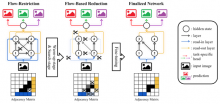
- Professor Sung-hoon Im’s research team at DGIST has developed automated search technology that can find an optimal deep learning network architecture by learning the relationship between tasks.
- It is expected to greatly contribute to advances in AI technology, such as autonomous driving, which simultaneously performs multiple tasks, including object detection, lane recognition, and distance estimation.
03 Nov 2023
Daegu Gyeongbuk Institute of Science and Technology (DGIST)
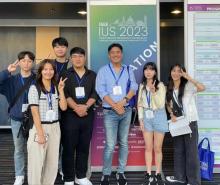
- A DGIST undergraduate research team successfully developed a technology that can effectively remove noise from photoacoustic microscopy images, even when only noisy images are available
- DGIST Undergraduate Group Research Program (UGRP) achievement presented at the IEEE, a prestigious international conference
03 Nov 2023
Daegu Gyeongbuk Institute of Science and Technology (DGIST)
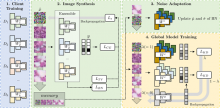
- Successfully developed federated learning AI, which can enable large-scale model learning and work without violating privacy with only a single model transfer
- Collaborated with Stanford University on a model for generating high-quality brain MRI images... Published 2 papers in MICCAI
03 Nov 2023
Daegu Gyeongbuk Institute of Science and Technology (DGIST)
- DGIST student startups Quester and Friending win Grand Prize and Excellence Prize

02 Nov 2023
Duke-NUS Medical School
First such local study finds extension of smoking ban to communal areas of residential blocks and outdoor spaces linked to monthly fall in heart attack cases

02 Nov 2023
Duke-NUS Medical School
• Duke-NUS scientists’ study shows metabolic elasticity is driven by genes.
• It is also dependent on diet, declining with a high-fat diet, while improving with intermittent fasting.
02 Nov 2023
Kavli Institute for the Physics and Mathematics of the Universe (Kavli IPMU)
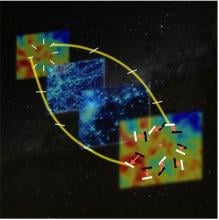
Future missions will be able to find signatures of violating the parity-symmetry in the cosmic microwave background polarization more accurately after a pair of researchers has managed to take into account the gravitational lensing effect, reports a new study in Physical Review D, selected as an Editors' Suggestion.

02 Nov 2023
The University of Osaka
A researcher from Osaka University has investigated the associations between mask usage and the reasons people give for wearing a mask. Online surveys were conducted before and after policies that downgraded the status of COVID-19. The study found that 59% of respondents continued wearing masks even after policy changes. Several sociological and psychological reasons other than disease prevention for mask usage were identified.
30 Oct 2023
Osaka Metropolitan University
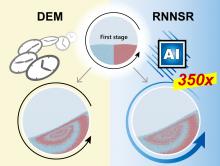
A research team at Osaka Metropolitan University has developed a new simulation method that accurately predicts powder mixing using AI, and has succeeded in increasing calculation speed by approximately 350 times while maintaining the same level of accuracy as conventional methods. This method is expected to not only pave the way for more efficient and precise powder mixing processes but also open up new possibilities for industries seeking to enhance product quality and streamline production.
29 Oct 2023
The University of Osaka
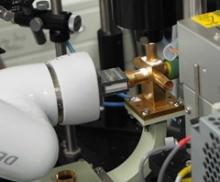
To quickly and accurately characterize prospective materials for use in solar energy, researchers built an automated system to perform laboratory experiments and used machine learning to help analyze the data they recorded. Their goal is to identify semiconductor materials for use in photovoltaic solar energy, which are highly efficient and have low toxicity.
27 Oct 2023
Daegu Gyeongbuk Institute of Science and Technology (DGIST)
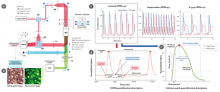
- DGIST developed an image sensor technology that automatically analyzes phenomena in cardiac muscle cells, such as calcium dynamics and impulse patterns, based on multi-mode images combining holograms and calcium.
- This technology can be used to examine characteristics of calcium dynamics and cellular motility depending on drugs inserted, thus being a core technology for new drug development customized for patients.

27 Oct 2023
Daegu Gyeongbuk Institute of Science and Technology (DGIST)
- A DGIST graduate student developed a super-resolution non-linear hyper-spectral imaging method and published a research paper on it as the lead author in PhotoniX, a renowned international academic journal.
27 Oct 2023
Daegu Gyeongbuk Institute of Science and Technology (DGIST)
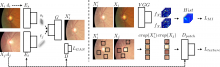
- Professor Park’s research team at DGIST has successfully developed domain-adaptive AI specialized in medical images
- Contributes to saving cost and time in developing deep learning models for multi-center medical image analysis

27 Oct 2023
Daegu Gyeongbuk Institute of Science and Technology (DGIST)
- A research team led by Professor Jong-min Choi at the Department of Energy Science and Engineering, DGIST, has successfully developed stable quantum dot thin films, which can improve efficiency and stability in perovskite quantum dot solar cells.
- Suggests a new quantum dot surface stabilization strategy based on a non-polar solvent and covalent ligands
27 Oct 2023
Daegu Gyeongbuk Institute of Science and Technology (DGIST)
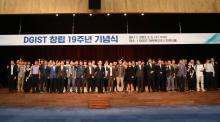
- This educational institution held a ceremony at the DGIST Convention Hall on September 6 to commemorate the 19th anniversary of its foundation.
27 Oct 2023
Daegu Gyeongbuk Institute of Science and Technology (DGIST)
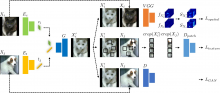
- The developed image translation model can yield accurate classification results despite the use of biased data for the training of a deep learning model.
- This solution is expected to be applied in various fields, such as self-driving, content creation, and medicine.
27 Oct 2023
Daegu Gyeongbuk Institute of Science and Technology (DGIST)
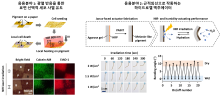
- This team developed the PAINT technology that controls the adhesive properties of new organic materials, analyzes melanin formation processes, and facilitates selective melanin formation.
- A research paper on the technology, which fabricates local patterns based on melanin-like pigments, was published in Nature Communications, an international academic journal.
26 Oct 2023
The University of Osaka
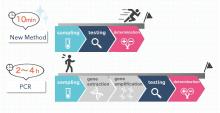
Research from Osaka University demonstrates a nanopore-based technique that can detect different variants of SARS-CoV-2, the virus that causes COVID-19. The method was very effective in detecting the Omicron variant of the virus in the saliva of people with COVID-19.
26 Oct 2023
The University of Osaka
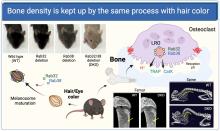
Research out of Osaka University finds an overlap in the mechanism of hair color determination and bone resorption, which is associated with bone related diseases like osteoporosis. The findings revealed that proteins named Rab32 and Rab38 play pivotal roles in bone resorption in osteoclast, cell specialized in the process. These proteins are also crucial for pigmentation of hair and skins.

25 Oct 2023
Hokkaido University
Pair-bonded Java sparrows show enlarged eye rings to signal breeding readiness.
Events
Sorry, no events coming up for this topic.
Researchers
Sorry, no researchers coming up for this topic.
Giants in history
Sorry, no researchers coming up for this topic.