

How are extra-long genes read? A novel mechanism in which RNA-scaffolded nuclear condensates gather diverse factors to coordinate gene expression
【Meshwork-like condensates formed by the RNA-binding protein SFPQ and their function】
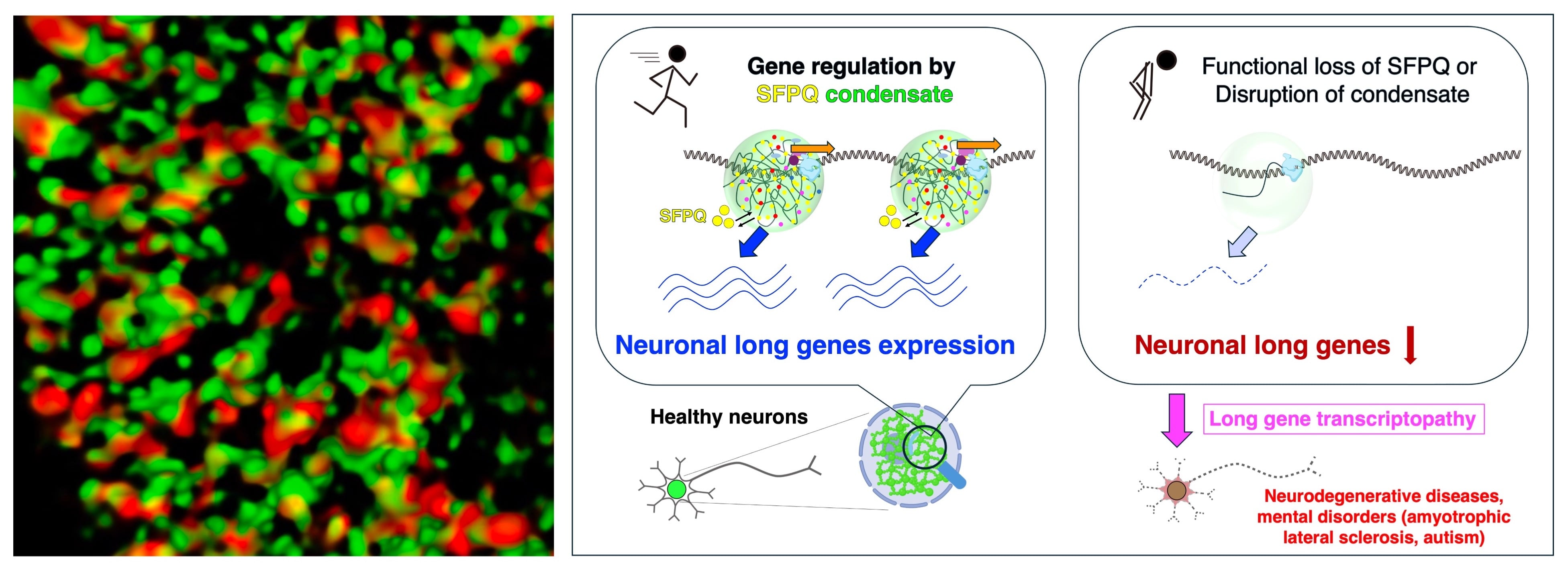
Super-resolution image of meshwork-like condensates formed by SFPQ using RNA as a scaffold in neuronal nuclei (left; green, SFPQ; red, FUS), together with a schematic showing how these structures support extra-long gene expression in neurons and how their disruption may contribute to neurological disorders (right).
Akihide Takeuchi
【Gene-regulatory factors gathered within SFPQ condensates】
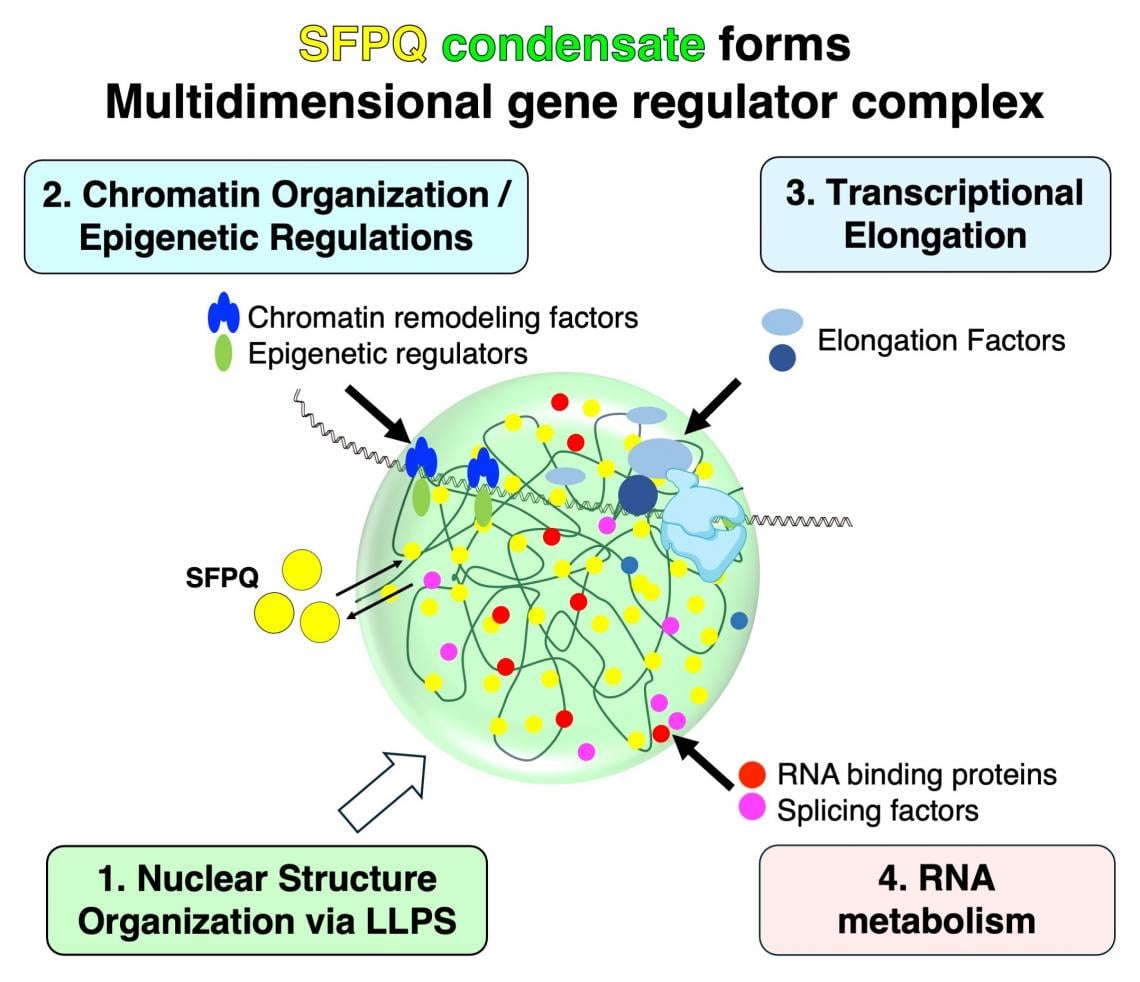
Proximity-dependent labeling revealed that SFPQ condensates bring together diverse molecules involved in reading genes and processing RNA.
Akihide Takeuchi
Neurons in humans and other mammals express many exceptionally long genes, ranging from more than 100 kb to over 2 Mb, that are important for forming synapses and neural circuits. In general, genetic information is read from DNA into RNA. This process is called transcription. The longer a gene is, the more time it takes to read from beginning to end. In addition, gene expression must be regulated at several steps. Neurons are therefore thought to require special mechanisms to read long genes accurately and stably, but the details of these mechanisms have remained unclear.
In this study, we focused on SFPQ, a protein that binds RNA. Using super-resolution microscopy and other approaches, we found that SFPQ uses long RNAs as scaffolds to form meshwork-like structures called condensates inside the cell nucleus. Condensates are membraneless structures formed when particular molecules gather together inside cells.
We further found that these condensates bring together many molecules involved in transcription—the reading of DNA into RNA—splicing, which joins the appropriate parts of newly made RNA, and regulation of chromatin, the structure that packages DNA. When SFPQ condensates could not form, extra-long genes were not read properly to the end, RNA splicing was impaired, and gene expression decreased.
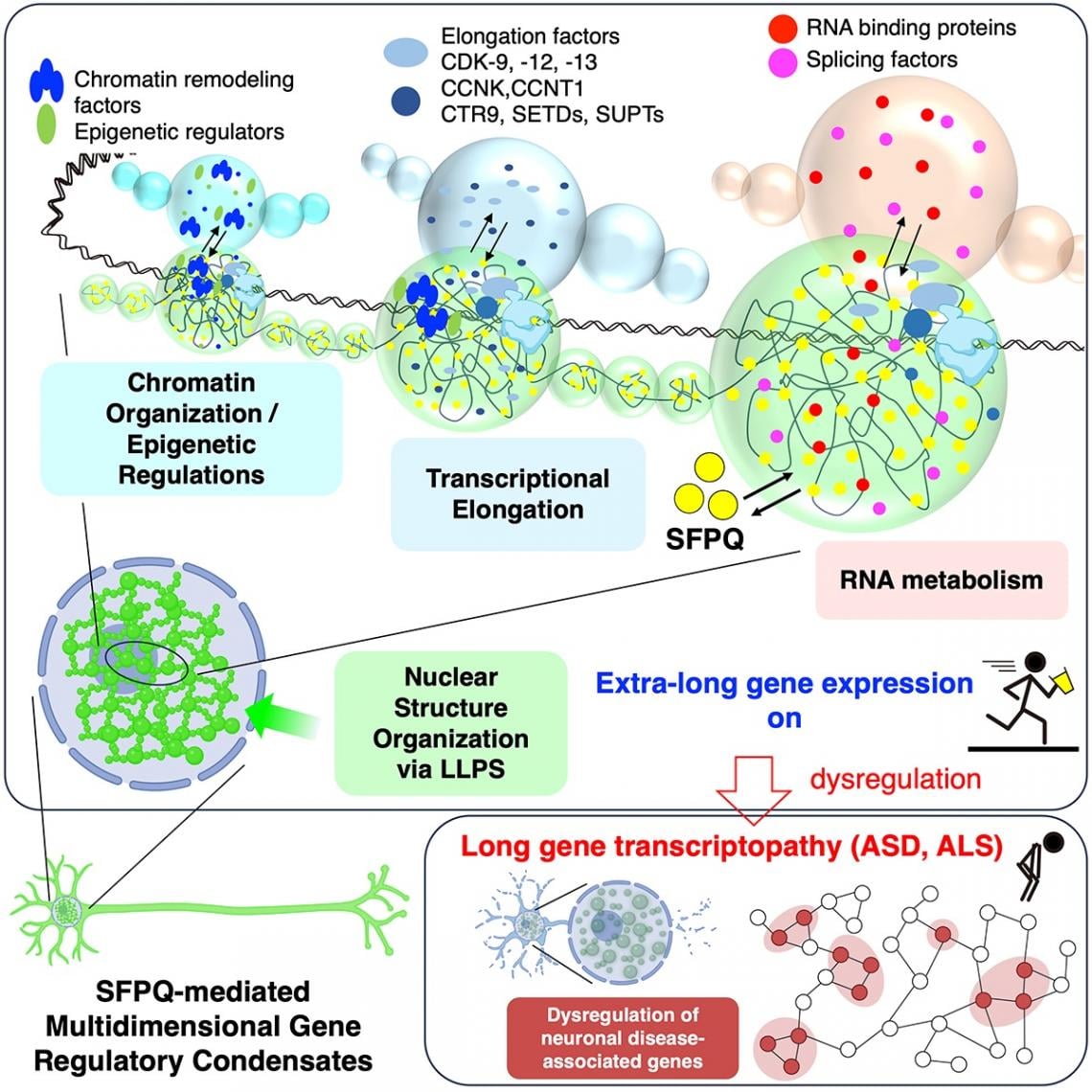
These results suggest that SFPQ condensates act as a shared 'workspace' that brings together several processes needed for exceptionally long genes to function properly. Our study provides insight into the physical basis of the previously proposed 'transcriptional elongation condensate' and offers a new way to understand gene regulation through the spatial organization of the nucleus. SFPQ and related proteins have also been linked to autism spectrum disorder (ASD) and amyotrophic lateral sclerosis (ALS). In the future, studying abnormal expression of extra-long genes may help us better understand the mechanisms of neurodevelopmental and neurodegenerative disorders.
Conceptual illustration showing how SFPQ condensates support extra-long gene expression at multiple stages in neurons, and how disruption of this mechanism may contribute to neurological disorders.
Akihide Takeuchi, Cell Chemical Biology (2026), CC BY 4.0
Advertisement