

Japan
News
24 Mar 2011
Toyohashi University of Technology
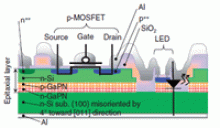
Silicon-based semiconductor devices dominate the microelectronics industry and are used for the fabrication of high density integrated circuits comprising of memory and processing devices. However, silicon has an indirect band gap, which severely limits its use for fabricating photonic devices such as light emitting diodes (LEDs) and lasers.
24 Mar 2011
Toyohashi University of Technology
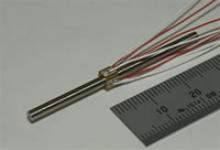
Microactuators are critical components for industrial applications such as MEMS, micro-medical devices, and microrobotics. However, the fabrication of increasingly sophisticated, millimeter sized microactuators is complicated and proving to be a challenge.
24 Mar 2011
Toyohashi University of Technology
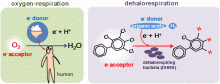
Polychlorinated biphenyls (PCBs) are a family of so-called 209 biphenyl congeners are major pollutants and pose a threat to human health and the environment.

24 Mar 2011
Toyohashi University of Technology
This week, Toyohashi University of Technology publishes the March issue of ‘Toyohashi Tech e-Newsletter’, which includes highlights of some of the top papers from researchers at the university. The on-line e-Newsletter includes further news and views from one of Japan’s most dynamic science and technology based universities.

23 Mar 2011
Science Media Centre of Japan
The expert comments here are from Prof Yamashita, who was recently requested by the Fukushima prefectural governor to be the area's nuclear radiation health risk management advisor.

16 Mar 2011
Waseda University
Professor Tadashi Otsuka charts the nascent field of environmental law in Japan.

15 Mar 2011
National Institute for Materials Science (NIMS)
The Foresight Institute in the United States recently announced the award of the Feynman Prize for 2010 to Dr. Masakazu Aono, Director-General of International Center for Materials Nanoarchitectonics (MANA) of the National Institute for Materials Science (NIMS).

15 Mar 2011
RIKEN
Dr. Hideki Hirayama has won an Achievement Award in the 43rd Ichimura Science Awards for his work on the development of high-quality AlGaN-based semiconductor crystals and advanced research on deep-UV LEDs. Dr. Hirayama is the leader of the Terahertz Quantum Device Team at RIKEN Advanced Science Insitute (ASI).
15 Mar 2011
RIKEN
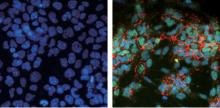
Embryonic stem cells (ESCs) are highly regarded for their ability to give rise to the full range of cellular lineages found in the adult body, but left to their own devices ESCs tend to differentiate into neural lineages. Researchers from RIKEN have revealed how the nuclear protein Zfp521 is key to the default neural fate.
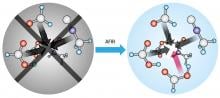
15 Mar 2011
RIKEN
Computational search algorithms take the guesswork out of understanding complex, multi-molecule transformations
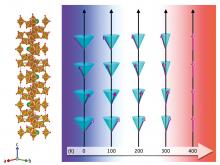
14 Mar 2011
RIKEN
A common industrial magnet exhibits rare and potentially useful qualities when its composition is slightly altered
14 Mar 2011
RIKEN
Two genes that affect Caucasians and a variant of the inflammatory gene interleukin-6 affect the abundance of a marker of systemic inflammation in the Japanese
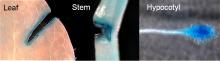
10 Mar 2011
RIKEN
Researchers at the RIKEN Plant Science Center (PSC) and the National Institute of Advanced Industrial Science and Technology (AIST) have identified a novel transcription factor controlling how plants dedifferentiate cells in response to wounding.
08 Mar 2011
RIKEN
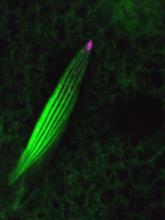
Some molecules have a single, highly specific function in physiology, while others have a much broader remit. Kinases in the IKK family are of the latter sort, playing a variety of roles. A new report from RIKEN shows that this factor regulates shuttling of endosomes in the tips of growing mechanosensory bristles.
08 Mar 2011
RIKEN
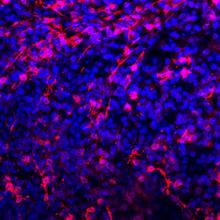
Retinitis pigmentosa (RP) is a cluster of genetically determined eye disorders that cause visual defects such as night blindness and narrowing of the field of vision, due to progressive loss of rod photoreceptors. New work by Zi-Bing Jin and colleagues looks to add a set of powerful new tools for those searching for treatments for RP.
08 Mar 2011
RIKEN
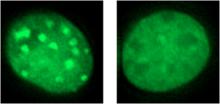
A great many cellular processes are switched on or off by the modification of a given enzyme or other protein by addition of a phosphate molecule, known as phosphorylation. In a new study, researchers at RIKEN have shown that phosphorylation of the protein HP1α boosts its ability to bind to heterochromatin resulting in stabilization of chromosomes
08 Mar 2011
Waseda University
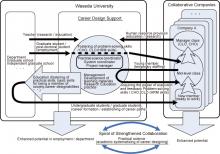
Professor Tatsunori Matsui of the Faculty of Human Sciences, Waseda University, looks at the concept of 'career design' and its realization in higher education.
07 Mar 2011
National Institute for Materials Science (NIMS)
Dr. Kazuhiro Hono, NIMS Fellow and Managing Director of Magnetic Materials Center, had received the TMS Fellows Award from the Minerals, Metals & Materials Society (TMS).
04 Mar 2011
RIKEN
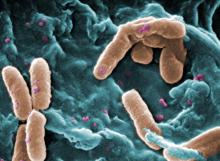
The structure of a greenhouse gas-producing bacterial enzyme may yield insights into the evolution of our earliest oxygen-breathing ancestors
04 Mar 2011
RIKEN
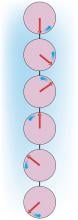
Calculations can now predict when and how spins of electrons and ions arrange in one-dimensional multiferroic materials
04 Mar 2011
RIKEN
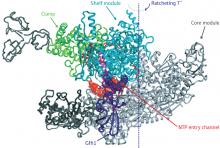
An analysis of the interactions of a gene-reading enzyme with an inhibitor protein provides surprising insights
28 Feb 2011
Waseda University
In the wake of China overtaking Japan to become the second largest economy ion the world, Satoshi Amako evaluates the likely course of China's foreign policy.
25 Feb 2011
National Institute for Materials Science (NIMS)
New Energy and Industrial Technology Development Organization (NEDO), Nagoya University in Japan and Aalto University in Finland jointly announced on February 7, 2011 that researchers of the two universities succeeded to make high-performance carbon nanotube (CNT) integrated circuits on flexible plastic substrate.
25 Feb 2011
National Institute for Materials Science (NIMS)
National Institute for Material Science, Japan Science and Technology Agency and University of Tsukuba announced on February 4, 2011 that they succeeded in detecting nondestructively dynamic behaviors of doped impurities in Si nanowires (Si NWs) coated by SiO2 to make surrounding gate field-effect transistors.
25 Feb 2011
National Institute for Materials Science (NIMS)
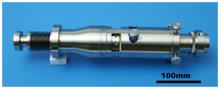
A specific way of visualizing specimen surfaces at high sensitivity is to use a cathode lens (CL) mode in the SEM. The CL is a zero working distance electrostatic lens with the negatively biased specimen serving as the cathode and the earthed scintillator of the detector as the anode of the CL.
25 Feb 2011
National Institute for Materials Science (NIMS)
Kyoto University and University of Illinois announced on 14th January 2011 that they have succeeded in observing half-height magnetization steps in strontium ruthenium oxide (Sr2RuO4).
25 Feb 2011
National Institute for Materials Science (NIMS)
Entanglement is the basis of quantum computing. Although spin ensembles, such as those used in liquid-state nuclear magnetic resonance have been examined, the results contain no entanglement and ultimately constitute classical simulations of quantum algorithms.
25 Feb 2011
RIKEN
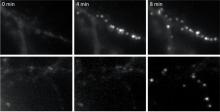
Insights into a specific secretion mechanism in the brain could lead to a better understanding of anxiety in unfamiliar or stressful environments
25 Feb 2011
RIKEN
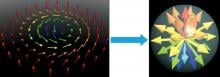
Exotic entities that arrange into a crystalline structure at near room-temperature could lead to a new approach to electronic memory
25 Feb 2011
RIKEN
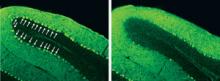
Particular types of neuronal loss and brain damage are caused by a molecular mechanism associated with calcium signaling
Researchers
Sorry, no researchers coming up for this topic.
Giants in history

Japanese biochemist Akira Endo (1933 – 2024) discovered the first statin, called mevastatin, which lowered cholesterol levels in the blood by inhibiting a key enzyme in the cholesterol biosynthesis pathway. His work laid the foundation for the development of statins to help patients lower their blood cholesterol levels and reduce their risk of heart disease or stroke.
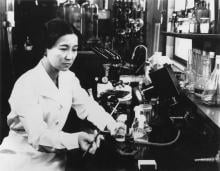
Ruby Sakae Hirose (1904 – 1960) was a Japanese-American scientist whose research contributed significantly to our understanding of blood clotting, allergies and cancer.

Haisako Koyama (1916 – 1997) was a Japanese solar observer whose dedication to recording sunspots – cooler parts of the sun’s surface that appear dark – produced a sunspot record of historic importance.
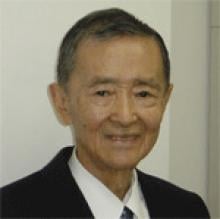
Michiaki Takahashi (17 February 1928 – 16 December 2013) was a Japanese virologist who developed the first chickenpox vaccine.
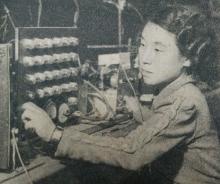
Toshiko Yuasa (11 December 1909 – 1 February 1980) was the first Japanese female physicist whose research on radioactivity shed light on beta decay – the process in which an atom emits a beta particle (electron) and turns into a different element.
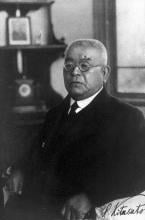
Baron Kitasato Shibasaburo (29 January 1856 – 13 June 1931) was a Japanese physician and bacteriologist whose work led to a new understanding of preventing and treating tetanus, diphtheria and anthrax.
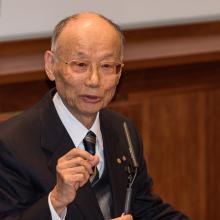
By isolating soil microorganisms and studying the compounds they produce, Satoshi Omura (born 1935) discovered almost 500 organic compounds with unique properties that were produced by these microorganisms, including many new antibiotics.
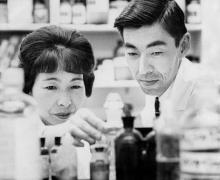
Husband and wife team, Kimishige (3 December 1925 – 6 July 2018) and Teruko Ishizaka (28 September 1926 – 4 June 2019) discovered the antibody class Immunoglobulin E (IgE) that triggers allergic reactions. They also discovered that IgE antibodies attach to white blood cells, known as mast cells, releasing histamine, which causes allergic reactions.
Husband and wife team, Kimishige (3 December 1925 – 6 July 2018) and Teruko Ishizaka (28 September 1926 – 4 June 2019) discovered the antibody class Immunoglobulin E (IgE) that triggers allergic reactions. They also discovered that IgE antibodies attach to white blood cells, known as mast cells, releasing histamine, which causes allergic reactions.
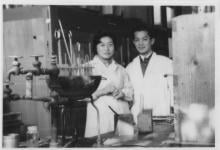
Reiji Okazaki (8 October 1930 – 1 August 1975) and Tsuneko (7 June 1933) were a Japanese couple who discovered Okazaki fragments – short sequences of DNA that are synthesized during DNA replication and linked together to form a continuous strand.
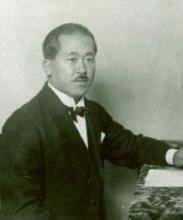
In 1915, Koichi Ichikawa along with pathologist Katsusaburo Yamagiwa became the first to prove that chronic exposure to chemicals can cause cancer.
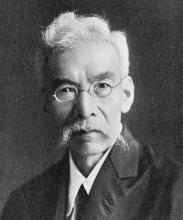
In 1915, pathologist Katsusaburo Yamagiwa and his research assistant Koichi Ichikawa became the first to prove that chronic exposure to chemicals can cause cancer.
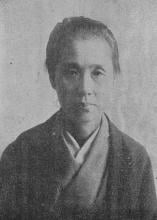
Ogino Ginko (3 March 1851 – 23 June 1913) was the first registered female doctor to practise modern medicine in Japan.
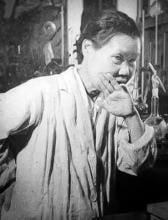
Michiyo Tsujimura (17 September 1888 – 1 June 1969) was a Japanese agricultural scientist and biochemist recognized for her research of green tea components.
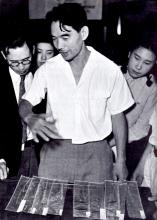
Hitoshi Kihara (1893 – 1986) was one of the most famous Japanese geneticists of the 20th century. One of his most significant contributions was identifying sex chromosomes (X and Y) in flowering plants.
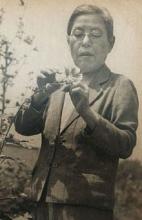
Kono Yasui (16 February 1880 – 24 March 1971) was a Japanese botanist who researched the genetics of poppies, corn and spiderworts and surveyed the plants that had been affected by the nuclear fallout after the atomic bombings of Hiroshima and Nagasaki.
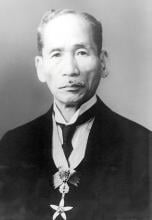
Umetaro Suzuki (7 April 1874 – 20 September 1943) was a Japanese scientist best remembered for his research on beriberi, a disease caused by vitamin B1 deficiency, characterized by limb stiffness, paralysis and pain.
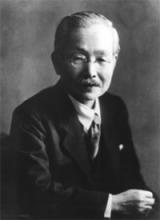
Kikunae Ikeda (8 October 1864 – 3 May 1936) was a Japanese chemist who discovered the fifth basic taste, umami.
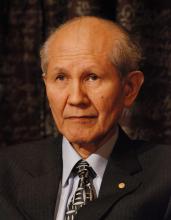
Osamu Shimomura (27 August 1928 – 19 October 2018) was a Japanese organic chemist and marine biologist who dedicated his career to understanding how organisms emitted light.
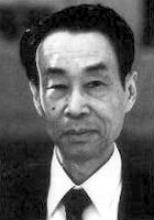
Motoo Kimura (13 November 1924 – 13 November 1994) was a Japanese theoretical population geneticist who is best remembered for developing the neutral theory of molecular evolution.

Chika Kuroda (24 March 1884 – 8 November 1968) was a Japanese chemist whose research focussed on the structures of natural pigments.
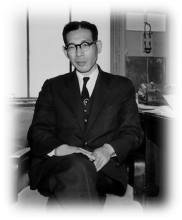
The field of solid-state ionics originated in Europe, but Takehiko Takahashi of Nagoya University in Japan was the first to coin the term ‘solid ionics’ in 1967. ‘Solid-state ionics’ first appeared in 1971 in another of his papers, and was likely a play on ‘solid-state electronics’, another rapidly growing field at the time.
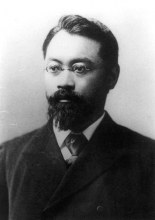
The techniques that make industrial pearl culturing possible were developed over a century ago at the Misaki Marine Biological Station in Japan. The station’s first director, Professor Kakichi Mitsukuri, emphasized to Kokichi Mikimoto in 1890 that stimulating pearl sac formation was important for pearl growth, and they went on to successfully develop methods for culturing pearls.
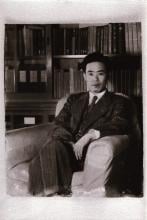
Japanese physicist Ukichiro Nakaya (1900-1962) made the world’s first artificial snowflakes. He started his research on snow crystals in the early 1930s at Hokkaido University, where there is an unlimited supply of natural snow in winter. By taking over 3,000 photographs, he established a classification of natural snow crystals and described their relationship with weather conditions.
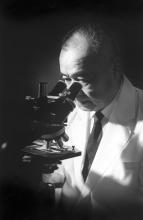
Minoru Shirota (April 23, 1899 – March 10, 1982) was a Japanese microbiologist who invented the popular fermented drink Yakult.
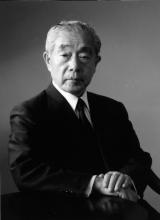
Japanese chemist Kenichi Fukui (4 October 1918 – 9 January 1998) was the first Asian scientist to be awarded the Nobel Prize in Chemistry. Together with Roald Hoffman, he received this honour in 1981 for his independent research into the mechanisms of chemical reactions.
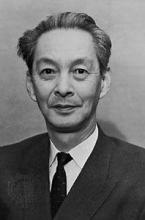
Shinichiro Tomonaga (31 March 1906 – 8 July 1979), together with Richard Feynman and Julian Schwinger, was awarded the Nobel Prize in Physics in 1965, for their contributions to advance the field of quantum electrodynamics. Tomonaga was also a strong proponent of peace, who actively campaigned against the proliferation of nuclear weapons and promoted the peaceful use of nuclear energy.
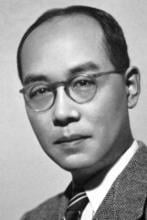
Hideki Yukawa (23 January 1907 – 8 September 1981) was awarded the Nobel Prize in Physics in 1949 for predicting the existence of the pi meson subatomic particle. Japan’s first Nobel laureate, Yakawa also expressed his support for nuclear disarmament by signing the Russell–Einstein Manifesto in 1955.
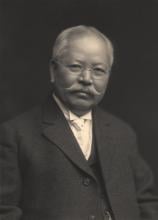
Japanese chemist Takamine Jokichi (3 November 1854 – 22 July 1922) founded the Tokyo Artificial Fertilizer Company, where he isolated a starch-digesting enzyme (named takadiastase) from the fungus Aspergillus oryzae.
Tsuneko (7 June 1933) and Reiji Okazaki (8 October 1930 – 1 August 1975) were a Japanese couple who discovered Okazaki fragments – short sequences of DNA that are synthesized during DNA replication and linked together to form a continuous strand.
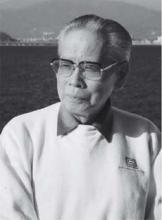
A Japanese surgeon, Tetsuzo Akutsu (20 August 1922 – 9 August 2007) built the first artificial heart capable of keeping an animal alive.
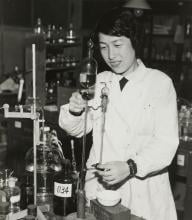
Japanese geochemist Katsuko Saruhashi developed the first method and tools for measuring carbon dioxide in seawater