

Japan
News
05 Dec 2017
Tohoku University
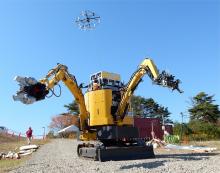
The latest ImPACT Tough Robotics Challenge public demonstration featured practical applications, with fire fighters taking part and more integrated robots capable of complex tasks.
05 Dec 2017
Tohoku University
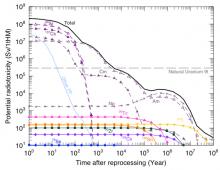
Researchers in Japan have proposed a more efficient method to reduce radioactive waste.
30 Nov 2017
Hokkaido University
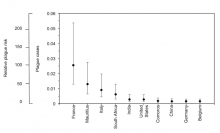
Mathematical models have proven the risk of the on-going pneumonic plague epidemic in Madagascar spreading elsewhere in the world is limited, with the estimated number of exported cases staying below 0.1 person in each country between August 1 and October 17.
27 Nov 2017
Hokkaido University
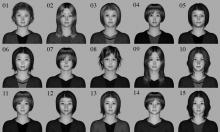
The act of nodding positively affects the subjective likability of people by about 30 percent and their approachability by 40 percent, according to a study conducted by researchers from Hokkaido University and Yamagata University in Japan.
22 Nov 2017
Hokkaido University
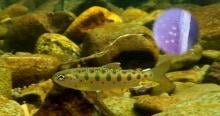
Large, physically strong Masu salmon disperse farther when infected with parasites, potentially escaping from further infections at the contaminated site but ironically resulting in the greater expansion of the parasite, according to Hokkaido University researchers.
21 Nov 2017
Tohoku University
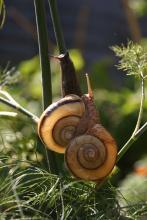
According to a recent study, differently-coiled types of Japanese land snails should in fact be considered a single species.
20 Nov 2017
Hokkaido University
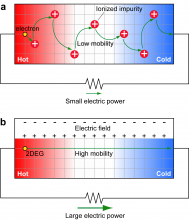
Novel approach utilizes high mobility two-dimensional electron gas, boosting thermoelectric conversion efficiency.
17 Nov 2017
Hokkaido University
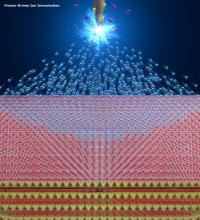
A team of Hokkaido University researchers has developed a novel material synthesis method called proton-driven ion introduction (PDII) which utilizes a phenomenon similar to “ion billiards.” The new method could pave the way for creating numerous new materials, thus drastically advancing materials sciences.
13 Nov 2017
Nagoya University
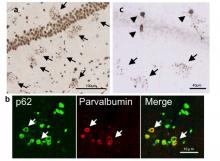
Japanese researchers develop new mouse model that captures pathology of sporadic neurological diseases.
10 Nov 2017
Tohoku University
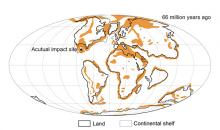
An asteroid, also known as the Chicxulub Impactor, hit Earth some 66 million years ago, causing a crater 180 km wide. The impact of the asteroid heated organic matter in rocks and ejected it into the atmosphere, forming soot in the stratosphere.
09 Nov 2017
Tohoku University
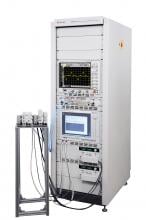
Tohoku University collaborates with Keysight Technologies Inc. on STT-MRAM test solution for MTJ
07 Nov 2017
Tohoku University
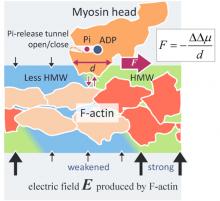
The actin and myosin complex (actomyosin) generates contraction force of a muscle utilizing the adenosine triphosphate (ATP) hydrolysis reaction. Many attempts have thus been made to explain the molecular origin of the actomyosin motility.
30 Oct 2017
Tohoku University
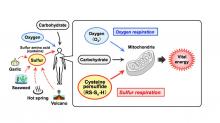
A common sulfur metabolite having antioxidant activity appears to be formed with the help of an enzyme found in mitochondria, highlighting a potential area of research for future treatments of various diseases.
24 Oct 2017
Hokkaido University
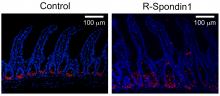
A physiological approach to restore the gut’s ecosystem in various diseases by using antimicrobial peptides has been developed by Hokkaido University scientists.
23 Oct 2017
Tohoku University
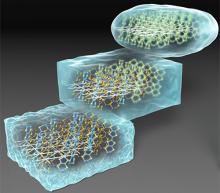
Researchers have gained new insight into the electronic processes that guide the transformation of liquids into a solid crystalline or glassy state.
19 Oct 2017
Tohoku University
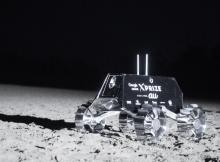
Professor Kazuya Yoshida and HAKUTO members prepare for the final push to land a rover on the moon in the Google Lunar XPRIZE challenge.
13 Oct 2017
Tohoku University
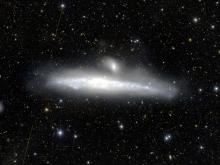
Dwarf galaxies and star-containing halos in a large spiral galaxy 25 million light-years away from Earth have been identified using a Japanese telescope in Hawaii.
10 Oct 2017
National Institute for Materials Science (NIMS)
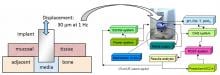
Opportunity to gain deeper insight into potential interaction between implants and body tissues through high-output benchtop screening.
05 Oct 2017
Kavli Institute for the Physics and Mathematics of the Universe (Kavli IPMU)
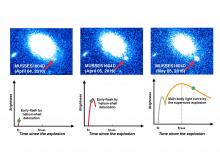
An international research team has used the Hyper Suprime-Cam on the Subaru Telescope in Hawaii to find a Type Ia supernova not long after its explosion. They are the first to find solid evidence about what triggered the star to explode, which will contribute to a further understanding of supernova history and behavior.
29 Sep 2017
Kavli Institute for the Physics and Mathematics of the Universe (Kavli IPMU)
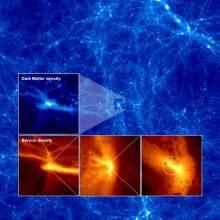
A super-computer simulation by an international team of researchers has shown the formation of a rapidly growing star from supersonic gas streams in the early universe left over from the Big Bang. The star ends its life with catastrophic collapse to leave a black hole with a mass of 34,000 times that of the Sun.
29 Sep 2017
Hokkaido University
Ice analogs mimicking interstellar ice behave like liquids at temperatures between –210°C and –120°C according to Hokkaido University researchers. This liquid-like ice may enhance the formation of organic compounds including prebiotic molecules and the accretion of dust to form planets.
25 Sep 2017
Institute for Integrated Cell-Material Sciences (iCeMS) at Kyoto University
A synthetic DNA-targeting molecule could pave the way for tissue regeneration.
25 Sep 2017
Tohoku University
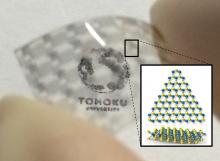
A new method for fabricating semitransperant, flexible solar cells has greatly improved power conversion efficiency.
20 Sep 2017
Institute of Transformative Bio-Molecules (WPI-ITbM), Nagoya University
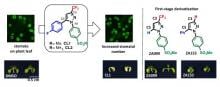
Discovery of small molecules that increases the number of stomata on plant leaves
14 Sep 2017
Nagoya University
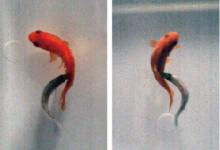
Two researchers from Nagoya University and the University of Toyama find scale-eating fish have a naturally stronger side for attacking prey fish, and learn to use the dominant side through experience.
14 Sep 2017
Hokkaido University
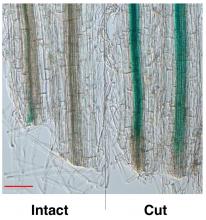
The molecular mechanism behind root regeneration after root cutting in plants has been discovered. A finding which could lead to the development of new methods for regulating plant growth in agriculture and horticulture.
12 Sep 2017
National Institute for Materials Science (NIMS)
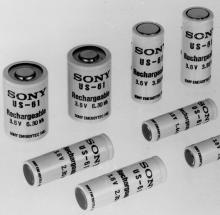
Japanese researchers have helped discover, analyze and commercialize novel conducting materials and products, such as zirconia-based gas sensors and lithium-ion batteries.
07 Sep 2017
Kavli Institute for the Physics and Mathematics of the Universe (Kavli IPMU)
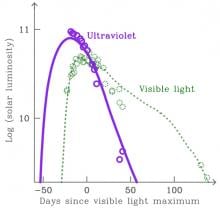
An international team of researchers led by Kavli IPMU's Alexey Tolstov and Ken'ichi Nomoto have discovered a way to use UV light from superluminous supernovae to uncover its explosion mechanism, and used it to identify Gaia16apd as a shock-interacting supernova, reports a new study.
06 Sep 2017
Hokkaido University
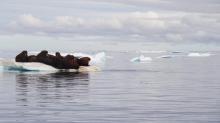
Quantitative analysis has evidenced the acceleration system of melting ice: dark water surfaces absorb more heat than white ice surfaces, thus melting ice and making more water surfaces in the Arctic Ocean.
06 Sep 2017
Hokkaido University
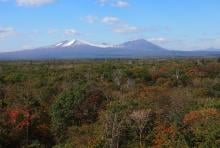
Researchers have found evidence that near-ground biogenic emissions of organics suppress cloud formation in cool-temperate forests in autumn, providing clues to how global warming will affect cloud formation and the overall climate.
Researchers
Sorry, no researchers coming up for this topic.
Giants in history

Japanese biochemist Akira Endo (1933 – 2024) discovered the first statin, called mevastatin, which lowered cholesterol levels in the blood by inhibiting a key enzyme in the cholesterol biosynthesis pathway. His work laid the foundation for the development of statins to help patients lower their blood cholesterol levels and reduce their risk of heart disease or stroke.
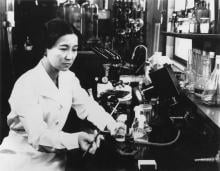
Ruby Sakae Hirose (1904 – 1960) was a Japanese-American scientist whose research contributed significantly to our understanding of blood clotting, allergies and cancer.
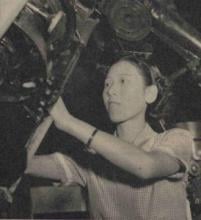
Haisako Koyama (1916 – 1997) was a Japanese solar observer whose dedication to recording sunspots – cooler parts of the sun’s surface that appear dark – produced a sunspot record of historic importance.
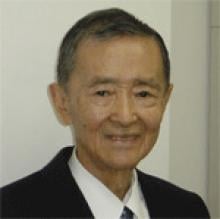
Michiaki Takahashi (17 February 1928 – 16 December 2013) was a Japanese virologist who developed the first chickenpox vaccine.
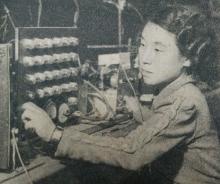
Toshiko Yuasa (11 December 1909 – 1 February 1980) was the first Japanese female physicist whose research on radioactivity shed light on beta decay – the process in which an atom emits a beta particle (electron) and turns into a different element.
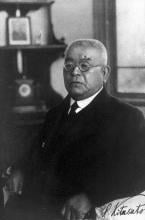
Baron Kitasato Shibasaburo (29 January 1856 – 13 June 1931) was a Japanese physician and bacteriologist whose work led to a new understanding of preventing and treating tetanus, diphtheria and anthrax.
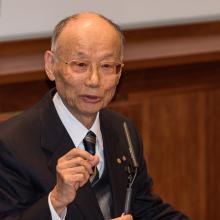
By isolating soil microorganisms and studying the compounds they produce, Satoshi Omura (born 1935) discovered almost 500 organic compounds with unique properties that were produced by these microorganisms, including many new antibiotics.
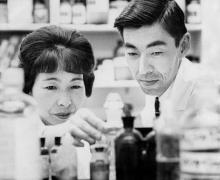
Husband and wife team, Kimishige (3 December 1925 – 6 July 2018) and Teruko Ishizaka (28 September 1926 – 4 June 2019) discovered the antibody class Immunoglobulin E (IgE) that triggers allergic reactions. They also discovered that IgE antibodies attach to white blood cells, known as mast cells, releasing histamine, which causes allergic reactions.
Husband and wife team, Kimishige (3 December 1925 – 6 July 2018) and Teruko Ishizaka (28 September 1926 – 4 June 2019) discovered the antibody class Immunoglobulin E (IgE) that triggers allergic reactions. They also discovered that IgE antibodies attach to white blood cells, known as mast cells, releasing histamine, which causes allergic reactions.
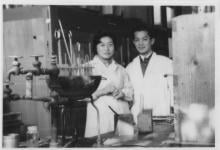
Reiji Okazaki (8 October 1930 – 1 August 1975) and Tsuneko (7 June 1933) were a Japanese couple who discovered Okazaki fragments – short sequences of DNA that are synthesized during DNA replication and linked together to form a continuous strand.
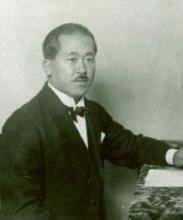
In 1915, Koichi Ichikawa along with pathologist Katsusaburo Yamagiwa became the first to prove that chronic exposure to chemicals can cause cancer.
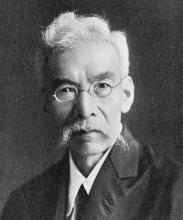
In 1915, pathologist Katsusaburo Yamagiwa and his research assistant Koichi Ichikawa became the first to prove that chronic exposure to chemicals can cause cancer.
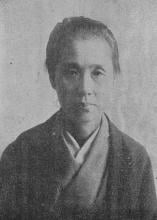
Ogino Ginko (3 March 1851 – 23 June 1913) was the first registered female doctor to practise modern medicine in Japan.
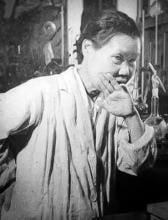
Michiyo Tsujimura (17 September 1888 – 1 June 1969) was a Japanese agricultural scientist and biochemist recognized for her research of green tea components.
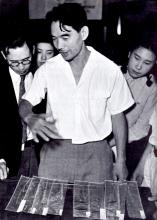
Hitoshi Kihara (1893 – 1986) was one of the most famous Japanese geneticists of the 20th century. One of his most significant contributions was identifying sex chromosomes (X and Y) in flowering plants.
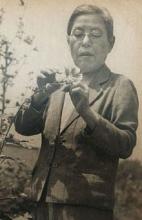
Kono Yasui (16 February 1880 – 24 March 1971) was a Japanese botanist who researched the genetics of poppies, corn and spiderworts and surveyed the plants that had been affected by the nuclear fallout after the atomic bombings of Hiroshima and Nagasaki.
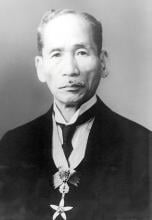
Umetaro Suzuki (7 April 1874 – 20 September 1943) was a Japanese scientist best remembered for his research on beriberi, a disease caused by vitamin B1 deficiency, characterized by limb stiffness, paralysis and pain.
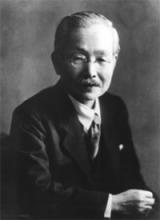
Kikunae Ikeda (8 October 1864 – 3 May 1936) was a Japanese chemist who discovered the fifth basic taste, umami.
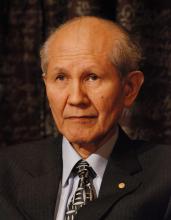
Osamu Shimomura (27 August 1928 – 19 October 2018) was a Japanese organic chemist and marine biologist who dedicated his career to understanding how organisms emitted light.
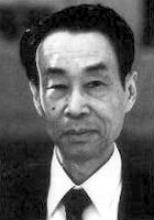
Motoo Kimura (13 November 1924 – 13 November 1994) was a Japanese theoretical population geneticist who is best remembered for developing the neutral theory of molecular evolution.

Chika Kuroda (24 March 1884 – 8 November 1968) was a Japanese chemist whose research focussed on the structures of natural pigments.
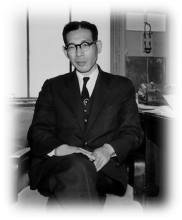
The field of solid-state ionics originated in Europe, but Takehiko Takahashi of Nagoya University in Japan was the first to coin the term ‘solid ionics’ in 1967. ‘Solid-state ionics’ first appeared in 1971 in another of his papers, and was likely a play on ‘solid-state electronics’, another rapidly growing field at the time.
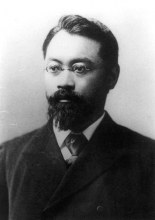
The techniques that make industrial pearl culturing possible were developed over a century ago at the Misaki Marine Biological Station in Japan. The station’s first director, Professor Kakichi Mitsukuri, emphasized to Kokichi Mikimoto in 1890 that stimulating pearl sac formation was important for pearl growth, and they went on to successfully develop methods for culturing pearls.
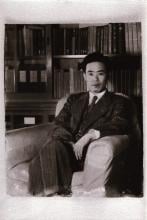
Japanese physicist Ukichiro Nakaya (1900-1962) made the world’s first artificial snowflakes. He started his research on snow crystals in the early 1930s at Hokkaido University, where there is an unlimited supply of natural snow in winter. By taking over 3,000 photographs, he established a classification of natural snow crystals and described their relationship with weather conditions.
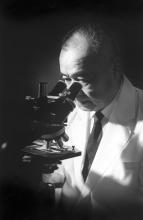
Minoru Shirota (April 23, 1899 – March 10, 1982) was a Japanese microbiologist who invented the popular fermented drink Yakult.
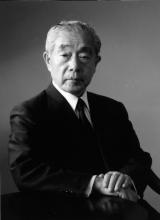
Japanese chemist Kenichi Fukui (4 October 1918 – 9 January 1998) was the first Asian scientist to be awarded the Nobel Prize in Chemistry. Together with Roald Hoffman, he received this honour in 1981 for his independent research into the mechanisms of chemical reactions.
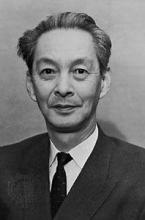
Shinichiro Tomonaga (31 March 1906 – 8 July 1979), together with Richard Feynman and Julian Schwinger, was awarded the Nobel Prize in Physics in 1965, for their contributions to advance the field of quantum electrodynamics. Tomonaga was also a strong proponent of peace, who actively campaigned against the proliferation of nuclear weapons and promoted the peaceful use of nuclear energy.
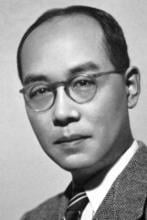
Hideki Yukawa (23 January 1907 – 8 September 1981) was awarded the Nobel Prize in Physics in 1949 for predicting the existence of the pi meson subatomic particle. Japan’s first Nobel laureate, Yakawa also expressed his support for nuclear disarmament by signing the Russell–Einstein Manifesto in 1955.
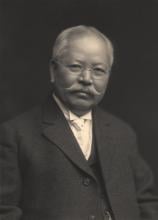
Japanese chemist Takamine Jokichi (3 November 1854 – 22 July 1922) founded the Tokyo Artificial Fertilizer Company, where he isolated a starch-digesting enzyme (named takadiastase) from the fungus Aspergillus oryzae.
Tsuneko (7 June 1933) and Reiji Okazaki (8 October 1930 – 1 August 1975) were a Japanese couple who discovered Okazaki fragments – short sequences of DNA that are synthesized during DNA replication and linked together to form a continuous strand.
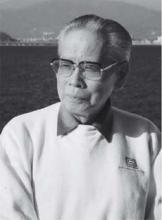
A Japanese surgeon, Tetsuzo Akutsu (20 August 1922 – 9 August 2007) built the first artificial heart capable of keeping an animal alive.
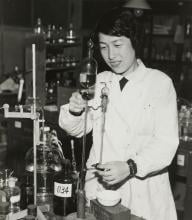
Japanese geochemist Katsuko Saruhashi developed the first method and tools for measuring carbon dioxide in seawater