

Japan
News
13 Feb 2017
Hokkaido University
This is Part IV of an article about Hokkaido University’s Center for Ainu and Indigenous Studies, the only national institution in Japan that studies the Ainu of Japan and other indigenous peoples around the world.
13 Feb 2017
Nagoya University
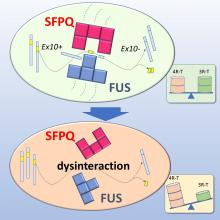
Nagoya University-led research identifies role for neuronal protein interaction in preventing frontotemporal lobar degeneration, a dementia that starts in middle age.
08 Feb 2017
Nagoya University
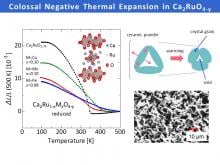
Researchers based at Nagoya University discover ceramic material that contracts on heating by more than twice the previous record-holding material.
08 Feb 2017
Hokkaido University
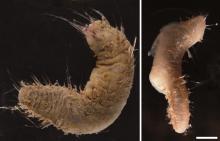
A team of Japanese scientists has discovered a new species of polychaete, a type of marine annelid worm, 9-meters deep underwater near Japan’s Syowa Station in Antarctica, providing a good opportunity to study how animals adapt to extreme environments.
08 Feb 2017
Hokkaido University
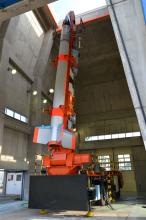
Pure iron grains in interstellar space are far rarer than previously thought, shedding new light on the evolution history of matters in the universe.
07 Feb 2017
Nagoya University
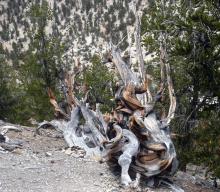
By analyzing the level of a carbon isotope in tree rings from a specimen of an ancient bristlecone pine, a team led by Nagoya University researchers has revealed that the sun exhibited a unique pattern of activity in 5480 BC.

07 Feb 2017
Tohoku University
Women who started menstruating early in life could later face a higher risk of stroke.
06 Feb 2017
Hokkaido University
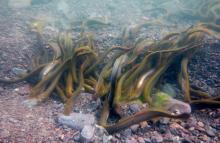
Researchers at Hokkaido University have discovered that the nonparasitic lamprey Lethenteron kessleri mates repeatedly without releasing eggs, in a behavior termed “sham mating,” suggesting the possibility that females choose their mates while engaged in promiscuous mating habits.
01 Feb 2017
Tohoku University
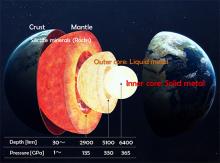
Researchers in Japan say they may be one step closer to solving the mystery at the core of the Earth.
01 Feb 2017
Tohoku University
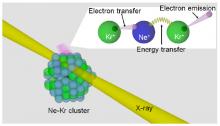
Researchers led by Kiyoshi Ueda of Tohoku University have investigated what x-rays in matter really do and identified a new mechanism of producing low-energy free electrons. Since the low-energy electrons cause damage to the matter, the identified process might be important in understanding and designing radiation treatment of illnesses.

31 Jan 2017
Institute for Integrated Cell-Material Sciences (iCeMS) at Kyoto University
Kyoto University researchers have identified a new way vitamin D helps control the balance of lipids in the body. This key finding could advance development of new treatments for metabolic disorders and certain cancers.

31 Jan 2017
Hokkaido University
Hokkaido University researchers have found that more than 10,000 stream fish migrated to a small tributary only four months after it had dried out during the summer, suggesting that even remnant tributaries are critical wintering habitats.
26 Jan 2017
Hokkaido University
This is Part III of an article about Hokkaido University’s Center for Ainu and Indigenous Studies, the only national institution in Japan that studies the Ainu of Japan and other indigenous peoples around the world.
26 Jan 2017
Tohoku University
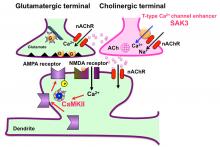
Acetylcholine is a neurotransmitter in the brain that plays an important role in controlling attention and cognition. Acetylcholine system dysfunction is believed to be one of the causes of Alzheimer's disease (AD) and vascular dementia.

26 Jan 2017
Nagoya University
Nagoya University-led researchers showed that hunger-driven neural signaling in the hypothalamus activates inhibitory reticular neurons in the medulla oblongata to reduce metabolism and promote feeding and chewing under starving conditions. Abnormal activation of these medullary reticular neurons may promote pathological changes leading to obesity.
24 Jan 2017
Hokkaido University
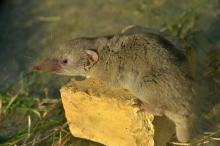
The distribution of house shrews in the coastal areas from Asia to East Africa suggests a wider trade network in the middle-modern ages.
24 Jan 2017
Hokkaido University
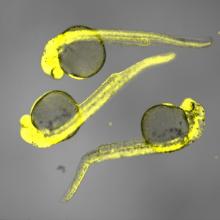
A Hokkaido University researcher has successfully developed a method to accurately manipulate gene expression by light illumination and demonstrated its usability by creating double-headed zebrafish.
23 Jan 2017
Hokkaido University
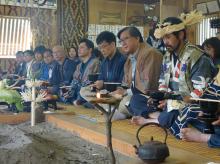
This is Part II of an article about Hokkaido University’s Center for Ainu and Indigenous Studies, the only national institution in Japan that studies the Ainu of Japan and other indigenous peoples around the world.
20 Jan 2017
Institute for Integrated Cell-Material Sciences (iCeMS) at Kyoto University
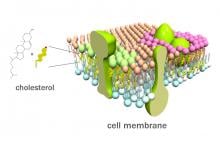
Novel sensors indicate how cell functions are affected by the distribution of cholesterol across the cell membrane. This information could lead to new methods for cancer detection.
20 Jan 2017
Tohoku University
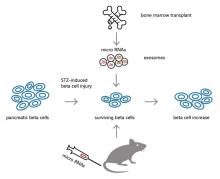
A study by Japan's Tokohu University researchers has identified two new types of microRNA (miRNA) that improved hyperglycemia in a mouse model of diabetes by stimulating the proliferation of insulin-producing pancreatic beta (β) cells. This is a key finding that may lead to the development of new diabetes treatment strategies.
19 Jan 2017
Institute for Integrated Cell-Material Sciences (iCeMS) at Kyoto University
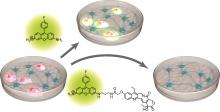
A new compound could help rid stem cell samples of potentially tumorigenic cells, making them safer for regenerative therapies.
17 Jan 2017
Tohoku University
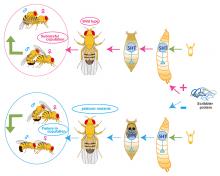
By studying the sexual behavior of a mutant strain of fruit fly called "platonic," researchers at the Tohoku University Graduate School of Life Sciences have found parallels between humans and flies in the neural control of copulation.
15 Jan 2017
Hokkaido University
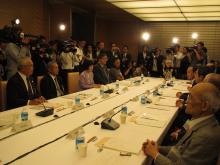
This is Part I of an article about Hokkaido University’s Center for Ainu and Indigenous Studies, the only national institution in Japan that studies the Ainu of Japan and other indigenous peoples around the world.
15 Jan 2017
Tohoku University
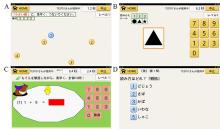
Researchers at Tohoku University have developed a new Processing Speed Training Game (PSTG) using a Tablet PC, which they say can significantly improve processing speed and inhibition among healthy older adults, while also reducing their depressive moods when played regularly.
04 Jan 2017
Hokkaido University
Researchers have verified that the mere presence of a cell phone or smartphone can adversely affect our cognitive performance, particularly among infrequent internet users.
22 Dec 2016
Tohoku University
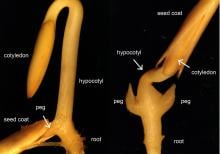
Researchers in Japan have examined cucumber seedlings germinated under the very weak gravity - or microgravity - conditions of the International Space Station.
21 Dec 2016
Hokkaido University
Hokkaido University researchers are finding evidence of natural selection that maintains the status quo among ant populations.
19 Dec 2016
Tohoku University
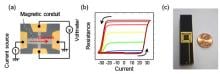
Researchers at Tohoku University have, for the first time, successfully demonstrated the basic operation of spintronics-based artificial intelligence.
19 Dec 2016
Tohoku University
Scientists in Japan and the US have found that vitamin B3 nicotinamide may help treat pregnant women who suffer from preeclampsia by preventing strokes and in some cases, even stimulating the growth of their fetus.
19 Dec 2016
Tohoku University
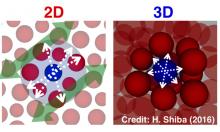
Scientists in Japan have revealed that if a glassy solid possesses a planar (sheet-like) structure, it can exhibit enhanced thermal vibration motion due to the same mechanism known for the planar crystals (two-dimensional crystals), by using large-scale simulations on supercomputers.
Researchers
Sorry, no researchers coming up for this topic.
Giants in history

Japanese biochemist Akira Endo (1933 – 2024) discovered the first statin, called mevastatin, which lowered cholesterol levels in the blood by inhibiting a key enzyme in the cholesterol biosynthesis pathway. His work laid the foundation for the development of statins to help patients lower their blood cholesterol levels and reduce their risk of heart disease or stroke.
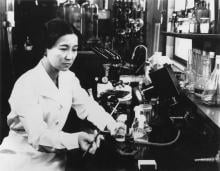
Ruby Sakae Hirose (1904 – 1960) was a Japanese-American scientist whose research contributed significantly to our understanding of blood clotting, allergies and cancer.

Haisako Koyama (1916 – 1997) was a Japanese solar observer whose dedication to recording sunspots – cooler parts of the sun’s surface that appear dark – produced a sunspot record of historic importance.
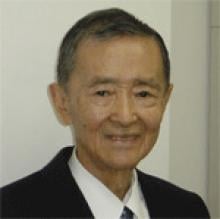
Michiaki Takahashi (17 February 1928 – 16 December 2013) was a Japanese virologist who developed the first chickenpox vaccine.
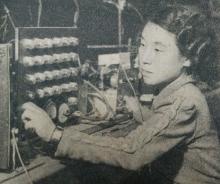
Toshiko Yuasa (11 December 1909 – 1 February 1980) was the first Japanese female physicist whose research on radioactivity shed light on beta decay – the process in which an atom emits a beta particle (electron) and turns into a different element.
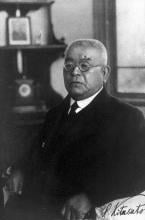
Baron Kitasato Shibasaburo (29 January 1856 – 13 June 1931) was a Japanese physician and bacteriologist whose work led to a new understanding of preventing and treating tetanus, diphtheria and anthrax.
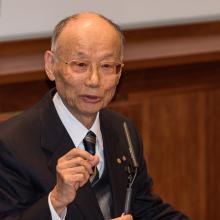
By isolating soil microorganisms and studying the compounds they produce, Satoshi Omura (born 1935) discovered almost 500 organic compounds with unique properties that were produced by these microorganisms, including many new antibiotics.
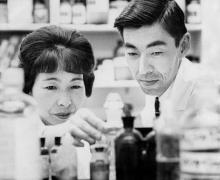
Husband and wife team, Kimishige (3 December 1925 – 6 July 2018) and Teruko Ishizaka (28 September 1926 – 4 June 2019) discovered the antibody class Immunoglobulin E (IgE) that triggers allergic reactions. They also discovered that IgE antibodies attach to white blood cells, known as mast cells, releasing histamine, which causes allergic reactions.
Husband and wife team, Kimishige (3 December 1925 – 6 July 2018) and Teruko Ishizaka (28 September 1926 – 4 June 2019) discovered the antibody class Immunoglobulin E (IgE) that triggers allergic reactions. They also discovered that IgE antibodies attach to white blood cells, known as mast cells, releasing histamine, which causes allergic reactions.
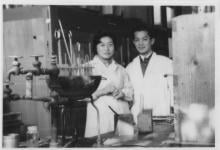
Reiji Okazaki (8 October 1930 – 1 August 1975) and Tsuneko (7 June 1933) were a Japanese couple who discovered Okazaki fragments – short sequences of DNA that are synthesized during DNA replication and linked together to form a continuous strand.
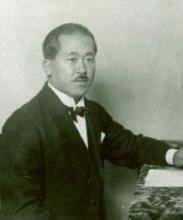
In 1915, Koichi Ichikawa along with pathologist Katsusaburo Yamagiwa became the first to prove that chronic exposure to chemicals can cause cancer.
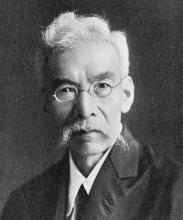
In 1915, pathologist Katsusaburo Yamagiwa and his research assistant Koichi Ichikawa became the first to prove that chronic exposure to chemicals can cause cancer.
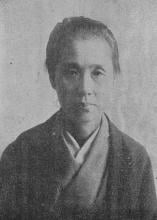
Ogino Ginko (3 March 1851 – 23 June 1913) was the first registered female doctor to practise modern medicine in Japan.
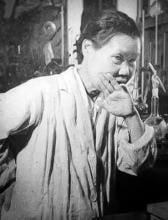
Michiyo Tsujimura (17 September 1888 – 1 June 1969) was a Japanese agricultural scientist and biochemist recognized for her research of green tea components.
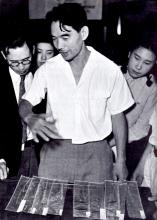
Hitoshi Kihara (1893 – 1986) was one of the most famous Japanese geneticists of the 20th century. One of his most significant contributions was identifying sex chromosomes (X and Y) in flowering plants.
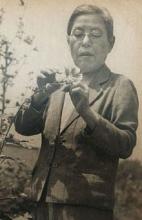
Kono Yasui (16 February 1880 – 24 March 1971) was a Japanese botanist who researched the genetics of poppies, corn and spiderworts and surveyed the plants that had been affected by the nuclear fallout after the atomic bombings of Hiroshima and Nagasaki.
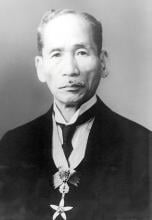
Umetaro Suzuki (7 April 1874 – 20 September 1943) was a Japanese scientist best remembered for his research on beriberi, a disease caused by vitamin B1 deficiency, characterized by limb stiffness, paralysis and pain.
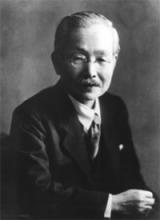
Kikunae Ikeda (8 October 1864 – 3 May 1936) was a Japanese chemist who discovered the fifth basic taste, umami.
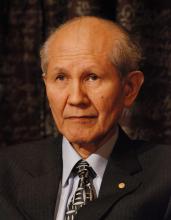
Osamu Shimomura (27 August 1928 – 19 October 2018) was a Japanese organic chemist and marine biologist who dedicated his career to understanding how organisms emitted light.
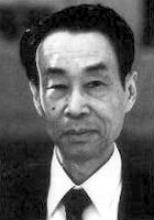
Motoo Kimura (13 November 1924 – 13 November 1994) was a Japanese theoretical population geneticist who is best remembered for developing the neutral theory of molecular evolution.

Chika Kuroda (24 March 1884 – 8 November 1968) was a Japanese chemist whose research focussed on the structures of natural pigments.
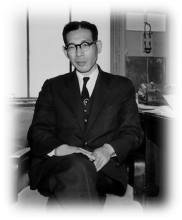
The field of solid-state ionics originated in Europe, but Takehiko Takahashi of Nagoya University in Japan was the first to coin the term ‘solid ionics’ in 1967. ‘Solid-state ionics’ first appeared in 1971 in another of his papers, and was likely a play on ‘solid-state electronics’, another rapidly growing field at the time.
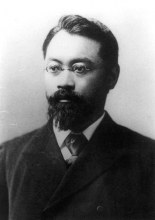
The techniques that make industrial pearl culturing possible were developed over a century ago at the Misaki Marine Biological Station in Japan. The station’s first director, Professor Kakichi Mitsukuri, emphasized to Kokichi Mikimoto in 1890 that stimulating pearl sac formation was important for pearl growth, and they went on to successfully develop methods for culturing pearls.
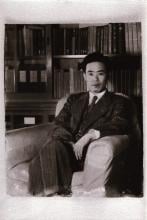
Japanese physicist Ukichiro Nakaya (1900-1962) made the world’s first artificial snowflakes. He started his research on snow crystals in the early 1930s at Hokkaido University, where there is an unlimited supply of natural snow in winter. By taking over 3,000 photographs, he established a classification of natural snow crystals and described their relationship with weather conditions.
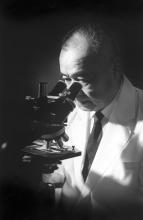
Minoru Shirota (April 23, 1899 – March 10, 1982) was a Japanese microbiologist who invented the popular fermented drink Yakult.
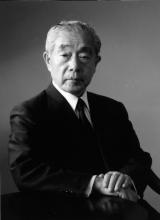
Japanese chemist Kenichi Fukui (4 October 1918 – 9 January 1998) was the first Asian scientist to be awarded the Nobel Prize in Chemistry. Together with Roald Hoffman, he received this honour in 1981 for his independent research into the mechanisms of chemical reactions.
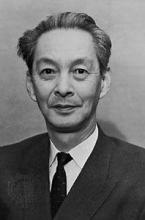
Shinichiro Tomonaga (31 March 1906 – 8 July 1979), together with Richard Feynman and Julian Schwinger, was awarded the Nobel Prize in Physics in 1965, for their contributions to advance the field of quantum electrodynamics. Tomonaga was also a strong proponent of peace, who actively campaigned against the proliferation of nuclear weapons and promoted the peaceful use of nuclear energy.
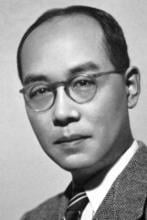
Hideki Yukawa (23 January 1907 – 8 September 1981) was awarded the Nobel Prize in Physics in 1949 for predicting the existence of the pi meson subatomic particle. Japan’s first Nobel laureate, Yakawa also expressed his support for nuclear disarmament by signing the Russell–Einstein Manifesto in 1955.
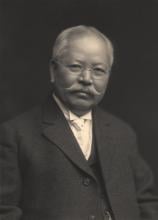
Japanese chemist Takamine Jokichi (3 November 1854 – 22 July 1922) founded the Tokyo Artificial Fertilizer Company, where he isolated a starch-digesting enzyme (named takadiastase) from the fungus Aspergillus oryzae.
Tsuneko (7 June 1933) and Reiji Okazaki (8 October 1930 – 1 August 1975) were a Japanese couple who discovered Okazaki fragments – short sequences of DNA that are synthesized during DNA replication and linked together to form a continuous strand.
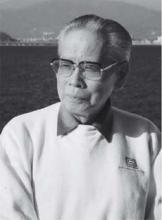
A Japanese surgeon, Tetsuzo Akutsu (20 August 1922 – 9 August 2007) built the first artificial heart capable of keeping an animal alive.
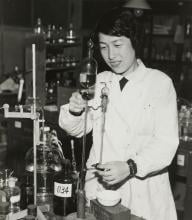
Japanese geochemist Katsuko Saruhashi developed the first method and tools for measuring carbon dioxide in seawater