
Japan
News

31 May 2017
Kavli Institute for the Physics and Mathematics of the Universe (Kavli IPMU)
The Einstein Legacy Project has named Kavli IPMU Director Hitoshi Murayama as a contributor to its Genius:100 Visions of the Future project. Murayama's vision will be one of 100 to be included in the world's first 3D-printed book.
31 May 2017
Hokkaido University
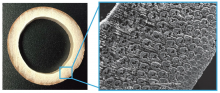
The spatial distribution of fibers in hollow bamboo cylinders is optimized to reinforce flexural rigidity, a new finding that sheds light on biomimetic approaches in the development of materials.
31 May 2017
Hokkaido University
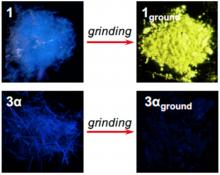
A gold compound shifts from a visible fluorescence to emitting infrared when ground - a big shift with potential applications in bioimaging and security inks.
30 May 2017
Hokkaido University
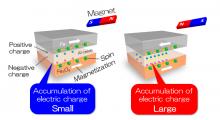
The study demonstrates for the first time a new type of magnetocapacitance, a phenomenon that could be useful in the next generation of ‘spintronic’ devices.
30 May 2017
Hokkaido University
A new tool enables identification of high-end caviar from Beluga sturgeons by analyzing DNA from a single caviar, a development that helps ensure the fair international trade of caviar and contributes to conservation of the species in the wild.
26 May 2017
Tohoku University
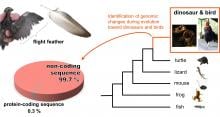
Tohoku University researchers and their international collaborators have identified a possible genetic mechanism underlying the evolution of birds, according to a recently published study in Nature Communications.
26 May 2017
Nagoya University
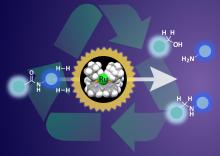
Nagoya University-based research team develops new highly efficient catalyst for breaking resistant chemical bonds, paving the way for easier recycling of plastic waste.
25 May 2017
Nagoya University
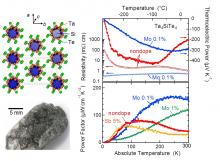
Researchers at Nagoya University report high thermoelectric powers in one-dimensional crystals for practical low-temperature cooling.
25 May 2017
Hokkaido University
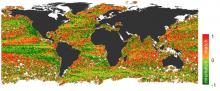
Ocean currents affect how climate change impacts movements of species to cooler regions.
19 May 2017
Kavli Institute for the Physics and Mathematics of the Universe (Kavli IPMU)
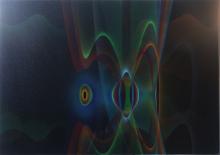
Computational artist Norimichi Hirakawa used computer programming to produce moving images.
19 May 2017
Hokkaido University
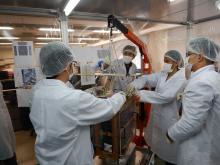
Satellite success is a big step forward for the Philippines and for broader efforts to establish a microsatellite consortium across Asia.

18 May 2017
Tohoku University
Tohoku University researchers have found that trans-fatty acids promote cell death in a more direct manner than previously thought, leading to the development of atherosclerosis, a major cause of heart attacks and strokes.
17 May 2017
Tohoku University
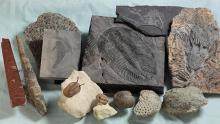
Researchers in the USA and Japan say they may have found the cause of the first mass extinction of life.
17 May 2017
Hokkaido University
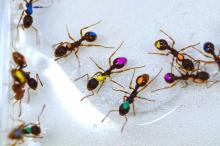
Understanding how ant colonies make collective decisions could provide insight into the functioning of the human brain.
16 May 2017
Institute of Transformative Bio-Molecules (WPI-ITbM), Nagoya University
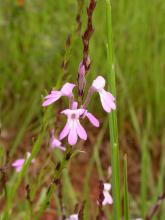
Scientists in Japan have designed a synthetic molecule that gives new insight into how a destructive weed might be detecting its host crops.
15 May 2017
Tohoku University
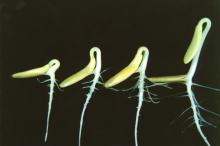
Biologists in Japan use the near-weightless environment on the International Space Station to study the influence of gravity on plant growth phenomena.
15 May 2017
Hokkaido University
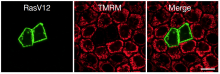
A new study shows cells in the initial stage of cancer change their metabolism before getting eliminated by the surrounding normal cells, providing a novel target for developing cancer prevention drugs.
11 May 2017
Hokkaido University
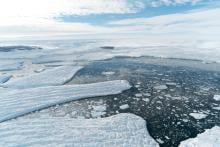
The higher the seawater temperature in the tropical Pacific, the more likely ice breakup will occur in East Antarctica, according to a Hokkaido University researcher.
11 May 2017
Tohoku University
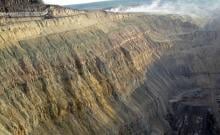
Graphic shows plate tectonics began far later than other theories propose, adding to the ongoing debate.
11 May 2017
Institute of Transformative Bio-Molecules (WPI-ITbM), Nagoya University
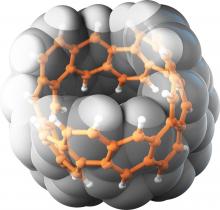
Chemists have tried to synthesize carbon nanobelts for more than 60 years, but none have succeeded until now. A team at Nagoya University reported the first organic synthesis of a carbon nanobelt in Science. Carbon nanobelts are expected to serve as a useful template for building carbon nanotubes and open a new field of nanocarbon science.
10 May 2017
Hokkaido University
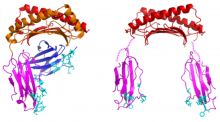
Revelations about a protein expressed in fetal cells could provide novel insights into its function and future immunosuppressive therapies.
10 May 2017
National Institute for Materials Science (NIMS)
Cellulose nanofibers can help particles in ink and printed electronics disperse evenly, rather than spread apart like dried coffee rings.
09 May 2017
Tohoku University
Diseased rice seeds treated with atmospheric plasma show significant improvement and growth, offering a potential tool to protect rice crops from fungus and blight.

08 May 2017
Tohoku University
The Tohoku University research group of Professor Keiichi Edamatsu and Postdoctoral fellow Naofumi Abe has demonstrated dynamically and statically unpolarized single-photon generation using diamond.
08 May 2017
Nagoya University
A Nagoya University-led research team mimics the rich color of bird plumage and demonstrates new ways to control how light interacts with materials.
03 May 2017
Nagoya University
Cyanine dyes could improve the efficiency of using molecular probes to identify, for example, the presence of a virus or a tumour receptor.
02 May 2017
Hokkaido University
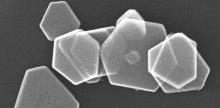
A new method combining tumor suppressor protein p53 and biomineralization peptide BMPep successfully created hexagonal silver nanoplates, suggesting an efficient strategy for controlling the nanostructure of inorganic materials.
28 Apr 2017
Institute for Integrated Cell-Material Sciences (iCeMS) at Kyoto University
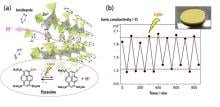
Adding photoacid to a special kind of melted polymeric crystal allows better and switchable proton conductivity. This could lead to new materials for memory, supercapacitor and transistor technologies.
28 Apr 2017
Kyoto University
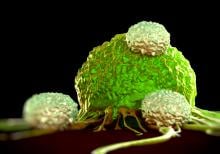
Refining the purification process of therapeutic cells could improve their use for treating cancer and other diseases.
27 Apr 2017
Tohoku University
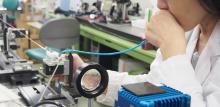
Affordable gas sensor setup developed by Tohoku University team monitors trace levels of health-indicating chemicals, paving the way for future non-invasive studies.
Researchers
Sorry, no researchers coming up for this topic.
Giants in history

Japanese biochemist Akira Endo (1933 – 2024) discovered the first statin, called mevastatin, which lowered cholesterol levels in the blood by inhibiting a key enzyme in the cholesterol biosynthesis pathway. His work laid the foundation for the development of statins to help patients lower their blood cholesterol levels and reduce their risk of heart disease or stroke.
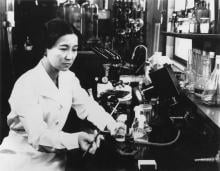
Ruby Sakae Hirose (1904 – 1960) was a Japanese-American scientist whose research contributed significantly to our understanding of blood clotting, allergies and cancer.
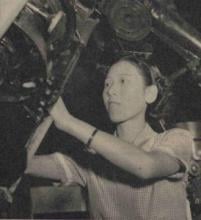
Haisako Koyama (1916 – 1997) was a Japanese solar observer whose dedication to recording sunspots – cooler parts of the sun’s surface that appear dark – produced a sunspot record of historic importance.
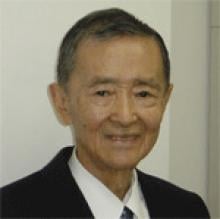
Michiaki Takahashi (17 February 1928 – 16 December 2013) was a Japanese virologist who developed the first chickenpox vaccine.
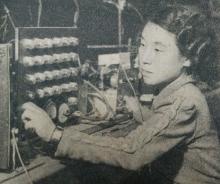
Toshiko Yuasa (11 December 1909 – 1 February 1980) was the first Japanese female physicist whose research on radioactivity shed light on beta decay – the process in which an atom emits a beta particle (electron) and turns into a different element.
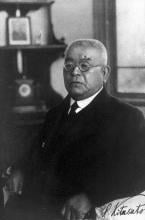
Baron Kitasato Shibasaburo (29 January 1856 – 13 June 1931) was a Japanese physician and bacteriologist whose work led to a new understanding of preventing and treating tetanus, diphtheria and anthrax.
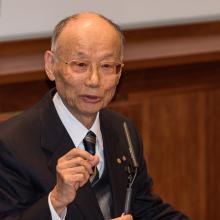
By isolating soil microorganisms and studying the compounds they produce, Satoshi Omura (born 1935) discovered almost 500 organic compounds with unique properties that were produced by these microorganisms, including many new antibiotics.
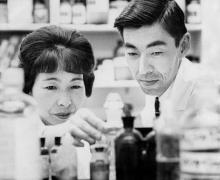
Husband and wife team, Kimishige (3 December 1925 – 6 July 2018) and Teruko Ishizaka (28 September 1926 – 4 June 2019) discovered the antibody class Immunoglobulin E (IgE) that triggers allergic reactions. They also discovered that IgE antibodies attach to white blood cells, known as mast cells, releasing histamine, which causes allergic reactions.
Husband and wife team, Kimishige (3 December 1925 – 6 July 2018) and Teruko Ishizaka (28 September 1926 – 4 June 2019) discovered the antibody class Immunoglobulin E (IgE) that triggers allergic reactions. They also discovered that IgE antibodies attach to white blood cells, known as mast cells, releasing histamine, which causes allergic reactions.
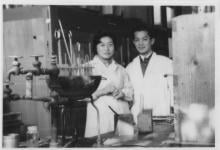
Reiji Okazaki (8 October 1930 – 1 August 1975) and Tsuneko (7 June 1933) were a Japanese couple who discovered Okazaki fragments – short sequences of DNA that are synthesized during DNA replication and linked together to form a continuous strand.
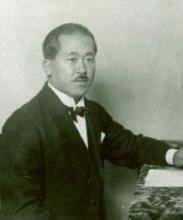
In 1915, Koichi Ichikawa along with pathologist Katsusaburo Yamagiwa became the first to prove that chronic exposure to chemicals can cause cancer.
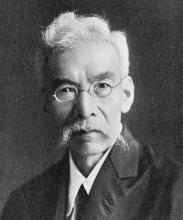
In 1915, pathologist Katsusaburo Yamagiwa and his research assistant Koichi Ichikawa became the first to prove that chronic exposure to chemicals can cause cancer.
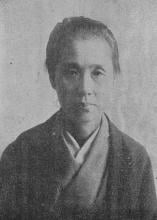
Ogino Ginko (3 March 1851 – 23 June 1913) was the first registered female doctor to practise modern medicine in Japan.
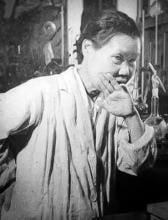
Michiyo Tsujimura (17 September 1888 – 1 June 1969) was a Japanese agricultural scientist and biochemist recognized for her research of green tea components.
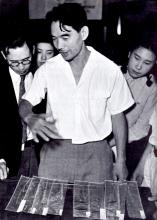
Hitoshi Kihara (1893 – 1986) was one of the most famous Japanese geneticists of the 20th century. One of his most significant contributions was identifying sex chromosomes (X and Y) in flowering plants.
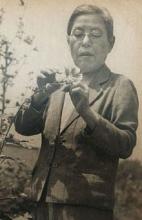
Kono Yasui (16 February 1880 – 24 March 1971) was a Japanese botanist who researched the genetics of poppies, corn and spiderworts and surveyed the plants that had been affected by the nuclear fallout after the atomic bombings of Hiroshima and Nagasaki.
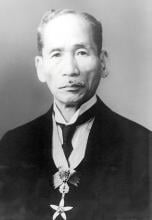
Umetaro Suzuki (7 April 1874 – 20 September 1943) was a Japanese scientist best remembered for his research on beriberi, a disease caused by vitamin B1 deficiency, characterized by limb stiffness, paralysis and pain.
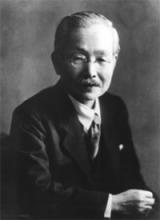
Kikunae Ikeda (8 October 1864 – 3 May 1936) was a Japanese chemist who discovered the fifth basic taste, umami.
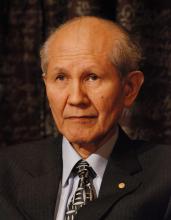
Osamu Shimomura (27 August 1928 – 19 October 2018) was a Japanese organic chemist and marine biologist who dedicated his career to understanding how organisms emitted light.
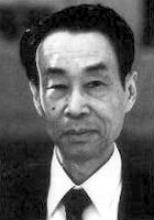
Motoo Kimura (13 November 1924 – 13 November 1994) was a Japanese theoretical population geneticist who is best remembered for developing the neutral theory of molecular evolution.

Chika Kuroda (24 March 1884 – 8 November 1968) was a Japanese chemist whose research focussed on the structures of natural pigments.
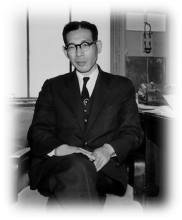
The field of solid-state ionics originated in Europe, but Takehiko Takahashi of Nagoya University in Japan was the first to coin the term ‘solid ionics’ in 1967. ‘Solid-state ionics’ first appeared in 1971 in another of his papers, and was likely a play on ‘solid-state electronics’, another rapidly growing field at the time.
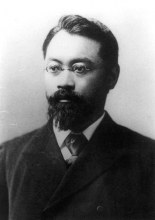
The techniques that make industrial pearl culturing possible were developed over a century ago at the Misaki Marine Biological Station in Japan. The station’s first director, Professor Kakichi Mitsukuri, emphasized to Kokichi Mikimoto in 1890 that stimulating pearl sac formation was important for pearl growth, and they went on to successfully develop methods for culturing pearls.
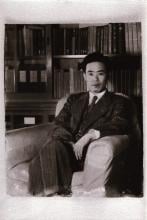
Japanese physicist Ukichiro Nakaya (1900-1962) made the world’s first artificial snowflakes. He started his research on snow crystals in the early 1930s at Hokkaido University, where there is an unlimited supply of natural snow in winter. By taking over 3,000 photographs, he established a classification of natural snow crystals and described their relationship with weather conditions.
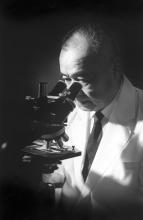
Minoru Shirota (April 23, 1899 – March 10, 1982) was a Japanese microbiologist who invented the popular fermented drink Yakult.
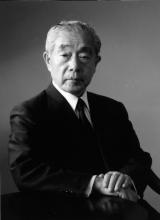
Japanese chemist Kenichi Fukui (4 October 1918 – 9 January 1998) was the first Asian scientist to be awarded the Nobel Prize in Chemistry. Together with Roald Hoffman, he received this honour in 1981 for his independent research into the mechanisms of chemical reactions.
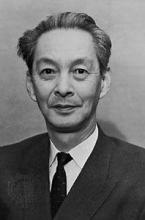
Shinichiro Tomonaga (31 March 1906 – 8 July 1979), together with Richard Feynman and Julian Schwinger, was awarded the Nobel Prize in Physics in 1965, for their contributions to advance the field of quantum electrodynamics. Tomonaga was also a strong proponent of peace, who actively campaigned against the proliferation of nuclear weapons and promoted the peaceful use of nuclear energy.
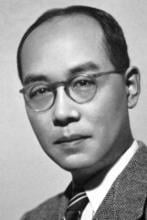
Hideki Yukawa (23 January 1907 – 8 September 1981) was awarded the Nobel Prize in Physics in 1949 for predicting the existence of the pi meson subatomic particle. Japan’s first Nobel laureate, Yakawa also expressed his support for nuclear disarmament by signing the Russell–Einstein Manifesto in 1955.
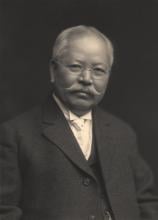
Japanese chemist Takamine Jokichi (3 November 1854 – 22 July 1922) founded the Tokyo Artificial Fertilizer Company, where he isolated a starch-digesting enzyme (named takadiastase) from the fungus Aspergillus oryzae.
Tsuneko (7 June 1933) and Reiji Okazaki (8 October 1930 – 1 August 1975) were a Japanese couple who discovered Okazaki fragments – short sequences of DNA that are synthesized during DNA replication and linked together to form a continuous strand.
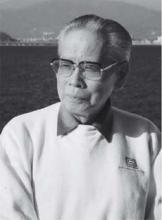
A Japanese surgeon, Tetsuzo Akutsu (20 August 1922 – 9 August 2007) built the first artificial heart capable of keeping an animal alive.
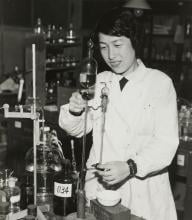
Japanese geochemist Katsuko Saruhashi developed the first method and tools for measuring carbon dioxide in seawater