

Japan
News
06 Sep 2017
Tohoku University
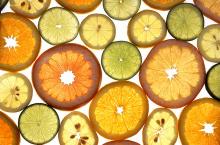
Tohoku University researchers have found some evidence to suggest that daily intake of citrus fruits, such as oranges, grapefruits, lemons or limes, could reduce the risk of dementia developing among older adults by almost 15 percent.
05 Sep 2017
Tohoku University
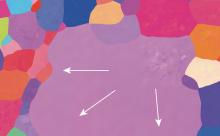
A new heating method for certain metals could lead to improved earthquake-resistant construction materials.

05 Sep 2017
Tohoku University
Researchers in Japan and China believe they have found new molecular fossils of archaea using a method of analysis commonly used in forensic science.
05 Sep 2017
Tohoku University
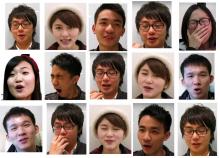
A new study out of Tohoku University suggests that contrary to common belief that the yawning contagion is associated with empathy, it is in fact, more likely that perceptual sensitivity is to blame.
05 Sep 2017
National Institute for Basic Biology (NIBB)
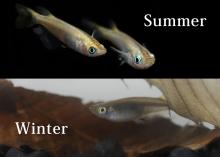
A research group from the National Institute for Basic Biology and Nagoya University in Japan found that color perception of Medaka, a small fish inhabiting rice fields and streams, varies greatly according to seasonal changes.
04 Sep 2017
National Institute for Materials Science (NIMS)
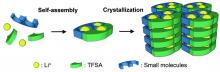
Solid crystals that self-assemble to form channels for an electric current could make safer batteries.

01 Sep 2017
National Institute for Materials Science (NIMS)
Investigation of paper-based electronics continues to advance, showing exciting signs of progress.

01 Sep 2017
Hokkaido University
A deadly tick-borne virus uses the host neuron’s transportation system to move their RNA, resulting in the local reproduction of the virus and severe neurological symptoms.

01 Sep 2017
Hokkaido University
Observations by Japan’s Venus climate orbiter Akatsuki have revealed an equatorial jet in the lower to middle cloud layer of the planet’s atmosphere, a finding that could be pivotal to unraveling a phenomenon called superrotation.
28 Aug 2017
Nagoya University
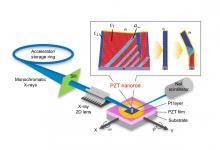
Nagoya University-led international collaboration develops new approach to advanced sensor and energy harvesting devices based on controlling domain alignment in nanostructured ferroelectric materials.

25 Aug 2017
Hokkaido University
Hokkaido University scientists have developed a new mathematical model which accurately forecasted that a devastating cholera epidemic in Yemen would peak by early July, the 26th week of 2017 and the cumulative incidence would be the order of 700-800 thousand cases.

25 Aug 2017
Hokkaido University
Scientists have developed a new chimeric antibody that suppresses malignant cancers in dogs, showing promise for safe and effective treatment of intractable cancers.
25 Aug 2017
Hokkaido University
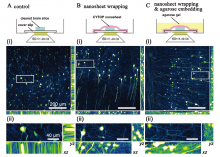
A nanosheet made of organic polymers has been developed to prevent the drying and deforming of biological samples, thus enabling high-quality imaging under microscopes.
24 Aug 2017
Institute for Integrated Cell-Material Sciences (iCeMS) at Kyoto University
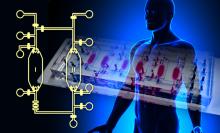
Improvements to tiny body-on-a-chip devices could lead to next-generation pre-clinical testing of drug toxicity.
23 Aug 2017
National Institute for Materials Science (NIMS)
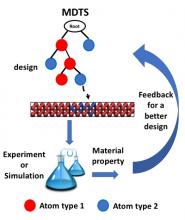
A new algorithm could help scientists decide the best atomic structures for the materials they design.
21 Aug 2017
Hokkaido University
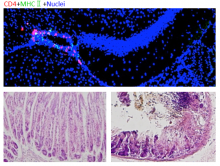
New research reveals the mechanisms behind the effects of chronic stress and tiny inflammations in the brain on fatal gut failure.
21 Aug 2017
Nagoya University
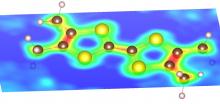
Nagoya University-led team of physicists use a synchrotron radiation X-ray source to probe a so-called “structure-less” transition and develop a new understanding of molecular conductors.
18 Aug 2017
Nagoya University
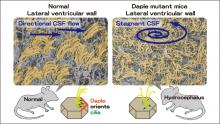
Researchers at Nagoya University have identified a molecule that enables cell appendages called cilia to beat in a coordinated way to drive the flow of fluid around the brain; this prevents the accumulation of this fluid, which otherwise leads to swelling of the head as found in the condition hydrocephalus.
18 Aug 2017
Tohoku University
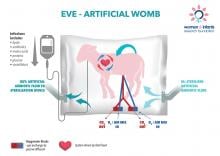
Researchers hope an artificial womb used to incubate healthy baby lambs can be used in future technology for premature babies.
18 Aug 2017
Nagoya University
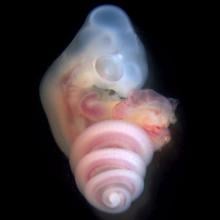
Researchers at Nagoya University uncover the gene and protein involved in the determination of the hind legs in tetrapods.
18 Aug 2017
Hokkaido University
Teams from the Czech Republic and Japan, and researchers from the Institut Pasteur, AP-HP, and AP-HM have identified the likely origin of the cross-reactivity between cypress pollen, peaches and citrus fruits, paving the way for the development of novel allergy diagnostic tests.
17 Aug 2017
Institute of Transformative Bio-Molecules (WPI-ITbM), Nagoya University
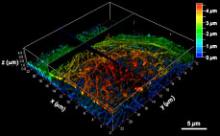
~ A powerful tool for 3D and multicolor STED imaging of cellular ultrastructure ~
04 Aug 2017
Tohoku University
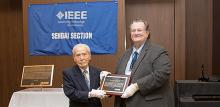
An IEEE Milestone has been dedicated to Tohoku University for Professor Emeritus Yasuto Mushiake's work on self-complementary antennas.
04 Aug 2017
Kavli Institute for the Physics and Mathematics of the Universe (Kavli IPMU)
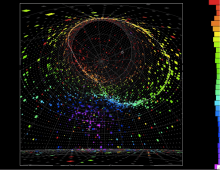
Kavli IPMU's Mark Hartz announces first indication of CP violation by neutrinos.
04 Aug 2017
Hokkaido University
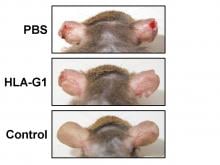
A protein which protects the fetus during pregnancy, HLA-G1, shows high potential for treating atopic dermatitis and other related diseases.
03 Aug 2017
Nagoya University
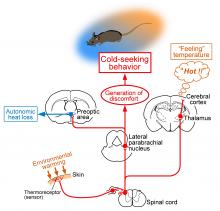
A team at Nagoya University, Japan, has shed light on how distinct sensory neural pathways function in “feeling” changes in temperature in the environment on the one hand, and actually responding to these changes, such as seeking a cooler or warmer site, on the other.
31 Jul 2017
Tohoku University
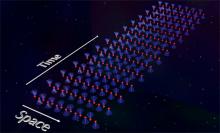
An international team of researchers from Thailand, USA and Japan, has conducted a thorough study of an exotic behavior of material called “noncentrosymmetric antiferromagnet.”
28 Jul 2017
Nagoya University
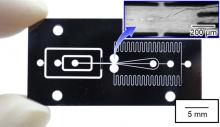
A research group in Nagoya University developed a high-speed cell sorting method of large cells with high-viability using dual on-chip pumps.
28 Jul 2017
Hokkaido University
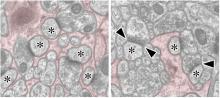
A molecule produced by insulating glial cells facilitates the functional wiring of brain cells involved in motor coordination.
25 Jul 2017
Tohoku University
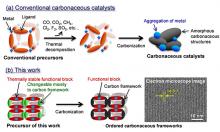
Researchers have developed a new synthesis route for alternative catalysts of noble metals.
Researchers
Sorry, no researchers coming up for this topic.
Giants in history

Japanese biochemist Akira Endo (1933 – 2024) discovered the first statin, called mevastatin, which lowered cholesterol levels in the blood by inhibiting a key enzyme in the cholesterol biosynthesis pathway. His work laid the foundation for the development of statins to help patients lower their blood cholesterol levels and reduce their risk of heart disease or stroke.
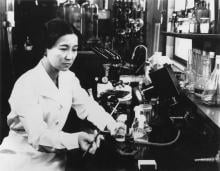
Ruby Sakae Hirose (1904 – 1960) was a Japanese-American scientist whose research contributed significantly to our understanding of blood clotting, allergies and cancer.
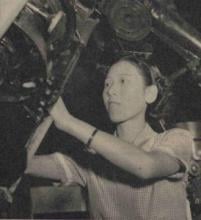
Haisako Koyama (1916 – 1997) was a Japanese solar observer whose dedication to recording sunspots – cooler parts of the sun’s surface that appear dark – produced a sunspot record of historic importance.
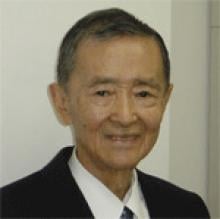
Michiaki Takahashi (17 February 1928 – 16 December 2013) was a Japanese virologist who developed the first chickenpox vaccine.
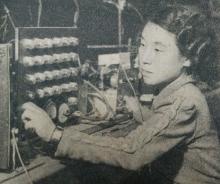
Toshiko Yuasa (11 December 1909 – 1 February 1980) was the first Japanese female physicist whose research on radioactivity shed light on beta decay – the process in which an atom emits a beta particle (electron) and turns into a different element.
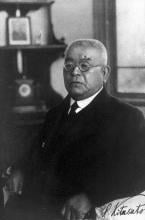
Baron Kitasato Shibasaburo (29 January 1856 – 13 June 1931) was a Japanese physician and bacteriologist whose work led to a new understanding of preventing and treating tetanus, diphtheria and anthrax.
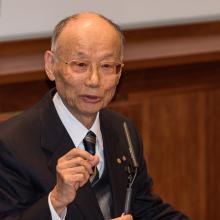
By isolating soil microorganisms and studying the compounds they produce, Satoshi Omura (born 1935) discovered almost 500 organic compounds with unique properties that were produced by these microorganisms, including many new antibiotics.
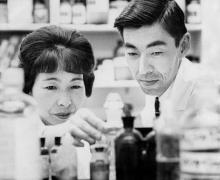
Husband and wife team, Kimishige (3 December 1925 – 6 July 2018) and Teruko Ishizaka (28 September 1926 – 4 June 2019) discovered the antibody class Immunoglobulin E (IgE) that triggers allergic reactions. They also discovered that IgE antibodies attach to white blood cells, known as mast cells, releasing histamine, which causes allergic reactions.
Husband and wife team, Kimishige (3 December 1925 – 6 July 2018) and Teruko Ishizaka (28 September 1926 – 4 June 2019) discovered the antibody class Immunoglobulin E (IgE) that triggers allergic reactions. They also discovered that IgE antibodies attach to white blood cells, known as mast cells, releasing histamine, which causes allergic reactions.
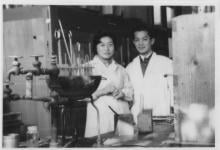
Reiji Okazaki (8 October 1930 – 1 August 1975) and Tsuneko (7 June 1933) were a Japanese couple who discovered Okazaki fragments – short sequences of DNA that are synthesized during DNA replication and linked together to form a continuous strand.
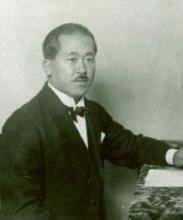
In 1915, Koichi Ichikawa along with pathologist Katsusaburo Yamagiwa became the first to prove that chronic exposure to chemicals can cause cancer.
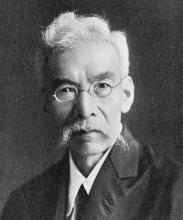
In 1915, pathologist Katsusaburo Yamagiwa and his research assistant Koichi Ichikawa became the first to prove that chronic exposure to chemicals can cause cancer.
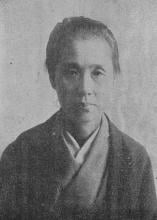
Ogino Ginko (3 March 1851 – 23 June 1913) was the first registered female doctor to practise modern medicine in Japan.
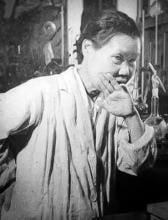
Michiyo Tsujimura (17 September 1888 – 1 June 1969) was a Japanese agricultural scientist and biochemist recognized for her research of green tea components.
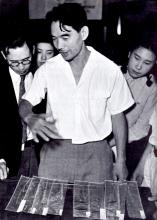
Hitoshi Kihara (1893 – 1986) was one of the most famous Japanese geneticists of the 20th century. One of his most significant contributions was identifying sex chromosomes (X and Y) in flowering plants.
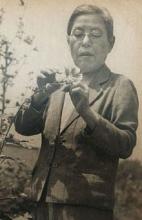
Kono Yasui (16 February 1880 – 24 March 1971) was a Japanese botanist who researched the genetics of poppies, corn and spiderworts and surveyed the plants that had been affected by the nuclear fallout after the atomic bombings of Hiroshima and Nagasaki.
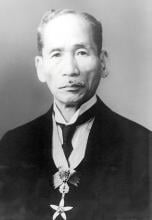
Umetaro Suzuki (7 April 1874 – 20 September 1943) was a Japanese scientist best remembered for his research on beriberi, a disease caused by vitamin B1 deficiency, characterized by limb stiffness, paralysis and pain.
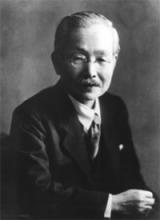
Kikunae Ikeda (8 October 1864 – 3 May 1936) was a Japanese chemist who discovered the fifth basic taste, umami.
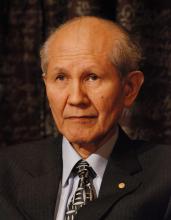
Osamu Shimomura (27 August 1928 – 19 October 2018) was a Japanese organic chemist and marine biologist who dedicated his career to understanding how organisms emitted light.
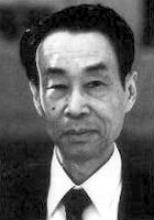
Motoo Kimura (13 November 1924 – 13 November 1994) was a Japanese theoretical population geneticist who is best remembered for developing the neutral theory of molecular evolution.

Chika Kuroda (24 March 1884 – 8 November 1968) was a Japanese chemist whose research focussed on the structures of natural pigments.
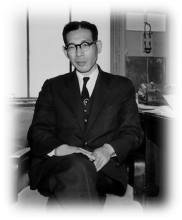
The field of solid-state ionics originated in Europe, but Takehiko Takahashi of Nagoya University in Japan was the first to coin the term ‘solid ionics’ in 1967. ‘Solid-state ionics’ first appeared in 1971 in another of his papers, and was likely a play on ‘solid-state electronics’, another rapidly growing field at the time.
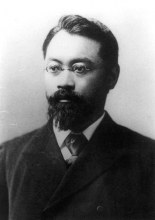
The techniques that make industrial pearl culturing possible were developed over a century ago at the Misaki Marine Biological Station in Japan. The station’s first director, Professor Kakichi Mitsukuri, emphasized to Kokichi Mikimoto in 1890 that stimulating pearl sac formation was important for pearl growth, and they went on to successfully develop methods for culturing pearls.
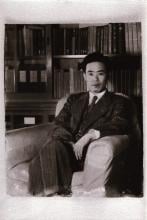
Japanese physicist Ukichiro Nakaya (1900-1962) made the world’s first artificial snowflakes. He started his research on snow crystals in the early 1930s at Hokkaido University, where there is an unlimited supply of natural snow in winter. By taking over 3,000 photographs, he established a classification of natural snow crystals and described their relationship with weather conditions.
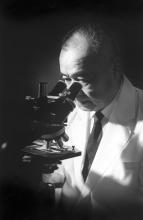
Minoru Shirota (April 23, 1899 – March 10, 1982) was a Japanese microbiologist who invented the popular fermented drink Yakult.
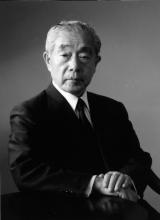
Japanese chemist Kenichi Fukui (4 October 1918 – 9 January 1998) was the first Asian scientist to be awarded the Nobel Prize in Chemistry. Together with Roald Hoffman, he received this honour in 1981 for his independent research into the mechanisms of chemical reactions.
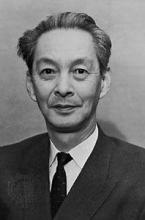
Shinichiro Tomonaga (31 March 1906 – 8 July 1979), together with Richard Feynman and Julian Schwinger, was awarded the Nobel Prize in Physics in 1965, for their contributions to advance the field of quantum electrodynamics. Tomonaga was also a strong proponent of peace, who actively campaigned against the proliferation of nuclear weapons and promoted the peaceful use of nuclear energy.
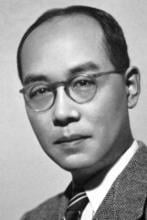
Hideki Yukawa (23 January 1907 – 8 September 1981) was awarded the Nobel Prize in Physics in 1949 for predicting the existence of the pi meson subatomic particle. Japan’s first Nobel laureate, Yakawa also expressed his support for nuclear disarmament by signing the Russell–Einstein Manifesto in 1955.
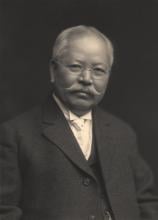
Japanese chemist Takamine Jokichi (3 November 1854 – 22 July 1922) founded the Tokyo Artificial Fertilizer Company, where he isolated a starch-digesting enzyme (named takadiastase) from the fungus Aspergillus oryzae.
Tsuneko (7 June 1933) and Reiji Okazaki (8 October 1930 – 1 August 1975) were a Japanese couple who discovered Okazaki fragments – short sequences of DNA that are synthesized during DNA replication and linked together to form a continuous strand.
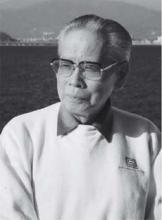
A Japanese surgeon, Tetsuzo Akutsu (20 August 1922 – 9 August 2007) built the first artificial heart capable of keeping an animal alive.
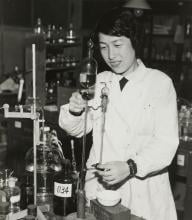
Japanese geochemist Katsuko Saruhashi developed the first method and tools for measuring carbon dioxide in seawater