

Biology Microbiology
News

10 Jul 2024
Researchers from Japan discover a new enzyme with promising antibacterial activity

19 Jun 2024
Study suggests mycoviral infections affect the ecology of host oomycete
23 May 2024
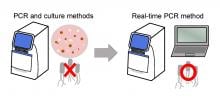
Novel real-time PCR method might become diagnostic tool targeting emerging bacterium responsible for food poisoning outbreaks
16 May 2024
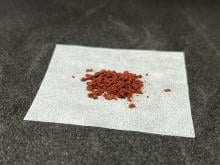
Naturally derived antioxidants improve growth of yeast strain in presence of ethanol

23 Apr 2024
Bacteriophage therapy could be developed based on study’s results
27 Feb 2024
Applied Microbiology International has announced it will be launching a new series of educational online content called The Microbiologist Masterclass.

08 Feb 2024
Yokohama National University scientists are working towards creating a better tomorrow by addressing diverse challenges, from snow algae and tropical cyclones to AI cyberthreats, and much more.
24 Jan 2024
This week sees the launch of the first published content in Sustainable Microbiology, the new open access journal which will apply microbiology to sustainability. The journal is published by Applied Microbiology International.
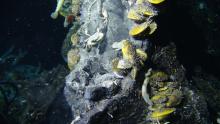
30 Nov 2023
A new bacterial species discovered at the deep-sea hydrothermal vent site ‘Crab Spa’ provides a deeper understanding of bacterial evolution.

29 Nov 2023
Mycorrhiza biofertilizer Uttam Superrhiza has been named as the winner of the Applied Microbiology International Product of the Year 2023.
The prestigious prize recognizes a commercial product derived from microbiology research, with special consideration given to those products that have addressed the United Nations Sustainable Development Goals.
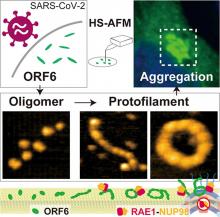
29 Nov 2023
Researchers at Kanazawa University report in the Journal of Physical Chemistry Letters high-speed atomic force microscopy studies that shed light on the possible role of the open reading frame 6 (ORF6) protein COVID19 symptoms.
16 Nov 2023
The winners of the Applied Microbiology International Horizon Awards were announced at the prestigious Environmental Microbiology lecture 2023, held at BMA House in London on November 16.
08 Nov 2023
Applied Microbiology International (AMI) has launched its reviewer training scheme for the journal Letters in Applied Microbiology (LAM), building upon its development opportunities for early career scientists in journal publishing.

16 Oct 2023
The shortlist for the Applied Microbiology International Awards 2023 has now been announced.
The AMI Awards programme is designed to celebrate the brightest minds in our field and promote the research, group, projects, products and individuals who continue to help shape the future of applied microbiology.
05 Oct 2023
The finalists in the Applied Microbiology International Product of the Year Award 2023 have been announced. The awards promote the research, groups, projects, products and individuals who are shaping the future of applied microbiology.
19 Jul 2023
Scientists have combined two light wavelengths to deactivate a bacterium that is invulnerable to some of the world’s most widely used antibiotics, giving hope that the regime could be adapted as a potential disinfectant treatment.

01 Jun 2023
Tests could soon identify patients who will respond well to the available treatment for chronic myeloid leukaemia and those who will be resistant to it—which could improve their chances of survival.

26 May 2023
Eating fermented foods might be the secret to a healthy and long-lived society

18 Mar 2023
Scientists restore impaired kidney for the first time, How fibre composite fails when wet, Cleaner fish recognize themselves in pictures 🖼️🐟& The source of black carbon in the sea. Read all in the latest Editor's Choice. Plus our magazine Asia Research News 2023 is out now 🎉!
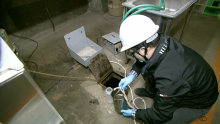
21 Feb 2023
Sifting through sewage for SARS-CoV-2 genetic material could help authorities tailor infection control policies.
02 Feb 2023
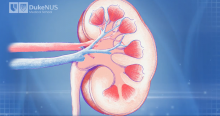
Blocking an immune-regulating protein reverses the damage caused by acute and chronic kidney disease, a preclinical study suggests.
30 Nov 2022
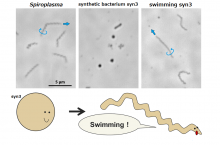
Osaka Metropolitan University researchers introduced seven proteins, thought to let bacteria swim by switching the direction that their helical bodies spiral, into a strain of synthetic bacterium with minimal genetic information. As a result, they confirmed that the synthetic bacterium named syn3, which is normally spherical, formed a helix that could swim by spiraling. Further investigation revealed that only two of these newly added proteins were required to make syn3 capable of minimal swimming. This swimming synthetic bacterium can be said to be the smallest mobile lifeform genetically, as it contains the fewest number of genes.
10 Oct 2022
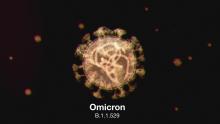
The SARS-CoV-2 Omicron variant escapes the immune response better than its coronavirus ancestors, but has also facilitated our transition to a society that can live with COVID-19.
15 Sep 2022
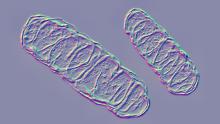
Cellular structures called mitochondria depend on microproteins to assist and control the assembly of a protein chain that extracts energy from nutrients, according to a new study by scientists in Singapore.
26 Aug 2022
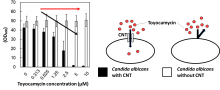
Osaka Metropolitan University researchers have clarified that an adenosine analog—the antibiotic toyocamycin—is taken up into cells by a concentrative nucleoside transporter (CNT) in Candida albicans, an opportunistic yeast fungus that causes candidiasis infections. This was also true of the human CNT3 protein. They found that C. albicans CNT and human CNT3 proteins take up similar molecules at different rates depending on their molecular size and structure. These results are expected to lead to the development of new antifungal drugs that are effective only against C. albicans and safe for humans.
15 Jul 2022
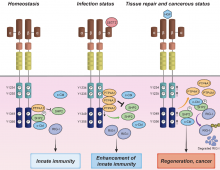
Innate immunity is activated when the pattern recognition receptors (PRRs) recognize pathogen-associated molecular patterns (PAMPs). We show that a liver-derived secretory protein LECT2, a hepatokine, binds to the HGF receptor MET, a proto-oncogene product, to suppress the proliferation signal of MET. LECT2 activates retinoic acid-inducible gene-I, enhancing antiviral and innate immune responses through MET. Thus, LECT2 is an anti-proliferative and immunoregulatory factor that could be a therapeutic target for viral infections and cancer.

14 Apr 2022
Bacteria hitchhike on red blood cells, New model simulates effects of exercise on muscles, Argon found in air of ancient atmosphere and Revealing emergent elastic fields of chiral crystals. Read all in the April Editor's Choice and this month's Asia Research News 2022 magazine pick - Asia's race to outsmart antimicrobial resistance.
30 Mar 2022
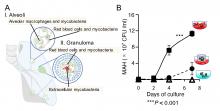
Mycobacteria are a group of pathogenic bacteria that cause diseases like leprosy and tuberculosis in humans. Now, a new study by scientists at Hiroshima University finds that mycobacteria are associated with red blood cells at lung infection sites, an interaction that has escaped scientific notice for 140 years since the discovery of the organism causing tuberculosis.
08 Mar 2022
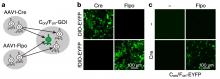
Scientists develop a method to genetically label neurons with a single gene of interest in mice by combining the anterograde transsynaptic spread of adeno-associated virus serotype 1 (AAV1) with intersectional gene expression. In two distinct circuits: the retina/primary visual cortex to the superior colliculus and the bilateral motor cortex to the dorsal striatum, injections of AAV1 expressing either Cre or Flpo recombinases and the Cre/Flpo double-dependent AAV into two upstream regions and the downstream region, respectively, were used to label postsynaptic neurons receiving inputs from the two upstream regions.
25 Feb 2022
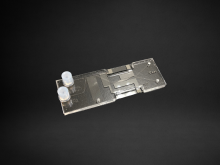
A Japanese research team created a new way to sort living cells suspended in fluid using an all-in-one operation in a lab-on-chip that required only 30 minutes for the entire separation process.
Events
Sorry, nothing coming up for this discipline
Researchers
Sorry, nothing coming up for this discipline
Giants in history
Sorry, nothing coming up for this discipline