
Health
News

16 Mar 2023
PAXLOVID™ rollout continues with Laos, Malawi, Rwanda and Zambia as international access to oral treatments improves.

16 Mar 2023
Asia Research News Partnerships
Annual innovation event brings together global innovators, entrepreneurs, researchers and scientists, and experts from various fields and industries to showcase their latest innovations, share ideas, and collaborate with industries to develop better technologies and solutions to shape our future. This is also a platform for innovators to meet potential investors and partners.
15 Mar 2023
The University of Osaka
An Osaka University study investigated how the COVID-19 onset and media coverage affected hand hygiene compliance. Voluntary use of hand sanitizer in a hospital rose from 5% in December 2019 to 70%+ by August 2020. In the same period, TV coverage reached 7.7 hours/day on a national broadcaster. The study’s simulations found a significant relation between TV coverage and hand hygiene compliance, though no correlation between compliance and newly confirmed COVID-19 cases and deaths.
15 Mar 2023
Hokkaido University
Researchers have revealed the modulatory effect of the anti-inflammatory metabolite itaconate on T helper and T regulatory cells, which may lead to new therapeutic approaches to treating some autoimmune diseases.

10 Mar 2023
Asia Research News
Asia Research News monitors the latest research news in Asia. Some highlights that caught our attention this week are how hanging out with friends can keep you healthy, eggs made from male mice, and taking one step closer to a machine that can read our minds.
10 Mar 2023
Tohoku University
Tohoku University researchers have discovered that softer gums hinder the development of gingiva fibroblasts – the cells that help produce the fibers that hold our teeth in place.

09 Mar 2023
City University of Hong Kong (CityUHK)
Cancer metastasis is a major cause of cancer-related death. A research team at City University of Hong Kong (CityU) recently identified a protein that triggers the migration of liver and pancreatic cancer cells and metastasis, and is correlated with shortening the survival time of patients. The research findings were verified by in vitro and in vivo models, supported with clinical data, and are expected to provide a new potential target for cancer therapy.
06 Mar 2023
The University of Osaka
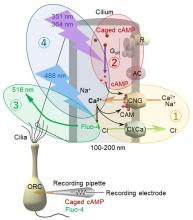
Researchers from Osaka University found that Ca2+ signaling simultaneously performed signal amplification and olfactory adaptation. The results demonstrated that this mysterious phenomenon was segregated inside the cilium. A novel system was used to observe changes in Ca2+ dynamics inside the thin structure of a cilium. Unveiling the mystery of Ca2+ signaling segregation further clarifies the mechanisms underlying the human sense of smell.

05 Mar 2023
Hiroshima University
Brain shrinkage patterns tied to low trust have links to depression vulnerability that can alert to its early detection even before symptoms appear.

03 Mar 2023
Asia Research News
Asia Research News monitors the latest research news in Asia. Some highlights that caught our attention this week are that COVID is transmissible between dogs, a new material created to replace extracted teeth, and a fungi-eating plant that was thought to be extinct.

24 Feb 2023
Asia Research News
Asia Research News monitors the latest research news in Asia. Some highlights that caught our attention this week are a robotic hand with a magic touch, a solution to reduce the negative effects of screen time in children, and a team charting dung beetles.
24 Feb 2023
Osaka Metropolitan University
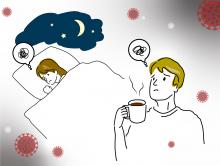
A research group from the Osaka Metropolitan University Graduate School of Medicine conducted a survey of 285 patients regarding the long-term aftereffects of COVID-19. As a result, they revealed that more than half of COVID-19 patients still had residual symptoms, even close to a year afterward. It became clear that fatigue, abnormalities in senses of taste and smell, hair loss, and sleep disorders could persist, regardless of the severity of the initial COVID-19.

23 Feb 2023
Newcastle University in Singapore
Scientists from Oil Crops Research Institute (OCRI) of Chinese Academy of Agricultural Sciences (CAAS), Anhui Agricultural University (Anhui, China), Newcastle University in Singapore, and Huizhou Comvikin Biotechnology Co., Ltd (Guangdong, China) have developed a green and efficient approach to synthesize highly liposoluble and antioxidant L-ascorbyl esters by immobilized lipases.

21 Feb 2023
Hokkaido University
Sifting through sewage for SARS-CoV-2 genetic material could help authorities tailor infection control policies.

17 Feb 2023
Asia Research News
Asia Research News monitors the latest research news in Asia. Some highlights that caught our attention this week are the discovery of a dinosaur larynx, 3D-printed contact lenses that use AR, and a leggy robot spider that can fly.

17 Feb 2023
Asia Research News
Antimicrobial resistance is a global public health threat. Asia Research News has prepared a resource for journalists to find stories and connect with scientists combating antimicrobial resistance.
16 Feb 2023
Duke-NUS Medical School
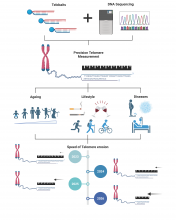
A new approach that ‘baits’ the caps or telomeres protecting the ends of chromosomes could provide information on how rapidly we are ageing and what we need to do to slow it down.
13 Feb 2023
The University of Osaka
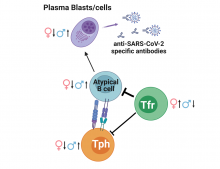
Researchers from Osaka University have shown sex-specific differences in the immune response to COVID-19 infection. By identifying and analyzing the immune cell population in COVID-19 patients, they showed that infection results in a reduced ratio of circulating follicular T regulatory (cTfr) cells to a network of antibody-producing proteins, correlated with dysregulated antibody production. This cTfr cell reduction is more significant in males, providing cellular evidence for the observed association between increased risk and male sex.
09 Feb 2023
Tohoku University
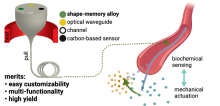
A research team led by an associate professor at Tohoku University has developed a microscopic fiber equipped with actuators and biochemical sensors. The breakthrough could be used to develop smart catheters and lead to further advancement in robotics.
02 Feb 2023
Duke-NUS Medical School
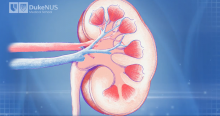
Blocking an immune-regulating protein reverses the damage caused by acute and chronic kidney disease, a preclinical study suggests.
02 Feb 2023
Hokkaido University
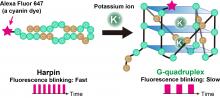
A new microscopic technique allows for the real-time study of RNA G-quadruplexes in living cells, with implications for the fight against amyotrophic lateral sclerosis.

27 Jan 2023
Asia Research News
Asia Research News monitors the latest research news in Asia. Some highlights that caught our attention this week are a robot that can melt and reform, artificial skin that can sense objects before touching them, and the pause and reversal of the planet’s inner core’s spin.

27 Jan 2023
Hiroshima University
New research found that periodontitis, a common gum infection known to worsen other systemic diseases, could also be linked to atrial fibrosis — potentially clarifying its previously unknown connection with atrial fibrillation.
20 Jan 2023
Kanazawa University
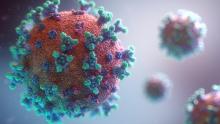
Researchers at Kanazawa University report in Nano Letters how high-speed atomic force microscopy can be used to assess the effectivity of spike-neutralizing antibodies for preventing COVID-19. The use of such antibodies offers a promising alternative to vaccines.

20 Jan 2023
Asia Research News
Overeating mechanism: why "eating just one chip"🍟 is impossible, Measuring hidden energy of gamma-ray bursts, Marine species that can adapt to ocean acidification & A rough start can lead to a strong bond, Read all in our first Editor's Choice of 2023. Plus our interview on what dengue vaccine approval in EU💉means for global dengue protection.
12 Jan 2023
Osaka Metropolitan University
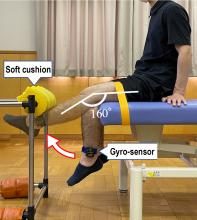
Osaka Metropolitan University scientists delved into the relationship between gait function and knee extension velocity after total knee arthroplasty and compared the effects of various factors on walking. The results reveal that knee extension velocity, measured while seated, on the operated side was the most important determinant of gait function. These findings are expected to contribute to the development of new rehabilitation programs for efficient gait function improvement.

12 Jan 2023
Osaka Metropolitan University
An Osaka Metropolitan University research group recorded the autonomic nervous system activity in patients with irritable bowel syndrome (IBS) and healthy subjects using a wearable device and a proprietary smartphone application to record daily life events such as defecation and sleep. As a result, they found that sympathetic nervous system activity was activated in IBS patients from 2 minutes before defecation and continued until 9 minutes after defecation. Further research is expected to improve the quality of life of IBS patients and elucidate the pathophysiology.

10 Jan 2023
Osaka Metropolitan University
A research team led by Osaka Metropolitan University has revealed a difference in neural activity in response to visual food stimuli, depending on whether those stimuli are presented consciously or unconsciously. Using a questionnaire to assess the study participants, the team found that this difference was associated with their scores on eating behaviors, including emotional eating and cognitive restraint of food intake. These results indicate that eating behavior cannot be understood without taking into account both unconscious and conscious neural processes.

06 Jan 2023
Asia Research News
Asia Research News monitors the latest research news in Asia. Some highlights that caught our attention this week are how mysterious enormous space bubbles are formed, how drinking sweet drinks might contribute to hair loss, and a synthetic tissue created to give pigs back their erectile function.

04 Jan 2023
The University of Osaka
Researchers from Osaka University found that dietary supplementation with tricaprin results in coronary artery plaque regression and resolution of symptoms in patients with triglyceride deposit cardiomyovasculopathy, a treatment-resistant form of coronary artery disease. These findings represent a conceptually novel treatment for coronary atherosclerosis that paves the way toward establishing a multi-faceted approach to caring for patients with this condition.
Events
Sorry, no events coming up for this topic.
- « first
- ‹ previous
- 1
- 2
- 3
Giants in history

Henriette Bui Quang Chieu (1906 – 2012) was inspired to follow in her brother’s footsteps and become a doctor after losing her mother to tuberculosis. She studied in France and became the first Vietnamese woman to receive a medical degree. Upon her return to Vietnam, Bui was appointed head of the Department of Midwifery at Cho Lon Hospital in Ho Chi Minh City. A pioneer in gynaecology, she applied acupuncture techniques that she had learned in Japan to obstetrics. As Vietnam was still a French colony, Bui also lobbied for the rights of Vietnamese doctors, nurses, and patients.

Japanese biochemist Akira Endo (1933 – 2024) discovered the first statin, called mevastatin, which lowered cholesterol levels in the blood by inhibiting a key enzyme in the cholesterol biosynthesis pathway. His work laid the foundation for the development of statins to help patients lower their blood cholesterol levels and reduce their risk of heart disease or stroke.

Filipina paediatrician and scientist Perla Santos-Ocampo (25 July 1931 – 29 June 2012) made important contributions to treatments and policies that curbed debilitating and sometimes deadly diarrhoea-related diseases and malnutrition in children.

Singaporean physician Oon Chiew Seng (1916 – 31 March 2022) advanced dementia care and research in Singapore, and co-founded the Apex Harmony Lodge, the nation’s first nursing home for residents with dementia.
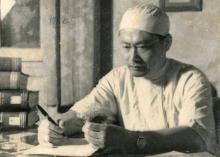
Vietnamese surgeon Tôn Thất Tùng (10 May 1912 – 7 May 1982) developed a pioneering technique that reduced the risks and mortality rate of liver operations.
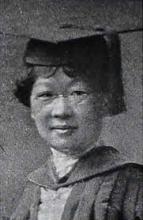
Chinese biochemist Chi Che Wang (1894 - 1979), one of the first Chinese women to study abroad, advanced to prominent research positions at American institutions including the University of Chicago and the Northwestern University Medical School.
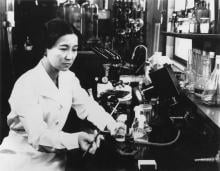
Ruby Sakae Hirose (1904 – 1960) was a Japanese-American scientist whose research contributed significantly to our understanding of blood clotting, allergies and cancer.
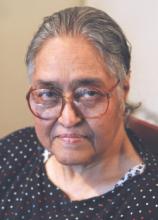
Flora Zaibun Majid ( 1939–2018) was an accomplished Bangladeshi researcher in botany and nutrition science and the first female chairperson of the Bangladesh Council of Scientific and Industrial Research.

Iranian physician and bacteriologist Azar Andami (8 December 1926 – 19 August 1984) developed a cholera vaccine to combat an outbreak that swept through the Middle East, India, Southeast Asia, and Africa in 1937.
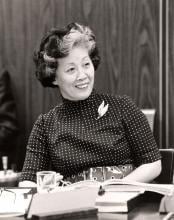
Irene Ayako Uchida’s (8 April 1917 – 30 July 2013) strides to understand genetic diseases such as Down syndrome paved the way for early screening of chromosomal abnormalities in foetuses.
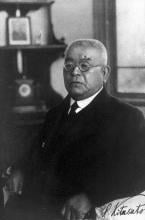
Baron Kitasato Shibasaburo (29 January 1856 – 13 June 1931) was a Japanese physician and bacteriologist whose work led to a new understanding of preventing and treating tetanus, diphtheria and anthrax.

Maggie Lim (5 January 1913 – November 1995) was a Singaporean physician who promoted family planning and expanded the access to clinics to improve the quality of life for mothers and children in Singapore’s early days.
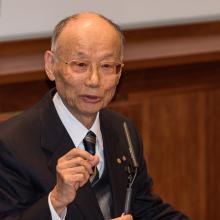
By isolating soil microorganisms and studying the compounds they produce, Satoshi Omura (born 1935) discovered almost 500 organic compounds with unique properties that were produced by these microorganisms, including many new antibiotics.

The founder of the Adyar Cancer Institute in India, Muthulakshmi Reddy (30 July 1886 – 22 July 1968), fought to uplift women and girls from impoverished situations.
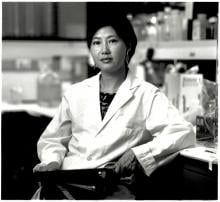
Chinese-American virologist and molecular biologist Flossie Wong-Staal (27 August 1946 – 8 July 2020) was the first scientist to clone HIV and determine the function of its genes.

Maharani Chakravorty (1937 – 2015) was one of India’s earliest molecular biologists whose research paved the way for advances in the treatment of bacterial and viral infections.

Archana Sharma (16 February 1932 - 14 January 2008) conducted research into plant and human genetics that expanded the understanding of both botany and human health. In relation to botany, she uncovered the means by which asexually-reproducing plants evolve into new species.
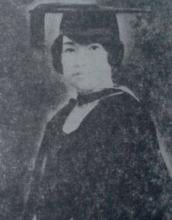
The first Thai woman to receive a degree in medicine, Margaret Lin Xavier (29 May 1898 – 6 December 1932), is best remembered for her compassion towards her less privileged patients.
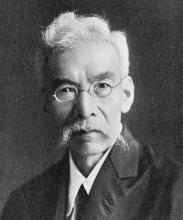
In 1915, pathologist Katsusaburo Yamagiwa and his research assistant Koichi Ichikawa became the first to prove that chronic exposure to chemicals can cause cancer.
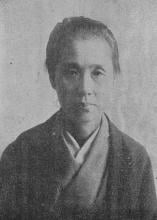
Ogino Ginko (3 March 1851 – 23 June 1913) was the first registered female doctor to practise modern medicine in Japan.
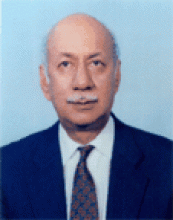
Syed Qasim Mehdi (13 February 1941 – 28 September 2016) was a Pakistani molecular biologist who was a founding member of the Human Genome Diversity Project (HGDP), which assessed human diversity by studying human migration, mutation rates, relationships between different populations, genes involved in height and selective pressure.
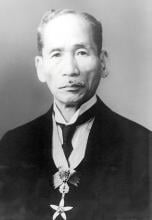
Umetaro Suzuki (7 April 1874 – 20 September 1943) was a Japanese scientist best remembered for his research on beriberi, a disease caused by vitamin B1 deficiency, characterized by limb stiffness, paralysis and pain.
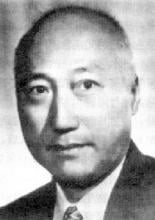
Hsien Wu (24 November 1893 – 8 August 1959) is widely regarded as the founder of biochemistry and nutrition science in China. He was the first to propose that protein denaturation was caused by the unfolding of the protein, instead of chemical alteration.

Indian organic chemist Asima Chatterjee (1917 to 2006) studied the medicinal properties of plant products, especially compounds known as vinca alkaloids.
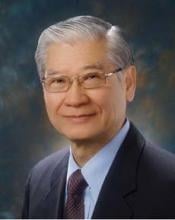
David T. Wong (born 1936) is a Hong Kong-born American neuroscientist who is best known for discovering the antidepressant drug fluoxetine, better known as Prozac.
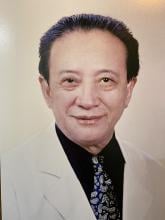
After witnessing death and suffering as a youth in his home village during World War II, Nguyễn Tài Thu (6 April 1931 – 14 February 2021) set his sights on alleviating pain by becoming a doctor. After studying Traditional Chinese Medicine in China in the 1950s, Thu returned to Vietnam to serve in military hospitals. Eventually, he became the country’s foremost practitioner of acupuncture, a technique he first learned by inserting needles into himself.

Filipino chemist and pharmacist Manuel A. Zamora (29 March 1870 – 9 July 1929) is best remembered for his discovery of the tiki-tiki formula to combat beriberi, a disease caused by Vitamin B1 deficiency.
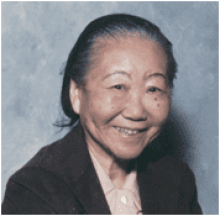
Tsai-Fan Yu (1911 – 2 March 2007) was a Chinese-American physician and researcher who was the first female full professor at Mount Sinai School of Medicine. She discovered that gout, a condition characterized by the painful inflammation of joints, was caused by elevated levels of uric acid in the bloodstream.
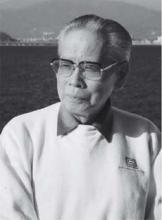
A Japanese surgeon, Tetsuzo Akutsu (20 August 1922 – 9 August 2007) built the first artificial heart capable of keeping an animal alive.
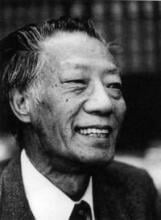
Min Chueh Chang (10 October 1908 – 5 June 1991) was a Chinese-American biologist who studied fertilization in mammalian reproduction.