Asia Research News monitors the latest research news in Asia. Some highlights that caught our attention this week are snakes that do gymnastics to get out of danger, 3 species of ancient spiders discovered in China, and how monkeys can fall for magic tricks.
Cambodia is leading Southeast Asia's transition to cleaner energy. After submitting its long-term strategy for carbon neutrality to the United Nations, it is now currently working with Singapore to become a major exporter of clean energy in the region.
An international interdisciplinary team of researchers hailed from India, Malaysia, Singapore and Thailand has successfully developed a method of using chitosan from terrestrial insects to manufacture eco‐friendly polymer composite parts using the 3D printing method.
Institute of Industrial Science, The University of Tokyo (UTokyo-IIS)
06 Apr 2023
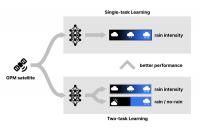
Researchers from the Institute of Industrial Science, The University of Tokyo, find that a deep-learning model that simultaneously learns to classify satellite data as rain/no-rain while determining rain intensity outperforms other models.
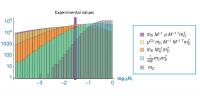
Osaka Metropolitan University scientists analyzed each element of the neutrino mass matrix belonging to leptons and showed theoretically that the intergenerational mixing of lepton flavors is large.
The 2022 Asian Universities Student Entrepreneurship Ideation Challenge (AUSEIC) has concluded successfully with an online final pitch and award presentation. Start-up Bridge Neuro, founded by Victor Wong, a Year-3 student on the Doctor of Education Programme at EdUHK won the competition, in a field of 30 teams overall.
Ferroptosis is a recently discovered type of cell death associated with certain neurodegenerative, cardiovascular and kidney diseases. Whilst scientists have understood that accumulated iron and degenerated lipids trigger ferroptosis, the actual mechanisms at play have remained a mystery. A team of researchers from Tohoku University has identified where in the cells these accumulations take place, and what gets targeted as ferroptosis occurs.
We sat down with Dr. Ji Ha Lee to get to know her and her work on developing recyclable and degradable gels that can replace plastics as well as nanogels that can help with targeted drug delivery.
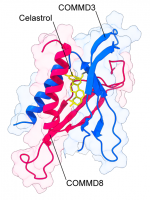
Researchers from Osaka University found that the COMMD3/8 complex is implicated in the progression of the autoimmune response in a mouse model of rheumatoid arthritis. They identified celastrol, the active compound of a medicinal herb, as an inhibitor of the COMMD3/8 complex. Celastrol blocked the progression of rheumatoid arthritis. Thus, celastrol is a potential lead for developing treatments against rheumatoid arthritis.
Kavli Institute for the Physics and Mathematics of the Universe (Kavli IPMU)
04 Apr 2023
An international team including Kavli IPMU has measured a value for the “clumpiness” of the universe’s dark matter, which aligns with values that other gravitational lensing surveys have found in looking at the relatively recent universe — but it does not align with the value of 0.83 derived from the Cosmic Microwave Background.
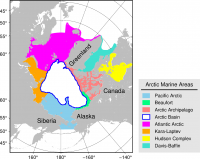
Marine predators have expanded their ranges into the Arctic waters over the last twenty years, driven by climate change and associated increases in productivity.
An international team of scientists is helping to reduce carbon emissions into the atmosphere by exploring different natural fibres and blending the natural fibres in plastics to make light-weight and strong green composite materials for the construction and automotive industries.
Asia Research News monitors the latest research news in Asia. Some highlights that caught our attention this week are glowing worms named after ghosts, bacteria that can create plastic from thin air, and a water source on the moon.
Asexual, or vegetative, reproduction in plants is controlled by environmental conditions, but the molecular signaling pathways that control this process are poorly understood. Recent research suggests that the KAI2-ligand (KL) hormone is responsible for initiating and terminating the production of gemmae, or genetically identical plantlets, on liverwort plants based on the presence or absence of specific environmental factors.
Daegu Gyeongbuk Institute of Science and Technology (DGIST)
31 Mar 2023
- Researcher startup MFR and student startup TIA have been selected among five innovative startups in the region
- Startups will receive funds up to 100 million KRW for one year and the opportunity to collaborate with Samsung Electronics and its affiliates
Daegu Gyeongbuk Institute of Science and Technology (DGIST)
31 Mar 2023
- Successful localization of magnetic sensor chips through a performance evaluation based on unique technologies of DGIST (original technology), Electric Vehicle Advanced Materials Co., Ltd. (module mass production), and Kwangwoo Co., Ltd. (product production)
- Expected to strengthen national competitiveness in the global sensor market, which is dominated by foreign companies based on performance and price competitiveness
Daegu Gyeongbuk Institute of Science and Technology (DGIST)
31 Mar 2023
- The effect of the cycle of G proteins in real time on the two-step structural change of cell membrane receptors has been investigated
- This study is expected to be applied to pathologies related to G protein-coupled receptors and on research for their treatments
Daegu Gyeongbuk Institute of Science and Technology (DGIST)
31 Mar 2023
- The 2021 paper from the research team of Professor Dongwon Yoon of the Daegu Gyeongbuk Institute of Science & Technology (DGIST) was selected as the cover paper for the 10th anniversary edition of the top Soft Robotics Journal
- Recognized for excellence in robot hand technology that is as flexible and delicate as a human hand combined with a “flexure hinge”
Daegu Gyeongbuk Institute of Science and Technology (DGIST)
31 Mar 2023
- Development of low-temperature, highly graphitized carbon synthesizing method that can overcome the limitations of existing fuel-cell carbon supports
- Expected to be used in next-generation fuel-cell vehicles with improved generation efficiency and excellent stability
- Study results will be published in ‘Applied Catalysis B: Environmental’, a top journal in the field of Environmental Science
Daegu Gyeongbuk Institute of Science and Technology (DGIST)
31 Mar 2023
- DGIST student startups, CURE and TIA, proved the possibility of commercialization and investment attraction of their next-generation eco-friendly technology
Daegu Gyeongbuk Institute of Science and Technology (DGIST)
31 Mar 2023
- Research teams led by Professor Hongsoo Choi and Professor Yongseok Oh from DGIST joined the research team led by Dr. Jongcheol Rah from Korea Brain Research Institute to develop the technology for delivering a microrobot to a target point of a hippocampus in an in-vitro environment, connecting neural networks, and measuring neural signals
- The research findings are expected to contribute to neural network research and the verification and analysis of cell therapy products
Daegu Gyeongbuk Institute of Science and Technology (DGIST)
31 Mar 2023
- DGIST Professor Minseok Kim’s research team has developed an electronic medicine that can restore normal Schwann cell phenotypes in CMT disease models
- It presents the potential of electric stimulation-based treatment for chronic peripheral nerve disorders
Daegu Gyeongbuk Institute of Science and Technology (DGIST)
31 Mar 2023
- The world’s first technology for synthesizing high-quality and low-cost copper-graphene nanowire using intense scintillation
- Implementation of high-performance transparent-flexible electronic device based on copper-graphene nanowire and publication in the international journal Nano Energy, which is renowned in the field of energy
Researchers from Osaka Metropolitan University Graduate School of Medicine conducted an interoperative comparison of lateral disc meniscus injuries of young patients (aged 15 or less), that were treated with plastic sutures or subtotal resection, to see if there was a difference in postoperative cartilage degeneration. The research group observed that sub-total meniscectomies were more likely to show cartilage degeneration, being worst in lateral disc meniscus injuries.
Osaka Metropolitan University scientists have developed a process using artificial photosynthesis to successfully convert more than 60% of waste acetone into 3-hydroxybutyrate, a material used to manufacture biodegradable plastic. The results were obtained using low-concentration CO2, equivalent to exhaust gas, and powered by light equivalent to sunlight for 24 hours.
Researchers at Kanazawa University report in JACS Au how they have developed operando scanning ion conductance microscopy to allow simultaneous measurements of changes in the anode surface topography of a lithium ion battery during use, as well as the varying ion concentration with depth. Combining both types of information should help researchers evaluate the correlation between the two to design better batteries.
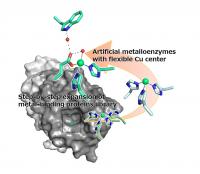
A research group at Osaka Metropolitan University has succeeded in simply creating an artificial metalloenzyme with the common metal-binding motif 2-his-1-carboxylate, which is found in natural non-heme metalloenzymes. They created a library of 12 different proteins and screened the library and found that the H52A/H58E variant had the best stereoselectivity. It is expected that this research can be expanded to produce a variety of biocatalysts that work under mild conditions.