

Peer Reviewed
News

17 Nov 2026
Proposing the “Clinical AI License,” a new system enabling independent initial diagnosis and prescribing.
A Perspective article by Yusaku Fujii, Professor at Gunma University, “Toward a Clinical AI License for Independent Initial Diagnosis and Prescribing in Primary Care,” has been published in the international journal AI (MDPI).
17 Nov 2026
Osaka Metropolitan University
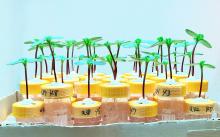
Selective light composition determines sunflower seedling outcomes
17 Nov 2026
Institute of Industrial Science, The University of Tokyo (UTokyo-IIS)
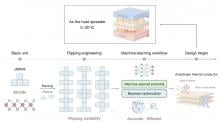
Researchers from the Institute of Industrial Science, The University of Tokyo use machine learning to design flipped stacks of Janus MoSSe layers that block heat flow between layers but not along them, a promising feature for 3D chips
17 Nov 2026
The University of Osaka
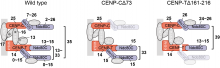
Researchers from the University of Osaka have quantified the protein copy numbers of components of the kinetochore protein structure, critical for cell division. The assembly of the outer kinetochore onto the constitutive inner kinetochore was shown to occur through two redundant mechanisms, meaning assembly can proceed if one route is disrupted. This study provides new insight into the process of protein assembly into the structures that are critical for accurate cell division.
16 Nov 2026
Hiroshima University
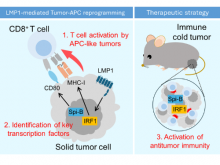
LMP1, an Epstein-Barr virus protein, has a “Mr. Hyde” side that can promote cancer and a “Dr. Jekyll” side that can spur antitumor immune responses. In a study published in Cell Reports, researchers traced key parts of that antitumor effect to the transcription factors Spi-B and IRF1, then showed that expressing the two without LMP1 activated CD8+ T cells and suppressed tumor growth in mice.
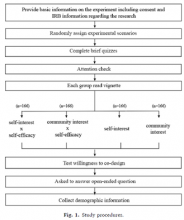
16 Nov 2026
Sungkyunkwan University
Published in the urban studies journal Cities, the study shows that personal stakes and policy efficacy increase citizens’ willingness to co-design
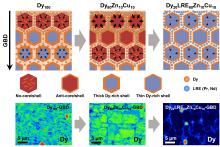
16 Nov 2026
Daegu Gyeongbuk Institute of Science and Technology (DGIST)
- Identifies the causes of excessive heavy rare-earth accumulation and proposes a precision diffusion design strategy
- Reduces dysprosium (Dy) usage by 80% while maintaining comparable magnetic performance, potentially easing supply chain risks and cost pressures
- Findings published in Chemical Engineering Journal (IF: 12.5), a leading international journal in chemical engineering and materials science
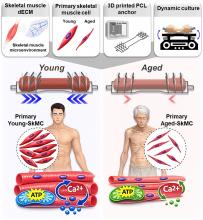
16 Nov 2026
Daegu Gyeongbuk Institute of Science and Technology (DGIST)
- Research teams led by Professor Minseok S. Kim of the Department of New Biology at DGIST and Professor Dong-Woo Cho of POSTECH create 3D muscle microtissues using human cells
- Platform expected to play a key role in developing treatments for “sarcopenia,” aligning with the FDA's shift toward non-animal testing methods; study selected as the Front Cover article of Small Science
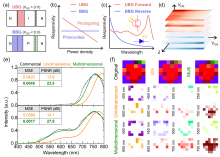
16 Nov 2026
Daegu Gyeongbuk Institute of Science and Technology (DGIST)
- Research teams led by Professors Jong-Soo Lee of DGIST, Hoon Hahn Yoon of GIST, and Hyun-Soo Ra of Kyungpook National University develop an ultra-high-precision computational spectrometer based on a single photodetector
- Technology expected to pave the way for commercialization of ultra-compact, low-power spectrometers for integration into smartphones, drones, and autonomous vehicles; findings published in Advanced Functional Materials, an international journal covering materials science and applied engineering
16 Nov 2026
Daegu Gyeongbuk Institute of Science and Technology (DGIST)
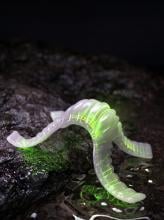
- Research team led by Professor Soon Moon Jeong of the Department of Advanced Technology develops a battery-free soft robot using highly stretchable “mechanoluminescent fibers”
- Study selected for the cover article of the October issue of Small Structures, a prestigious international journal in nanotechnology and advanced materials
16 Nov 2026
Daegu Gyeongbuk Institute of Science and Technology (DGIST)
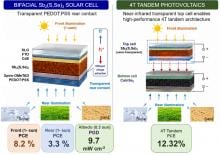
- Research team led by Dae-Kue Hwang and Dae-Hwan Kim of the Division of Energy & Environmental Technology develops antimony (Sb)-based thin-film solar cells using transparent polymer electrodes
- Technology expected to maximize solar cell efficiency by harnessing previously unused reflected light to generate electricity
- Findings published in Advanced Materials, one of the world's leading journals in materials science
15 Nov 2026
Hokkaido University
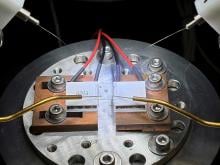
Better electron transport without degrading heat transfer offers a promising path for next-generation power electronic devices.
13 Nov 2026
National Taiwan University
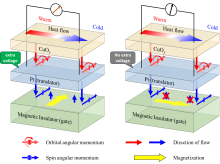
Scientists at National Taiwan University have reported the first experimental evidence of the orbital Nernst effect, showing how a heat current drives transverse accumulation of electrons' orbital angular momentum in a naturally oxidized copper film.
13 Nov 2026
Institute of Industrial Science, The University of Tokyo (UTokyo-IIS)
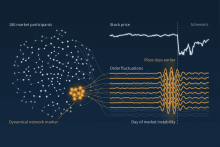
Researchers from The University of Tokyo and Rikkyo University applied a theory first used to detect a pre-disease state to order data from the Tokyo Stock Exchange

12 Nov 2026
Nanjing University researchers develop a sensitive method to detect overlooked biological effects of complex chemical mixtures in water.

12 Nov 2026
Osaka Metropolitan University
Climate-related changes in forest structure and tree composition revealed by long-term monitoring
12 Nov 2026
The University of Osaka
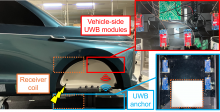
Researchers at the University of Osaka and collaborators developed an ultra-wideband (UWB) radio-based positioning method for electric vehicle wireless charging. By combining signal travel times, phase differences, and calibration, the system accurately estimates the position and orientation of a vehicle's charging coil relative to a charging pad. Laboratory experiments using a scaled-down vehicle mockup achieved median errors of 2.32 millimeters and 0.25 degrees, a promising step toward automated wireless charging for self-driving vehicles.
11 Nov 2026
Singapore University of Technology and Design
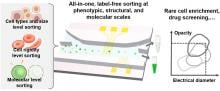
A Singapore-China study led by SUTD has built a microfluidic system that identifies and sorts cells using their electrical signature, then separates them with a precisely aimed pulse of sound.
11 Nov 2026
Osaka Metropolitan University
Okinawa rail embryo successfully developed after artificial insemination using frozen-thawed sperm
11 Nov 2026
National Taiwan University
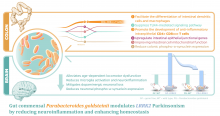
Researchers in Taiwan have shown that a single oral dose of a common gut bacterium, given before any movement problems appeared, protected mice carrying a Parkinson's-linked gene mutation from losing the brain cells that control movement. The bacterium worked by calming inflammation in the intestine, which in turn kept the brain's own immune cells quiet.
11 Nov 2026
Tohoku University
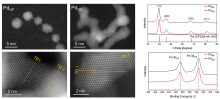
Researchers have developed a hydrogen sensor that maintains high accuracy even in hot, humid conditions, without an external heater. The secret lies in tiny crystal boundaries within palladium nanoparticles, which help the sensor detect hydrogen even when water vapor is abundant. Combining this technology with machine learning could pave the way for safer, more reliable hydrogen monitoring in industrial facilities and future clean energy systems.
11 Nov 2026
Tohoku University
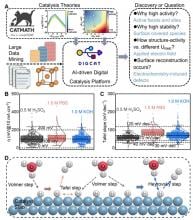
Cobalt phosphide is a mystery to scientists. Computer models predict it should be an unstable platinum substitute for producing hydrogen, yet in reality it performs remarkably well. A recent study has finally found out why: the material reshapes its own surface to protect itself while it works.
10 Nov 2026
Tohoku University
Water is typically not thought of as a magnetic material, but a recent study has discovered that the orientation of water molecules can flip when introduced to metal ions. The discovery means that hydrogen bonding could potentially be used to link magnetic ions together.

10 Nov 2026
Tohoku University
Building models that show how atoms interact is a notoriously complicated process. But a newly developed AI agent has made this much easier. Called MLP Copilot, the framework consolidates scientific evidence and calculations, making it easier for researchers to build models. A research group from Tohoku University’s WPI-AIMR used this framework to reveal more about how alumni nanoparticles oxidize.
10 Nov 2026
The University of Osaka
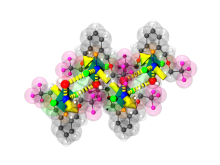
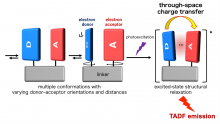
An international research team led by the University of Osaka has created specially designed, flexible molecules that efficiently generate orange-to-red light. Unlike many earlier designs, the molecules do not need to be locked into a rigid shape to work well. These new materials could be used in the screens of smartphones and televisions and, with further development, could also be used for biological imaging.
10 Nov 2026
Tohoku University
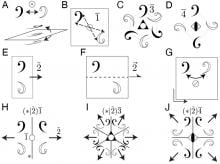
Mathematics often distills the complex into a language we can understand. A newly developed mathematical framework has done just that with symmetry in complex, layered structures. Developed by an international research team led by Tohoku University’s WPI-AIMR, the framework enables a better understanding of how these materials work and potentially opens up new ways to influence how symmetrical patterns can be utilized to enhance heat conduction, electricity transport, and light interaction.

10 Nov 2026
Xi'an Jiaotong-Liverpool University
The 21st-century epidemics of animal-human diseases, or zoonotic pathogens, such as MERS, SARS, and Covid-19, have demonstrated how pathogen spillover from animal to human can pose a global health threat. There is one factor linked with at least 70% of such emerging diseases: wildlife.
10 Nov 2026
National Taiwan University
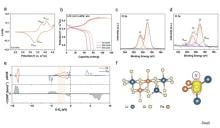
National Taiwan University Department of Chemistry and research collaborators combine synchrotron experiments and electronic-structure calculations to show how chlorine can take part in charge storage in an iron chloride cathode.
10 Nov 2026
The University of Osaka
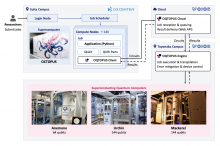
Researchers at The University of Osaka have developed SEAFOOD, a platform linking the OCTOPUS supercomputer with domestically developed superconducting quantum computers through the open-source OQTOPUS software. This marks Japan’s first integration of a domestically developed quantum computer and a supercomputer installed at the same university. A quantum chemistry demonstration confirmed their ability to work together in a single workflow, opening possibilities for advances in materials design and drug discovery.
09 Nov 2026
Osaka Metropolitan University
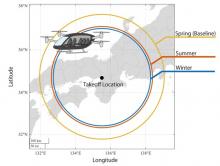
Why electric air taxis may fly shorter distances in summer and winter than in spring
Events
Sorry, no events coming up for this topic.
Researchers
Sorry, no researchers coming up for this topic.
Giants in history
Sorry, no researchers coming up for this topic.