

Japan
News

27 Apr 2021
Hokkaido University
A team of scientists has found that women’s football was common across Japan between the Meiji restoration and the start of the Second World War. In the process, they also uncovered the oldest known photograph of women playing football in Japan, from 1916.
22 Apr 2021
Kavli Institute for the Physics and Mathematics of the Universe (Kavli IPMU)
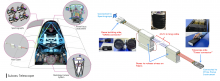
The two most recent additions to the Subaru Telescope in February 2021, including a miniature telescope, have enabled the international Prime Focus Spectrograph team, led by Kavli IPMU members, to observe night sky spectra for the first time.
22 Apr 2021
Hokkaido University
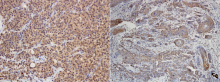
Scientists have shown that the biological molecule PD-L1 is a potential target for the treatment of metastasized oral malignant melanoma in dogs.
20 Apr 2021
Hiroshima University
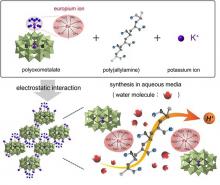
Protons are the next big thing when it comes to fuel cell technology. The subatomic exchange produces power on a scale that challenges contemporary solid-state fuel cell technology, used to help power space shuttles. To realize the proton-based technology sooner, an international team of researchers have developed a hybrid material that effectively transports protons at high temperatures and humidity — two major challenges in past attempts.
19 Apr 2021
Osaka City University
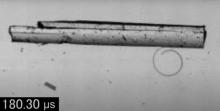
Researchers discovered, while exploring the photomechanical properties of diarylethene, that under irradiation with UV light the crystal of the compound peels off into micrometer sized crystals at a world’s fastest speed of 260 microseconds. As the material returns to its former molecular structure when exposed to visible light, the exfoliation method positions itself as a candidate for photoactuator manufacturing.
16 Apr 2021
Hiroshima University
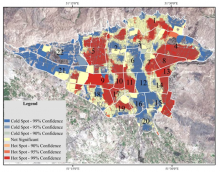
A person who owns a car or who has a college education may be less vulnerable to COVID-19, according to an analysis of cases in Tehran, Iran, one of the early epicenters of the pandemic. While such variables do not inherently lower a person’s risk, they do indicate an infrastructure of protection that persists despite how densely populated a person’s district might be.
15 Apr 2021
Institute of Industrial Science, The University of Tokyo (UTokyo-IIS)
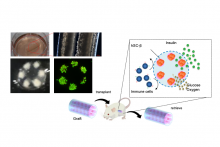
Researchers from The University of Tokyo develop a novel device for the safe and effective transplantation of human induced pluripotent stem cell (iPSC)-derived pancreatic beta-cells in type I diabetes mellitus
14 Apr 2021
Hokkaido University
On April 15, 2021, Hokkaido University and Shionogi & Co., Ltd. will start to monitor COVID-19 in Osaka Prefecture based on wastewater-based epidemiology (WBE), with the cooperation of the Prefectural Government.
14 Apr 2021
Institute of Industrial Science, The University of Tokyo (UTokyo-IIS)
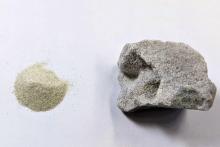
Researchers at the Institute of Industrial Science at The University of Tokyo examined a new method of producing concrete via direct bonding of sand particles, which may help reduce greenhouse emissions and even construct a Moon base.
13 Apr 2021
Hokkaido University
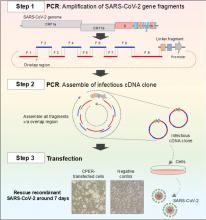
Researchers from Osaka University and Hokkaido University develop a system for analyzing mutations in SARS-CoV-2 that is much simpler and faster than existing methods.
13 Apr 2021
Hiroshima University
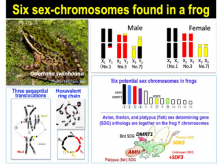
The O. swinhoana frog species is the first vertebrate known to retain descendant genes that now determine sex in mammals, birds, and fishes inherited from a common ancestor.
13 Apr 2021
Hokkaido University
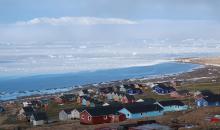
Hokkaido University researchers have clarified different causes of past glacial river floods in the far north of Greenland, and what it means for the region’s residents as the climate changes.
05 Apr 2021
Hokkaido University
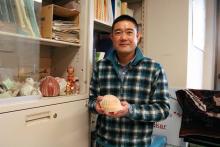
“The earth is suffering from several ‘diseases’: global warming, ocean acidification, habitat loss, etc. If any of these diseases remains uncured, other diseases will accelerate and cause new ones to appear, hence putting humanity’s well-being in danger,” said Associate Professor Masahiko Fujii. For this reason, the research staff of the Faculty of Environmental Earth Science keeps on assessing the current global environmental issues and promoting renewable energy sources as a possible solution.
02 Apr 2021
Hokkaido University
Scientists in Japan have developed and tested a novel probiotic formulation to control severe diarrhea in calves, ensuring their health and reducing mortality, and in turn reducing economic loss.
31 Mar 2021
Institute of Industrial Science, The University of Tokyo (UTokyo-IIS)
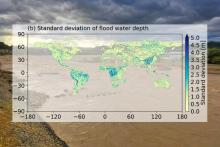
Researchers from the Institute of Industrial Science, The University of Tokyo calculate sources of uncertainty in flood risks to improve global flood predictions
31 Mar 2021
Osaka City University
Researchers reveal through a systematic review of 158 articles detailing quality improvements in pediatric intensive care units mainly throughout North America and the U.K. that despite having a median score of 11.0 on the Quality Improvement Minimum Quality Criteria Set, only 17% of them were considered high quality by achieving a 14-16 score, and only 5% cited Standards for QUality Improvement Reporting Excellence (SQUIRE) guidelines for reporting quality improvement works.
31 Mar 2021
Hiroshima University
The younger generations are willing to put their money where their mouth is when it comes to sustainable living. In a study questioning both commitment to sustainable behaviors and willingness to trade better pay to work for a more sustainable-minded company, the surveyed young adults in Japan made their preferences clear.
30 Mar 2021
Hokkaido University
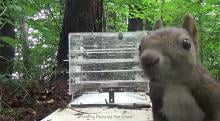
Human disturbance in urban environments makes some squirrels fail, but others perform better in novel problem-solving.
30 Mar 2021
Kanazawa University
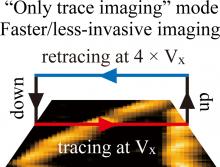
Researchers at Kanazawa University report in Review of Scientific Instruments a newly developed atomic force microscopy approach for imaging biological samples and processes. The method offers higher frame rates and less disturbance of samples.
29 Mar 2021
Hokkaido University
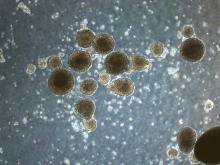
A hydrogel, a type of soft matter, developed at Hokkaido University successfully reverted cancer cells back to cancer stem cells within 24 hours, in six different human cancer types. This could lead to the development of anti-cancer stem cell drugs and personalized medicines.
29 Mar 2021
National Institute for Materials Science (NIMS)
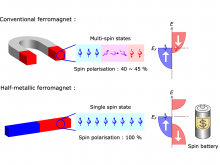
A review on the latest research of the various types of Heusler alloys summarizes the field’s main achievements up to 2020.
29 Mar 2021
International Institute for Integrative Sleep Medicine (WPI-IIIS), University of Tsukuba
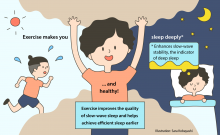
Researchers from the University of Tsukuba find that vigorous exercise causes imperceptible improvements in sleep quality
Tsukuba, Japan—Physical exercise has long been prescribed as a way to improve the quality of sleep. But now, researchers from Japan have found that even when exercise causes objectively measured changes in sleep quality, these changes may not be subjectively perceptible.
In a study published this month in Scientific Reports, researchers from the University of Tsukuba have revealed that vigorous exercise was able to modulate various sleep parameters associated with improved sleep, without affecting subjective reports regarding sleep quality.
26 Mar 2021
Hokkaido University
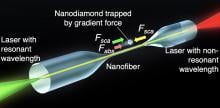
Scientists have developed a method to use lasers to control the movement of nanodiamonds with fluorescent centers.
26 Mar 2021
Institute for Integrated Cell-Material Sciences (iCeMS) at Kyoto University
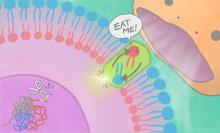
An ‘eat-me’ signal displayed on cell surfaces requires activation of a lipid-scrambling protein by a nuclear protein fragment.
25 Mar 2021
Osaka City University
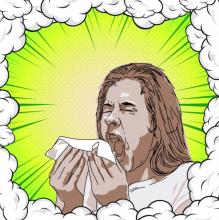
Through a series of experiments using nasal polyp organ culture and mouse models of restraint stress, researchers unveil relationship between presence of corticotropin-releasing stress hormone and increase in and degranulation of allergy-causing mast cells.
25 Mar 2021
Hokkaido University
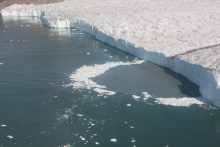
For the first time, scientists have succeeded in continuous monitoring of a subglacial discharge plume, providing a deeper understanding of the glacier-fjord environment.
24 Mar 2021
Institute of Industrial Science, The University of Tokyo (UTokyo-IIS)
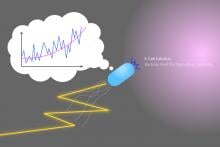
The University of Tokyo researchers use information theory to show that the accepted biochemical model of bacterial chemical sensing is mathematically equivalent to the optimal solution, with implications for microbiology and robotics
23 Mar 2021
Hiroshima University
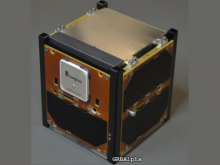
A nanosatellite that Hiroshima University researchers helped develop was launched to orbit to monitor gamma-ray bursts in space.
19 Mar 2021
Hokkaido University
On March 19, 2021, Hokkaido University, Robotic Biology Institute Inc., iLAC Co., Ltd., and Shionogi & Co., Ltd. have entered into a memorandum of understanding (MOU) toward the establishment of an automated system for the analysis of the novel coronavirus (SARS-CoV-2) in wastewater.
19 Mar 2021
Osaka City University
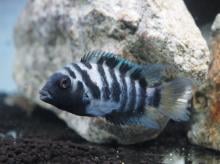
Through a series of prosocial choice tasks, researchers reveal prosocial and antisocial characteristics in male convict cichlid fish. The fish distinguish between female breeding partners, unknown females, and rival males by adjusting their actions to either provide food for both them and the females or avoid providing food for the rival males.
Researchers
Sorry, no researchers coming up for this topic.
Giants in history

Japanese biochemist Akira Endo (1933 – 2024) discovered the first statin, called mevastatin, which lowered cholesterol levels in the blood by inhibiting a key enzyme in the cholesterol biosynthesis pathway. His work laid the foundation for the development of statins to help patients lower their blood cholesterol levels and reduce their risk of heart disease or stroke.
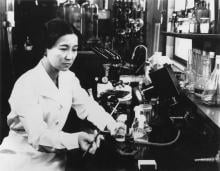
Ruby Sakae Hirose (1904 – 1960) was a Japanese-American scientist whose research contributed significantly to our understanding of blood clotting, allergies and cancer.
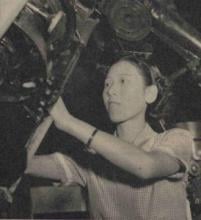
Haisako Koyama (1916 – 1997) was a Japanese solar observer whose dedication to recording sunspots – cooler parts of the sun’s surface that appear dark – produced a sunspot record of historic importance.
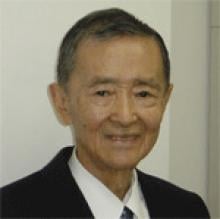
Michiaki Takahashi (17 February 1928 – 16 December 2013) was a Japanese virologist who developed the first chickenpox vaccine.
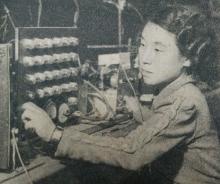
Toshiko Yuasa (11 December 1909 – 1 February 1980) was the first Japanese female physicist whose research on radioactivity shed light on beta decay – the process in which an atom emits a beta particle (electron) and turns into a different element.
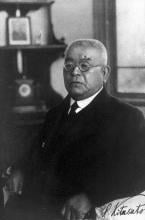
Baron Kitasato Shibasaburo (29 January 1856 – 13 June 1931) was a Japanese physician and bacteriologist whose work led to a new understanding of preventing and treating tetanus, diphtheria and anthrax.
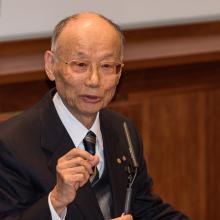
By isolating soil microorganisms and studying the compounds they produce, Satoshi Omura (born 1935) discovered almost 500 organic compounds with unique properties that were produced by these microorganisms, including many new antibiotics.
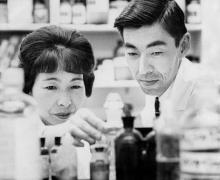
Husband and wife team, Kimishige (3 December 1925 – 6 July 2018) and Teruko Ishizaka (28 September 1926 – 4 June 2019) discovered the antibody class Immunoglobulin E (IgE) that triggers allergic reactions. They also discovered that IgE antibodies attach to white blood cells, known as mast cells, releasing histamine, which causes allergic reactions.
Husband and wife team, Kimishige (3 December 1925 – 6 July 2018) and Teruko Ishizaka (28 September 1926 – 4 June 2019) discovered the antibody class Immunoglobulin E (IgE) that triggers allergic reactions. They also discovered that IgE antibodies attach to white blood cells, known as mast cells, releasing histamine, which causes allergic reactions.
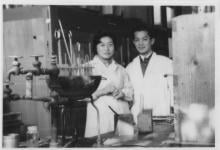
Reiji Okazaki (8 October 1930 – 1 August 1975) and Tsuneko (7 June 1933) were a Japanese couple who discovered Okazaki fragments – short sequences of DNA that are synthesized during DNA replication and linked together to form a continuous strand.
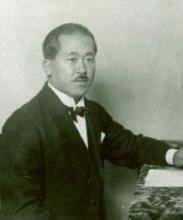
In 1915, Koichi Ichikawa along with pathologist Katsusaburo Yamagiwa became the first to prove that chronic exposure to chemicals can cause cancer.
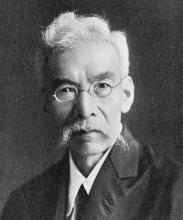
In 1915, pathologist Katsusaburo Yamagiwa and his research assistant Koichi Ichikawa became the first to prove that chronic exposure to chemicals can cause cancer.
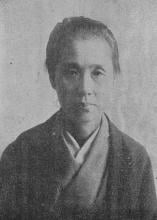
Ogino Ginko (3 March 1851 – 23 June 1913) was the first registered female doctor to practise modern medicine in Japan.
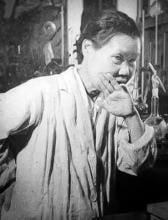
Michiyo Tsujimura (17 September 1888 – 1 June 1969) was a Japanese agricultural scientist and biochemist recognized for her research of green tea components.
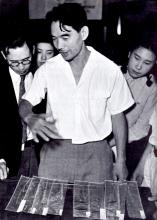
Hitoshi Kihara (1893 – 1986) was one of the most famous Japanese geneticists of the 20th century. One of his most significant contributions was identifying sex chromosomes (X and Y) in flowering plants.
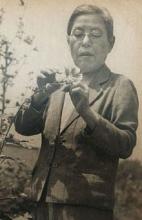
Kono Yasui (16 February 1880 – 24 March 1971) was a Japanese botanist who researched the genetics of poppies, corn and spiderworts and surveyed the plants that had been affected by the nuclear fallout after the atomic bombings of Hiroshima and Nagasaki.
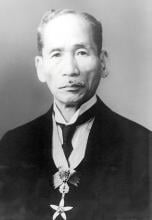
Umetaro Suzuki (7 April 1874 – 20 September 1943) was a Japanese scientist best remembered for his research on beriberi, a disease caused by vitamin B1 deficiency, characterized by limb stiffness, paralysis and pain.
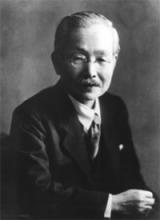
Kikunae Ikeda (8 October 1864 – 3 May 1936) was a Japanese chemist who discovered the fifth basic taste, umami.
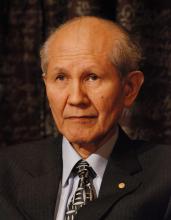
Osamu Shimomura (27 August 1928 – 19 October 2018) was a Japanese organic chemist and marine biologist who dedicated his career to understanding how organisms emitted light.
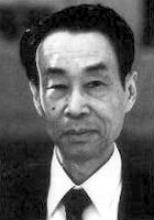
Motoo Kimura (13 November 1924 – 13 November 1994) was a Japanese theoretical population geneticist who is best remembered for developing the neutral theory of molecular evolution.

Chika Kuroda (24 March 1884 – 8 November 1968) was a Japanese chemist whose research focussed on the structures of natural pigments.
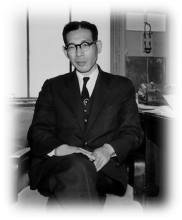
The field of solid-state ionics originated in Europe, but Takehiko Takahashi of Nagoya University in Japan was the first to coin the term ‘solid ionics’ in 1967. ‘Solid-state ionics’ first appeared in 1971 in another of his papers, and was likely a play on ‘solid-state electronics’, another rapidly growing field at the time.
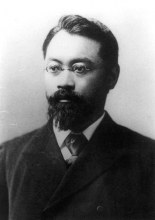
The techniques that make industrial pearl culturing possible were developed over a century ago at the Misaki Marine Biological Station in Japan. The station’s first director, Professor Kakichi Mitsukuri, emphasized to Kokichi Mikimoto in 1890 that stimulating pearl sac formation was important for pearl growth, and they went on to successfully develop methods for culturing pearls.
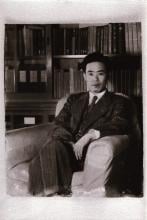
Japanese physicist Ukichiro Nakaya (1900-1962) made the world’s first artificial snowflakes. He started his research on snow crystals in the early 1930s at Hokkaido University, where there is an unlimited supply of natural snow in winter. By taking over 3,000 photographs, he established a classification of natural snow crystals and described their relationship with weather conditions.
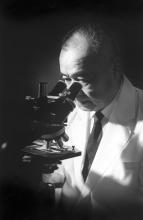
Minoru Shirota (April 23, 1899 – March 10, 1982) was a Japanese microbiologist who invented the popular fermented drink Yakult.
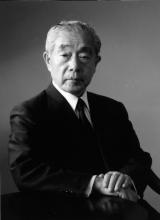
Japanese chemist Kenichi Fukui (4 October 1918 – 9 January 1998) was the first Asian scientist to be awarded the Nobel Prize in Chemistry. Together with Roald Hoffman, he received this honour in 1981 for his independent research into the mechanisms of chemical reactions.
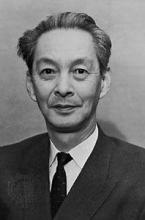
Shinichiro Tomonaga (31 March 1906 – 8 July 1979), together with Richard Feynman and Julian Schwinger, was awarded the Nobel Prize in Physics in 1965, for their contributions to advance the field of quantum electrodynamics. Tomonaga was also a strong proponent of peace, who actively campaigned against the proliferation of nuclear weapons and promoted the peaceful use of nuclear energy.
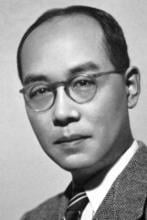
Hideki Yukawa (23 January 1907 – 8 September 1981) was awarded the Nobel Prize in Physics in 1949 for predicting the existence of the pi meson subatomic particle. Japan’s first Nobel laureate, Yakawa also expressed his support for nuclear disarmament by signing the Russell–Einstein Manifesto in 1955.
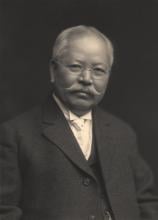
Japanese chemist Takamine Jokichi (3 November 1854 – 22 July 1922) founded the Tokyo Artificial Fertilizer Company, where he isolated a starch-digesting enzyme (named takadiastase) from the fungus Aspergillus oryzae.
Tsuneko (7 June 1933) and Reiji Okazaki (8 October 1930 – 1 August 1975) were a Japanese couple who discovered Okazaki fragments – short sequences of DNA that are synthesized during DNA replication and linked together to form a continuous strand.
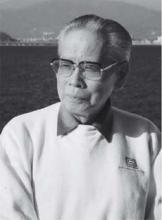
A Japanese surgeon, Tetsuzo Akutsu (20 August 1922 – 9 August 2007) built the first artificial heart capable of keeping an animal alive.
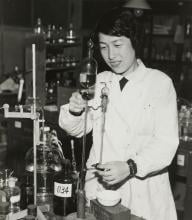
Japanese geochemist Katsuko Saruhashi developed the first method and tools for measuring carbon dioxide in seawater