
Japan
News
17 Dec 2020
Institute of Industrial Science, The University of Tokyo (UTokyo-IIS)
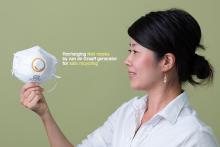
A researcher at The University of Tokyo develops a method for recharging used N95 masks with a van de Graaff generator, which may greatly alleviate the lack of high-quality personal protective equipment during the COVID-19 pandemic
15 Dec 2020
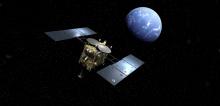
The Japan Aerospace Exploration Agency (JAXA) has confirmed that the gas collected from the sample container inside the re-entry capsule of the asteroid explorer, Hayabusa2, is a gas sample originating from asteroid Ryugu.
14 Dec 2020
Institute of Industrial Science, The University of Tokyo (UTokyo-IIS)
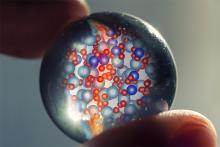
Scientists at The University of Tokyo study aluminosilicate glass to determine its complex local structure with unprecedented detail. This work may lead to tougher and more inexpensive glass for touchscreens and solar arrays
14 Dec 2020
Institute of Industrial Science, The University of Tokyo (UTokyo-IIS)
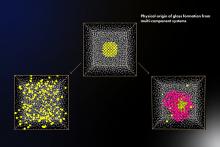
Scientists at The University of Tokyo use computer simulations to model the effects of elemental composition on the glass-forming ability of metallic mixtures, which may lead to tough, electroconductive glasses
10 Dec 2020
Hokkaido University
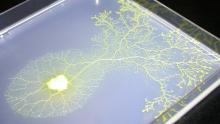
Researchers at Hokkaido University and Amoeba Energy in Japan have, inspired by the efficient foraging behavior of a single-celled amoeba, developed an analog computer for finding a reliable and swift solution to the traveling salesman problem — a representative combinatorial optimization problem.
09 Dec 2020
Hiroshima University
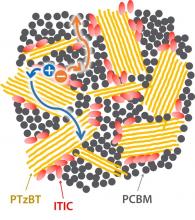
Researchers at Hiroshima University in Japan have blended together various polymer and molecular semiconductors as photo-absorbers to create a solar cell with increased power efficiencies and electricity generation.
07 Dec 2020
Hokkaido University
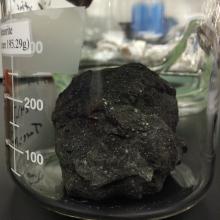
Scientists from Japan and the USA have confirmed the presence in meteorites of a key organic molecule which may have been used to build other organic molecules, including some used by life. The discovery validates theories of the formation of organic compounds in extraterrestrial environments.
04 Dec 2020
Hiroshima University
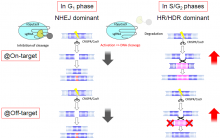
Turning off gene-editing until it reaches cell cycle phases where more accurate repairs are likely to happen offers a promising fix to CRISPR-Cas9’s problem with unwanted genetic changes.
03 Dec 2020
Hokkaido University
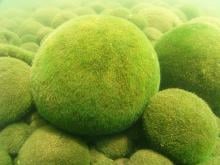
A team of scientists from Hokkaido University has suggested that marimo maintain their characteristic spherical shape due to the rarity of the formation of reproductive cells.
02 Dec 2020
Kavli Institute for the Physics and Mathematics of the Universe (Kavli IPMU)
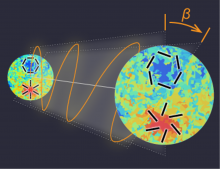
Yuto Minami at KEK and Eiichiro Komatsu at Kavli IPMU developed a new method to calibrate detectors to the light from dust in our Galaxy, thereby describing a new physics, with 99.2 percent accuracy, that may show parity symmetry breaking.
02 Dec 2020
Osaka City University
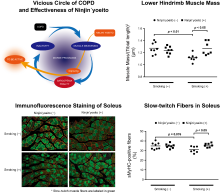
Osaka City University shows carrot-based Japanese herbal medicine “Ninjin’yoeito” helps recover muscle fibers in mice.
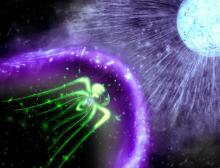
02 Dec 2020
Kavli Institute for the Physics and Mathematics of the Universe (Kavli IPMU)
A research team led by Kavli IPMU graduate student Hiroki Yoneda has shed new night on the massive star and its neutron star companion, which are thought to be at the core of the gamma-ray binary system LS 5039.
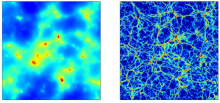
02 Dec 2020
Kavli Institute for the Physics and Mathematics of the Universe (Kavli IPMU)
A research team including Kavli IPMU Principal Investigator Naoki Yoshida has, in a world first, succeeded in performing a 6-dimensional simulation of neutrinos moving through the universe.
01 Dec 2020
Institute of Industrial Science, The University of Tokyo (UTokyo-IIS)
University of Tokyo researchers have fabricated a tiny electronic sensor that can detect very low levels of a commonly used weed killer in drinking water.
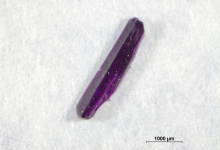
25 Nov 2020
Hokkaido University
A team of scientists has succeeded in visualizing how carbon dioxide (CO2) behaves in an ionic liquid that selectively absorbs CO2. The finding is expected to help develop more efficient methods to capture CO2 in the atmosphere, one of the major factors causing global warming.
23 Nov 2020
Institute for Integrated Cell-Material Sciences (iCeMS) at Kyoto University
A chance discovery leads to a simple process that can introduce ‘oxygen-missing layers’ into perovskite oxynitrides, changing their properties.
19 Nov 2020
Osaka City University
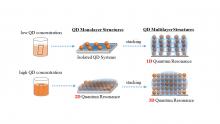
Scientists have found a way to control an interaction between quantum dots that could lead to more efficient solar cells.
19 Nov 2020
Institute for Integrated Cell-Material Sciences (iCeMS) at Kyoto University
A repetitive DNA sequence that causes health risks when it malfunctions can now be watched inside living cells using a synthetic tool
18 Nov 2020
Osaka City University
A collaboration between Osaka City University and the advertising company Hakuhodo Inc. brings innovation to conflict resolution during corporate development with a process that has businesses and the public voice their concerns and systematically solve them together, instead of a one-way game of convincing each other.
17 Nov 2020
Hokkaido University
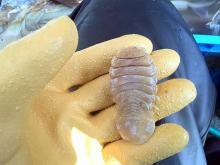
Scientists have discovered an extremely rare species of cymothoid from the mouth of a museum specimen of a deep-sea shark caught from the East China Sea, suggesting its wide distribution around the globe.
13 Nov 2020
Kavli Institute for the Physics and Mathematics of the Universe (Kavli IPMU)
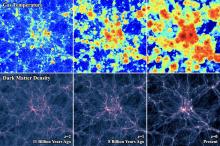
How hot is the Universe today? How hot was it before? A new study by an international team of researchers, including members of the Kavli Institute for the Physics and Mathematics of the Universe (Kavli IPMU), suggests that the mean temperature of gas in large structures of the Universe has increased about 3 times in the last 8 billion years, to reach about two million Kelvin today.
12 Nov 2020
Hokkaido University
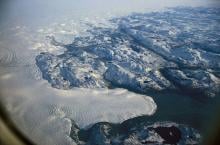
Computational models suggest that melting water originating in the deep interior of Greenland could flow the entire length of a subglacial valley and exit at Petermann Fjord, along the northern coast of the island. Updating ice sheet models with this open valley could provide additional insight for future climate change predictions.
05 Nov 2020
Institute of Industrial Science, The University of Tokyo (UTokyo-IIS)
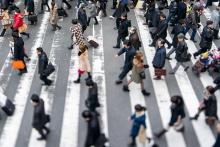
Research shows that Japan’s noncompulsory state of emergency generally succeeded in reducing human movement. A study from The University of Tokyo Institute of Industrial Science used mobile phone location data for January–April 2020 to record and plot movement of people in metro Tokyo during the emergence and first wave of COVID-19. They found a movement reduction of over 50%, which in turn limited social contact and slowed infection spread.
04 Nov 2020
Institute of Industrial Science, The University of Tokyo (UTokyo-IIS)
The University of Tokyo introduced a system of gold nanorods that acts like a tiny light-driven motor, with its direction of motion is determined by the orientation of the motors. This work may lead to smaller and more precise nanomachines.
04 Nov 2020
Hokkaido University
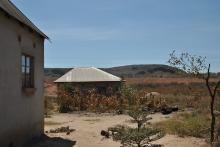
Residents of Kabwe Town, Zambia, have very high blood levels of lead and cadmium, to such an extent that the symptoms of toxicity have been clinically observed.
30 Oct 2020
Hiroshima University
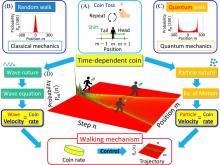
A research team based in Japan may be moving toward a more controlled walk by unveiling the mechanism underlying the directional decision of each quantum step and introducing a way to potentially control the direction of movement.
29 Oct 2020
Institute of Industrial Science, The University of Tokyo (UTokyo-IIS)
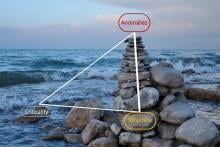
Scientists at The University of Tokyo use a two-state model based on the formation of tetrahedral structures to explain water’s anomalous properties and the surprising liquid–liquid transition of water.
29 Oct 2020
Hokkaido University
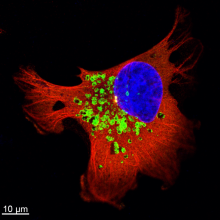
Scientists have revealed the molecular mechanism regulating the trafficking of lysosomes that increases the invasiveness of radioresistant cancer cells following radiotherapy.
23 Oct 2020
Hiroshima University
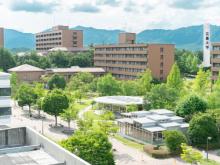
Therapeutic drugs, a novel test method, a fully automated testing process, and a way to conduct medical diagnosis remotely are just some of the research being done at Hiroshima University to beat COVID-19.
20 Oct 2020
Osaka City University
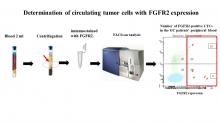
Osaka City University detects cancer cells in 2ml blood samples and connects them back to their origin tumor – creating a new diagnostic tool that may aid in quicker and more accurate anti-cancer measures.
Researchers
Sorry, no researchers coming up for this topic.
Giants in history

Japanese biochemist Akira Endo (1933 – 2024) discovered the first statin, called mevastatin, which lowered cholesterol levels in the blood by inhibiting a key enzyme in the cholesterol biosynthesis pathway. His work laid the foundation for the development of statins to help patients lower their blood cholesterol levels and reduce their risk of heart disease or stroke.
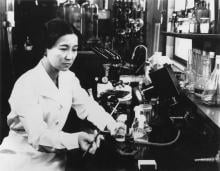
Ruby Sakae Hirose (1904 – 1960) was a Japanese-American scientist whose research contributed significantly to our understanding of blood clotting, allergies and cancer.
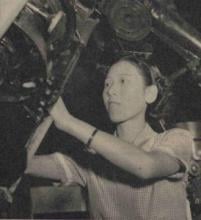
Haisako Koyama (1916 – 1997) was a Japanese solar observer whose dedication to recording sunspots – cooler parts of the sun’s surface that appear dark – produced a sunspot record of historic importance.
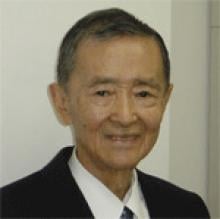
Michiaki Takahashi (17 February 1928 – 16 December 2013) was a Japanese virologist who developed the first chickenpox vaccine.
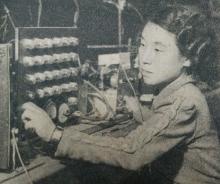
Toshiko Yuasa (11 December 1909 – 1 February 1980) was the first Japanese female physicist whose research on radioactivity shed light on beta decay – the process in which an atom emits a beta particle (electron) and turns into a different element.
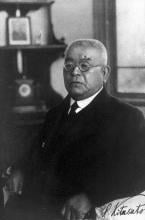
Baron Kitasato Shibasaburo (29 January 1856 – 13 June 1931) was a Japanese physician and bacteriologist whose work led to a new understanding of preventing and treating tetanus, diphtheria and anthrax.
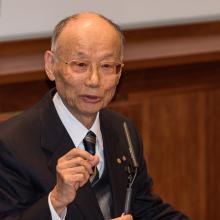
By isolating soil microorganisms and studying the compounds they produce, Satoshi Omura (born 1935) discovered almost 500 organic compounds with unique properties that were produced by these microorganisms, including many new antibiotics.
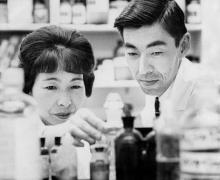
Husband and wife team, Kimishige (3 December 1925 – 6 July 2018) and Teruko Ishizaka (28 September 1926 – 4 June 2019) discovered the antibody class Immunoglobulin E (IgE) that triggers allergic reactions. They also discovered that IgE antibodies attach to white blood cells, known as mast cells, releasing histamine, which causes allergic reactions.
Husband and wife team, Kimishige (3 December 1925 – 6 July 2018) and Teruko Ishizaka (28 September 1926 – 4 June 2019) discovered the antibody class Immunoglobulin E (IgE) that triggers allergic reactions. They also discovered that IgE antibodies attach to white blood cells, known as mast cells, releasing histamine, which causes allergic reactions.
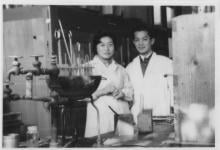
Reiji Okazaki (8 October 1930 – 1 August 1975) and Tsuneko (7 June 1933) were a Japanese couple who discovered Okazaki fragments – short sequences of DNA that are synthesized during DNA replication and linked together to form a continuous strand.
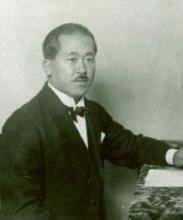
In 1915, Koichi Ichikawa along with pathologist Katsusaburo Yamagiwa became the first to prove that chronic exposure to chemicals can cause cancer.
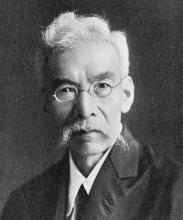
In 1915, pathologist Katsusaburo Yamagiwa and his research assistant Koichi Ichikawa became the first to prove that chronic exposure to chemicals can cause cancer.
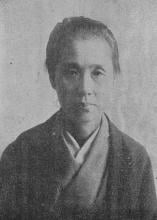
Ogino Ginko (3 March 1851 – 23 June 1913) was the first registered female doctor to practise modern medicine in Japan.
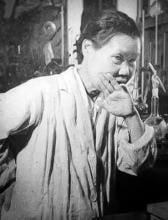
Michiyo Tsujimura (17 September 1888 – 1 June 1969) was a Japanese agricultural scientist and biochemist recognized for her research of green tea components.
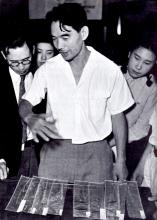
Hitoshi Kihara (1893 – 1986) was one of the most famous Japanese geneticists of the 20th century. One of his most significant contributions was identifying sex chromosomes (X and Y) in flowering plants.
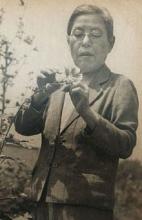
Kono Yasui (16 February 1880 – 24 March 1971) was a Japanese botanist who researched the genetics of poppies, corn and spiderworts and surveyed the plants that had been affected by the nuclear fallout after the atomic bombings of Hiroshima and Nagasaki.
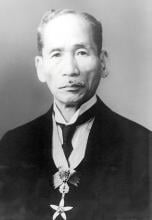
Umetaro Suzuki (7 April 1874 – 20 September 1943) was a Japanese scientist best remembered for his research on beriberi, a disease caused by vitamin B1 deficiency, characterized by limb stiffness, paralysis and pain.
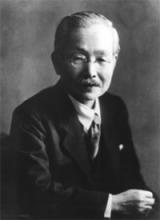
Kikunae Ikeda (8 October 1864 – 3 May 1936) was a Japanese chemist who discovered the fifth basic taste, umami.
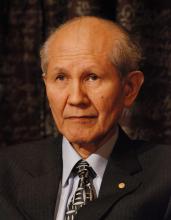
Osamu Shimomura (27 August 1928 – 19 October 2018) was a Japanese organic chemist and marine biologist who dedicated his career to understanding how organisms emitted light.
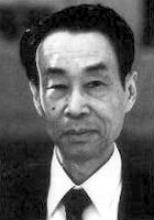
Motoo Kimura (13 November 1924 – 13 November 1994) was a Japanese theoretical population geneticist who is best remembered for developing the neutral theory of molecular evolution.

Chika Kuroda (24 March 1884 – 8 November 1968) was a Japanese chemist whose research focussed on the structures of natural pigments.
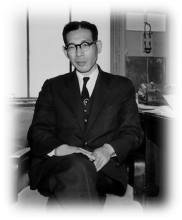
The field of solid-state ionics originated in Europe, but Takehiko Takahashi of Nagoya University in Japan was the first to coin the term ‘solid ionics’ in 1967. ‘Solid-state ionics’ first appeared in 1971 in another of his papers, and was likely a play on ‘solid-state electronics’, another rapidly growing field at the time.
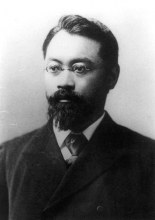
The techniques that make industrial pearl culturing possible were developed over a century ago at the Misaki Marine Biological Station in Japan. The station’s first director, Professor Kakichi Mitsukuri, emphasized to Kokichi Mikimoto in 1890 that stimulating pearl sac formation was important for pearl growth, and they went on to successfully develop methods for culturing pearls.
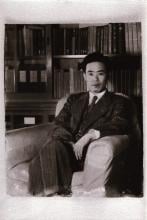
Japanese physicist Ukichiro Nakaya (1900-1962) made the world’s first artificial snowflakes. He started his research on snow crystals in the early 1930s at Hokkaido University, where there is an unlimited supply of natural snow in winter. By taking over 3,000 photographs, he established a classification of natural snow crystals and described their relationship with weather conditions.
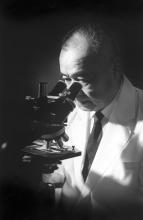
Minoru Shirota (April 23, 1899 – March 10, 1982) was a Japanese microbiologist who invented the popular fermented drink Yakult.
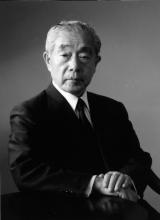
Japanese chemist Kenichi Fukui (4 October 1918 – 9 January 1998) was the first Asian scientist to be awarded the Nobel Prize in Chemistry. Together with Roald Hoffman, he received this honour in 1981 for his independent research into the mechanisms of chemical reactions.
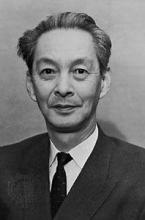
Shinichiro Tomonaga (31 March 1906 – 8 July 1979), together with Richard Feynman and Julian Schwinger, was awarded the Nobel Prize in Physics in 1965, for their contributions to advance the field of quantum electrodynamics. Tomonaga was also a strong proponent of peace, who actively campaigned against the proliferation of nuclear weapons and promoted the peaceful use of nuclear energy.
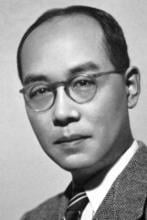
Hideki Yukawa (23 January 1907 – 8 September 1981) was awarded the Nobel Prize in Physics in 1949 for predicting the existence of the pi meson subatomic particle. Japan’s first Nobel laureate, Yakawa also expressed his support for nuclear disarmament by signing the Russell–Einstein Manifesto in 1955.
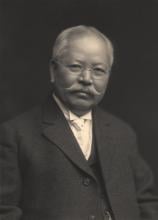
Japanese chemist Takamine Jokichi (3 November 1854 – 22 July 1922) founded the Tokyo Artificial Fertilizer Company, where he isolated a starch-digesting enzyme (named takadiastase) from the fungus Aspergillus oryzae.
Tsuneko (7 June 1933) and Reiji Okazaki (8 October 1930 – 1 August 1975) were a Japanese couple who discovered Okazaki fragments – short sequences of DNA that are synthesized during DNA replication and linked together to form a continuous strand.
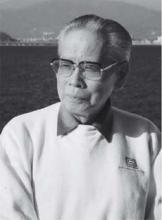
A Japanese surgeon, Tetsuzo Akutsu (20 August 1922 – 9 August 2007) built the first artificial heart capable of keeping an animal alive.
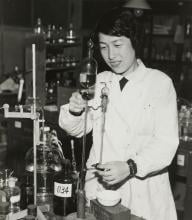
Japanese geochemist Katsuko Saruhashi developed the first method and tools for measuring carbon dioxide in seawater