

Japan
News
02 Jun 2021
Hokkaido University
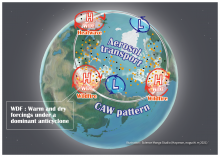
Scientists have uncovered a summertime climate pattern in and around the Arctic that could drive co-occurrences of European heatwaves and large-scale wildfires with air pollution over Siberia and subpolar North America.
01 Jun 2021
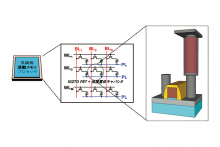
Researchers from the Institute of Industrial Science at The University of Tokyo, Kobe Steel, Ltd, and Kobelco Research Institute, Inc, develop high-density, energy-efficient 3D embedded RAM for artificial intelligence applications.
31 May 2021
Institute for Integrated Cell-Material Sciences (iCeMS) at Kyoto University
High-resolution genome structural analyses combined with large-scale simulations show the arrangements of the genome’s spool-like structures affecting gene expression.
31 May 2021
Hokkaido University
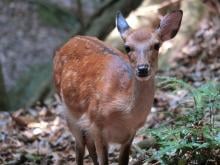
Scientists have shown that the population of the Yakushima sika deer has declined due to natural factors, suggesting that the population can be regulated without culling.

29 May 2021
Hiroshima University
A look at Japan’s mimamoru approach suggests that adults’ non-intervention in kids’ fights allows children to nurture social and interpersonal skills on their own. Is it worth a try in other countries?
28 May 2021
Osaka City University
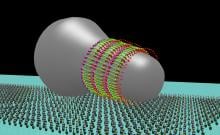
In collaboration with Kanazawa University, researchers from Osaka City University used high-speed atomic force microscopy (HS-AFM) to visualize at the nanometer level the movement of individual particles within the parasitic bacterium Mycoplasma mobile. After confirming the outline on the surface of the cell structure in an immobilized state with previous data gathered from electron microscopy, the team succeeded in visualizing the real-time movements of the internal structure by scanning the outside of the cell with HS-AFM.
28 May 2021
Hokkaido University
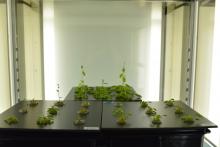
Scientists from Japan, Europe and the USA have described a pathway leading to the accelerated flowering of plants in low-nitrogen soils. These findings could eventually lead to increases in agricultural production.

25 May 2021
Institute of Industrial Science, The University of Tokyo (UTokyo-IIS)
Researchers at The University of Tokyo Institute of Industrial Science repurpose food waste to build materials with a bending strength comparable to concrete and that still taste good
22 May 2021
Hokkaido University
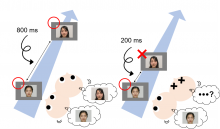
Chuo University and Hokkaido University researchers have found that infants take less than a second to completely process visual information and have the same temporal limitation in processing visual information as seen in adults.
21 May 2021
Hokkaido University
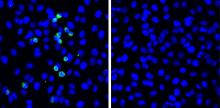
Scientists from Hokkaido University have discovered a novel defensive response to SARS-CoV-2 that involves the viral pattern recognition receptor RIG-I. Upregulating expression of this protein could strengthen the immune response in COPD patients.
20 May 2021
Hokkaido University
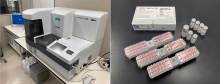
Scientists from Hokkaido University have shown that an antigen-based test for quantifying SARS-CoV-2 in saliva samples is simple, rapid, and more conducive for mass-screening.
19 May 2021
Hokkaido University
Dr. Kazuhiro Ohtani is a certified public psychologist and a lecturer at Hokkaido University’s Graduate School of Education. His main research interest is the academic motivations of Japanese students, especially adolescents. He believes that children in the age range of puberty are more prone to depression, which often leads to the loss of academic motivation.
18 May 2021
Hokkaido University
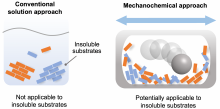
Scientists from Hokkaido University have developed a rapid, efficient protocol for cross-coupling reactions, vastly expanding the pool of chemicals that can be used for the synthesis of useful organic compounds.
17 May 2021
Hokkaido University
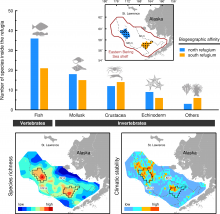
Scientists from Hokkaido University have used species survey and climate data to identify two marine biodiversity refugia in the Eastern Bering Sea – regions where species richness, community stability and climate stability are high.
14 May 2021
Earth-Life Science Institute (ELSI), Tokyo Institute of Technology
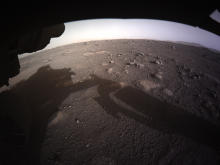
Upcoming Solar System exploration missions will search for extraterrestrial (ET) life, but ET life may not be like Earth life. A new mass spectrometry analysis technique may allow for process-based ways to find ET life that is compositionally alien.
13 May 2021
Hokkaido University
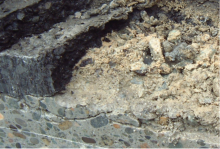
Scientists reveal that the deterioration of modern concrete and asphalt structures is due to the presence of trace quantities of organic matter in these structures.
13 May 2021
National Institute for Materials Science (NIMS)
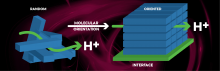
Controlling the organization of molecules within polymer membranes could lead to more efficient fuel cells.
13 May 2021
Institute of Industrial Science, The University of Tokyo (UTokyo-IIS)
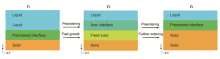
Researchers from the Institute of Industrial Science, The University of Tokyo have shown how glasses that apparently look frozen can crystallize, which could contribute to the improvement of the stability of glassy materials

12 May 2021
National Institute for Materials Science (NIMS)
Molecular interactions within gels and rubbers can be controlled to fabricate stronger and more elastic materials.

12 May 2021
National Institute for Materials Science (NIMS)
An artificial intelligence approach extracts how an aluminium alloy’s contents and manufacturing are related to specific mechanical properties.
12 May 2021
Hiroshima University
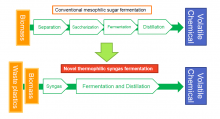
Acetone, a volatile solvent used for everything from removing nail polish and cleaning textiles to manufacturing plastics, could get a sustainability boost from a new strain of bacteria engineered by a research team based in Japan.
11 May 2021
Earth-Life Science Institute (ELSI), Tokyo Institute of Technology
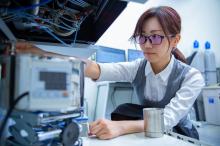
“By looking at substances in volcanos, lakes and hotsprings, you can start to see the ecosystems that existed billions of years ago,” says Mayuko Nakagawa, a microbiologist and specially-appointed assistant professor at the Earth-Life Science Institute (ELSI) based at the Tokyo Institute of Technology, Japan. She analyses components left by microorganisms with colleagues from various disciplines, while as a lab manager, she looks after cutting-edge equipment and visitors from different countries.
11 May 2021
Earth-Life Science Institute (ELSI), Tokyo Institute of Technology
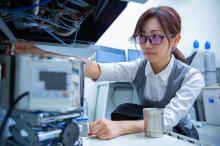
火山や湖、温泉の物質からは数十億年前に存在した微生物の生態系が見えてくると語るのは、東京工業大学・地球生命研究所(ELSI)の中川麻悠子特任助教。異分野の研究者たちと共に微生物の作り出した成分を解析する傍ら、ラボマネージャーとして国内外の訪問者サポートや最先端の機材の管理などを行っている。
11 May 2021
Earth-Life Science Institute (ELSI), Tokyo Institute of Technology
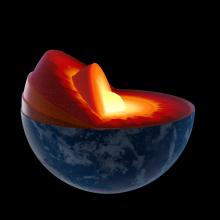
Earth scientist Hitoshi Gomi investigates how plants are made by studying materials from the deep Earth, while creating a hospitable workplace at the Earth-Life Science Institute (ELSI) at the Tokyo Institute of Technology, Japan. He shared his research and the role of a lab manager with Asia Research News.
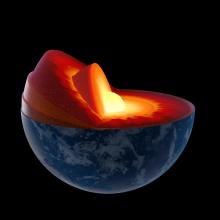
11 May 2021
Earth-Life Science Institute (ELSI), Tokyo Institute of Technology
地球の中心部の物質を研究しながら、共に研究をしている仲間が働きやすい環境を作るのが五味斎特任助教の日常だ。所属先の東京工業大学・地球生命研究所(ELSI)で地球科学者として行う研究活動と、ラボマネージャーの役目について、お話しを伺った。
11 May 2021
Earth-Life Science Institute (ELSI), Tokyo Institute of Technology
Tomohiro Mochizuki tracks down viruses inside single-cell organisms thriving in boiling hot springs. His fieldwork is conducted in relatively extreme environments and, despite the significance of his investigations, he doesn’t need many fancy gadgets back at his lab at Japan’s Earth-Life Science Institute (ELSI). ARN asked Mochizuki about his virus-hunting exploits and what they involve.
11 May 2021
Earth-Life Science Institute (ELSI), Tokyo Institute of Technology
Tony Z. Jia is a specially-appointed assistant professor and lab manager at Japan’s Earth-Life Science Institute (ELSI), based at the Tokyo Institute of Technology. He is an astrobiologist and shared highlights from his dual research/management role.
10 May 2021
Hokkaido University
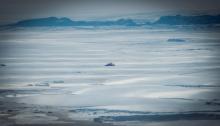
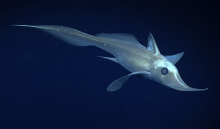
Ice is melting at a surprisingly fast rate underneath Shirase Glacier Tongue in East Antarctica due to the continuing influx of warm seawater into the Lützow-Holm Bay.
10 May 2021
Hokkaido University
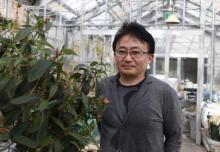
Deep sea animals face greater risks compared to those nearer the surface as they become less able to maintain their preferred thermal habitats with climate change.
29 Apr 2021
Hokkaido University
Living beings need elements to develop properly. The study of ionomics measures and analyses the element accumulations in living organisms to determine which mineral nutrients are required and not required for growth. Associate Professor Toshihiro Watanabe from Hokkaido University’s Research Faculty of Agriculture applies this approach to learn about mineral accumulation in both plants and soil, in addition to inter-element interactions.
Researchers
Sorry, no researchers coming up for this topic.
Giants in history

Japanese biochemist Akira Endo (1933 – 2024) discovered the first statin, called mevastatin, which lowered cholesterol levels in the blood by inhibiting a key enzyme in the cholesterol biosynthesis pathway. His work laid the foundation for the development of statins to help patients lower their blood cholesterol levels and reduce their risk of heart disease or stroke.
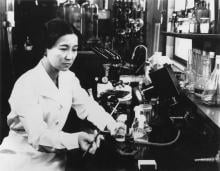
Ruby Sakae Hirose (1904 – 1960) was a Japanese-American scientist whose research contributed significantly to our understanding of blood clotting, allergies and cancer.

Haisako Koyama (1916 – 1997) was a Japanese solar observer whose dedication to recording sunspots – cooler parts of the sun’s surface that appear dark – produced a sunspot record of historic importance.
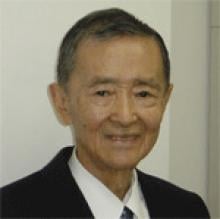
Michiaki Takahashi (17 February 1928 – 16 December 2013) was a Japanese virologist who developed the first chickenpox vaccine.

Toshiko Yuasa (11 December 1909 – 1 February 1980) was the first Japanese female physicist whose research on radioactivity shed light on beta decay – the process in which an atom emits a beta particle (electron) and turns into a different element.
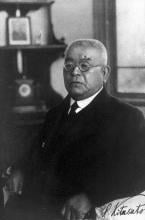
Baron Kitasato Shibasaburo (29 January 1856 – 13 June 1931) was a Japanese physician and bacteriologist whose work led to a new understanding of preventing and treating tetanus, diphtheria and anthrax.
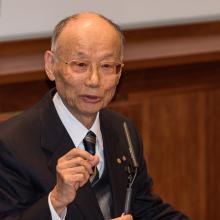
By isolating soil microorganisms and studying the compounds they produce, Satoshi Omura (born 1935) discovered almost 500 organic compounds with unique properties that were produced by these microorganisms, including many new antibiotics.
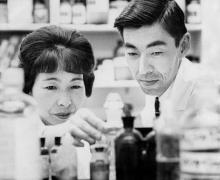
Husband and wife team, Kimishige (3 December 1925 – 6 July 2018) and Teruko Ishizaka (28 September 1926 – 4 June 2019) discovered the antibody class Immunoglobulin E (IgE) that triggers allergic reactions. They also discovered that IgE antibodies attach to white blood cells, known as mast cells, releasing histamine, which causes allergic reactions.
Husband and wife team, Kimishige (3 December 1925 – 6 July 2018) and Teruko Ishizaka (28 September 1926 – 4 June 2019) discovered the antibody class Immunoglobulin E (IgE) that triggers allergic reactions. They also discovered that IgE antibodies attach to white blood cells, known as mast cells, releasing histamine, which causes allergic reactions.
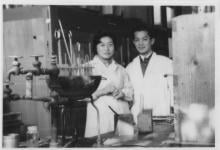
Reiji Okazaki (8 October 1930 – 1 August 1975) and Tsuneko (7 June 1933) were a Japanese couple who discovered Okazaki fragments – short sequences of DNA that are synthesized during DNA replication and linked together to form a continuous strand.
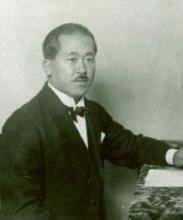
In 1915, Koichi Ichikawa along with pathologist Katsusaburo Yamagiwa became the first to prove that chronic exposure to chemicals can cause cancer.
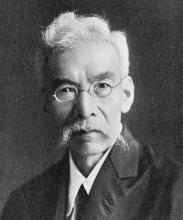
In 1915, pathologist Katsusaburo Yamagiwa and his research assistant Koichi Ichikawa became the first to prove that chronic exposure to chemicals can cause cancer.
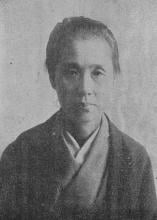
Ogino Ginko (3 March 1851 – 23 June 1913) was the first registered female doctor to practise modern medicine in Japan.
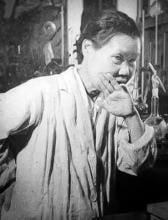
Michiyo Tsujimura (17 September 1888 – 1 June 1969) was a Japanese agricultural scientist and biochemist recognized for her research of green tea components.
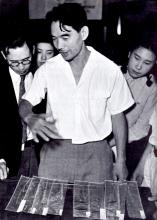
Hitoshi Kihara (1893 – 1986) was one of the most famous Japanese geneticists of the 20th century. One of his most significant contributions was identifying sex chromosomes (X and Y) in flowering plants.
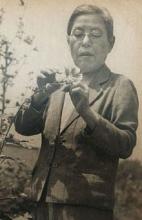
Kono Yasui (16 February 1880 – 24 March 1971) was a Japanese botanist who researched the genetics of poppies, corn and spiderworts and surveyed the plants that had been affected by the nuclear fallout after the atomic bombings of Hiroshima and Nagasaki.
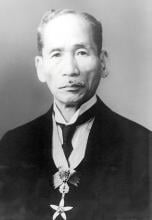
Umetaro Suzuki (7 April 1874 – 20 September 1943) was a Japanese scientist best remembered for his research on beriberi, a disease caused by vitamin B1 deficiency, characterized by limb stiffness, paralysis and pain.
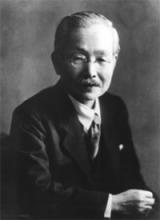
Kikunae Ikeda (8 October 1864 – 3 May 1936) was a Japanese chemist who discovered the fifth basic taste, umami.
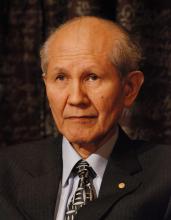
Osamu Shimomura (27 August 1928 – 19 October 2018) was a Japanese organic chemist and marine biologist who dedicated his career to understanding how organisms emitted light.
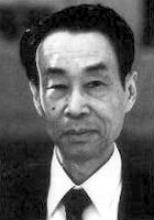
Motoo Kimura (13 November 1924 – 13 November 1994) was a Japanese theoretical population geneticist who is best remembered for developing the neutral theory of molecular evolution.

Chika Kuroda (24 March 1884 – 8 November 1968) was a Japanese chemist whose research focussed on the structures of natural pigments.
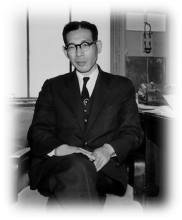
The field of solid-state ionics originated in Europe, but Takehiko Takahashi of Nagoya University in Japan was the first to coin the term ‘solid ionics’ in 1967. ‘Solid-state ionics’ first appeared in 1971 in another of his papers, and was likely a play on ‘solid-state electronics’, another rapidly growing field at the time.
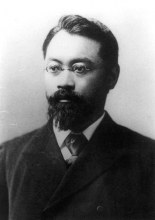
The techniques that make industrial pearl culturing possible were developed over a century ago at the Misaki Marine Biological Station in Japan. The station’s first director, Professor Kakichi Mitsukuri, emphasized to Kokichi Mikimoto in 1890 that stimulating pearl sac formation was important for pearl growth, and they went on to successfully develop methods for culturing pearls.
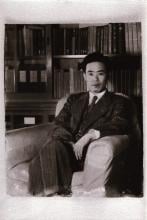
Japanese physicist Ukichiro Nakaya (1900-1962) made the world’s first artificial snowflakes. He started his research on snow crystals in the early 1930s at Hokkaido University, where there is an unlimited supply of natural snow in winter. By taking over 3,000 photographs, he established a classification of natural snow crystals and described their relationship with weather conditions.
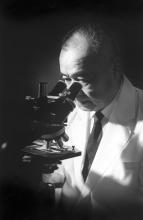
Minoru Shirota (April 23, 1899 – March 10, 1982) was a Japanese microbiologist who invented the popular fermented drink Yakult.
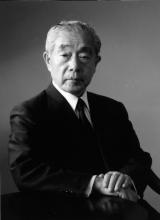
Japanese chemist Kenichi Fukui (4 October 1918 – 9 January 1998) was the first Asian scientist to be awarded the Nobel Prize in Chemistry. Together with Roald Hoffman, he received this honour in 1981 for his independent research into the mechanisms of chemical reactions.
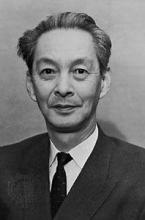
Shinichiro Tomonaga (31 March 1906 – 8 July 1979), together with Richard Feynman and Julian Schwinger, was awarded the Nobel Prize in Physics in 1965, for their contributions to advance the field of quantum electrodynamics. Tomonaga was also a strong proponent of peace, who actively campaigned against the proliferation of nuclear weapons and promoted the peaceful use of nuclear energy.
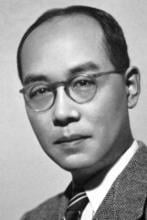
Hideki Yukawa (23 January 1907 – 8 September 1981) was awarded the Nobel Prize in Physics in 1949 for predicting the existence of the pi meson subatomic particle. Japan’s first Nobel laureate, Yakawa also expressed his support for nuclear disarmament by signing the Russell–Einstein Manifesto in 1955.
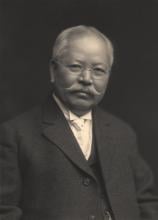
Japanese chemist Takamine Jokichi (3 November 1854 – 22 July 1922) founded the Tokyo Artificial Fertilizer Company, where he isolated a starch-digesting enzyme (named takadiastase) from the fungus Aspergillus oryzae.
Tsuneko (7 June 1933) and Reiji Okazaki (8 October 1930 – 1 August 1975) were a Japanese couple who discovered Okazaki fragments – short sequences of DNA that are synthesized during DNA replication and linked together to form a continuous strand.
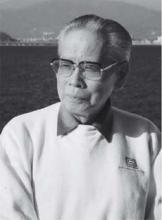
A Japanese surgeon, Tetsuzo Akutsu (20 August 1922 – 9 August 2007) built the first artificial heart capable of keeping an animal alive.
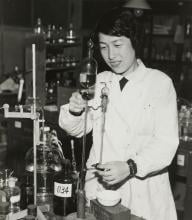
Japanese geochemist Katsuko Saruhashi developed the first method and tools for measuring carbon dioxide in seawater