

Japan
News
09 Sep 2021
International Institute for Integrative Sleep Medicine (WPI-IIIS), University of Tsukuba
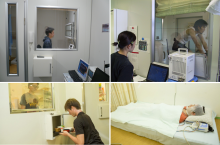
Researchers at the University of Tsukuba in Japan show that low metabolic flexibility is associated with reduced fat metabolism during sleep.
09 Sep 2021
International Institute for Integrative Sleep Medicine (WPI-IIIS), University of Tsukuba
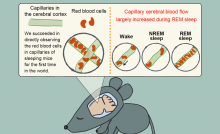
Researchers from the University of Tsukuba and Kyoto University find that capillary blood flow in the brain, which is important for delivering oxygen and nutrients and removing waste products, is increased in mice during the dream-active phase of sleep.

09 Sep 2021
International Institute for Integrative Sleep Medicine (WPI-IIIS), University of Tsukuba
Researchers from University of Tsukuba in collaboration with Yamagata University scientists find that exposure to light with less blue before sleep is better for energy metabolism. Extended exposure to light during nighttime can have negative consequences for human health. But now, researchers from Japan have identified a new type of light with reduced consequences for physiological changes during sleep.
08 Sep 2021
Hiroshima University
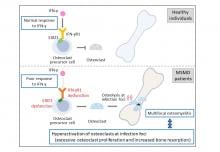
A research team led by Hiroshima University Professor Satoshi Okada has determined that enhanced bone resorption activity due to a faulty immune response may underpin multifocal osteomyelitis — painful, chronic bone infections — in children with MSMD, a rare genetic condition resulting from a range of immune system mutations.
06 Sep 2021
Kanazawa University
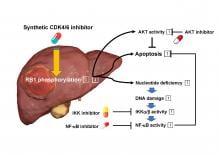
A synthetic CDK4/6 inhibitor exerts antitumor effects by forcing RB1 tumor-suppressor into an active status, but its single administration is not sufficiently effective. We find its combinatorial administration with an IKKβ inhibitor is significantly more effective in hepatocellular carcinoma treatment. Also, blockage of the IKK-NF-κB or AKT pathway enhances its effects on RB1-intact K-Ras mutated lung and colon cancers. CDK4/6 inhibitors have potential to treat various RB1-intact cancers when combined with an appropriate kinase inhibitor.
06 Sep 2021
Hokkaido University
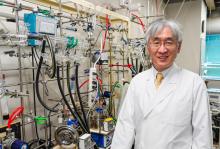
Professor Toshifumi Satoh of Hokkaido University’s Graduate School of Engineering has taken up the challenge to create “Smart synthetic method.” Satoh and his colleagues proposed the idea of “Smart synthesis,” which aims to minimize the use of harmful chemicals and solvents for cleaner and more sustainable polymeric synthesis.
06 Sep 2021
Osaka City University
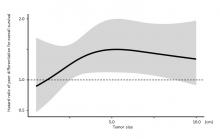
Using data from 1,107 patients dating back over 30 years, researchers have connected prognostic impact to poorly differentiated tumor size in hepatocellular carcinoma. Data confirmed previous findings that after resection, <2 cm sized tumors had excellent long-term outcomes. However, ≥2 cm and ≥5 cm sizes shared a risk of early recurrence with the latter size also at risk of early extrahepatic recurrence.
03 Sep 2021
Hokkaido University
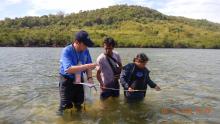
Social vulnerabilities of coastal communities and their reliance on blue carbon ecosystem services may be improved by addressing three major factors, according to a study led by Hokkaido University researchers.
03 Sep 2021
Hiroshima University
The COVID-19 pandemic has increased attention on links between public health and the planet’s health — areas traditionally addressed in separate science and policy circles. Now, an international research collaboration conducted the first comprehensive review of urban climate change responses and potential human health improvements.
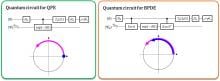
02 Sep 2021
Osaka City University
Researchers have developed a general quantum algorithm that can directly calculate the energy difference of an atom and molecule using a quantum computer. By avoiding the need to calculate the total molecular energies, the general algorithm is expected to be applied not only to quantum chemical calculations but also to various physical and mathematical problems, which are intractable with nowadays classical computers.
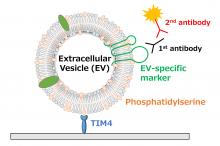
02 Sep 2021
Kanazawa University
Researchers at Kanazawa University describe in Scientific Reports the identification of small compounds that can regulate the cellular production of extracellular vesicles — nanocontainers transporting biomolecules between cells. Such compounds hold promise for use in therapies for various diseases.
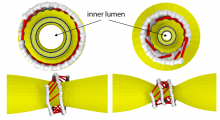
02 Sep 2021
Kanazawa University
Researchers at Kanazawa University report in Proceedings of the National Academy of Sciences how a protein molecular motor can chop off a piece of cell membrane. The constrict-and-cut mechanism resembles that of a ratchet motor, and is of importance in processes mediating the entry of particles into cells.
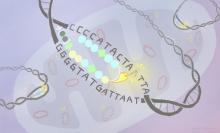
26 Aug 2021
Institute for Integrated Cell-Material Sciences (iCeMS) at Kyoto University
A multi-functional, small molecule can tag mutant genetic sequences inside mitochondria for removal.
26 Aug 2021
Hokkaido University
Distinguished Professor Reiko Kishi of the Hokkaido University Center for Environmental and Health Sciences was honored with the International Society for Environmental Epidemiology (ISEE)’s prestigious 2021 John Goldsmith Award, on August 26, 2021.
26 Aug 2021
Osaka City University
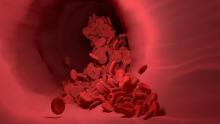
Researchers discover a link between an increase in protein Ba of the complement immune system and the eventual development of thrombotic microangiopathy in patients who have received an allogeneic hematopoietic stem cell transplantation.
25 Aug 2021
Hokkaido University
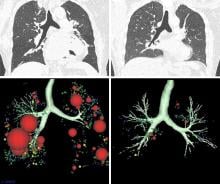
A novel CT scan-based approach has revealed significant changes in a parameter indicating lung destruction in some asthmatics. This finding could lead to more personalized treatments for asthma accompanied by persistent airflow limitation.
24 Aug 2021
Osaka City University
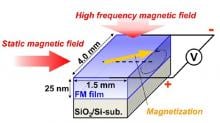
Researchers have succeeded in storing electricity with the voltage generated from ferromagnetic resonance (FMR) using a nanometer-thin magnetic film. Exploring the storage characteristics of the commonly used iron-cobalt and iron-nickel alloy thin films, they found that by controlling the thermal conditions of the thin film to be within FMR excitation range, energy can be stored by all the electromagnetic waves that surround us – including Wi-Fi.

18 Aug 2021
Osaka City University
A collaboration between Osaka City University and Setsunan University sheds light on the effect urbanization has on the flesh fly species Sarcophaga similis. Through a series of laboratory and in-field experiments, scientists show that an increase in nighttime illumination and temperature, two of the major characteristics of urbanization, can postpone S. similis hibernation anywhere from 3 weeks to a month.
17 Aug 2021
Hiroshima University
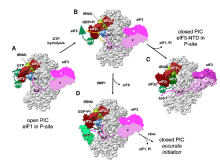
Cells translate their genetic material at rapid rates with exquisite precision to reproduce, repair damage or even combat disease. But the process can deregulate and give rise to disease. Byproducts of errant processes can build up like gunk in the gears, especially around neurons, breaking down the repair mechanisms and causing further damage and even neurodegenerative disorders such as Alzheimer’s disease.
11 Aug 2021
Osaka City University
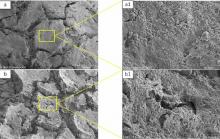
Researchers from Osaka City University show the benefits of mixing alginic acid with calcium phosphate cement (CPC), a common bone replacement material, with in vitro and in vivo studies. The biopolymer is shown to improve the setting time and compressive strength of CPC, as well as help it acquire porosity – which allows cells to enter the defected area and grow new bone.
10 Aug 2021
Hokkaido University
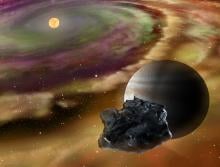
Researchers have developed a novel technique to investigate the dynamics of the early Solar System by analyzing magnetites in meteorites utilizing the wave nature of electrons.
04 Aug 2021
Hokkaido University
Sleeping safe and sound is one of human’s most fundamental needs to stay reenergized and maintain our bodily functions. How does hearing environmental sounds influence our sleeping quality? Assistant Professor Junta Tagusari from the Laboratory of Regional Environmental Issues, Graduate School of Engineering, is investigating the best method to measure noises and how they affect human health.
30 Jul 2021
Institute of Industrial Science, The University of Tokyo (UTokyo-IIS)
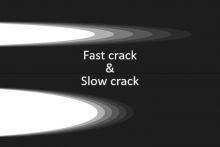
Researchers from The University of Tokyo Institute of Industrial Science develop an experimentally supported mathematical model that defines the velocity jump mechanism in crack propagation
30 Jul 2021
Hokkaido University
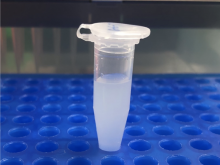
Testing a large library of compounds reveals an easy-to-make lipid that can carry genetic code into the lung to treat disease.
29 Jul 2021
Osaka City University
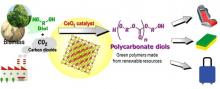
Using a CeO2 catalyst, researchers develop an effective catalytic process for the direct synthesis of polycarbonate diols without the need for dehydrating agents. The high yield, high selective process has CO2 blown at atmospheric pressure to evaporate excess water by-product allowing for a catalytic process that can be used with any substrate with a boiling point higher than water.
27 Jul 2021
Hokkaido University
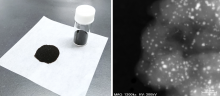
Adding lead and calcium to an industrial catalyst dramatically improves its ability to support propylene production at very high temperatures, making it stable and active for a month.
22 Jul 2021
Hokkaido University
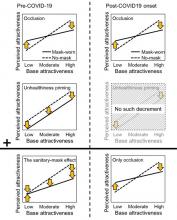
The Covid-19 pandemic has improved perceptions of facial attractiveness and healthiness of people wearing face masks in Japan.
21 Jul 2021
RIKEN
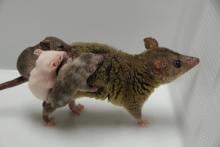
Researchers at the RIKEN Center for Biosystems Dynamics Research (BDR) have succeeded in creating the first genetically engineered marsupial. This study, published in the scientific journal Current Biology, will contribute to deciphering the genetic background of unique characteristics observed only in marsupials.
21 Jul 2021
Kavli Institute for the Physics and Mathematics of the Universe (Kavli IPMU)
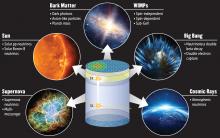
Kavli IPMU's Kai Martens and Masaki Yamashita are two of many researchers who have signed an MOU to work together to design, construct, and operate a new, single, multi-tonne scale xenon observatory to explore dark matter.
20 Jul 2021
Osaka City University
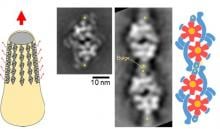
Using electron microscopy and high-speed atomic force microscopy, researchers show the internal molecular motor behind the gliding mechanism for Mycoplasma mobile to consist of two ATP synthase-like molecules. Sharing a similar structure with ATP synthase suggests a common evolutionary ancestor. This synthase-like ATPase is challenging the origin of cells and proteins themselves.
Researchers
Sorry, no researchers coming up for this topic.
Giants in history

Japanese biochemist Akira Endo (1933 – 2024) discovered the first statin, called mevastatin, which lowered cholesterol levels in the blood by inhibiting a key enzyme in the cholesterol biosynthesis pathway. His work laid the foundation for the development of statins to help patients lower their blood cholesterol levels and reduce their risk of heart disease or stroke.
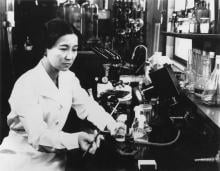
Ruby Sakae Hirose (1904 – 1960) was a Japanese-American scientist whose research contributed significantly to our understanding of blood clotting, allergies and cancer.
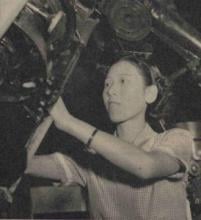
Haisako Koyama (1916 – 1997) was a Japanese solar observer whose dedication to recording sunspots – cooler parts of the sun’s surface that appear dark – produced a sunspot record of historic importance.
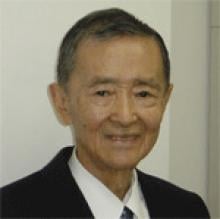
Michiaki Takahashi (17 February 1928 – 16 December 2013) was a Japanese virologist who developed the first chickenpox vaccine.
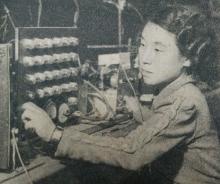
Toshiko Yuasa (11 December 1909 – 1 February 1980) was the first Japanese female physicist whose research on radioactivity shed light on beta decay – the process in which an atom emits a beta particle (electron) and turns into a different element.
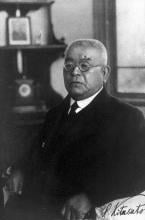
Baron Kitasato Shibasaburo (29 January 1856 – 13 June 1931) was a Japanese physician and bacteriologist whose work led to a new understanding of preventing and treating tetanus, diphtheria and anthrax.
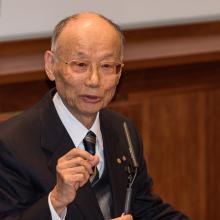
By isolating soil microorganisms and studying the compounds they produce, Satoshi Omura (born 1935) discovered almost 500 organic compounds with unique properties that were produced by these microorganisms, including many new antibiotics.
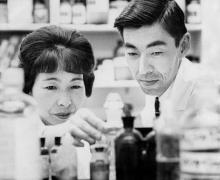
Husband and wife team, Kimishige (3 December 1925 – 6 July 2018) and Teruko Ishizaka (28 September 1926 – 4 June 2019) discovered the antibody class Immunoglobulin E (IgE) that triggers allergic reactions. They also discovered that IgE antibodies attach to white blood cells, known as mast cells, releasing histamine, which causes allergic reactions.
Husband and wife team, Kimishige (3 December 1925 – 6 July 2018) and Teruko Ishizaka (28 September 1926 – 4 June 2019) discovered the antibody class Immunoglobulin E (IgE) that triggers allergic reactions. They also discovered that IgE antibodies attach to white blood cells, known as mast cells, releasing histamine, which causes allergic reactions.
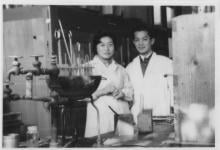
Reiji Okazaki (8 October 1930 – 1 August 1975) and Tsuneko (7 June 1933) were a Japanese couple who discovered Okazaki fragments – short sequences of DNA that are synthesized during DNA replication and linked together to form a continuous strand.
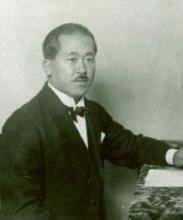
In 1915, Koichi Ichikawa along with pathologist Katsusaburo Yamagiwa became the first to prove that chronic exposure to chemicals can cause cancer.
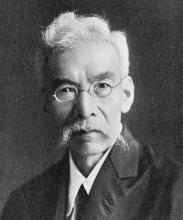
In 1915, pathologist Katsusaburo Yamagiwa and his research assistant Koichi Ichikawa became the first to prove that chronic exposure to chemicals can cause cancer.
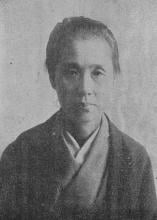
Ogino Ginko (3 March 1851 – 23 June 1913) was the first registered female doctor to practise modern medicine in Japan.
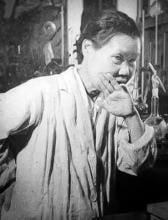
Michiyo Tsujimura (17 September 1888 – 1 June 1969) was a Japanese agricultural scientist and biochemist recognized for her research of green tea components.
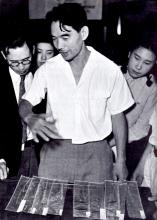
Hitoshi Kihara (1893 – 1986) was one of the most famous Japanese geneticists of the 20th century. One of his most significant contributions was identifying sex chromosomes (X and Y) in flowering plants.
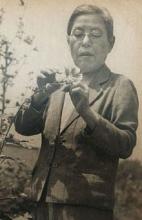
Kono Yasui (16 February 1880 – 24 March 1971) was a Japanese botanist who researched the genetics of poppies, corn and spiderworts and surveyed the plants that had been affected by the nuclear fallout after the atomic bombings of Hiroshima and Nagasaki.
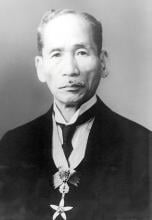
Umetaro Suzuki (7 April 1874 – 20 September 1943) was a Japanese scientist best remembered for his research on beriberi, a disease caused by vitamin B1 deficiency, characterized by limb stiffness, paralysis and pain.
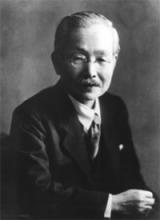
Kikunae Ikeda (8 October 1864 – 3 May 1936) was a Japanese chemist who discovered the fifth basic taste, umami.
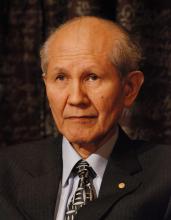
Osamu Shimomura (27 August 1928 – 19 October 2018) was a Japanese organic chemist and marine biologist who dedicated his career to understanding how organisms emitted light.
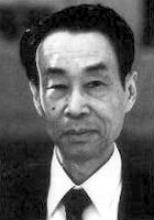
Motoo Kimura (13 November 1924 – 13 November 1994) was a Japanese theoretical population geneticist who is best remembered for developing the neutral theory of molecular evolution.

Chika Kuroda (24 March 1884 – 8 November 1968) was a Japanese chemist whose research focussed on the structures of natural pigments.
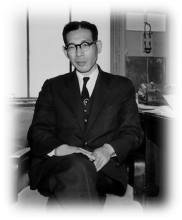
The field of solid-state ionics originated in Europe, but Takehiko Takahashi of Nagoya University in Japan was the first to coin the term ‘solid ionics’ in 1967. ‘Solid-state ionics’ first appeared in 1971 in another of his papers, and was likely a play on ‘solid-state electronics’, another rapidly growing field at the time.
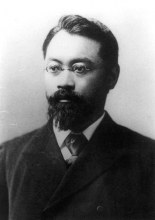
The techniques that make industrial pearl culturing possible were developed over a century ago at the Misaki Marine Biological Station in Japan. The station’s first director, Professor Kakichi Mitsukuri, emphasized to Kokichi Mikimoto in 1890 that stimulating pearl sac formation was important for pearl growth, and they went on to successfully develop methods for culturing pearls.
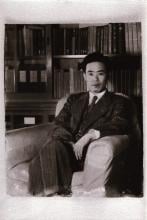
Japanese physicist Ukichiro Nakaya (1900-1962) made the world’s first artificial snowflakes. He started his research on snow crystals in the early 1930s at Hokkaido University, where there is an unlimited supply of natural snow in winter. By taking over 3,000 photographs, he established a classification of natural snow crystals and described their relationship with weather conditions.
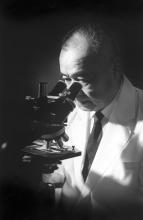
Minoru Shirota (April 23, 1899 – March 10, 1982) was a Japanese microbiologist who invented the popular fermented drink Yakult.
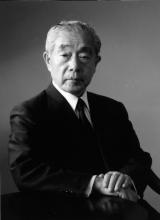
Japanese chemist Kenichi Fukui (4 October 1918 – 9 January 1998) was the first Asian scientist to be awarded the Nobel Prize in Chemistry. Together with Roald Hoffman, he received this honour in 1981 for his independent research into the mechanisms of chemical reactions.
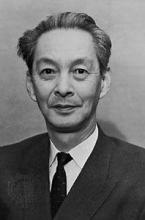
Shinichiro Tomonaga (31 March 1906 – 8 July 1979), together with Richard Feynman and Julian Schwinger, was awarded the Nobel Prize in Physics in 1965, for their contributions to advance the field of quantum electrodynamics. Tomonaga was also a strong proponent of peace, who actively campaigned against the proliferation of nuclear weapons and promoted the peaceful use of nuclear energy.
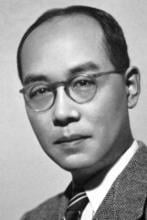
Hideki Yukawa (23 January 1907 – 8 September 1981) was awarded the Nobel Prize in Physics in 1949 for predicting the existence of the pi meson subatomic particle. Japan’s first Nobel laureate, Yakawa also expressed his support for nuclear disarmament by signing the Russell–Einstein Manifesto in 1955.
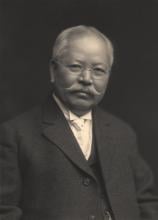
Japanese chemist Takamine Jokichi (3 November 1854 – 22 July 1922) founded the Tokyo Artificial Fertilizer Company, where he isolated a starch-digesting enzyme (named takadiastase) from the fungus Aspergillus oryzae.
Tsuneko (7 June 1933) and Reiji Okazaki (8 October 1930 – 1 August 1975) were a Japanese couple who discovered Okazaki fragments – short sequences of DNA that are synthesized during DNA replication and linked together to form a continuous strand.
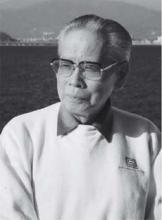
A Japanese surgeon, Tetsuzo Akutsu (20 August 1922 – 9 August 2007) built the first artificial heart capable of keeping an animal alive.
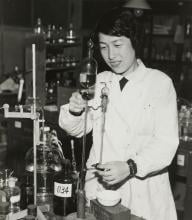
Japanese geochemist Katsuko Saruhashi developed the first method and tools for measuring carbon dioxide in seawater