

Japan
News
28 Dec 2021
Osaka City University
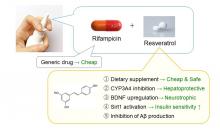
Researchers from Osaka City University have shown in mice models of Alzheimer's disease, frontotemporal dementia, and dementia with Lewy bodies, that the intranasal administration of rifampicin and resveratrol in combination is safer and improves cognitive function more than rifampicin alone. The research results are expected to lead to the development of safe and effective nasal spray for the prevention of dementia.
23 Dec 2021
Osaka City University
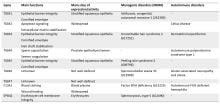
By searching for the protein transglutaminase 1 (TGM1) among patients with various autoimmune skin diseases, researchers have successfully identified a separate disease that
can be linked to autoimmunity against TGM1. This backward method
demonstrates a new way of identifying autoantigens as markers for various
diseases. By letting autoantigens point to the disease, diagnosis and
treatment can be facilitated, according to the study now published in PNAS.
22 Dec 2021
Kanazawa University
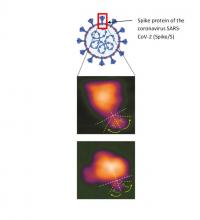
In a recent study published in the Journal of Extracellular Vesicles researchers from Kanazawa University have visualized structural changes on the surface of SARS-CoV-2 that enable it to enter human cells.
22 Dec 2021
Hokkaido University
Scientists predict that continued global warming under current trends could lead to an elevation of the sea level by as much as five meters by the year 3000 CE.
22 Dec 2021
Kanazawa University
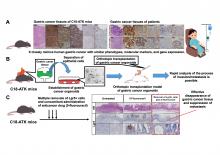
We have succeeded in establishing a mouse model that develops gastric cancer closely resembling advanced human gastric cancer. Using this model, we have discovered gastric cancer stem cells, i.e. Lgr5+ gastric cancer cells, essential for the development, maintenance, and metastasis of cancer. Our study provides an experimental system that enables detailed analysis of highly malignant gastric cancer and is expected to lead to the development of a breakthrough treatment for advanced human gastric cancer.
21 Dec 2021
Osaka City University
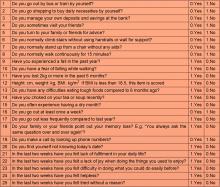
In a study of 280 patients who underwent transcatheter aortic valve replacement (TAVI), researchers investigated the 3-year prognostic impact of frailty evaluated by the Kihon checklist (KCL), a survey originally developed to identify elderly individuals who were at risk of requiring support within the Japanese long-term care insurance system. Results showed that the estimated 3-year mortality rate was significantly higher in individuals who ranked high on the KCL, showcasing the checklist as a simple tool to be used alongside other surgical risk scores, in identifying patients who are too frail to benefit from TAVI
17 Dec 2021
Hiroshima University
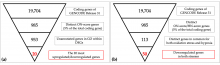
Researchers are closer to understanding potential common features of sources of oxidative stress observed in several diseases, from Parkinson’s disease to cancer.
17 Dec 2021
Kavli Institute for the Physics and Mathematics of the Universe (Kavli IPMU)
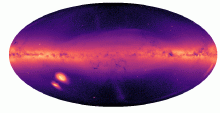
An international team of astronomers has revealed a new map of the Milky Way galaxy’s outer disc showing remains of tidal arms excited from interactions with satellite galaxies in the distant past.

16 Dec 2021
Institute for Integrated Cell-Material Sciences (iCeMS) at Kyoto University
In a study published in Nature Energy this month, researchers led by Kyoto University’s Institute for Integrated Cell-Material Sciences (iCeMS) describe how nanodiamond-reinforced composite membranes can purify hydrogen from its humid mixtures, making the hydrogen generation processes vastly more efficient and cost-effective.
13 Dec 2021
Hokkaido University
The Akira Suzuki Award and the ICReDD Award, both sponsored by the Tosoh Corporation, were established in 2021 by the Akira Suzuki Award Organizing Committee, led by professors at the Institute for Chemical Reaction Design and Discovery (ICReDD), in commemoration of Professor Akira Suzuki’s winning of the 2010 Nobel Prize in Chemistry and in celebration of his 90th birthday.

09 Dec 2021
Kanazawa University
Using data on electromagnetic (EM) waves and plasma particles measured simultaneously via multiple satellites, an international collaborative research group has discovered the existence of invisible “propagation path” of EM waves and elucidated the mechanism by which EM waves propagate to the ground.

09 Dec 2021
Kavli Institute for the Physics and Mathematics of the Universe (Kavli IPMU)
A team of astronomers including Kavli IPMU's Ji-an Jiang has discovered the fastest optical flash of a Type Ia supernova.
08 Dec 2021
Kavli Institute for the Physics and Mathematics of the Universe (Kavli IPMU)
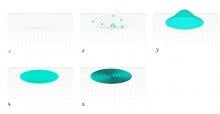
If researchers can detect Q-balls in gravitational waves, it could help explain why more matter than anti-matter was left over after the Big Bang.
07 Dec 2021
Hokkaido University
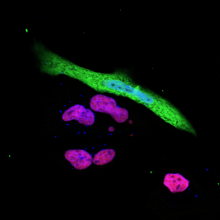
Scientists at Hokkaido University and Texas A&M University have identified a key mechanism used by the SARS-CoV-2 virus to evade host immune systems.
03 Dec 2021
Hokkaido University
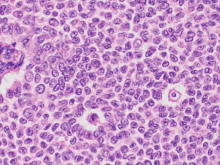
Examination of Japanese cases of gynecological cancer offers a better understanding of the profile of a rare ovarian tumor and could change treatment guidelines.
02 Dec 2021
Institute of Industrial Science, The University of Tokyo (UTokyo-IIS)
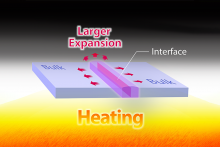
Researchers from the The University of Tokyo Institute of Industrial Science use electron energy loss spectroscopy to understand local thermal behavior at grain boundaries in polycrystals
29 Nov 2021
Hokkaido University
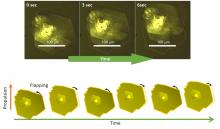
Synthesized microrobots that are capable of converting their mechanical motion into a means of self-propulsion in water have been developed by scientists at Hokkaido University.
26 Nov 2021
Osaka City University
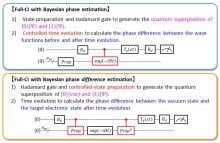
In a continuing effort to improve upon previous work, a research team at the Graduate School of Science, Osaka City University, have applied their recently developed Bayesian phase difference estimation quantum algorithm to perform full configuration interaction (full-CI) calculations of atoms and molecules without simulating the time evolution of the wave function conditional on an ancillary qubit. Superior to conventional methods in terms of parallel execution of quantum gates during quantum computing, this new algorithm is expected to be much easier to implement in actual quantum computers.
24 Nov 2021
Osaka City University
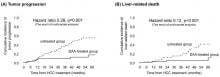
Researchers from the Osaka City University Graduate School of Medicine have shown in patients with early-stage hepatocellular carcinoma who received cancer treatment that eliminating the hepatitis C virus with a direct-acting antiviral treatment reduces the risk of the liver cancer progression and increases overall patient survival.
19 Nov 2021
Hiroshima University
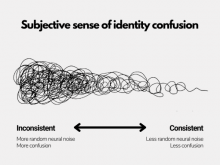
Feeling unsure of yourself? Your brain’s background noise may be interfering with the long memory signals communicated by your neurons’ electrical chatter.
18 Nov 2021
Hokkaido University
A new method for creating one of chemistry’s most widely used class of compounds could revolutionize industrial processes, making them cheaper, simpler and more environmentally friendly.

18 Nov 2021
Hokkaido University
Surveys have revealed an upward trend in the number of brown bears over the past three decades in Hokkaido, Japan's northernmost island. Researchers at Hokkaido University have been investigating the causes and implications of the increase.
17 Nov 2021
Institute of Industrial Science, The University of Tokyo (UTokyo-IIS)
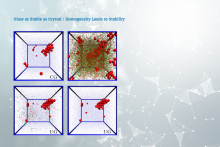
Researchers at The University of Tokyo use numerical simulations to model the process called devitrification during which glasses crystallize, which may help improve the long-term stability of glassy materials, like pharmaceuticals and smartphone screens.
16 Nov 2021
Osaka City University
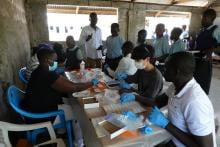
Scientists are turning to genomics to better understand the epidemiology of malaria and to inform control and elimination interventions and strategies. In the Lake Victoria region of Kenya, malaria burden remains very high despite more than a decade of intense control activities. A team of researchers from Osaka City University, Nagasaki University, London School of Hygiene and Tropical Medicine, and Mount Kenya University generated whole Plasmodium falciparum genome sequences from the lake region. Their analyses revealed that malaria parasites from this region appear distinct from other parasites from East Africa, while frequencies of known drug resistance markers were similar to those in other East African parasite populations. Their findings will help to develop improved surveillance tools to determine parasite transmission routes and aid clinical disease management.
11 Nov 2021
Asia Research News
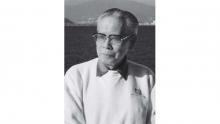
Giants in History: A Japanese surgeon, Tetsuzo Akutsu (20 August 1922 – 9 August 2007) built the first artificial heart capable of keeping an animal alive.
10 Nov 2021
Hokkaido University
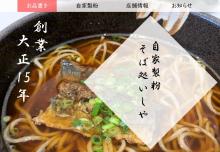
Japanese customers have higher expectations of restaurants selling traditional foods more when they display an older year of establishment.
08 Nov 2021
Kanazawa University
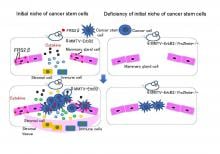
We have clarified at the molecular level the mechanism by which a microenvironment, a so-called niche that surrounds cancer cells, is formed in which stromal cells and immune cells are attracted at an initiation stage of breast cancer onset. A molecule called FRS2β is found to be critical for creating this microenvironment. The present finding is expected to be beneficial in prevention, diagnosis and treatment of cancers at the initiation stage.
04 Nov 2021
Hokkaido University
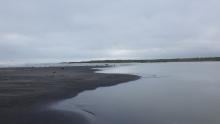
The diversity of threatened fish in estuaries increases when surrounded by forest cover, whereas estuaries surrounded by farmland show the opposite effect.
02 Nov 2021
Hiroshima University
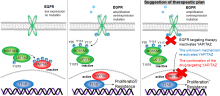
Malfunctioning of the so-called Hippo signalling pathway within animal cells leads to irregular activity of proteins that regulate genes involved in cell proliferation. Researchers have identified a key step in the process of this aberration, opening the door to new therapeutics for cancers such as head-and-neck squamous cell carcinoma and lung adenocarcinoma.
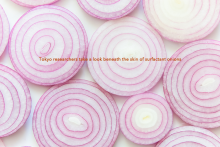
02 Nov 2021
Institute of Industrial Science, The University of Tokyo (UTokyo-IIS)
Researchers from The University of Tokyo Institute of Industrial Science use optical microscopy to form a picture of what’s really going on inside surfactant onions
Researchers
Sorry, no researchers coming up for this topic.
Giants in history

Japanese biochemist Akira Endo (1933 – 2024) discovered the first statin, called mevastatin, which lowered cholesterol levels in the blood by inhibiting a key enzyme in the cholesterol biosynthesis pathway. His work laid the foundation for the development of statins to help patients lower their blood cholesterol levels and reduce their risk of heart disease or stroke.
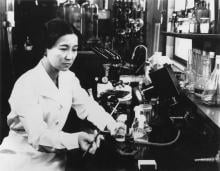
Ruby Sakae Hirose (1904 – 1960) was a Japanese-American scientist whose research contributed significantly to our understanding of blood clotting, allergies and cancer.
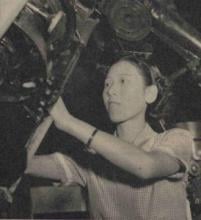
Haisako Koyama (1916 – 1997) was a Japanese solar observer whose dedication to recording sunspots – cooler parts of the sun’s surface that appear dark – produced a sunspot record of historic importance.
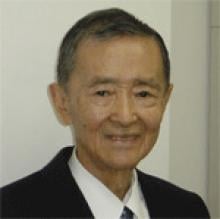
Michiaki Takahashi (17 February 1928 – 16 December 2013) was a Japanese virologist who developed the first chickenpox vaccine.
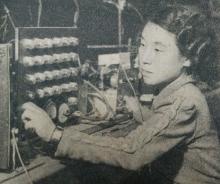
Toshiko Yuasa (11 December 1909 – 1 February 1980) was the first Japanese female physicist whose research on radioactivity shed light on beta decay – the process in which an atom emits a beta particle (electron) and turns into a different element.
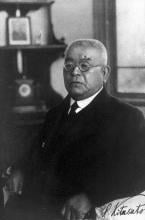
Baron Kitasato Shibasaburo (29 January 1856 – 13 June 1931) was a Japanese physician and bacteriologist whose work led to a new understanding of preventing and treating tetanus, diphtheria and anthrax.
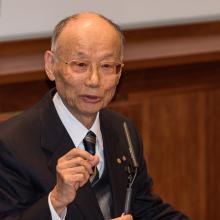
By isolating soil microorganisms and studying the compounds they produce, Satoshi Omura (born 1935) discovered almost 500 organic compounds with unique properties that were produced by these microorganisms, including many new antibiotics.
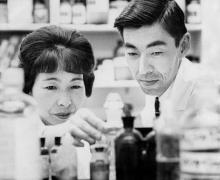
Husband and wife team, Kimishige (3 December 1925 – 6 July 2018) and Teruko Ishizaka (28 September 1926 – 4 June 2019) discovered the antibody class Immunoglobulin E (IgE) that triggers allergic reactions. They also discovered that IgE antibodies attach to white blood cells, known as mast cells, releasing histamine, which causes allergic reactions.
Husband and wife team, Kimishige (3 December 1925 – 6 July 2018) and Teruko Ishizaka (28 September 1926 – 4 June 2019) discovered the antibody class Immunoglobulin E (IgE) that triggers allergic reactions. They also discovered that IgE antibodies attach to white blood cells, known as mast cells, releasing histamine, which causes allergic reactions.
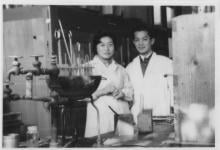
Reiji Okazaki (8 October 1930 – 1 August 1975) and Tsuneko (7 June 1933) were a Japanese couple who discovered Okazaki fragments – short sequences of DNA that are synthesized during DNA replication and linked together to form a continuous strand.
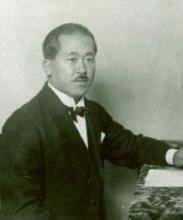
In 1915, Koichi Ichikawa along with pathologist Katsusaburo Yamagiwa became the first to prove that chronic exposure to chemicals can cause cancer.
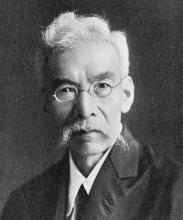
In 1915, pathologist Katsusaburo Yamagiwa and his research assistant Koichi Ichikawa became the first to prove that chronic exposure to chemicals can cause cancer.
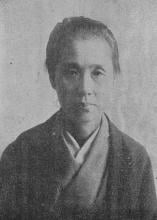
Ogino Ginko (3 March 1851 – 23 June 1913) was the first registered female doctor to practise modern medicine in Japan.
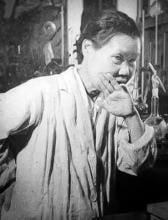
Michiyo Tsujimura (17 September 1888 – 1 June 1969) was a Japanese agricultural scientist and biochemist recognized for her research of green tea components.
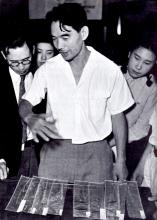
Hitoshi Kihara (1893 – 1986) was one of the most famous Japanese geneticists of the 20th century. One of his most significant contributions was identifying sex chromosomes (X and Y) in flowering plants.
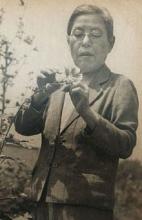
Kono Yasui (16 February 1880 – 24 March 1971) was a Japanese botanist who researched the genetics of poppies, corn and spiderworts and surveyed the plants that had been affected by the nuclear fallout after the atomic bombings of Hiroshima and Nagasaki.
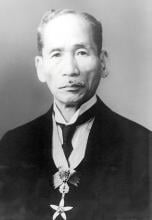
Umetaro Suzuki (7 April 1874 – 20 September 1943) was a Japanese scientist best remembered for his research on beriberi, a disease caused by vitamin B1 deficiency, characterized by limb stiffness, paralysis and pain.
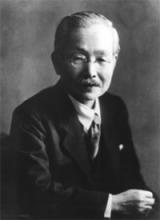
Kikunae Ikeda (8 October 1864 – 3 May 1936) was a Japanese chemist who discovered the fifth basic taste, umami.
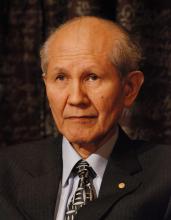
Osamu Shimomura (27 August 1928 – 19 October 2018) was a Japanese organic chemist and marine biologist who dedicated his career to understanding how organisms emitted light.
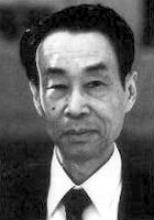
Motoo Kimura (13 November 1924 – 13 November 1994) was a Japanese theoretical population geneticist who is best remembered for developing the neutral theory of molecular evolution.

Chika Kuroda (24 March 1884 – 8 November 1968) was a Japanese chemist whose research focussed on the structures of natural pigments.
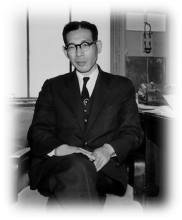
The field of solid-state ionics originated in Europe, but Takehiko Takahashi of Nagoya University in Japan was the first to coin the term ‘solid ionics’ in 1967. ‘Solid-state ionics’ first appeared in 1971 in another of his papers, and was likely a play on ‘solid-state electronics’, another rapidly growing field at the time.
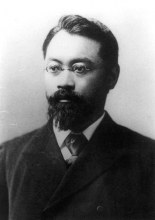
The techniques that make industrial pearl culturing possible were developed over a century ago at the Misaki Marine Biological Station in Japan. The station’s first director, Professor Kakichi Mitsukuri, emphasized to Kokichi Mikimoto in 1890 that stimulating pearl sac formation was important for pearl growth, and they went on to successfully develop methods for culturing pearls.
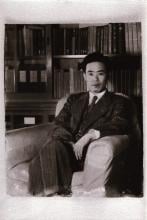
Japanese physicist Ukichiro Nakaya (1900-1962) made the world’s first artificial snowflakes. He started his research on snow crystals in the early 1930s at Hokkaido University, where there is an unlimited supply of natural snow in winter. By taking over 3,000 photographs, he established a classification of natural snow crystals and described their relationship with weather conditions.
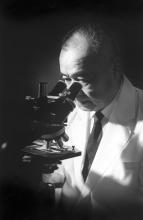
Minoru Shirota (April 23, 1899 – March 10, 1982) was a Japanese microbiologist who invented the popular fermented drink Yakult.
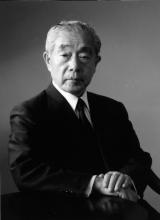
Japanese chemist Kenichi Fukui (4 October 1918 – 9 January 1998) was the first Asian scientist to be awarded the Nobel Prize in Chemistry. Together with Roald Hoffman, he received this honour in 1981 for his independent research into the mechanisms of chemical reactions.
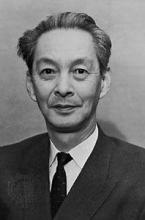
Shinichiro Tomonaga (31 March 1906 – 8 July 1979), together with Richard Feynman and Julian Schwinger, was awarded the Nobel Prize in Physics in 1965, for their contributions to advance the field of quantum electrodynamics. Tomonaga was also a strong proponent of peace, who actively campaigned against the proliferation of nuclear weapons and promoted the peaceful use of nuclear energy.
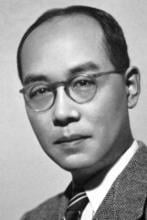
Hideki Yukawa (23 January 1907 – 8 September 1981) was awarded the Nobel Prize in Physics in 1949 for predicting the existence of the pi meson subatomic particle. Japan’s first Nobel laureate, Yakawa also expressed his support for nuclear disarmament by signing the Russell–Einstein Manifesto in 1955.
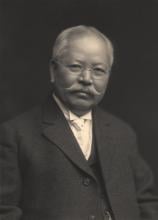
Japanese chemist Takamine Jokichi (3 November 1854 – 22 July 1922) founded the Tokyo Artificial Fertilizer Company, where he isolated a starch-digesting enzyme (named takadiastase) from the fungus Aspergillus oryzae.
Tsuneko (7 June 1933) and Reiji Okazaki (8 October 1930 – 1 August 1975) were a Japanese couple who discovered Okazaki fragments – short sequences of DNA that are synthesized during DNA replication and linked together to form a continuous strand.
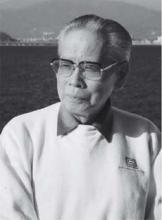
A Japanese surgeon, Tetsuzo Akutsu (20 August 1922 – 9 August 2007) built the first artificial heart capable of keeping an animal alive.
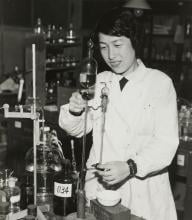
Japanese geochemist Katsuko Saruhashi developed the first method and tools for measuring carbon dioxide in seawater