
Japan
News
22 Feb 2022
Hokkaido University
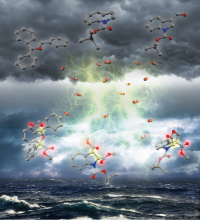
Using electricity, a new method offers the possibility of recycling CO2 while also performing a notoriously difficult reaction, producing compounds potentially useful for drug development.
20 Feb 2022
Kanazawa University
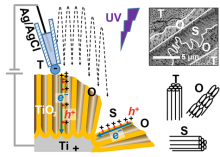
In a recent study published in the journal ACS Catalysis researchers from Kanazawa University describe novel scanning electrochemical cell microscopy measurements to determine sites of photoelectrochemical activity in titanium dioxide nanotubes.
18 Feb 2022
Osaka City University
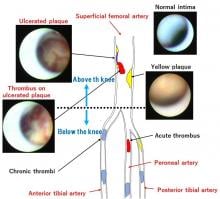
New research finds the extent of arterial occlusive disease in the popliteal artery correlates with the prognosis of peripheral arterial disease in lower limbs. The study of 31 patients who underwent percutaneous angioplasty of femoropopliteal artery (FPA) proved for the first time that ulcerated plaque observed in the FPA during angioscopy is the source of the thromboembolic mechanism in the popliteal artery.

17 Feb 2022
Osaka City University
An international team of researchers respond to criticisms on previous work that demonstrated Mirror Self-Recognition (MSR) in the cleaner fish Labroides dimidiatus, by 1) successfully repeating the mark test with a larger sample size, 2) showing the MSR behaviour to be the visual result of the mark not a physical response to it, and 3) showing that MSR-trained fish do not show aggression to spatially varied mirror images of themselves. Additionally, they further demonstrate potential self-awareness in L. dimidiatus by showing that they do not demonstrate MSR behaviour when visually presented with the mark on other fish and solidify the importance of ecologically relevant marks presented in previous work by showing MSR behaviour of L. dimidiatus with brown marks, meant to resemble a main food source of the fish, as opposed to no such behaviour in fish with green or blue marks.
16 Feb 2022
Hokkaido University
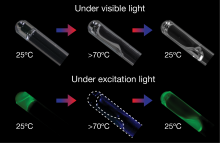
Simulations have led to the fabrication of a polymer-DNA gel that could be used in tissue regeneration and robotics.
16 Feb 2022
Institute of Industrial Science, The University of Tokyo (UTokyo-IIS)
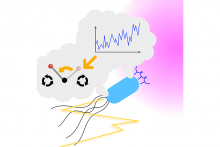
Researchers at The University of Tokyo demonstrate the theoretically optimal search method for organisms that employ the “run-and-tumble” technique, and find that it conforms with observations of chemotaxis by E. coli, which may help automate drones
16 Feb 2022
Osaka City University
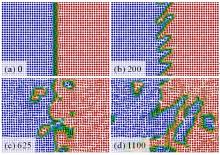
Through numerical simulations, a researcher details the discovery of a new isolated skyrmion with a half-integer topological quantum number in the ferromagnetic phase of the magnetic quantum fluid Bose-Einstein condensate (BEC). The new skyrmion is generated by applying a spin current to a magnetic domain wall and it has an eccentric (off-center) spin singularity inside it.
15 Feb 2022
Hiroshima University
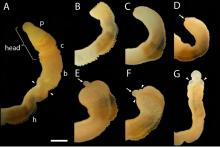
Better understanding of regeneration in hemichordates may eventually lead to advances in reparative medicine
15 Feb 2022
Hiroshima University
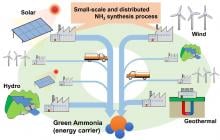
Research by Japanese scientists at Hiroshima University reveals a way to make ammonia from its constituent molecules of nitrogen and hydrogen at ambient pressure.
14 Feb 2022
Hiroshima University
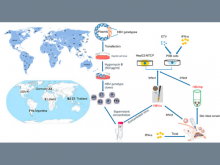
Advancement in cell lines capable of producing Hepatitis B’s many genotypes can reveal much about the unique virological features and treatment responses eluding researchers of this virus that has been infecting humans as far back as the Bronze Age.
07 Feb 2022
Hokkaido University
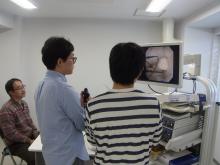
A large-scale study has found that simulation-based surgical training produced an increase of surgeons’ skills for more complex surgeries.
04 Feb 2022
Hiroshima University
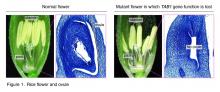
Rice has long been a staple food for more than half the global population. The United Nations even declared 2004 the International Year of Rice to raise awareness and encourage action to protect and advance the crop for a rapidly growing population. The genetic guidance rice uses to grow and reproduce, however, is still not fully understood. Now, a research team based in Japan is learning more, including how critical one gene is for the plant to develop grains of rice, which serve as both seeds and food.
03 Feb 2022
Hokkaido University
Wastewater-based epidemiological tracking of COVID-19 in the Tokyo 2020 Olympic and Paralympic village showed that SARS-CoV-2 was present in areas without diagnosed individuals.
02 Feb 2022
Institute of Industrial Science, The University of Tokyo (UTokyo-IIS)
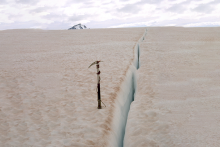
Researchers from Institute of Industrial Science, The University of Tokyo find that the occurrence of red snow is closely tied to the length of the snow melt season and new snowfall events
01 Feb 2022
Institute of Industrial Science, The University of Tokyo (UTokyo-IIS)
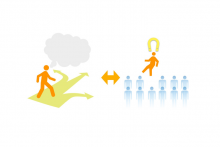
A new study provides a theoretical basis for the influence of learning from ancestors on the acceleration of natural selection using Fisher’s fundamental theorem
31 Jan 2022
Hiroshima University
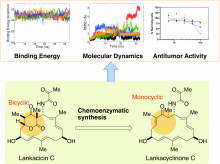
Garden soil houses a variety of bacteria and their natural byproducts — including one that may help halt tumor growth. Lankacidins are molecules that can be isolated from Strepomyces rochei, a common bacterium in soil. In addition to antimicrobial properties, a type of lankacidins, called lankacidin C, can inhibit tumor activity in various cancer cell lines, including leukemia, melanoma, ovarian and breast cancers. Lankacidin C offers a potential foundation on which to design anticancer drugs, but its structure is complicated and difficult to manipulate, according to an international research group. The same group recently identified where antitumor activity is housed on the molecule and has now used that information to simplify lankacidin as a potential starting point to engineer treatments.
28 Jan 2022
Kavli Institute for the Physics and Mathematics of the Universe (Kavli IPMU)
Kavli IPMU and UC Berkeley's Hitoshi Murayama has been named a new fellow of the American Association for the Advancement of Science (AAAS). Congratulations!
27 Jan 2022
Hokkaido University
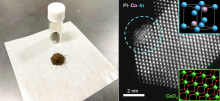
Researchers have developed an innovative catalyst for the synthesis of propylene, which has potential benefits for the chemical industry and carbon recycling.
27 Jan 2022
Osaka Prefecture University
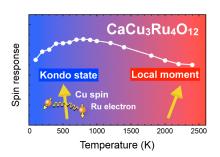
An international research group demonstrated that the Kondo effect can have a significant impact on transition metal oxide compound, which has unique and desirable properties to realize wide range of quantum phenomena. The findings have provided more evidence in a decade long debate.
27 Jan 2022
Hiroshima University
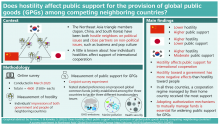
Despite ongoing antagonism between the peoples of China, Japan and South Korea, support for regional cooperation on issues such as climate, pandemics and pollution exists if such cooperation mechanisms are mutually managed rather than dominated by any one nation.
27 Jan 2022
Kavli Institute for the Physics and Mathematics of the Universe (Kavli IPMU)
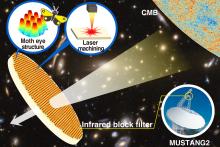
An international team has developed an alumina short-wavelength absorber patterned with moth eye-like structures. These new anti-reflective structures will improve the performance of telescopes studying radiation from the Big Bang.
25 Jan 2022
Hokkaido University
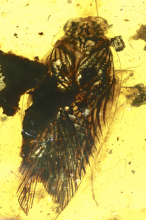
Studying the sensory organs of a 100-million-year-old cockroach offers new insights into how the species may have lived.
24 Jan 2022
Hokkaido University
Researchers from Hokkaido University have proposed a framework to assist in the demarcation between genetically modified organisms and genome-edited organisms, taking into account both scientific and socio-ethical considerations.
24 Jan 2022
Hiroshima University
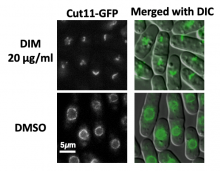
Broccoli may contain advantages beyond nutrition. A molecule found in broccoli, cabbage and more digests down into DIM, a compound with brighter benefits than the name implies, such as inducing cell death in breast, prostate and colon cancer. Now, researchers are beginning to understand the mechanism underpinning this molecular behavior — information that could help elucidate future anti-cancer treatments.
18 Jan 2022
Kavli Institute for the Physics and Mathematics of the Universe (Kavli IPMU)
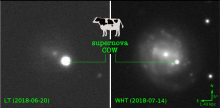
COW and GEP are new types of exploding stars. Researchers have succeeded in explaining the features of a new type of supernova which appears ten to a hundred times brighter at its peak, and with a much faster rise toward the peak compared to an ordinary supernova.
18 Jan 2022
Hokkaido University
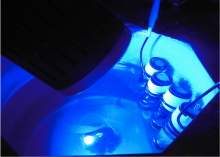
A new method for creating a highly useful chemical subunit eliminates the need for precious metals, potentially leading to the sustainable production of pharmaceuticals and electronics.
12 Jan 2022
Hokkaido University
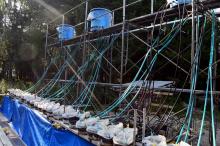
Predator species may buffer the negative impacts of climate change by mitigating against the loss of biodiversity, according to new research led by scientists in Trinity College Dublin and joined by scientists at Hokkaido University

12 Jan 2022
Kavli Institute for the Physics and Mathematics of the Universe (Kavli IPMU)
A team of researchers including Kavli IPMU's Valeri Vardanyan and Misao Sasaki have theorized that in addition to the gravitational waves originating from vacuum fluctuations during inflation, a large amount of gravitational waves can be sourced by the quantum vacuum fluctuations of additional fields during inflation.
06 Jan 2022
Institute of Industrial Science, The University of Tokyo (UTokyo-IIS)
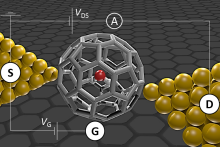
A collaborative team led by researchers from Institute of Industrial Science, The University of Tokyo uses a single water molecule in a C60 cage to probe quantum mechanics
05 Jan 2022
Kanazawa University
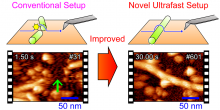
Researchers at Kanazawa University report in Applied Physics Letters the design of an ultrafast amplitude detector for use in high-speed atomic force microscopy. The detector will enable the real-time recording of fast dynamical processes of biomolecules.
Researchers
Sorry, no researchers coming up for this topic.
Giants in history

Japanese biochemist Akira Endo (1933 – 2024) discovered the first statin, called mevastatin, which lowered cholesterol levels in the blood by inhibiting a key enzyme in the cholesterol biosynthesis pathway. His work laid the foundation for the development of statins to help patients lower their blood cholesterol levels and reduce their risk of heart disease or stroke.
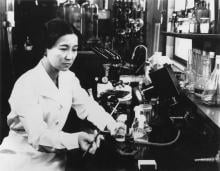
Ruby Sakae Hirose (1904 – 1960) was a Japanese-American scientist whose research contributed significantly to our understanding of blood clotting, allergies and cancer.
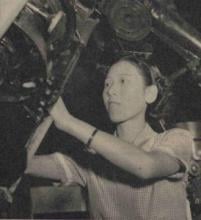
Haisako Koyama (1916 – 1997) was a Japanese solar observer whose dedication to recording sunspots – cooler parts of the sun’s surface that appear dark – produced a sunspot record of historic importance.
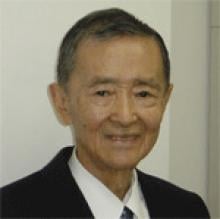
Michiaki Takahashi (17 February 1928 – 16 December 2013) was a Japanese virologist who developed the first chickenpox vaccine.
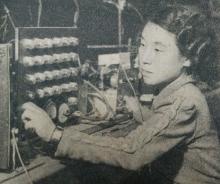
Toshiko Yuasa (11 December 1909 – 1 February 1980) was the first Japanese female physicist whose research on radioactivity shed light on beta decay – the process in which an atom emits a beta particle (electron) and turns into a different element.
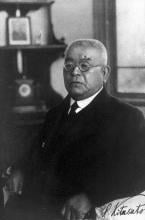
Baron Kitasato Shibasaburo (29 January 1856 – 13 June 1931) was a Japanese physician and bacteriologist whose work led to a new understanding of preventing and treating tetanus, diphtheria and anthrax.
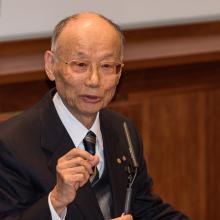
By isolating soil microorganisms and studying the compounds they produce, Satoshi Omura (born 1935) discovered almost 500 organic compounds with unique properties that were produced by these microorganisms, including many new antibiotics.
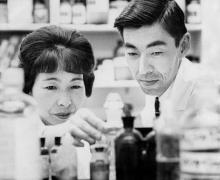
Husband and wife team, Kimishige (3 December 1925 – 6 July 2018) and Teruko Ishizaka (28 September 1926 – 4 June 2019) discovered the antibody class Immunoglobulin E (IgE) that triggers allergic reactions. They also discovered that IgE antibodies attach to white blood cells, known as mast cells, releasing histamine, which causes allergic reactions.
Husband and wife team, Kimishige (3 December 1925 – 6 July 2018) and Teruko Ishizaka (28 September 1926 – 4 June 2019) discovered the antibody class Immunoglobulin E (IgE) that triggers allergic reactions. They also discovered that IgE antibodies attach to white blood cells, known as mast cells, releasing histamine, which causes allergic reactions.
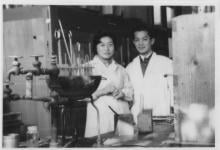
Reiji Okazaki (8 October 1930 – 1 August 1975) and Tsuneko (7 June 1933) were a Japanese couple who discovered Okazaki fragments – short sequences of DNA that are synthesized during DNA replication and linked together to form a continuous strand.
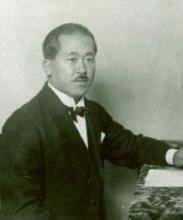
In 1915, Koichi Ichikawa along with pathologist Katsusaburo Yamagiwa became the first to prove that chronic exposure to chemicals can cause cancer.
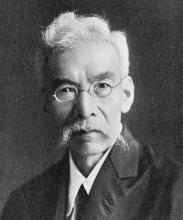
In 1915, pathologist Katsusaburo Yamagiwa and his research assistant Koichi Ichikawa became the first to prove that chronic exposure to chemicals can cause cancer.
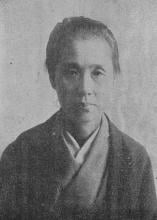
Ogino Ginko (3 March 1851 – 23 June 1913) was the first registered female doctor to practise modern medicine in Japan.
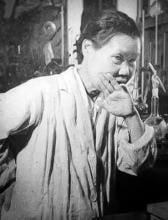
Michiyo Tsujimura (17 September 1888 – 1 June 1969) was a Japanese agricultural scientist and biochemist recognized for her research of green tea components.
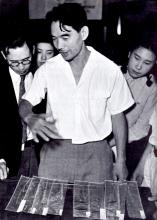
Hitoshi Kihara (1893 – 1986) was one of the most famous Japanese geneticists of the 20th century. One of his most significant contributions was identifying sex chromosomes (X and Y) in flowering plants.
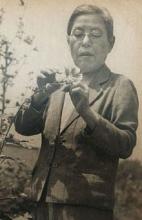
Kono Yasui (16 February 1880 – 24 March 1971) was a Japanese botanist who researched the genetics of poppies, corn and spiderworts and surveyed the plants that had been affected by the nuclear fallout after the atomic bombings of Hiroshima and Nagasaki.
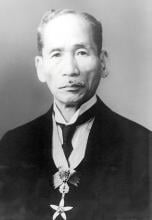
Umetaro Suzuki (7 April 1874 – 20 September 1943) was a Japanese scientist best remembered for his research on beriberi, a disease caused by vitamin B1 deficiency, characterized by limb stiffness, paralysis and pain.
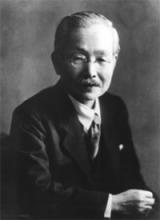
Kikunae Ikeda (8 October 1864 – 3 May 1936) was a Japanese chemist who discovered the fifth basic taste, umami.
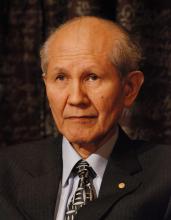
Osamu Shimomura (27 August 1928 – 19 October 2018) was a Japanese organic chemist and marine biologist who dedicated his career to understanding how organisms emitted light.
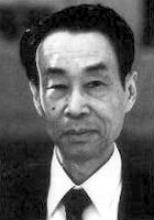
Motoo Kimura (13 November 1924 – 13 November 1994) was a Japanese theoretical population geneticist who is best remembered for developing the neutral theory of molecular evolution.

Chika Kuroda (24 March 1884 – 8 November 1968) was a Japanese chemist whose research focussed on the structures of natural pigments.
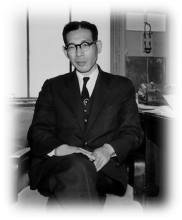
The field of solid-state ionics originated in Europe, but Takehiko Takahashi of Nagoya University in Japan was the first to coin the term ‘solid ionics’ in 1967. ‘Solid-state ionics’ first appeared in 1971 in another of his papers, and was likely a play on ‘solid-state electronics’, another rapidly growing field at the time.
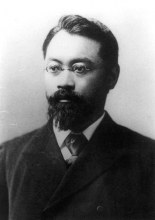
The techniques that make industrial pearl culturing possible were developed over a century ago at the Misaki Marine Biological Station in Japan. The station’s first director, Professor Kakichi Mitsukuri, emphasized to Kokichi Mikimoto in 1890 that stimulating pearl sac formation was important for pearl growth, and they went on to successfully develop methods for culturing pearls.
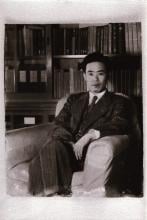
Japanese physicist Ukichiro Nakaya (1900-1962) made the world’s first artificial snowflakes. He started his research on snow crystals in the early 1930s at Hokkaido University, where there is an unlimited supply of natural snow in winter. By taking over 3,000 photographs, he established a classification of natural snow crystals and described their relationship with weather conditions.
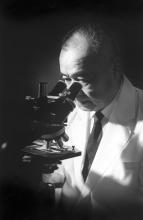
Minoru Shirota (April 23, 1899 – March 10, 1982) was a Japanese microbiologist who invented the popular fermented drink Yakult.
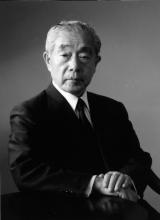
Japanese chemist Kenichi Fukui (4 October 1918 – 9 January 1998) was the first Asian scientist to be awarded the Nobel Prize in Chemistry. Together with Roald Hoffman, he received this honour in 1981 for his independent research into the mechanisms of chemical reactions.
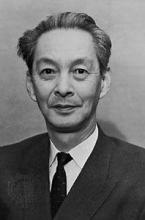
Shinichiro Tomonaga (31 March 1906 – 8 July 1979), together with Richard Feynman and Julian Schwinger, was awarded the Nobel Prize in Physics in 1965, for their contributions to advance the field of quantum electrodynamics. Tomonaga was also a strong proponent of peace, who actively campaigned against the proliferation of nuclear weapons and promoted the peaceful use of nuclear energy.
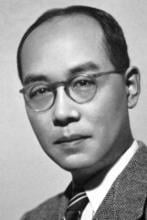
Hideki Yukawa (23 January 1907 – 8 September 1981) was awarded the Nobel Prize in Physics in 1949 for predicting the existence of the pi meson subatomic particle. Japan’s first Nobel laureate, Yakawa also expressed his support for nuclear disarmament by signing the Russell–Einstein Manifesto in 1955.
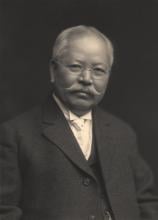
Japanese chemist Takamine Jokichi (3 November 1854 – 22 July 1922) founded the Tokyo Artificial Fertilizer Company, where he isolated a starch-digesting enzyme (named takadiastase) from the fungus Aspergillus oryzae.
Tsuneko (7 June 1933) and Reiji Okazaki (8 October 1930 – 1 August 1975) were a Japanese couple who discovered Okazaki fragments – short sequences of DNA that are synthesized during DNA replication and linked together to form a continuous strand.
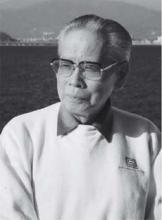
A Japanese surgeon, Tetsuzo Akutsu (20 August 1922 – 9 August 2007) built the first artificial heart capable of keeping an animal alive.
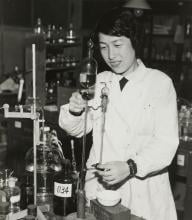
Japanese geochemist Katsuko Saruhashi developed the first method and tools for measuring carbon dioxide in seawater