

Engineering & Technology Materials Science and Engineering
News
17 Jul 2026
Lithium metal is a prime contender for the next generation of rechargeable batteries. But in order to live up to that potential, scientists have had to try and find a solution to the dendrite problem. Lithium tends to grow into needle-like structures (dendrites) which reduce the battery life and create safety hazards. The answer may be like the key to most things in life: balance. Researchers from Tohoku University's Institute for Materials Research (IMR) discovered that, rather than increasing the amount of lithium salt in a battery, an optimal lithium concentration allows lithium to deposit evenly and form a stronger protective layer on the battery surface.
16 Jul 2026
Scientists have found a way to spot early signs of skin aging, discovering that collagen's hidden internal structure begins to unravel before the fibers themselves break apart.

15 Jul 2026
A recyclable enzyme catalyst could support cleaner production of flavour esters for food, drink and cosmetics.
11 Jul 2026
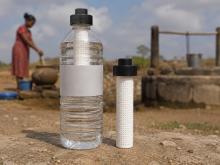
A patented portable filter offers a practical route to cleaner drinking water during droughts, floods and contamination events.
10 Jul 2026
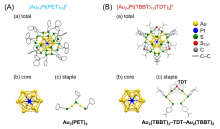
Catalysts are everywhere—from fertilizer production to clean energy—but making them more active without sacrificing stability has remained a major challenge. Researchers have now engineered a gold-platinum nanocluster catalyst that can be activated at lower temperatures while maintaining its precise atomic structure, boosting low-temperature carbon monoxide oxidation performance. Yet a clever ligand design could pave the way for more efficient and durable catalysts.

09 Jul 2026
A study shows palm oil can replace aromatic oil in natural rubber composites while supporting greener rubber products.
08 Jul 2026
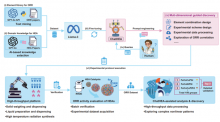
An AI assistant for high-entropy alloy (HEA) electrocatalysis named ChatHEA provided a helping hand not just to extract data from the literature, but provide suggestions for promising catalysts, design experiments, and analyze data.

08 Jul 2026
Pineapple leaf fibres gain strength through alkali treatment, supporting stronger and more sustainable biobased composites.

07 Jul 2026
Researchers break a fundamental rule to create a new concept: heat that can be directed and “programmed”. In most materials, heat absorption and heat emission are linked, meaning a surface that absorbs thermal radiation well from a particular direction will also emit it in the same way. A team from OMU in Japan has designed a reconfigurable device that breaks this symmetry, enabling heat to be absorbed and emitted differently depending on the direction of absorption. This technology could eventually lead to smarter thermal-management systems and infrared sensors.
06 Jul 2026
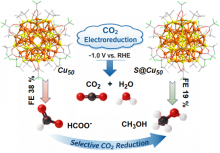
Researchers at Tohoku University have discovered a promising strategy that converts harmful carbon dioxide into valuable fuels and chemicals by precisely altering nanoclusters made of copper.
06 Jul 2026
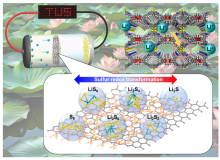
The abundance of sulfur not only makes lithium-sulfur batteries cheaper to manufacture, but they also boast superior energy-storage capacity to current lithium-ion technologies. But one problem preventing practical deployment is polysulfide shuttling—when polysulfides formed during battery cycling escape the cathode and drift into unwanted areas and cause the battery to erode. Now, a group of researchers from Tohoku University has solved this problem with a molecularly designed covalent organic framework (COF)–graphene interlayer. Like a security checkpoint that both identifies threats and efficiently streams people where they need to go, the interlayer combines chemical trapping, rapid charge transport, and sulfur-conversion promotion.
06 Jul 2026
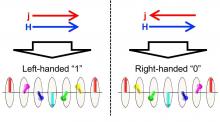
Magnets can store data – but there is a limit. To improve the data density of memory devices, researchers at Tohoku University delved into ways to exert precise control over a unique material called metallic helimagnets.
06 Jul 2026
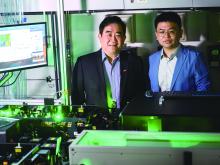
A research team from City University of Hong Kong (CityUHK) has recently overcome a technological bottleneck that has persisted for over a decade. They successfully “turned waste into treasure” by recycling triplet excitons and converting them into effective charge carriers for electricity generation. Using this new approach, they achieved an efficiency of 20.5% in OPV cells.

02 Jul 2026
The end of colored plastic downgrading could be near with new approach
01 Jul 2026
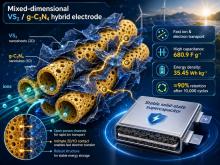
Researchers developed a hybrid supercapacitor electrode by anchoring two-dimensional vanadium disulfide nanosheets onto one-dimensional porous graphitic carbon nitride nanotubes. The mixed-dimensional structure improves ion transport, charge storage, and cycling stability, offering a promising strategy for fast and durable energy storage.
01 Jul 2026
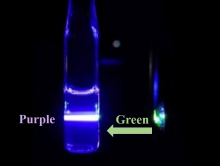
A research group has developed “TP-An,” a molecule that enables even low-energy, long-wavelength light to be used more effectively by solar cells and photocatalysts. The molecule can be used even at high concentrations that are difficult for traditional materials, suggesting their usefulness in technology.
30 Jun 2026
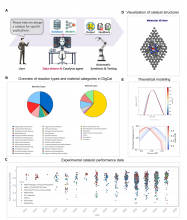
Catalysts play a vital role in the chemical reactions used to produce fertilizers, fuels, pharmaceuticals, and hydrogen, to name a few. AI-driven catalyst discovery is revolutionizing the field of materials science. But AI is only as reliable as the data it learns from. Therefore, researchers from Tohoku University have introduced an AI-powered digital catalysis platform that serves as a one-stop source for experimental data, theoretical calculations, and scientific literature.
25 Jun 2026
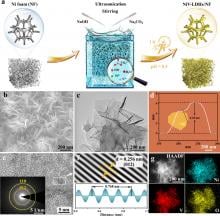
A new electrochemical system simultaneously converts plant-derived materials and nitrate pollutants into valuable industrial chemicals. Developed by Tohoku University researchers, the system provides a more sustainable way to manufacture chemicals while helping address wastewater pollution.
25 Jun 2026
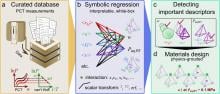
Hydrogen can store renewable energy, but then what stores the hydrogen? A new AI-powered, logic-based method provides probable materials for the job – and explains the reasoning behind its decision.
24 Jun 2026
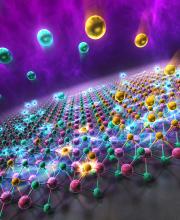
Janus 2D materials, named after the two-faced Roman god, boast bottom surfaces composing two different elements. This asymmetry gives them unique properties, and Janus two-dimensional semiconductors are becoming more common. While scientists have long known how to produce Janus 2D materials, they have yet to grasp the underlying physics behind the process. Now, researchers from Tohoku University have solved the mystery.

19 Jun 2026
An international research team has discovered a method to precisely synthesize extremely small Iridium Nanoclusters that outperform conventional, commercially available iridium catalysts by 1.5 times in mass activity. This breakthrough could result in improved production of green hydrogen.

19 Jun 2026
Kanazawa University-led researchers developed a one-step recycling method that recovers toxic lead (Pb) and valuable metals including gold (Au) and indium (In) from flexible perovskite solar cells, supporting sustainable solar energy technologies.

18 Jun 2026
Sweet power nanogenerator, Cosmic fossil, Dopamine and Alzheimer's link, Sustainable 3D printing, Quantum dots for brain diseases, Smart trolley and Bamboo and bone. Read all in the latest Editor's Choice. Plus SciCom Coffee talk: Inside a University Merger.
10 Jun 2026
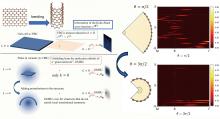
New “GMBU” procedure reveals band structures in finite, curved nanomaterials, linking nano‑ARPES and theory for next‑generation device design.
09 Jun 2026
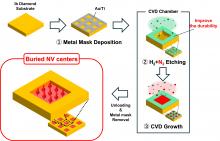
Researchers at Kanazawa University, in collaboration with Diamond and Carbon Applications (Germany), have developed a buried-growth process for nitrogen–vacancy (NV) centers in diamond using microwave plasma chemical vapor deposition (MPCVD). By employing nitrogen-radical selective etching, which simultaneously enhances metal-mask durability through nitridation, the team enabled a continuous etching–growth sequence within a single MPCVD process. Optical measurements confirmed highly aligned NV centers selectively buried in predefined regions. This integrated approach provides a stable and scalable platform for orientation-controlled diamond qubits and future room-temperature quantum technologies.
04 Jun 2026
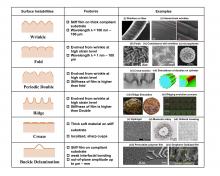
Wrinkles or dents appearing on material surfaces are often regarded as signs of damage or deformation. In a recent collaborative review paper published in the internationally recognised journal Nano-Micro Letters and titled Harnessing Surface Instabilities for Functional Materials: Mechanics, Morphology, and Emerging Applications, researchers from Lingnan University propose that naturally formed surface textures in materials could in future be combined with artificial intelligence (AI)-assisted design to develop novel functional materials. The technology would potentially support applications in intelligent anti-counterfeiting, artificial organs, and stretchable batteries.
28 May 2026
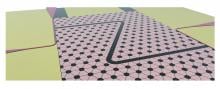
Spin waves are a promising way to reduce the energy-consumption of computing. New research shows that sending spin waves along a zig-zag path boosts the signal over 5,000 times compared to previous methods.

28 May 2026
Humans have evolved to be able to link intentions to emotions or physical actions. This is why we may approach someone with open arms but flee if someone approaches using threatening body language. While AI can accurately identify emotions, it struggles to derive intention from them. A research group, with the help of performers from Japan and Taiwan, has helped facilitate a means to bridge this gap.

27 May 2026
The study from National Taiwan University reveals a single-layer zigzag-type metallic glass film with precisely tunable emissivity for thermal infrared camouflage technology.
25 May 2026
Researchers from Tohoku University have developed a new kind of filter that overcomes a long-standing challenge, creating a special material that makes separating CO2 from other gases both fast and highly accurate.
Events
Sorry, nothing coming up for this discipline
Researchers

Ken-ichi Uchida is a group leader in the Spin Caloritronics Group, Research Center for Magnetic and Spintronic Materials under the National Institute for Materials Science (NIMS), Japan

Satoshi Ishii is a principal researcher at International Center for Materials Nanoarchitectonics (MANA), National Institute for Materials Science (NIMS), Japan. He also holds an adjunct associate professorship at University of Tsukuba.

I am the Director of Research and Associate Professor (Reader in Mechanics of Composite Materials) at the Newcastle University in Singapore.
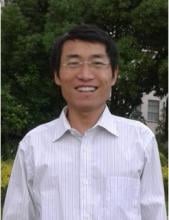
Fei Zhuge is a professor at Ningbo Institute of Materials Technology and Engineering (NIMTE), Chinese Academy of Sciences (CAS).

Zuankai Wang is currently a Professor in the Department of Mechanical Engineering and Associate Dean (Internationalization & Industry Engagement) of College of Engineering at City University of Hong Kong.

Dr. KeweiGao is the Professor of Materials Physics, and the Associate Chair of the Department of Materials Physics and Chemistry at University of Science and Technology Beijing (USTB).

Roland Hany is a Group Leader at Empa, Swiss Federal Laboratories for Materials Science and Technology.
Kyohei Okubo is an assistant professor at the Faculty of Industrial Science and Technology, Department of Materials Science and Technology, Tokyo University of Science.

Biomaterials Scientist working on surface engineering of medical implants used for the replacement of hip knee, cardiac and dental .

Dr Teng Yin Ting is a Lecturer in Republic Polytechnic, Singapore, with more than 10 years of research experience in chemical additives, nanomaterials, battery materials and energy harvesting materials.

Hortense is Professor at the Schools of Mechanical and Aerospace Engineering and Materials Science and Engineering at Nanyang Technological University, Singapore. She develops sustainable manufacturing of high performance materials.
Dr. Sravya Tekumalla is currently a Principal Investigator in Nanyang Technological University, Singapore, where she works as a Presidential Postdoctoral Fellow. In addition, she also leads a small team of staff and students working in the domain of metal additive manufacturing (commonly known as 3D printing).

I am a leading expert in the reconstruction of an artificial cell membrane as a novel system for screening side effects of drugs on the heart. This system can assess the potential risks of drugs that unintentionally interfere with the function of membrane proteins in the heart muscle.

Assoc Prof Yang and her research team from SUTD conducts research into water desalination as well as energy storage simultaneously. She developed a low dimensional nanomaterial to desalinate ocean water using a process of hybrid capacitive deionization. This process, allows for the processing of desalinated water more efficiently while also providing low-cost energy storage.

Michael Angelo B. Promentilla is a Professor of Chemical Engineering and the head of the Waste and Resource Management Unit of the Center for Engineering and Sustainable Development Research (CESDR) at De La Salle University (DLSU).

For 20 years, I have been engaged in research in the development of compositions and study of the properties of heterocomposite polymer materials used in mechanical engineering. Currently, a performer in the applied joint Uzbek-Indian project “Improving the mechanical and tribological properties of polymer composite”.

Dr.Ms.Aruna Dhathathreyan is a professor and emeritus scientist at the Advanced Materials Lab, CSIR-Central Leather Research Institute, India.

Ordered Functional Materials, like, COFs, COPs, CTFs for membrane applications (soft actuators and energy storage & conversion)

Madoka Ono is an associate professor at the Research Institute for Electronic Science/Green Nanotechnology Research Center at Hokkaido University and is the principal researcher at AGC Inc. Materials Integration Laboratories.

Associate Professor of Institute for Integrated Cell-Material Sciences (iCeMS), Institute for Advanced Study, Kyoto University.
Dr. Zhifeng Huang is a professor at Hong Kong Baptist University, and associate director of nanomaterials at HKBU's Golden Meditech Centre for NeuroRegeneration Sciences. He co-founded Mat-A-Cell Ltd.
Materials scientist studying structure and microstructure of metal and alloys by transmission electron microscopy. Specialize in light metals and quasicrystals.

Current: Deputy and Administrative Director & Principal Investigator of International Center for Materials Nanoarchitectonics (WPI-MANA) .
Professor at the Graduate School of Pure and Applied Sciences, University of Tsukuba

Dr. Omachi is Associate Professor, Research Center for Materials Science, Nagoya University

Prof. Kyoung- Jin Choi leads the Energy Conversion Materials Lab at Ulsan National Institute of Science and Technology (UNIST). He is also the editor of Electronic Materials Letters.

Prof. Oh is the director of the Creative Research Initiative Center for Functionally Antagonistic Nano-Engineering, and the director of the Active Materials and Dynamic Systems Lab at KAIST.
Giants in history
Sorry, nothing coming up for this discipline