

Health
News

08 Jul 2024
Osaka Metropolitan University
Potential benefits of method include subjecting patients to fewer exams and reducing health care costs

02 Jul 2024
Osaka Metropolitan University
Results compare favorably with conventional microscopic method, with added benefit of shorter operative times, less blood loss

28 Jun 2024
Asia Research News monitors the latest research news in Asia. Some highlights that caught our attention this week are how to reach your 100th birthday, a (slightly unnerving) robot covered in human skin, and a feline urine test.

20 Jun 2024
Asia Research News
WSA's Office of Research in Clinical Amplification (ORCA) Asia will be a research laboratory dedicated to conducting audiological research for the Asian population.

18 Jun 2024
Duke-NUS Medical School
A study from Duke-NUS Medical School and the NUS Yong Loo Lin School of Medicine (NUS Medicine) estimates that the yearly additional costs of about S$700 per person are mainly due to emergency and subsequent hospital admissions. In total, these costs are set to rise to S$106 million annually in 2030 as the population ages.

14 Jun 2024
Asia Research News
Asia Research News monitors the latest research news in Asia. Some highlights that caught our attention this week are how drug-resistant bacteria survive in space, omnipresent microplastics, and a glowing treatment for brain tumors.

07 Jun 2024
Asia Research News monitors the latest research news in Asia. Some highlights that caught our attention this week are new biomarkers for fish, quantum theory showing fewer black holes, and how complaining can be beneficial.

07 Jun 2024
Asia Research News
Blue energy future, Off switch for brain cells, New Japanese lily species, Generative AI in motion, Economies take off with new airports and Braille-shaped electrodes for retinal implants. Read all in the latest Editor's Choice. Plus SciCom Coffee with Catriona Child.

04 Jun 2024
Osaka Metropolitan University
Online group discussions, active learning help sustain healthy habits among countryside residents

04 Jun 2024
Duke-NUS Medical School
Groundbreaking research from Duke-NUS offers new hope to millions with asthma and severe food allergies, signalling a new strategy for the prevention of life-threatening reactions.

01 Jun 2024
Duke-NUS Medical School
The largest graduating class in Duke-NUS’ history saw 90 graduates, including the first-ever Master of International Translational Medicine cohort, receive their degrees. Collectively, this cohort published 99 academic publications, underscoring Duke-NUS’ role as a leader in innovation and academic rigour in medical education. Celebrating diverse pathways to a career in healthcare, the graduates’ first degrees reflect diverse backgrounds, including architecture, communication studies and engineering, among others.

31 May 2024
Asia Research News monitors the latest research news in Asia. Some highlights that caught our attention this week are how to analyze sweat without getting sweaty, man’s best (robot) friends, and a satellite made from an innovative material: wood.

27 May 2024
Duke-NUS Medical School
• International study, led by researchers in Singapore and Germany, unveils unexpected mechanisms of SGLT2 inhibitors, challenging the assumption that their beneficial, organ-protective effects stem from a diuretic effect.
• Insights suggest the drugs, which have been developed to treat diabetes but are meanwhile widely used for chronic kidney disease and heart failure, trigger ancient and highly conserved evolutionary survival signals that may also contribute to longer healthspans.

24 May 2024
Asia Research News
Asia Research News monitors the latest research news in Asia. Some highlights that caught our attention this week are how catching up on sleep in big chunks does not completely pay our sleep debt, a biodegradable paper placed on the brain to help with neurological diseases, and a dinosaur that shows the transition between scales and feathers.
24 May 2024
Duke-NUS Medical School
New genetic tool developed by Duke-NUS could help investigate brain function and psychiatric disorders.
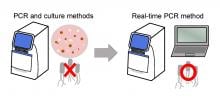
23 May 2024
Osaka Metropolitan University
Novel real-time PCR method might become diagnostic tool targeting emerging bacterium responsible for food poisoning outbreaks

23 May 2024
Harpswell’s sixth ASEAN Women’s Leadership Summit will kick-off in Penang on June 1, 2024.
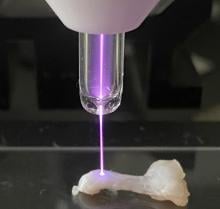
21 May 2024
Osaka Metropolitan University
Promising results of helium plasma jet therapy on rats after surgery widen scope of method’s medical applications

17 May 2024
Asia Research News
Asia Research News monitors the latest research news in Asia. Some highlights that caught our attention this week are how negative rumors affect children, a new fiber-sorting method, and an ancient Egyptian “anomaly”.
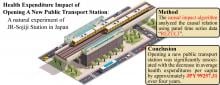
14 May 2024
Osaka Metropolitan University
Time series data and causal impact algorithm reveal the effectiveness of a new transit station over a four-year period

13 May 2024
Hiroshima University
Researchers undertook a study of older adults to examine the connection between a sense of economic insecurity and a person’s participation in social activities.

10 May 2024
Asia Research News
Asia Research News monitors the latest research news in Asia. Some highlights that caught our attention this week are the lifespan of different cat breeds, the possibility of regrowing teeth, and how small creatures can help maintain our environments.
08 May 2024
Singapore University of Technology and Design
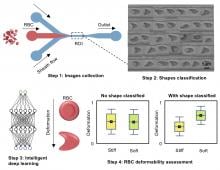
Using image-based deep learning and dynamic shape classification techniques, SUTD researchers developed a novel method of checking red blood cell deformability that is less invasive, more cost-effective, more sensitive, and has higher throughput.
08 May 2024
International Science Council Regional Focal Point for Asia and the Pacific
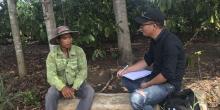
Four delegates attending the International Network for Governmental Science Advice (INGSA) meeting in Kigali, Rwanda (1-2 May) share their work to ensure trusted science advice is integrated into decision-making and government policy.
26 Apr 2024
Tohoku University
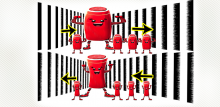
Our brains are truly miraculous. They can process vast swathes of information with very little energy supply. One of the many ways our brain may do this is through dilation of blood vessels, which enhances energy circulation and clears wasteful materials. A research team has recently developed a method that easily observes and monitors this phenomenon.

25 Apr 2024
City University of Hong Kong (CityUHK)
Academic, clinical and industry partners signed several MoUs with City University of Hong Kong at a special ceremony on 24 April to mark the establishment of the CityUHK Institute of Digital Medicine (IDM).
24 Apr 2024
Hokkaido University
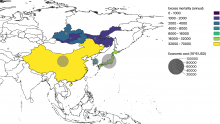
As wildfires in Siberia become more common, global climate modeling estimates significant impacts on climate, air quality, health, and economies in East Asia and across the northern hemisphere.
24 Apr 2024
Tohoku University
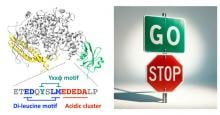
The enzyme PI3K plays a critical role in cell migration. Scientists have long understood this function. But researchers have recently unveiled that a subunit of this enzyme also has the ability to slam on the breaks to this process.
24 Apr 2024
The University of Osaka
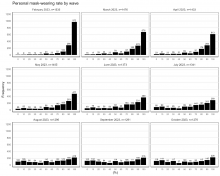
Researchers from Osaka University examined how specific types of contextual changes, such as government recommendations and perceived behavior of others, influenced mask-wearing behavior during the COVID-19 pandemic. They found a complex relationship between societal norms and individual behavior during the pandemic, indicating that future strategies for public health crises interventions should consider various factors and contexts, including cultural predispositions.

23 Apr 2024
Osaka Metropolitan University
Bacteriophage therapy could be developed based on study’s results
Events
Sorry, no events coming up for this topic.
- « first
- ‹ previous
- 1
- 2
- 3
Giants in history

Henriette Bui Quang Chieu (1906 – 2012) was inspired to follow in her brother’s footsteps and become a doctor after losing her mother to tuberculosis. She studied in France and became the first Vietnamese woman to receive a medical degree. Upon her return to Vietnam, Bui was appointed head of the Department of Midwifery at Cho Lon Hospital in Ho Chi Minh City. A pioneer in gynaecology, she applied acupuncture techniques that she had learned in Japan to obstetrics. As Vietnam was still a French colony, Bui also lobbied for the rights of Vietnamese doctors, nurses, and patients.

Japanese biochemist Akira Endo (1933 – 2024) discovered the first statin, called mevastatin, which lowered cholesterol levels in the blood by inhibiting a key enzyme in the cholesterol biosynthesis pathway. His work laid the foundation for the development of statins to help patients lower their blood cholesterol levels and reduce their risk of heart disease or stroke.

Filipina paediatrician and scientist Perla Santos-Ocampo (25 July 1931 – 29 June 2012) made important contributions to treatments and policies that curbed debilitating and sometimes deadly diarrhoea-related diseases and malnutrition in children.

Singaporean physician Oon Chiew Seng (1916 – 31 March 2022) advanced dementia care and research in Singapore, and co-founded the Apex Harmony Lodge, the nation’s first nursing home for residents with dementia.
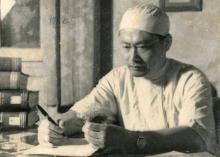
Vietnamese surgeon Tôn Thất Tùng (10 May 1912 – 7 May 1982) developed a pioneering technique that reduced the risks and mortality rate of liver operations.
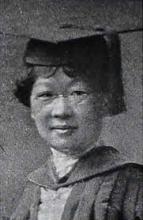
Chinese biochemist Chi Che Wang (1894 - 1979), one of the first Chinese women to study abroad, advanced to prominent research positions at American institutions including the University of Chicago and the Northwestern University Medical School.
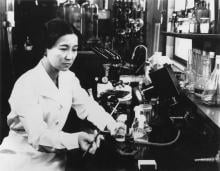
Ruby Sakae Hirose (1904 – 1960) was a Japanese-American scientist whose research contributed significantly to our understanding of blood clotting, allergies and cancer.
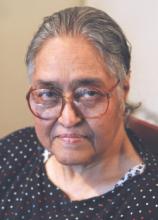
Flora Zaibun Majid ( 1939–2018) was an accomplished Bangladeshi researcher in botany and nutrition science and the first female chairperson of the Bangladesh Council of Scientific and Industrial Research.

Iranian physician and bacteriologist Azar Andami (8 December 1926 – 19 August 1984) developed a cholera vaccine to combat an outbreak that swept through the Middle East, India, Southeast Asia, and Africa in 1937.
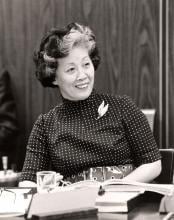
Irene Ayako Uchida’s (8 April 1917 – 30 July 2013) strides to understand genetic diseases such as Down syndrome paved the way for early screening of chromosomal abnormalities in foetuses.
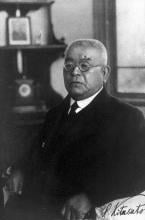
Baron Kitasato Shibasaburo (29 January 1856 – 13 June 1931) was a Japanese physician and bacteriologist whose work led to a new understanding of preventing and treating tetanus, diphtheria and anthrax.

Maggie Lim (5 January 1913 – November 1995) was a Singaporean physician who promoted family planning and expanded the access to clinics to improve the quality of life for mothers and children in Singapore’s early days.
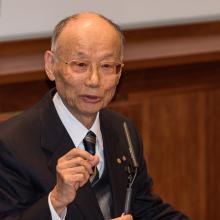
By isolating soil microorganisms and studying the compounds they produce, Satoshi Omura (born 1935) discovered almost 500 organic compounds with unique properties that were produced by these microorganisms, including many new antibiotics.

The founder of the Adyar Cancer Institute in India, Muthulakshmi Reddy (30 July 1886 – 22 July 1968), fought to uplift women and girls from impoverished situations.
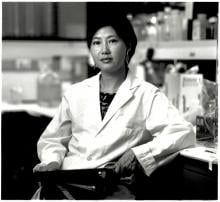
Chinese-American virologist and molecular biologist Flossie Wong-Staal (27 August 1946 – 8 July 2020) was the first scientist to clone HIV and determine the function of its genes.

Maharani Chakravorty (1937 – 2015) was one of India’s earliest molecular biologists whose research paved the way for advances in the treatment of bacterial and viral infections.

Archana Sharma (16 February 1932 - 14 January 2008) conducted research into plant and human genetics that expanded the understanding of both botany and human health. In relation to botany, she uncovered the means by which asexually-reproducing plants evolve into new species.
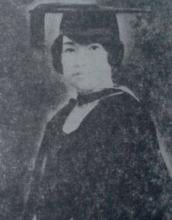
The first Thai woman to receive a degree in medicine, Margaret Lin Xavier (29 May 1898 – 6 December 1932), is best remembered for her compassion towards her less privileged patients.
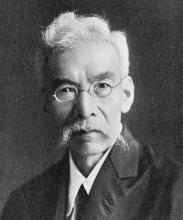
In 1915, pathologist Katsusaburo Yamagiwa and his research assistant Koichi Ichikawa became the first to prove that chronic exposure to chemicals can cause cancer.
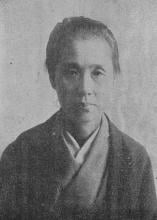
Ogino Ginko (3 March 1851 – 23 June 1913) was the first registered female doctor to practise modern medicine in Japan.
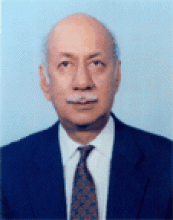
Syed Qasim Mehdi (13 February 1941 – 28 September 2016) was a Pakistani molecular biologist who was a founding member of the Human Genome Diversity Project (HGDP), which assessed human diversity by studying human migration, mutation rates, relationships between different populations, genes involved in height and selective pressure.
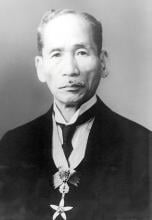
Umetaro Suzuki (7 April 1874 – 20 September 1943) was a Japanese scientist best remembered for his research on beriberi, a disease caused by vitamin B1 deficiency, characterized by limb stiffness, paralysis and pain.
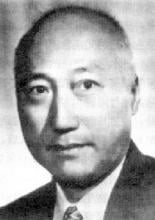
Hsien Wu (24 November 1893 – 8 August 1959) is widely regarded as the founder of biochemistry and nutrition science in China. He was the first to propose that protein denaturation was caused by the unfolding of the protein, instead of chemical alteration.

Indian organic chemist Asima Chatterjee (1917 to 2006) studied the medicinal properties of plant products, especially compounds known as vinca alkaloids.
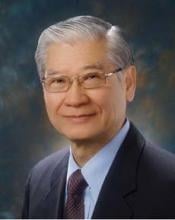
David T. Wong (born 1936) is a Hong Kong-born American neuroscientist who is best known for discovering the antidepressant drug fluoxetine, better known as Prozac.
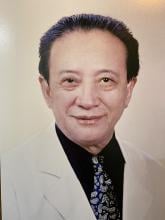
After witnessing death and suffering as a youth in his home village during World War II, Nguyễn Tài Thu (6 April 1931 – 14 February 2021) set his sights on alleviating pain by becoming a doctor. After studying Traditional Chinese Medicine in China in the 1950s, Thu returned to Vietnam to serve in military hospitals. Eventually, he became the country’s foremost practitioner of acupuncture, a technique he first learned by inserting needles into himself.

Filipino chemist and pharmacist Manuel A. Zamora (29 March 1870 – 9 July 1929) is best remembered for his discovery of the tiki-tiki formula to combat beriberi, a disease caused by Vitamin B1 deficiency.
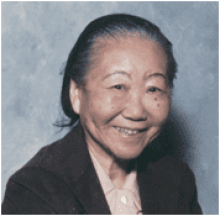
Tsai-Fan Yu (1911 – 2 March 2007) was a Chinese-American physician and researcher who was the first female full professor at Mount Sinai School of Medicine. She discovered that gout, a condition characterized by the painful inflammation of joints, was caused by elevated levels of uric acid in the bloodstream.
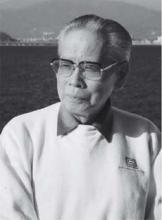
A Japanese surgeon, Tetsuzo Akutsu (20 August 1922 – 9 August 2007) built the first artificial heart capable of keeping an animal alive.
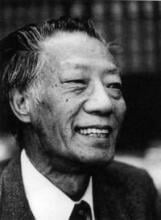
Min Chueh Chang (10 October 1908 – 5 June 1991) was a Chinese-American biologist who studied fertilization in mammalian reproduction.