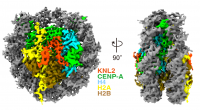
Researchers led by Osaka University used cryogenic electron microscopy to analyze the atomic structure of the centromeric region of the chromosome, essential for cell division. A protein called CENP-A marks the centromere; the researchers showed that during interphase, CENP-A is bound by a protein called KNL2 to maintain the location of the centromere. During mitosis, KNL2 is replaced by CENP-C, allowing correct formation of the kinetochore complex for cell division.
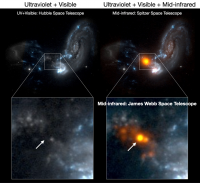
Researchers used the James Webb Space Telescope to identify the precise location of a powerful energy source hidden by cosmic dust in the luminous merging galaxy IIZw096.
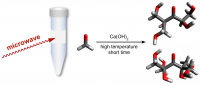
Researchers from Osaka University expanded the synthetic toolkit for preparing valuable chemical precursors from renewable feedstocks. They used microwave irradiation to dramatically improve the selectivity of the formose reaction, forming a simple six- and seven-carbon mixture that can be readily purified. These findings will help the chemicals industry minimize the use of fossil resources and improve the sustainability of manufacturing processes.
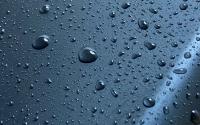
Scientists from two Asian universities, namely Universiti Teknologi Malaysia (UTM) and Newcastle University in Singapore, have completed a study to understand how the mechanical behaviour of carbon fibre reinforced epoxy composite laminates could be compromised by moisture seepage.
In situ observation and recording of important liquid-phase electrochemical reactions in energy devices is crucial for the advancement of energy science. A research team led by a scholar from City University of Hong Kong (CityU) recently developed a novel, tiny device to hold liquid specimens for transmission electron microscopy (TEM) observation, opening the door to directly visualizing and recording complex electrochemical reactions at nanoscale in real-time at high resolution.
Traditional hydrogen peroxide production is energy and emission intensive, and so scientists have sought to synthesize it electrochemically. But tailoring the cobalt-nitrogen-carbon (Co-N-C) catalyst has been challenging. Using a theoretical prediction, which was then experimentally verified, an international research group has designed a Co-N-C catalyst that alleviates this problem.
Researchers used a chemical synthesis robot and computationally cost effective A.I. model to successfully predict and validate highly selective catalysts.
Researchers from Osaka University have used single carbon atom doping to form four chemical bonds in one step. Gamma-lactams (cyclic molecules that are common in antibiotics) were easily synthetically accessible from alpha, beta-unsaturated amides (an important molecule in cancer progression). The team chemically modified an anti-seizure medication in 96% yield, highlighting the work's utility to otherwise synthetically complex aspects of pharmaceutical development.
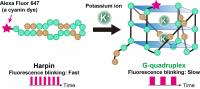
A new microscopic technique allows for the real-time study of RNA G-quadruplexes in living cells, with implications for the fight against amyotrophic lateral sclerosis.
A research group at the Osaka Metropolitan University Graduate School of Informatics has developed a new learning method for artificial intelligence that combines classification performance for data with multiple labels with the ability to learn continually from data. Numerical experiments on real-world multi-label data indicate that the new method outperforms conventional approaches. The simplicity of this algorithm makes it easy to integrate it with other algorithms to devise new ones.
Osaka University researchers investigated the physics of laser-driven neutron sources, and found the relationship between the power and the neutrons generated. They were able to decrease the exposure time needed for neutron absorption experiments, which may be employed in biomedical research.
Dr Wang Cong, Assistant Professor at the Department of Chinese Language Studies, The Education University of Hong Kong (EdUHK), has been awarded funding of HK$1.95 million under the French National Research Agency (ANR) and the Research Grants Council (RGC) of Hong Kong Joint Research Scheme, to support her project ‘Language Contact and Areal Diffusion of Sinitic Languages in the Greater Bay Area (GBA)’.
Pyroelectric catalysis (pyro-catalysis) can convert environmental temperature fluctuations into clean chemical energy, like hydrogen. However, compared with the more common catalysis strategy, such as photocatalysis, pyro-catalysis is inefficient due to slow temperature changes in the ambient environment.
Metal oxides are a promising catalyst for photoelectrochemical (PEC) water splitting to produce hydrogen as alternative energy. However, their effectiveness is restricted at low voltage. A research team led by scholars from City University of Hong Kong (CityU), Australia and Germany successfully mediated the poor charge carrier transport at low voltage by adding phosphorus to a metal oxide catalyst, which reduced energy losses during water splitting.
Organic photovoltaics (OPVs) are a promising, economical, next-generation solar cell technology for scalable clean energy and wearable electronics. But the energy conversion loss due to the recombination of photogenerated charge carriers in OPVs has hindered further enhancement of their power conversion efficiency (PCE).
Enhancing the virtual experience with the touch sensation has become a hot topic, but today’s haptic devices remain typically bulky and tangled with wires. A team led by the City University of Hong Kong (CityU) researchers recently developed an advanced wireless haptic interface system, called WeTac, worn on the hand, which has soft, ultrathin soft features, and collects personalised tactile sensation data to provide a vivid touch experience in the metaverse.
The study is an important step towards the understanding of long-term changes in the water cycle and will aid in more informed decisions when assessing and managing regional water systems.
Data stored in ice cores dating back 55 years bring new insight into atmospheric levels of a molecule that can significantly affect weather and climate.
Researchers from Osaka University have shown that a system known as the GET pathway is essential for efficient mitophagy, the process by which mitochondria are removed from cells. The GET pathway targets a protein assembly called the Ppg1–Far complex, which inhibits mitophagy, to the membrane of a part of the cell called the endoplasmic reticulum. When the GET pathway is defective, this complex instead becomes targeted to mitochondria, where it acts to suppress mitophagy.
Researchers from Osaka University compared the sensitivity of rapid antigen tests (RATs) and polymerase chain reaction (PCR) tests for the Omicron variant of COVID-19 using data produced by the Japan Professional Football League. They found the comparative sensitivity of RATs for Omicron was not affected by the duration from the onset of symptoms to testing.
Everyday electronics, such as our phones, employ surface acoustic wave devices for frequency filtering and sensing. But this consumes a lot of energy, serving as a drain on battery life. Now, a team of researchers has developed a new acoustic waveguide based on the mathematical concept of topology, which will help alleviate this problem.
The Kailasanatha Temple at Ellora is the largest monolithic rock-cut monument in the world. Considered to represent the victory of its patrons, the Rashtrakuta Dynasty, over the Chalukyas, the temple is widely considered remarkable for its size, standing at 32 metres high and 78 metres long.
Asia Research News monitors the latest research news in Asia. Some highlights that caught our attention this week are a robot that can melt and reform, artificial skin that can sense objects before touching them, and the pause and reversal of the planet’s inner core’s spin.
New research found that periodontitis, a common gum infection known to worsen other systemic diseases, could also be linked to atrial fibrosis — potentially clarifying its previously unknown connection with atrial fibrillation.
Researchers from Osaka University created a bound state of a proton and a K- meson known as Λ(1405), and measured its mass. The data implied that it consisted of five quarks. This work may help scientists develop a theory of exotic matter that existed in the early Universe or in neutron stars.
Researchers from Osaka University have identified a protein, FER1L5, that is essential for sperm to acquire fertilizing ability. Sperm from mice lacking this protein were unable to undergo the “acrosome reaction”, which releases molecules that facilitate fertilization, resulting in impaired male fertility. As FER1L5 is also present in human sperm, this work may lead to new diagnostic methods and treatments for male infertility in humans.
Osaka Metropolitan University scientists have succeeded in synthesizing fumaric acid, a raw material for plastics, from CO2 powered by solar energy—for the first time. Typically, fumaric acid is synthesized from petroleum as a raw material to make polybutylene succinate, a biodegradable plastic, but this research shows that it can be synthesized from CO2 and biomass-derived compounds using renewable energy.