

China
News
23 Oct 2026
Lingnan University
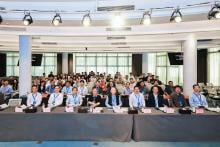
The rapid progress of artificial intelligence (AI) has given rise to challenges ranging from algorithmic bias and system security to energy consumption. Jointly hosted by Lingnan University and the Harbin Institute of Technology, Shenzhen, and co-organised by the Qianhai Shenzhen-Hong Kong Fund Town, the 2026 Summit on AI Ethics and Governance was held today (23 October) in Qianhai, Shenzhen. Themed "Shaping Responsible AI", the Summit brought together over 200 key experts, including Chinese and international academicians, university presidents from China, and renowned AI scholars from APEC member economies, such as Australia, Mexico, Singapore, South Korea, Thailand and the US. Participants discussed how countries can advance AI innovation while balancing safety, social responsibility and sustainable development.
22 Oct 2026
Lingnan University
Lingnan University announces the renaming of its Department of Translation to the Department of Language Industry and Technology (LIT) starting in the 2027/28 academic year. Related undergraduate and taught postgraduate programmes will adopt new names in the same academic year, reflecting the Department’s strategic development direction in the digital era.
20 Oct 2026
Lingnan University
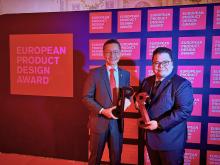
Humanitarian innovation and invention projects developed by the United Nations University Hub on Humanitarian Innovation and Technology at Lingnan University (UNU Hub at Lingnan University) have won five awards at the 2026 edition of the European Product Design Award (EPDA). “Incuvia - Modular Foldable Baby Incubator” received three, including the “Design for Humanity” Special Award, which selects only 10 winners a year, and the “Top Design” Special Award in the Industrial / Healthcare: Medical Products Category, the highest honour in the category. “PureAura - Portable Mini Energy-saving Air Purifier” also received two awards. Lingnan University is the only one of the Hong Kong SAR’s eight UGC-funded universities selected as one of the 10 main winners of the year, bringing honour to the Hong Kong SAR.
19 Oct 2026
Springer Nature
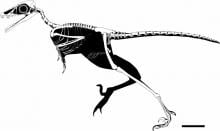
A newly discovered Jurassic bird from China appears to have lived a land-based, flightless lifestyle, suggesting that the earliest birds had a greater diversity of lifestyles than previously recognized
16 Oct 2026
Lingnan University
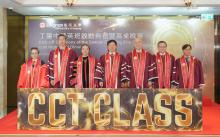
Lingnan University has announced the admission of 14 outstanding students to its inaugural Samuel C.C. Ting Elite Class (CCT Class). Selected from high-achieving undergraduates awarded University Entrance Scholarships, the students come from eight countries and regions, namely the Hong Kong SAR, the Chinese Mainland, Ethiopia, Kyrgyzstan, Nepal, the Philippines, Russia, and the UK. They will receive four-year full-tuition scholarships, a guaranteed hostel place with fees covered for four years, dedicated one-to-one mentorship, artificial intelligence (AI) training provided by leading multinationals, precedence in frontier research projects, opportunities to meet Nobel laureates and leading scholars, and priority for admission to postgraduate programmes.
13 Oct 2026
Lingnan University
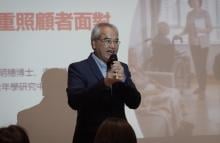
The Hong Kong Council of Social Service estimates that the number of carers across the territory reaches as high as 1.12 million. Some employed people are forced to juggle the demands of work alongside caring for parents, spouses, or children, taking on the arduous role of “compound carers”. The Asia-Pacific Institute of Ageing Studies (APIAS) at Lingnan University conducted in-depth interviews with over 40 multiple carers who care for at least two family members, one of whom has a disability or a chronic illness. The study found that these working compound carers face heavy pressure in balancing professional and family duties. Nearly half of those interviewed keep their caregiving responsibilities hidden at work for fear of being branded “troublesome employees”. Consequently, several had to give up promotions or switch to part-time work due to caregiving demands. Researchers note that current support networks remain fragmented, leaving compound carers to search for, evaluate, and arrange various services entirely on their own — adding substantial friction to an already overwhelming load. The research team recommends introducing dedicated Case Managers who will integrate healthcare, rehabilitation, and social welfare services.
13 Oct 2026
Lingnan University
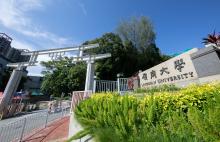
Lingnan University has officially opened applications for its undergraduate programmes for the 2027/28 academic year. Starting from today, both Chinese Mainland Gaokao candidates and students holding international qualifications may submit their applications through the University's online system.
09 Oct 2026
Lingnan University
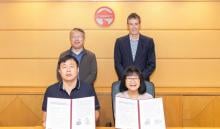
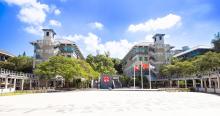
The Wofoo Joseph Lee Consulting and Counselling Psychology Research Centre at Lingnan University and the Interdisciplinary Research Center for Applied Psychology at Shandong Normal University signed a Memorandum of Understanding (MoU) at Lingnan on 8 October 2026. The two centres also co-organised a psychology seminar on impulsive decision-making and the influence of artificial intelligence (AI) on moral decisions.
09 Oct 2026
Lingnan University
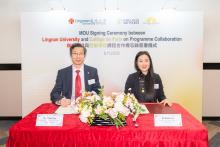
Lingnan University has achieved remarkable results in the 2026 edition of the World’s Top 2% Scientists list published by Stanford University. The 54 Lingnan scholars named represent an increase of about 25 per cent over last year’s 43. Among them, 21 are ranked in the world's top 100, and six are ranked first either in China or the Hong Kong SAR in their respective disciplines, underscoring international recognition of Lingnan’s academic influence as it transforms into a research-oriented liberal arts university comprehensive in arts and sciences in the digital era.
06 Oct 2026
Lingnan University
The Short-legged Horned Toad (Boulenophrys brachykolos), listed as endangered on the International Union for Conservation of Nature (IUCN) Red List of Threatened Species, is the only known small frog species in Hong Kong belonging to the genus Boulenophrys of the family Megophryidae. A study led by the Division of Science at Lingnan University has found that the Lantau Island population of the Short-legged Horned Toad shows clear genetic divergence from other local populations, along with several notable differences in the mating calls of males. The research team suggests that the Lantau population represents an early stage of speciation. Geographical isolation of Lantau Island from other landmasses likely contributed to these unique evolutionary traits. The team recommends treating the Lantau population as a separate conservation unit in future.
02 Oct 2026
Lingnan University
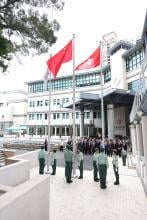
Lingnan University held a flag-raising ceremony to celebrate the 77th anniversary of the founding of the People’s Republic of China on the University campus today, 1 October, starting at 10:30 am. Honoured guests included the Hon Andrew Yao Cho-fai, Council Chairman of Lingnan University; Dr Patrick Wong Chi-kwong, Chairman of the Court; Ms Carrie Leung Ka-lai, Treasurer of the Council; Mr Sammy Leung Chung-sing, Council Member; Prof William Shum Wai-lam, Council Member; Mr David Kwok Sek-chi, Member of the Court; Prof S. Joe Qin, President and Wai Kee Kau Chair Professor of Data Science; Prof Raymond Chan Hon-fu, Vice-President (Academics) cum Provost and Lam Man Tsan Chair Professor of Scientific Computing; Prof Xin Yao, Vice-President (Research and Innovation) and Tong Tin Sun Chair Professor of Machine Learning; and Mr Ernest Chan Chi-man, Vice-President (Administration), and Lingnan senior management, staff, and students.

30 Sep 2026
Lingnan University
Lingnan University has achieved outstanding results in the newly released Times Higher Education (THE) World University Rankings 2027. Among 2,297 institutions across 118 countries and regions, Lingnan made a remarkable leap from the 301–350 band to 257th, climbing nearly 100 places to show the highest improvement among the Hong Kong SAR’s eight UGC-funded universities. This demonstrates widespread international recognition of the University’s excellence in quality education, industry-academic-research collaboration, internationalisation, and the nurturing of research-oriented liberal arts talent in the digital era.
30 Sep 2026
Lingnan University
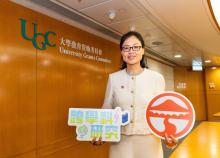
The University Grants Committee (UGC) of the Hong Kong Special Administrative Region presented the 2026 UGC Teaching Award to Prof Helen Geng Hongyan, Assistant Professor of Teaching of the Division of Science at Lingnan University. She received the award in the General Faculty Members category. The award recognises her student-centred, innovative teaching approach, which breaks through traditional boundaries between the arts and sciences, incorporates artificial intelligence (AI) and Service-Learning in science education, stimulates students’ interest in interdisciplinary learning, and demonstrates excellence in teaching.
29 Sep 2026
Lingnan University
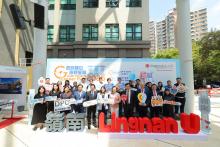
Lingnan University and the Civil Service Bureau of the Hong Kong Special Administrative Region (HKSAR) Government jointly organised the first Government Career Fair on the Lingnan campus today (29 September), with 20 exhibition booths, bringing together over 15 government bureaux and departments — including the Digital Policy Office, the Education Bureau, disciplined services and the Leisure and Cultural Services Department, totalling over 30 civil service grades. Recruitment activities were held alongside career talks, on-site interviews, and written examinations, helping students gain a deeper understanding of the career development opportunities available across different government grades.

29 Sep 2026
Springer Nature
New research identifies coastal regions at heightened risk of non-native marine species, including the eastern United States, Gulf of Mexico, coastlines bordering the North Sea, southeastern China and northern Australia.

24 Sep 2026
Xi'an Jiaotong-Liverpool University
New research investigated self-stigma among university students. They found that, over time, students with higher levels of mindfulness had lower self-stigma and fewer depressive symptoms.
24 Sep 2026
Lingnan University
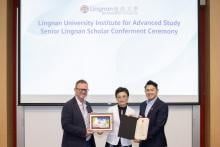
The Lingnan University Institute for Advanced Study (LUIAS) held a ceremony on campus yesterday, 23 September, to confer the title of Senior Lingnan Scholar on Prof Meng Bingchun, a renowned scholar in media and communications, and Professor in the Department of Media and Communications at the London School of Economics and Political Science (LSE), in recognition of her important academic contributions in the fields of media studies, communication governance, and digital culture. Her distinguished lecture, titled “The politics and poetics of AI: From great power competition to imaginaries of good life”, offered an in-depth analysis of the divergent artificial intelligence (AI) policies and development models of China and the US, explaining that this competition is not only a rivalry over “hard power” in data and computing capabilities, but also a contest between the two sides’ visions of good life.
22 Sep 2026
Lingnan University
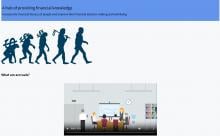
Why are individual investors, commonly known as “retail investors”, prone to losing money in the stock market? A Lingnan University joint study of more than 4,600 Chinese and US stocks finds that investors are less likely to buy stocks blindly when they understand the difference between a company’s “reported earnings” and its “actual cash flows”. The research team used social media to explain the difference between the two, and to teach investors how to analyse relevant company data. The results show that for companies whose earnings contain a larger accrual component, the buying behaviour of retail investors who received the relevant education declined significantly. Investment losses arising from stock prices rising and then falling after an earnings announcement were also reduced.
16 Sep 2026
Lingnan University
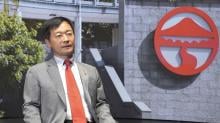
Prof S. Joe Qin, President and Wai Kee Kau Chair Professor of Data Science at Lingnan University, welcomes the release of Hong Kong’s First Five-Year Plan and the 2026 Policy Address delivered by Chief Executive of the Hong Kong SAR Government, Mr John Lee, and responds as follows:
15 Sep 2026
Lingnan University
Lingnan University has achieved outstanding results in the newly released 2026 ShanghaiRanking's Global Ranking of Academic Subjects (GRAS), with eight subjects on the list, nearly three times as many as last year. Five subjects, including Computer Science and Engineering, and Electrical and Electronic Engineering, made the list for the first time, and Artificial Intelligence, which made its debut on the list last year, saw a significant leap in its ranking, breaking into the global top 100 for the first time in the 76th to 100th band. This achievement underscores Lingnan’s dedication to advancing interdisciplinary research in artificial intelligence and data science, and demonstrates widespread recognition from the international academic community.
14 Sep 2026
Lingnan University
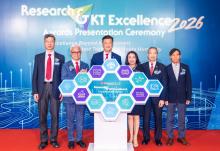
Lingnan University recently hosted the Research and Knowledge Transfer Excellence Awards Presentation Ceremony 2026. At the “Excellence Beyond Achievement Where Technology Meets Humanity” ceremony, 53 Lingnan scholars were presented with the Outstanding Researcher Award, the Early Career Researcher Award, and the Research & Knowledge Transfer Fund Award for their exceptional contributions to academic research and knowledge transfer that advance societal development. The University’s overall innovation and technology performance reached new heights in the 2025/26 academic year, with the number of granted patents for research projects increasing sixfold year-on-year to set a new record.

11 Sep 2026
Lingnan University
Prof Sam Kwong Tak-wu, Associate Vice-President (Strategic Research), Dean of the School of Graduate Studies, and J.K. Lee Chair Professor of Computational Intelligence at Lingnan University, was recently elected to the Class of 2026 Fellows of the Academy of Science of the Royal Society of Canada (RSC) in recognition of his outstanding academic achievements and remarkable contributions in the field of science. Fellowship of the RSC is one of the highest honours Canada bestows upon scholars and scientists. This year, 105 people worldwide were elected as new Fellows, and Prof Kwong is one of the three scholars in Hong Kong SAR to receive this prestigious recognition. He will attend the induction ceremony in Ottawa in November.

10 Sep 2026
Springer Nature
Two new papers published in Nature offer new insights into how this group of ancient humans looked, evolved, and behaved.
08 Sep 2026
Lingnan University
As Hong Kong’s population ages at one of the fastest rates in the world, the demand for family eldercare increases daily. To understand the responsibilities and roles assumed by grandchildren in caring for their grandparents, the Asia-Pacific Institute of Ageing Studies (APIAS) at Lingnan University conducted an in-depth interview study, which shows that having been looked after by grandparents in childhood is a major reason why grandchildren are willing to take on these same responsibilities for their own grandparents; another key motivation is the desire to alleviate their parents’ burden. However, the study highlights a common dilemma faced by grandchildren acting as carers: a lack of nursing knowledge and skills. Also, as more families employ foreign domestic helpers for childcare, this shift in caregiving models may weaken the traditional role of grandparents, which could in turn affect the long-term intergenerational eldercare support network.
03 Sep 2026
Lingnan University
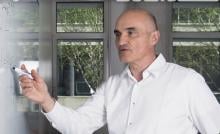
Prof Jean-Michel Morel, Chair Professor of the Division of Industrial Data Science at Lingnan University, has been elected a Foreign Member of the Luxembourg Academy of Sciences and Arts (LASA). The honour recognises his pioneering research extending from mathematical foundations to image analysis and industrial data science, and demonstrating the profound contribution of fundamental mathematics to artificial intelligence (AI), computer vision, and image analysis, aligning with LASA's mission to foster interdisciplinary exchange.
27 Aug 2026
Lingnan University
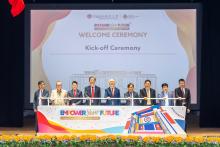
Lingnan University hosted the “Empower Your Future: Lingnan Postgraduate Orientation 2026” on campus today, 27 August, welcoming about 3,200 new taught postgraduate/doctoral degree and MPhil/PhD programme students for the 2026/27 academic year. To meet the growing demand for professionals in artificial intelligence (AI), data analytics, and smart manufacturing in the digital era, Lingnan has introduced three new taught postgraduate programmes, bringing the number of offerings to a record high of 50. In addition, the University held its first-ever “Welcome Gathering for Research Postgraduate Students” to help new students adapt more quickly to Lingnan’s academic research environment.
24 Aug 2026
Springer Nature
New study of James Webb Space Telescope images suggests that little red dots are not simply single points of light but likely exist within compact star-forming galaxies.
24 Aug 2026
Lingnan University
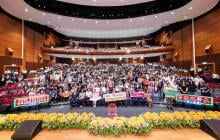
Lingnan University held its 2026/27 academic year New Student Orientation (NSO) and Official Welcome for undergraduate students at its Tuen Mun campus today (24 August).
21 Aug 2026
Lingnan University
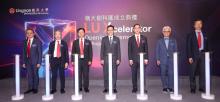
Lingnan University announced the establishment of the innovation and entrepreneurship platform “LU Xcelerator (LUX)” and held its Opening Ceremony today, 21 August. LUX focuses on “AI + X” and the application of agentic AI in different industries, leveraging the unique strength of Lingnan University in data science and interdisciplinary studies. Benefitting from Lingnan’s location near the Northern Metropolis, LUX will spearhead an innovative mode of collaboration between “Government, Industry, Academia, Research, and Investment” in the Greater Bay Area. This new platform will assist our students and researchers in translating innovative research into market-ready applications with tangible commercial and social value.
18 Aug 2026
Lingnan University
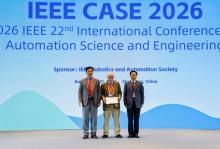
Prof S. Joe Qin, President and Wai Kee Kau Chair Professor of Data Science of Lingnan University, and Lingnan Fellow of the Lingnan University Institute for Advanced Study (LUIAS) and internationally renowned chemical engineering scholar Prof Ignacio E. Grossmann attended the 22nd IEEE International Conference on Automation Science and Engineering (IEEE CASE 2026) in Shenyang, Liaoning Province. The conference, themed “Smart Industry”, brought together leading scholars and industry experts from around the world in the fields of automation and robotics. During the conference session, President Prof S. Joe Qin introduces Prof Grossmann’s academic background and distinguished achievements. Prof Grossmann delivered a plenary speech today (18 August), entitled “Challenges in the Application of Mathematical Programming Approaches to Industrial Enterprise-wide Optimisation”, sharing the challenges of applying mathematical programming approaches to enterprise-wide optimisation, as well as the applications of related research in industrial production planning, supply chains and enterprise decision-making.
Events
28 Apr 2026
Engage with the largest network of potential partners to accelerate your cross-border strategies and expand your reach into the China market.
21 Aug 2026
We are thrilled to announce that the 12th World Sustainability Forum (WSF-12) — a prestigious and long-running global event — will be held in Hong Kong from 21–24 August 2026.

06 Nov 2025
With the theme "Future-Proofing Digital Infrastructure: Harnessing AI for Enhanced Security and Resilience", CS Summit 2025 will delve into how the integration of AI and state-of-the-art cyber security technologies can bolster digital infrastructure against cyber threats.
11 Sep 2023
Jointly organised by the Hong Kong Productivity Council and leading information security organisations in Hong Kong, The Cyber Security Summit (CS Summit) is the flagship cyber security summit in Hong Kong, with the aim to provide participants with the latest information on security trends and developments.

23 May 2022
SNEC 16th (2022) International Photovoltaic Power Generation and Smart Energy Conference (SNEC2021) will take place on May 23-25, 2022 in Shanghai, China.

06 Sep 2022
Themed “Security Transformation for the Next Normal – Evolution of Risk Management and Data Protection in a Post Pandemic World”, the 2-day Summit will focus on how the enterprises can transform their security successfully under the cyber security challenges and the escalating cyber threats for the next normal.

02 Jun 2021
The SNEC 15th (2021) International Photovoltaic Power Generation and Smart Energy Conference will be held on June 2-4, 2021 in Shanghai, China.
19 Aug 2020
The annual gathering of 220+ Savvy Marketers, as well as senior level professionals from Technology, Digital, Strategy & Innovation fields.

03 Nov 2020
Your go-to event to reach out to key decision makers in the pharmaceutical industry. The event will be delivered digitally from 3-5 November 2020.

12 Dec 2019
Co-organised by Confexhub Group and China (Sanya) Public Diplomacy Institute, this conference is designed to support the growth of the rubber industry by delivering objectives, accurate updates and latest R&D to conference delegates.

13 Jan 2020
Duxes is pleased to announce the launch of the Smart Wearable Device Asia Pacific Summit 2020 (SWAP), that will take place in Shenzhen, China. January 13-14. This upcoming event aims to meet the latest demands of companies in the smart wearable device market, shedding light on current hot topics, industry concerns and the latest innovations.
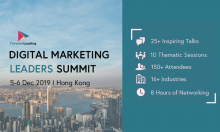
14 May 2019
China’s leading event, BioPharma Development and Production (BDP) Week in Shanghai returns from 14-16 May 2019 with 5 co-located conferences and a trade show!

11 Jun 2019
CES Asia 2019 will return to Shanghai June 11-13 as the only industry event focused on the Asia-Pacific market.
Researchers
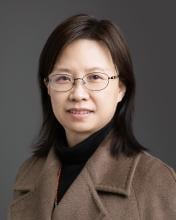
Xi'an Jiaotong-Liverpool University
Professor Minyan Wang is a PhD supervisor at the School of Science, Xi’an Jiaotong-Liverpool University, with an honorary appointment at the University of Liverpool. She earned her PhD in Neuropharmacology from the UK in 2004, supported by the Migraine Trust. With over 35 years of expertise in migraine and neurological disorders, she leads internationally collaborative projects on migraine pathogenesis and drug targets. She runs a cutting‑edge platform using multimodal techniques to decode migraine signaling and identify novel drug targets to advance novel therapies.

Chief Physician at Shanghai Ninth People’s Hospital, Shanghai Jiaotong University School of Medicine, China.
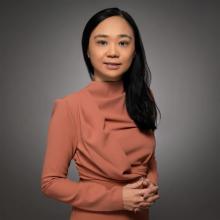
Xi'an Jiaotong-Liverpool University
Mia Tedjosaputro is an Indonesian architect who is currently the DHoD (Deputy Head of Architecture Department) and Digital Design and Fabrication lab (DDF LAB) coordinator at Xi'an Jiaotong - Liverpool University (XJTLU). Her main research focuses are the study of design behaviour, augmented reality, bamboo architecture and circular design.
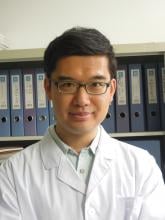
Xi'an Jiaotong-Liverpool University
Dr. Zheng Chen is an environmental chemist and associate professor at Xi'an Jiaotong-Liverpool University. His research interests include nutrient recycling from agricultural waste, soil contamination and remediation.
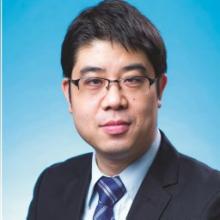
City University of Hong Kong (CityUHK)
Prof Yang obtained his bachelor degree from Peking University in 2001, and PhD from Princeton University in 2007. His research interest includes the development of advanced alloys, including metallic glasses, high entropy alloys, low dimensional metals/ceramics and metamaterials.

I am specialized in international sustainable development cooperation. I am member of European Platform of Women Scientists and Women Scientist from Developing Countries. My research focuses on promoting sustainable development cooperation between government, universities and enterprises on new media platform, with my researches presented on World Cities Day organized by UN-HABITAT, and at Culture Technology Integration Summit organized by Qinghua University.
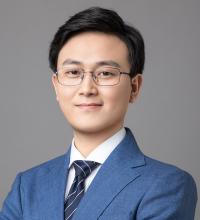
City University of Hong Kong (CityUHK)
Dr. Zhu Pingan is currently an Assistant Professor at the Department of Mechanical Engineering of City University Hong Kong.

His research focuses on functional surfaces, bioinspired antifouling coatings, and medical antifouling materials.
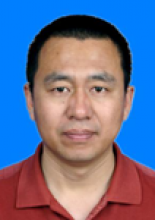
Guangshun Jiang does research in ecology and zoology with a special focus on big feline ecology and conservation research.

Currently a research assistant in the laboratory of green energy in Zhejiang University of Technology.
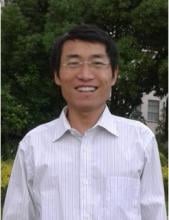
Fei Zhuge is a professor at Ningbo Institute of Materials Technology and Engineering (NIMTE), Chinese Academy of Sciences (CAS).
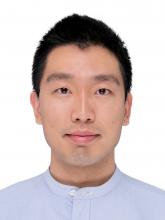
Dr Ye Zhou is an electronic engineer at the Institute for Advanced Study, Shenzhen University, China.
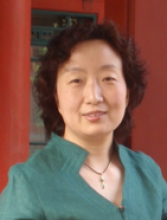
Dr. KeweiGao is the Professor of Materials Physics, and the Associate Chair of the Department of Materials Physics and Chemistry at University of Science and Technology Beijing (USTB).
Giants in history

Chinese-American physicist Tsung-Dao Lee (24 November 1926 – 4 August 2024) was awarded the Nobel Prize for Physics in 1957 together with Chen-Ning Yang for their work challenging the symmetry law in subatomic particles. They were the first Chinese Nobel prize winners, with Lee becoming the second-youngest laureate. Born in Shanghai, he went to the United States on scholarship and studied under another Nobel winner, Enrico Fermi.

Tu Youyou (born 30 December 1930) is a Chinese pharmaceutical scientist who was awarded the 2015 Nobel Prize in Physiology or Medicine for her work on extracting artemisin from sweet wormwood to treat malaria.
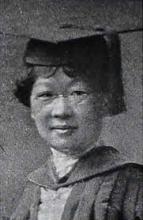
Chinese biochemist Chi Che Wang (1894 - 1979), one of the first Chinese women to study abroad, advanced to prominent research positions at American institutions including the University of Chicago and the Northwestern University Medical School.
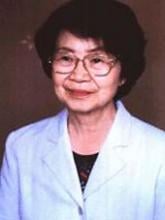
Chinese electron microscopy specialist Li Fanghua (6 January 1932 – 24 January 2020) facilitated the high-resolution imaging of crystal structures by eliminating interference.
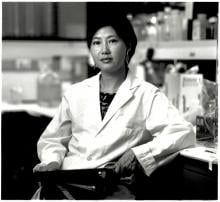
Chinese-American virologist and molecular biologist Flossie Wong-Staal (27 August 1946 – 8 July 2020) was the first scientist to clone HIV and determine the function of its genes.
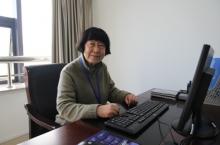
Meemann Chang (born 17 April 1936) is a Chinese palaeontologist who studied the fossils of ancient fish to understand the evolution of life. By examining fossils, she uncovered new insights on how vertebrates, animals with a backbone, migrated from the sea and became adapted to live on land.

Chien-Shiung Wu (31 May 1912 – 16 February 1997) was an experimental physicist who made several important contributions to nuclear physics. Wu worked on the Manhattan Project – a top-secret program for the production of nuclear weapons during World War II and helped to develop a process for separating uranium into U235 and U238.
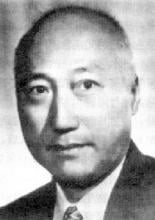
Hsien Wu (24 November 1893 – 8 August 1959) is widely regarded as the founder of biochemistry and nutrition science in China. He was the first to propose that protein denaturation was caused by the unfolding of the protein, instead of chemical alteration.
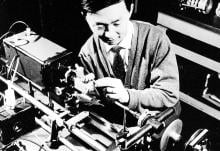
Charles Kuen Kao (Nov. 4, 1933 to Sept. 23, 2018) was an engineer who is regarded as the father of fibre optics. His work in the 1960s on long distance signal transmission using very pure glass fibres revolutionized telecommunications, enabling innovations such as the Internet.

Chinese physicist Xie Xide (19 March 1921 – 4 March 2000) was an influential educator and one of China’s pioneer researchers of solid-state physics.
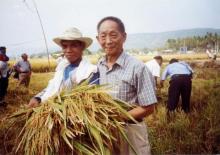
Chinese agronomist Yuan Longping (7 September 1930 – 22 May 2021) developed the first varieties of the high-yield, hybrid rice that brought food security to multiple countries including China, which had been ravaged by food shortages as recently as the mid-20th century.
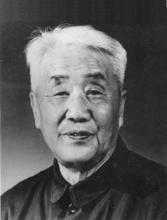
Chinese palaeontologist, archaeologist and anthropologist Pei Wenzhong (January 19, 1904 – September 18, 1982) is regarded as a founder of Chinese anthropology.

Chinese biochemist Cao Tianqin (5 December 1920 – 8 January 1995) discovered the myosin light chain, a subunit of myosin, a protein crucial for muscle contraction.
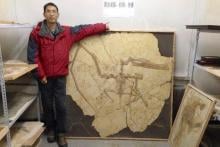
Lü Junchang (1965–9 October 2018) was a Chinese palaeontologist who is remembered as one of the most important dinosaur researchers of the last 50 years. Lü was an expert on reptiles that lived during the Mesozoic period about 252 million years ago. Cumulatively, Lü and his colleague/competitor Xiaolin Wang described and named more than 50 new species of flying dinosaurs known as pterosaurs.
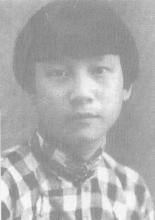
Palaeontologist Yichun Hao (1920 – 2001) co-authored the first Chinese textbooks on palaeontology and micropalaeontology. Her research on Foraminifera – amoeba-like organisms with shells – was vital for the exploration and utilisation of marine energy resources.
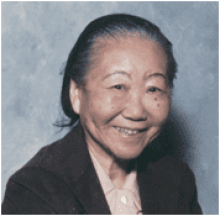
Tsai-Fan Yu (1911 – 2 March 2007) was a Chinese-American physician and researcher who was the first female full professor at Mount Sinai School of Medicine. She discovered that gout, a condition characterized by the painful inflammation of joints, was caused by elevated levels of uric acid in the bloodstream.
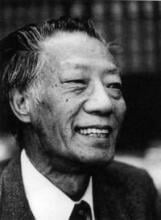
Min Chueh Chang (10 October 1908 – 5 June 1991) was a Chinese-American biologist who studied fertilization in mammalian reproduction.

Lin Lanying (7 February 1918 – 4 March 2003) was a Chinese material engineer remembered for her contributions to the field of semiconductor and aerospace materials. Lanying was born into a family who did not believe in educating girls and she was not allowed to go to school.