

Science
News
13 Mar 2026
Tohoku University
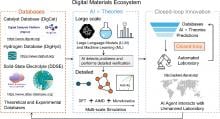
This invited publication highlights the contributions of Distinguished Professor Hao Li to AI and materials science – focusing on their original concept for a digital materials ecosystem.
13 Mar 2026
National Taiwan University
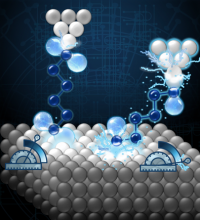
By placing single-atom-thick adlayers of p-block metals on commonly employed gold electrodes (d-block), a research team at National Taiwan University has successfully quantified the "interfacial hopping integral" between molecules and electrodes. This new model establishes a universal descriptor to predict conductance trends in single-molecule junctions, resolving long-standing variations in molecular measurements.
12 Mar 2026
Institute of Industrial Science, The University of Tokyo (UTokyo-IIS)
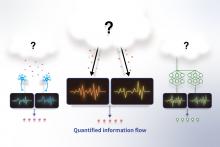
Researchers from Institute of Industrial Science, The University of Tokyo develop a mutual information estimator capable of accurately measuring information flow to biological outputs without needing input quantities
12 Mar 2026
Tohoku University
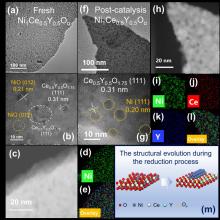
Researchers found that Y-doping (adding yttrium) to an inexpensive nickel catalyst was the key to speeding up an otherwise sluggish reaction that results in hydrogen – which can be used as a sustainable fuel.
10 Mar 2026
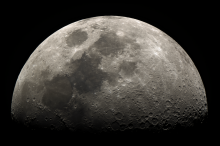
Observations of the Rimae Bode region on the Moon reveal five distinct types of terrain and identify several potential landing sites for China’s first crewed mission, according to research published in Nature Astronomy.
06 Mar 2026
Kanazawa University
Researchers at the Cancer Research Institute and the Nano Life Science Institute (WPI-NanoLSI), Kanazawa University, have uncovered a critical mechanism that enables gastric cancer to spread to distant organs. Their study shows that cancer cells stimulate Wnt signaling in surrounding stromal fibroblasts to produce hyaluronan, creating a supportive microenvironment that promotes metastasis.
These findings provide new insight into how metastatic tumors establish themselves and suggest promising strategies to prevent gastric cancer progression.

06 Mar 2026
Daegu Gyeongbuk Institute of Science and Technology (DGIST)
Double Triumph: Two DGIST Student Entrepreneurs Feature on “2026 Forbes Korea 30 Under 30” List

06 Mar 2026
Asia Research News
Kelli canines, Healthy fats in rice, Mercury and Earth in chorus, AI lights up materials discovery, Radiation detection with phones and Down to one. Read all in the latest Editor's Choice. Plus Women's Month 2026.
05 Mar 2026
Lingnan University
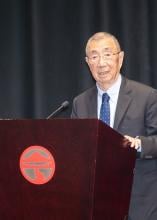
Lingnan University announced today (4 March) that it will officially launch the Samuel C.C. Ting Elite Class (CCT Class) in the 2026/27 academic year. The Class, bearing the name of Nobel Prize-winning physicist Professor Samuel C.C. Ting, will select a group of top-performing undergraduate students from among recipients of the University Entrance Scholarships for comprehensive learning opportunities.
04 Mar 2026
Springer Nature
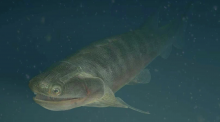
The oldest-known articulated bony fish and an early example of teeth from a bony fish have been detected in a collection of fossils from China. Two Nature papers offer new insights into the origins of bony fish.

04 Mar 2026
Springer Nature
New award to celebrate researchers accelerating discovery through the use of AI and machine‑learning technologies.
04 Mar 2026
Tohoku University
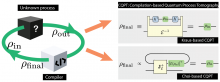
What’s going on in there? An international research team developed a method to pull back the veil on the unknown processes going on inside quantum computers - which may help us build more reliable quantum machines.
04 Mar 2026
Asia Research News
In celebration of International Women's Day, Asia Research News has prepared a list of women experts who can share their expertise with journalists, along with other resources highlighting the contributions of Asian women to science.
03 Mar 2026
The University of Osaka
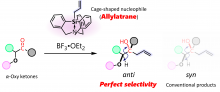
Diastereomers are molecules with identical structures that are not mirror images of each other, described as anti or syn for molecules without rings. Researchers at The University of Osaka developed a strategy for using a rigid cage-like molecule to produce an anti-diastereomer in high yield. This diastereomer can only be obtained as a minor byproduct by traditional methods. The strategy is expected to become a key technology for making medicines and other bioactive substances.

03 Mar 2026
Tohoku University
A team led by researchers at Tohoku University have taken the first step toward developing antiferromagnetic technology. They detected a liquid-crystal phase that may change the game for spintronic devices.
02 Mar 2026
National Taiwan University
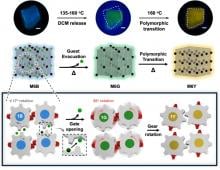
Chemists at National Taiwan University and collaborators discovered that a seemingly solid, nonporous crystal can “come alive” when heated. A two-step transformation releases trapped molecules, drives a vivid blue → green → yellow glow, and even propels the crystal forward through bubble-powered motion.
01 Mar 2026
City University of Hong Kong (CityUHK)
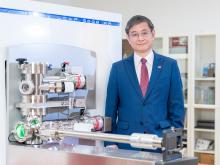
A research team at CityUHK has discovered for the first time that the naturally occurring porous ceramic structure within sea urchin spines possesses an unexpected capability for mechanoelectrical perception.
27 Feb 2026
Hokkaido University
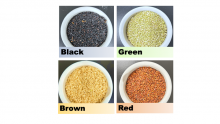
Study of 56 japonica rice varieties finds black and green rice to be healthier choices
27 Feb 2026
Ehime University
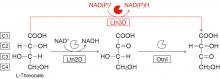
Biochemical and structural biological analysis of a hypothetical gene (protein) within a gene cluster related to metabolic pathway of L-threonate, a four-carbon sugar acid, revealed it’s enzyme function as a L-threonate 3-dehydrogenase and physiological role for metabolic diversity. Although the existence of this enzyme itself was reported in the same academic journal in 1964, the molecular identity of which has remained unknown for over 60 years.
27 Feb 2026
Daegu Gyeongbuk Institute of Science and Technology (DGIST)
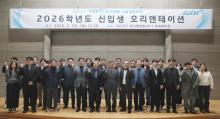
- Huge interest in the first semester ... Presenting a new model for AI-based technology and management education
26 Feb 2026
Tohoku University
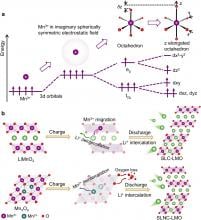
We all want cheap, long-lasting, green, and efficient energy. Researchers are helping to make this dream a reality with a new distortion-resistant material that greatly improves these aspects of a battery’s cathode.
25 Feb 2026
Ateneo de Manila University
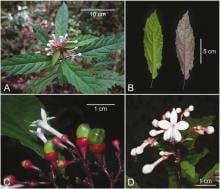
The indigenous Bugkalot people of Nueva Ecija call it “kelli” but science has only now been able to identify it as a distinct species and given it a formal scientific name
25 Feb 2026
Ateneo de Manila University
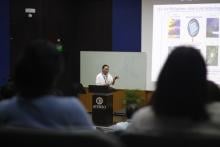
The Ateneo de Manila University’Research on Optical and Electronic Systems (ROSES) Laboratory, the Philippines' first and only facility dedicated to locally designing Photonic Integrated Circuits (PICs) and training PIC designers.
24 Feb 2026
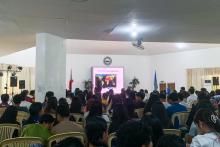
The Philippine Space Agency (PhilSA) formalized strategic partnerships to enhance the use of Space Science, Technology, and Applications (SSTA) to advance environmental protection, sustainable development, and evidence-based policymaking, including for the Tubbataha Reefs Natural Park, a UNESCO World Heritage Site.

23 Feb 2026
Daegu Gyeongbuk Institute of Science and Technology (DGIST)
Donghwan Kim, distinguished professor at Korea University, appointed as DGIST’s new Vice President for Research: Claims to lead the institution’s leap toward a Korean-style Lincoln Laboratory

22 Feb 2026
The University of Osaka
The University of Osaka’s Center for Quantum Information and Quantum Biology (QIQB) is a premier research institute in Japan, distinguished by its extensive global network of leading institutions worldwide.
20 Feb 2026
Springer Nature
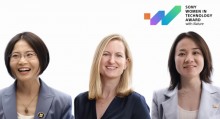
Three early- to mid-career researchers across science and engineering, recognised at second awards: Zhen Xu, Ellen Roche, and Xiwen Gong.
20 Feb 2026
Osaka Metropolitan University
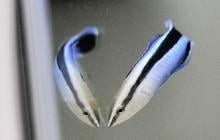
Cleaner fish interacted with a mirror in their tank in a way that suggests ‘contingency testing’ intelligence, a higher form of smarts typically found in mammals. This finding coupled with faster self-recognition than previously thought, expands our image of intelligence in these social fish.
19 Feb 2026
Daegu Gyeongbuk Institute of Science and Technology (DGIST)
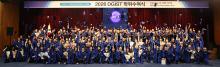
- DGIST Held the 2026 Spring Commencement Ceremony, with Degrees Awarded to 293 Graduates: 59 PhDs, 103 Master’s Degrees, and 131 Bachelor’s Degrees.
- Dr. Soo-eon Lee, Recipient of the Deputy Prime Minister and Minister of Science and ICT Award, Developed Unrivaled Original Technologies while Publishing 13 Papers in World-Leading Academic Journals and Applying for Seven Korean and International Patents.
- One Step Closer to Physical AI Implementation... DGIST Awards Bachelor’s Degree of Science in Convergence Engineering to Jungwoo Lee, CEO of Quester, a Deep-Tech DGIST Student Startup in Robotics/IT.

19 Feb 2026
Daegu Gyeongbuk Institute of Science and Technology (DGIST)
- Research Team Led by Prof. Sunghoon Im of the Department of Electrical Engineering and Computer Science, DGIST, has Developed and Applied a Generative AI Model
- Fusion of Art and Technology Manifested at the “Portrait of a Beauty” Preview Exhibition, Held at Daegu Kansong Art Museum from February 14
Events

13 Sep 2011
The 2nd SWS Asia Chapter's 2011 Asian Wetland Convention and Workshop which will be held in Kuching, the capital city of Sarawak for the first time in September 13-15, 2011.
28 Sep 2011
The 9th Malaysia Genetics Congress themed “Appreciating the richness of nature through genetics” will be held from 28th to 30th September 2011 at Pullman Hotel, Kuching, Sarawak, Malaysia.
22 Jun 2011
The Faculty of Information Management, Universiti Teknologi MARA, Shah Alam, Malaysia, is hosting A-LIEP 2011: Asia-Pacific Conference on Library & Information Education and Practice- Issues, Challenges and Opportunities on 22-24 June 2011.
20 Nov 2011
TACT 2011 is to provide an open forum to discuss the current status of the scientific and technological achievements in coatings and thin films that are of great importance and interest to academic and industry.
28 Sep 2011
The 2011 International Conference on Solid Sate Devices and Materials (SSDM2011) will be held from September 28 on Wednesday, through 30 on Friday at The Aichi Industry & Labor Center (WINC AICHI), Nagoya, Japan.
08 Sep 2011
This conference provides an opportunity for the presentation and
discussion of the latest advances in modeling and simulation of
semiconductor devices, processes, and equipments for integrated circuits.
22 May 2011
The objective of this conference is to provide a platform for scientists and engineers to share their experience and knowledge on high temperature materials and structures, in order to explore new materials and their new applications.
13 Apr 2011
Photomask Japan 2011 is the 18th international symposium on photomasks and NGL masks in Japan. The aim of the symposium is to bring together engineers and investigators from Japan, USA, and all over the world in the field of photomasks, NGL masks, and related technologies to discuss recent progress, applications, and future trends.
14 Mar 2011
TOEO-7 follows preceding TOEO symposia and will be held at International Conference Center, Waseda University, Tokyo, Japan (Japanese Web). TOEO-7 will come with more than 20 highly-reputed Invited Speakers.
16 Feb 2011
'nano tech' International Nanotechnology Exhibition & Conference is the world’s largest nanotechnology fair and an essential event for state-of the-art manufacturing.

18 Feb 2011
In the present symposium, cutting-edge nanotechnology R&Ds related to energy, environment, and resources issues are presented.
14 Sep 2011
The Centre for Jatropha Promotion & Biodiesel is set to hold 4th Global Jatropha Hi-tech Integrated Nonfood Biodiesel Farming & Technology Training Programme. The training program will cover sustainable business models, R&D progress and application technologies, including the introduction of new potential nonfood biodiesel crops.
19 May 2011
The International Center for Science, Technology, and Art, University of Sumatera Utara (IC-STAR USU), Medan - Indonesia is going to hold the 7th International Conference on Numerical Analysis in Engineering (NAE2011) on May 19th - 20th, 2011 in Manado, North Sulawesi - Indonesia.
25 Apr 2011
BIT’s 2nd Inaugural Symposium on Enzymes & Biocatalysis-2011 (SEB-2011) will be held during April 25-29, 2011, Dalian, China.
19 Apr 2011
Chemistry conference covering all aspects of chemistry.
10 Apr 2011
The 1st International Conference on Clean Energy will be held on the 10th-13th April in Dalian, China.
07 May 2011
The aim of the ICFEB conference series is to provide a forum for laying the foundations of a new principled approach to Food Engineering and Biotechnology.
28 Nov 2011
BIOCICON 2011 is aimed to promote basic and applied research and development for ecofriendly pest disease and nematode management in agriculture, horticulture and forestry.

27 Apr 2011
The International Workshop on the Advances in Computational Methods for Fluid Structure Interaction is the first international conference/workshop to be held in Asia Pacific.

03 Feb 2011
The first international symposium of the Strategic Exploitation of Neuro-Genetics for Emergence of the Mind program is to be held on 3 February 2011 in Tokyo, Japan.
06 Jul 2011
International Symposium on Sputtering and Plasma Processes (ISSP) was established in 1991. The symposium to be held in 2011 will take place in Kyoto.
14 Jun 2011
The 2011 Symposium on VLSI Technology and the 2011 Symposium on VLSI Circuits will be held on June 14-16 and June 15-17, 2011 respectively.
08 Mar 2011
The 1st International Symposium on Advanced Nanostructured Materials for Clean Energy (ANMCE, 2011) will be held during March 8-10, 2011 in Osaka, Japan.
02 Mar 2011
The MANA International Symposium, jointly held with International Center for Young Scientist (ICYS) is organized once a year to publish the research activities of MANA and ICYS.
17 Jan 2011
NIMS International Symposium on Photocatalysis & Environmental Remediation Materials 2011 will be held between the 17th and the 19th January 2011.
25 Jan 2011
The 11th International Symposium on Biomimetic Materials Processing (BMMP-11) will be held on January 25 to 28, 2011 at Noyori Hall for Academic Exchange in Nagoya University.
19 Apr 2011
The Faculty of Resource Science and Technology, UNIMAS, will be hosting the 2011 Taxonomist and Ecologist Conference on 19 - 20 April, 2011. Interested individuals are called to submit their abstracts on a range of topics.
01 Mar 2011
Keystone Symposia on Molecular and Cellular Biology and Singapore’s Agency for Science Technology and Research announce the second Keystone Symposia conference on “Biofuels” in Singapore from 1-6 March 2011.
Giants in history

Chinese-American physicist Tsung-Dao Lee (24 November 1926 – 4 August 2024) was awarded the Nobel Prize for Physics in 1957 together with Chen-Ning Yang for their work challenging the symmetry law in subatomic particles. They were the first Chinese Nobel prize winners, with Lee becoming the second-youngest laureate. Born in Shanghai, he went to the United States on scholarship and studied under another Nobel winner, Enrico Fermi.

Turkish astrophysicist Dilhan Eryurt (29 November 1926 – 13 September 2012) conducted research on how the sun affects environmental conditions on the moon.

Chinese biochemist Chi Che Wang (1894 - 1979), one of the first Chinese women to study abroad, advanced to prominent research positions at American institutions including the University of Chicago and the Northwestern University Medical School.
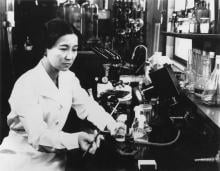
Ruby Sakae Hirose (1904 – 1960) was a Japanese-American scientist whose research contributed significantly to our understanding of blood clotting, allergies and cancer.

Chinese electron microscopy specialist Li Fanghua (6 January 1932 – 24 January 2020) facilitated the high-resolution imaging of crystal structures by eliminating interference.

Sálim Moizuddin Abdul Ali (12 November 1896 – 20 June 1987), commonly referred to as the Birdman of India, was the first person to conduct systematic surveys of birds from across India.

Haisako Koyama (1916 – 1997) was a Japanese solar observer whose dedication to recording sunspots – cooler parts of the sun’s surface that appear dark – produced a sunspot record of historic importance.
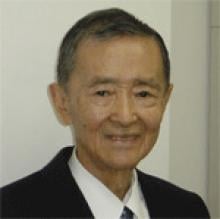
Michiaki Takahashi (17 February 1928 – 16 December 2013) was a Japanese virologist who developed the first chickenpox vaccine.

Toshiko Yuasa (11 December 1909 – 1 February 1980) was the first Japanese female physicist whose research on radioactivity shed light on beta decay – the process in which an atom emits a beta particle (electron) and turns into a different element.

Angelita Castro Kelly (1942-2015) was the first female Mission Operations Manager (MOM) of NASA. She spearheaded and supervised the Earth Observing System missions during its developmental stage.
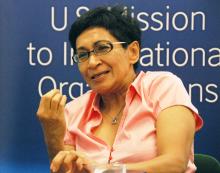
Malaysia’s first astrophysicist, Mazlan binti Othman (born 11 December 1951) was instrumental in launching the country’s first microsatellite, and in sending Malaysia’s first astronaut, Sheikh Muszaphar Shukor, into space.

Bibha Chowdhuri (1913 – 2 June 1991) was an Indian physicist who researched on particle physics and cosmic rays. In 1936, she was the only female to complete a M.Sc. degree at the University of Calcutta.

Meemann Chang (born 17 April 1936) is a Chinese palaeontologist who studied the fossils of ancient fish to understand the evolution of life. By examining fossils, she uncovered new insights on how vertebrates, animals with a backbone, migrated from the sea and became adapted to live on land.
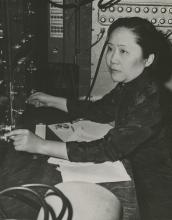
Chien-Shiung Wu (31 May 1912 – 16 February 1997) was an experimental physicist who made several important contributions to nuclear physics. Wu worked on the Manhattan Project – a top-secret program for the production of nuclear weapons during World War II and helped to develop a process for separating uranium into U235 and U238.

Hitoshi Kihara (1893 – 1986) was one of the most famous Japanese geneticists of the 20th century. One of his most significant contributions was identifying sex chromosomes (X and Y) in flowering plants.
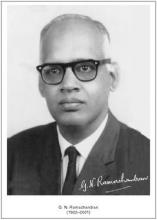
Gopalasamudram Narayanan Ramachandran (8 October 1922 – 7 April 2001) is best known for developing the Ramachandran plot to understand the structure of short chains of amino acids, known as peptides.

Srinivasa Ramanujan (22 December 1887 – 26 April 1920) was a math prodigy and widely considered one of India’s greatest mathematicians. Despite having almost no formal training in mathematics, he made substantial contributions to mathematical analysis, number theory, infinite series and continued fractions.
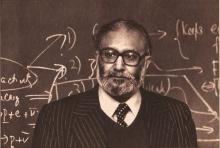
Mohammad Abdus Salam (29 January 1926 – 21 November 1996) was a theoretical physicist and the first Pakistani to receive a Nobel Prize in science.
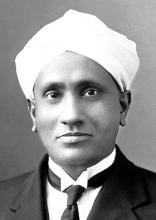
Sir Chandrasekhara Venkata Raman (7 November 1888 – 21 November 1970) was an Indian physicist who performed ground-breaking research in the field of light-scattering.
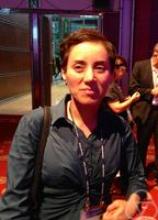
Mathematician Maryam Mirzakhani (12 May 1977 – 14 July 2017) was the first and only woman and Iranian to date to win the Fields Medal in 2014 for her work on curved surfaces.

Joo-myung Seok (November 13, 1908 – October 6, 1950) was a Korean butterfly entomologist who made important contributions to the taxonomy of the native butterfly species in Korea.
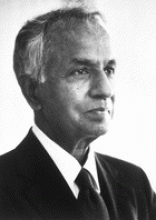
Subrahmanyan Chandrasekhar (19 October 1910 – 21 August 1995) was an Indian astrophysicist who studied the structure and evolution of stars.
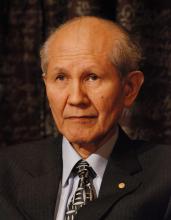
Osamu Shimomura (27 August 1928 – 19 October 2018) was a Japanese organic chemist and marine biologist who dedicated his career to understanding how organisms emitted light.
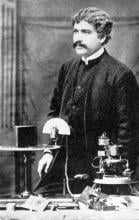
Sir Jagadish Chandra Bose (30 November 1858 – 23 November 1937) was a scientist and inventor who contributed to a wide range of scientific fields such as physics, botany and biology.
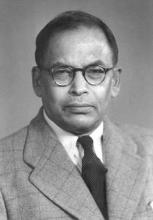
Meghnad Saha (6 October 1893 – 16 February 1956) was an Indian astrophysicist best known for formulating the Saha ionization equation which describes the chemical and physical properties of stars.
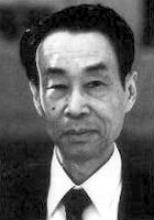
Motoo Kimura (13 November 1924 – 13 November 1994) was a Japanese theoretical population geneticist who is best remembered for developing the neutral theory of molecular evolution.

Chika Kuroda (24 March 1884 – 8 November 1968) was a Japanese chemist whose research focussed on the structures of natural pigments.
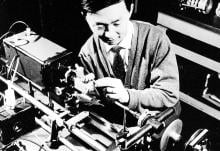
Charles Kuen Kao (Nov. 4, 1933 to Sept. 23, 2018) was an engineer who is regarded as the father of fibre optics. His work in the 1960s on long distance signal transmission using very pure glass fibres revolutionized telecommunications, enabling innovations such as the Internet.

The field of solid-state ionics originated in Europe, but Takehiko Takahashi of Nagoya University in Japan was the first to coin the term ‘solid ionics’ in 1967. ‘Solid-state ionics’ first appeared in 1971 in another of his papers, and was likely a play on ‘solid-state electronics’, another rapidly growing field at the time.

Japanese physicist Ukichiro Nakaya (1900-1962) made the world’s first artificial snowflakes. He started his research on snow crystals in the early 1930s at Hokkaido University, where there is an unlimited supply of natural snow in winter. By taking over 3,000 photographs, he established a classification of natural snow crystals and described their relationship with weather conditions.
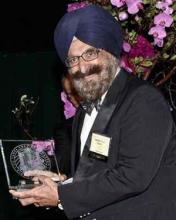
Physicist Narinder Singh Kapany (31 October 1926 – 4 December 2020) pioneered the use of optical fibres to transmit images, and founded several optical technology companies. Born in Punjab, India, he worked at a local optical instruments factory before moving to London for PhD studies at Imperial College. There, he devised a flexible fibrescope to convey images along bundles of glass fibres.
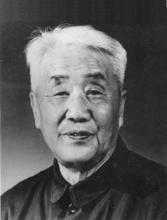
Chinese palaeontologist, archaeologist and anthropologist Pei Wenzhong (January 19, 1904 – September 18, 1982) is regarded as a founder of Chinese anthropology.
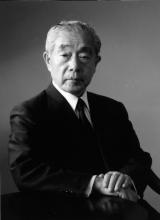
Japanese chemist Kenichi Fukui (4 October 1918 – 9 January 1998) was the first Asian scientist to be awarded the Nobel Prize in Chemistry. Together with Roald Hoffman, he received this honour in 1981 for his independent research into the mechanisms of chemical reactions.
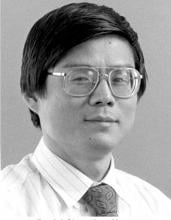
South Korean theoretical physicist Daniel Chonghan Hong (3 March 1956 – 6 July 2002) achieved fame in the public sphere through his research into the physics of popcorn.
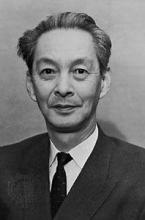
Shinichiro Tomonaga (31 March 1906 – 8 July 1979), together with Richard Feynman and Julian Schwinger, was awarded the Nobel Prize in Physics in 1965, for their contributions to advance the field of quantum electrodynamics. Tomonaga was also a strong proponent of peace, who actively campaigned against the proliferation of nuclear weapons and promoted the peaceful use of nuclear energy.
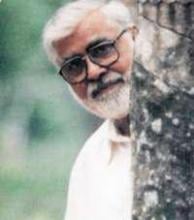
Known as Mr. Natural Rubber, chemist and researcher B. C. Shekhar (17 November 1929 – 6 September 2006) introduced a number of technical innovations that helped put Malaysia’s natural rubber industry on the world map.

Lin Lanying (7 February 1918 – 4 March 2003) was a Chinese material engineer remembered for her contributions to the field of semiconductor and aerospace materials. Lanying was born into a family who did not believe in educating girls and she was not allowed to go to school.
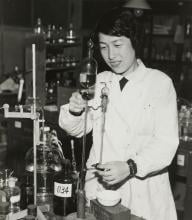
Japanese geochemist Katsuko Saruhashi developed the first method and tools for measuring carbon dioxide in seawater