

Science
News
19 Dec 2025
Tohoku University
Why are gourmets seemingly able to detect subtle nuances in taste that others miss? Researchers at Tohoku University have uncovered part of the answer by demonstrating that taste sensitivity can be enhanced through learning.
17 Dec 2025
Institute of Industrial Science, The University of Tokyo (UTokyo-IIS)
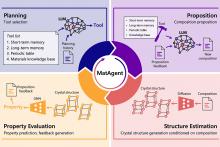
Researchers from the Institute of Industrial Science, The University of Tokyo develop an artificial intelligence framework for designing new inorganic materials with humanlike reasoning
16 Dec 2025
YOKOHAMA National University
Researchers have discovered a previously unknown marine fungus that kills toxic algae known to pose a health risk to humans
16 Dec 2025
Hiroshima University
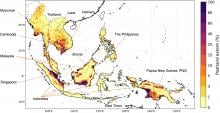
A new regional assessment shows that Southeast Asia is a major net source of greenhouse gases, with land-use change and rising fossil fuel use overwhelming natural carbon sinks, reservoirs that store carbon-containing chemical compounds for a long period.
15 Dec 2025
Hiroshima University
In a new Nature Physics study, researchers created particle-like so-called “vortex knots” inside chiral nematic liquid crystals, a twisted fluid similar to those used in LCD screens. For the first time, these knots are stable and could be reversibly switched between different knotted forms, using electric pulses to fuse and split them.
12 Dec 2025
Tohoku University
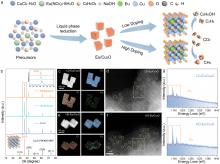
Researchers at Tohoku University found the key to taming electrochemical reactions so they don’t produce rogue byproducts instead of valuable fuels.
12 Dec 2025
Osaka Metropolitan University
Researchers create a stem cell medium for canine stem cells that doesn’t contain any human components
12 Dec 2025
Ehime University
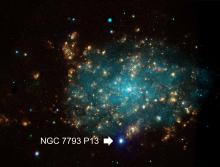
Over 10 years of monitoring
11 Dec 2025
Tohoku University
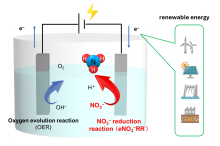
Sometimes the simplest solution is the best one. This research shows how exposing a single active site has huge implications for producing green energy.
10 Dec 2025
Tohoku University
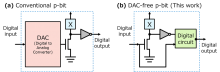
Probabilistic computers can solve certain problems more efficiently than traditional computers, but are usually saddled with a power-hungry, bulky, analog component. That is, until a research team developed a fully digital p-bit design.
09 Dec 2025
Osaka Metropolitan University
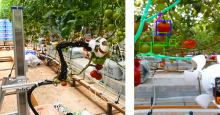
A scientist has solved the conundrum of why robots struggle to pick tomatoes

09 Dec 2025
Asia Research News
Brain atlas, From perfume to plastic, Stable solar power, Plant aging switch, Anti-cancer droplets, Greener gold, Extreme star factory and How research shapes sustainability policy. Read all in the latest Editor's Choice.
09 Dec 2025
Tohoku University
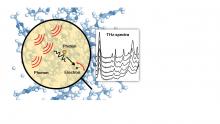
Listening to the "whispers" of electrons and crystals has lead to a quantum discovery with terahertz light that could help us advance technological innovations and life science research.
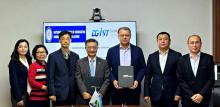
08 Dec 2025
Daegu Gyeongbuk Institute of Science and Technology (DGIST)
- Attracting top talent from Uzbekistan to graduate schools and expanding joint research networks
- Comprehensive training of talents in global technology management through industry-academia-research collaboration.
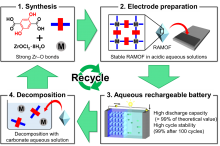
03 Dec 2025
Tohoku University
Rechargeable batteries get a supercharged boost from newly developed RAMOFs that don’t break down in water, which was previously a major problem for this material.
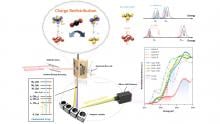
03 Dec 2025
National Taiwan University
The origin of the elusive preference of copper chalcogenides for selectively converting carbon dioxide (CO2) into formate has long puzzled researchers. Researchers at National Taiwan University have identified a charge-redistribution mechanism that resolves this long-standing debate, providing fundamental insight into the basis of their exceptional selectivity.
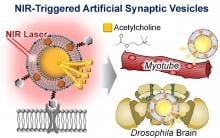
02 Dec 2025
Kanazawa University
Researchers at the Nano Life Science Institute (WPI-NanoLSI), Kanazawa University, report in ACS Nano the successful creation of artificial synaptic vesicles that can be remotely controlled by near-infrared (NIR) light. By embedding a phthalocyanine dye into lipid bilayers, the team achieved local heating that modulates membrane permeability, enabling precise release of neurotransmitters such as acetylcholine. These findings demonstrate that nanoscale heating can control communication between nerve cells.
The work opens new avenues for non-genetic modulation of neuronal activity, with potential applications in neuroscience, drug delivery, and bioengineering.
02 Dec 2025
Kanazawa University
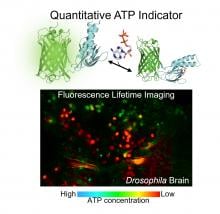
Researchers at the Nano Life Science Institute (WPI-NanoLSI), Kanazawa University, have developed a breakthrough method for quantitative imaging of ATP levels inside living cells. The study, published in Nature Communications, introduces qMaLioffG, a genetically encoded fluorescence lifetime indicator that allows scientists to observe how cells produce and consume energy in real time.
02 Dec 2025
Ateneo de Manila University
Sea salt aerosols are an important, chemically-reactive contributor to air quality when their components interact with the already polluted city air, particularly in Metro Manila.

01 Dec 2025
Hiroshima University
Surface-bound gels may have provided the structure and chemistry for life to take root on Earth, and perhaps beyond
01 Dec 2025
Daegu Gyeongbuk Institute of Science and Technology (DGIST)
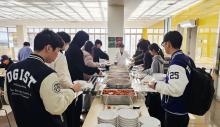
- With donations from NH Investment & Securities, providing a unique local menu.
- ‘Farmer’s Day’ event, also scheduled for November 11
01 Dec 2025
Daegu Gyeongbuk Institute of Science and Technology (DGIST)
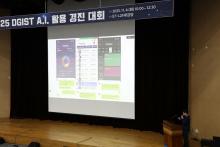
- Exploring practical uses of AI across all areas of research, education, and administration
- Creating a ‘DGIST-type AI circular ecosystem to spread AI applications into education
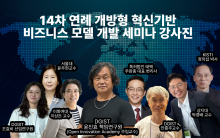
01 Dec 2025
Daegu Gyeongbuk Institute of Science and Technology (DGIST)
- Lectures scheduled from 9:30 a.m. to 5 p.m. at Innopolis Daegu on December 11, 12, 15, 16, and 17, 2025
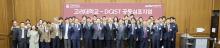
01 Dec 2025
Daegu Gyeongbuk Institute of Science and Technology (DGIST)
DGIST Holds Joint Symposium with Korea University, Collaborating in Future Convergence Research
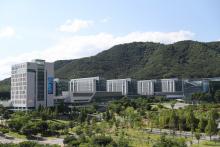
01 Dec 2025
Daegu Gyeongbuk Institute of Science and Technology (DGIST)
- Opening DGIST’s advanced research infrastructure to the local community to realize future-oriented convergence education.
- Fostering creative and problem-solving talent through programs mainly exploring math and science convergence.
- Targeting 5th and 6th grade elementary school students and 1st grade middle school students in Dalseong-gun.
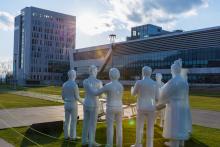
01 Dec 2025
Daegu Gyeongbuk Institute of Science and Technology (DGIST)
- Fostering next-generation talent through a tailored, non-graded education for elementary, middle, and high school students.
- Promoting balanced regional development and strengthening national competitiveness through a full-cycle AI/SW curriculum.
27 Nov 2025
National Taiwan University
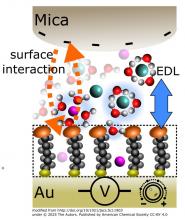
What if a surface could instantly switch from sticky to slippery at the push of a button? By using electricity to control how ions and water structure at the solid liquid interface of self-assembled monolayers of aromatic molecules, researchers at National Taiwan University have created a molecular-scale adhesion switch that turns attraction on and off.

24 Nov 2025
Springer Nature
A first of its kind, the report from Springer Nature, in partnership with Overton, draws on more than 12 million policy documents to uncover how academic research is influencing real-world policy tied to the Sustainable Development Goals (SDGs).
21 Nov 2025
Institute of Industrial Science, The University of Tokyo (UTokyo-IIS)
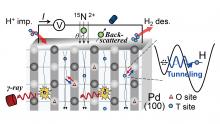
Researchers from the Institute of Industrial Science, The University of Tokyo detect the motion of hydrogen atoms in palladium at low temperatures using channeling nuclear reaction analysis

21 Nov 2025
Kanazawa University
Scientists at the Nano Life Science Institute (WPI-NanoLSI), Kanazawa University, have discovered how a gene-regulating protein forms tiny liquid-like droplets inside the cell nucleus (the compartment that stores and manages DNA) to guard against cancer. Their study, published in Nature Communications, shows that these protein droplets act as control centers that keep tumor-suppressor genes switched on.
Events
11 Jun 2009
Hong Kong: This is the 15th international interdisciplinary scientific conference on consciousness and it is opened to researchers and scholars throughout the sciences, humanities and arts.
01 Jun 2009
The conference will become a perfect platform to share, discuss and exchange ideas on the latest development and recent findings in research studies related to advanced materials, minerals and environment among local and international participants.
27 Jul 2009
Scientific experts meeting focusing on scientific matchmaking and identifying opportunities for collaboration and to form consortia to bid into upcoming FP7 calls
05 Nov 2009
Soft Science contributions to the world cannot be denied now or in the future. This conference will provide an avenue for scholars and business sectors to exchange views and experiences, formulate strategies, forge academic fraternities, and contribute positively towards the continued development of a Soft Science perspective.

06 Jul 2009
It is generally acknowledged that the advancement of technologies has improved the quality of life of people all over the world. However, current technological solutions, no matter how advanced, by themselves are not enough without taking into account the people that use them.
17 Nov 2009
Many cities within the region are with different urban development phases and experiences. Experiences, lessons learnt and sound urban development programmes should be shared among countries. The conference will provide opportunities for collaborations and information sharing on urban forest and park development.
09 Dec 2009
The impact of globalisation on the environment has reached such an alarming stage that it is vital to create greater awareness of environmental problems and educate the public on environmental issues.
26 Oct 2009
The 3rd National Conference on Infectious Diseases (3rd NCID) is for health-care workers and researchers in the management of infectious disease.
17 Nov 2009
Many cities within the region are with different urban development phases and experiences. Experiences, lessons learnt and sound urban development programmes should be shared among countries.
The conference will provide opportunities for collaborations and information sharing on urban forest and park development.

22 Jun 2009
University Putra Malaysia proudly announces that it has won the bid to host this major international event from 22nd -26th June, 2009. This conference will address a range of important disciplines in the various areas of thinking for the benefit of mankind. The conference theme is: “Thinking Minds: Nurturing the Design of a Better Future.”
03 Nov 2009
Theme: "Meeting Globalization Challenges Through Advanced Technology"
18 May 2009
This international workshop aims at bringing together different researchers and academicians in the developing countries in the fields of nanotechnology and nanoscience.
08 Mar 2009
Over 50 scientists and students specialising in marine science from Malaysia, Japan, Thailand and the Philippines will be discussion isssues on finding, defining and recording coastal biodiversity in the global arena
30 Jun 2009
What is the future for science reporting? The 6th World Conference of Science Journalists invites you to debate, influence, share experience and excellence, develop skills, network, and enjoy all that London has to offer.
15 May 2009
The 6th International Conference on Numerical Analysis in Engineering NAE 2009 gives a place and opportunities for researchers and engineers from academic, industries and other institutions to exchange their scientific and technological information.
21 Mar 2009
Singapore - This conference will engage basic and clinical scientists, including human geneticists, genome scientists, computational biologists, and experts in pathogenic microbial agents to chart the effects of genomics on questions in global infectious disease management.
13 Feb 2009
Hong Kong - Various medical and paramedical disciplines with interest in the clinical management of liver diseases will be attracted to the conference.
02 Mar 2009
Taipei, Taiwan - This year's program will aim to deliver presentations from the most creative research labs and companies working with new technologies in antibody discovery and engineering.
17 Feb 2009
Isfahan, Iran - The 8th conference designed to promote the latest findings and most recent theories, furthering exchange of ideas, welcomes the expert and authorities, teachers and students to send their new innovative and though provoking articles to the conference.
05 Mar 2009
Melbourne, Australia - The Conference builds on the themes of the 2008 Sydney event by looking more broadly at how museums and libraries can contribute to the development of general understandings of science and culture by communities and publics.
25 Mar 2009
UNIMAS will be organising the 2009 International Symposium on Electrohydrodynamics from 25 to 28 March 2009 in Kuching, Sarawak. Co-sponsored by International Electrostatic Assembly, the main objective is to promote international cooperation and technological progress on the interaction between electrical and fluid mechanics phenomena.
06 Jul 2009
The Faculty of Computer Science and Information Technology, Universiti Malaysia Sarawak (UNIMAS) will be holding the 6th International Conference on Information Technology In Asia 2009 (CITA 2009) from 6 - 9 July 2009.
16 Mar 2009
The objectives of the course are to disseminate information on soil survey methods and to provide better understanding of tropical soils and their behaviour.
19 Jan 2009
Kolkata, India - All aspects of SPV including financing and policy matters will be discussed and reviewed in the Conference. There is also an exhibition.
27 Feb 2009
Kathmandu, Nepal - The WINBIS conference is by now a well-respected event joining international researchers, Academia, students and interested fields to discuss the wide range of the development, implementation, application and improvement of business applications and systems.

25 Mar 2009
This 2-day event brings together sub-Saharan African and European policymakers and research organisations to address the development of collaborative ICT research projects. The Forum is co-organized by the European Commission (DG Information Society and Media) and the African Union Commission with the support of the EuroAfriCa-ICT project.
16 Feb 2009
KL,Malaysia - JATROPHAWORLD is a showcase of all the latest trends and shifts occurring in the Jatropha value chain, bringing together on a single platform, the best expertise to discuss and analyze the present and future dynamics of Jatropha from a technological and socio-economic angle.
09 Feb 2009
Jakarta, Indonesia - The event offers top industry panel, leading plantation and power generation companies to discuss on biomass conversion to energy products, challenges and issues.
Giants in history

Chinese-American physicist Tsung-Dao Lee (24 November 1926 – 4 August 2024) was awarded the Nobel Prize for Physics in 1957 together with Chen-Ning Yang for their work challenging the symmetry law in subatomic particles. They were the first Chinese Nobel prize winners, with Lee becoming the second-youngest laureate. Born in Shanghai, he went to the United States on scholarship and studied under another Nobel winner, Enrico Fermi.

Turkish astrophysicist Dilhan Eryurt (29 November 1926 – 13 September 2012) conducted research on how the sun affects environmental conditions on the moon.

Chinese biochemist Chi Che Wang (1894 - 1979), one of the first Chinese women to study abroad, advanced to prominent research positions at American institutions including the University of Chicago and the Northwestern University Medical School.
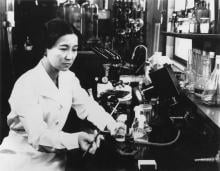
Ruby Sakae Hirose (1904 – 1960) was a Japanese-American scientist whose research contributed significantly to our understanding of blood clotting, allergies and cancer.

Chinese electron microscopy specialist Li Fanghua (6 January 1932 – 24 January 2020) facilitated the high-resolution imaging of crystal structures by eliminating interference.
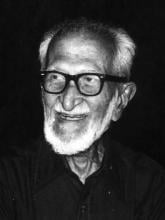
Sálim Moizuddin Abdul Ali (12 November 1896 – 20 June 1987), commonly referred to as the Birdman of India, was the first person to conduct systematic surveys of birds from across India.

Haisako Koyama (1916 – 1997) was a Japanese solar observer whose dedication to recording sunspots – cooler parts of the sun’s surface that appear dark – produced a sunspot record of historic importance.
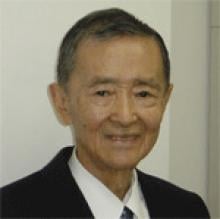
Michiaki Takahashi (17 February 1928 – 16 December 2013) was a Japanese virologist who developed the first chickenpox vaccine.

Toshiko Yuasa (11 December 1909 – 1 February 1980) was the first Japanese female physicist whose research on radioactivity shed light on beta decay – the process in which an atom emits a beta particle (electron) and turns into a different element.

Angelita Castro Kelly (1942-2015) was the first female Mission Operations Manager (MOM) of NASA. She spearheaded and supervised the Earth Observing System missions during its developmental stage.
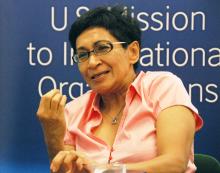
Malaysia’s first astrophysicist, Mazlan binti Othman (born 11 December 1951) was instrumental in launching the country’s first microsatellite, and in sending Malaysia’s first astronaut, Sheikh Muszaphar Shukor, into space.

Bibha Chowdhuri (1913 – 2 June 1991) was an Indian physicist who researched on particle physics and cosmic rays. In 1936, she was the only female to complete a M.Sc. degree at the University of Calcutta.
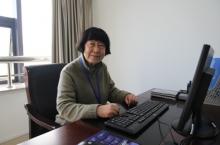
Meemann Chang (born 17 April 1936) is a Chinese palaeontologist who studied the fossils of ancient fish to understand the evolution of life. By examining fossils, she uncovered new insights on how vertebrates, animals with a backbone, migrated from the sea and became adapted to live on land.
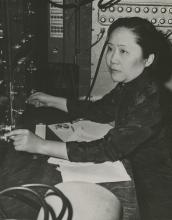
Chien-Shiung Wu (31 May 1912 – 16 February 1997) was an experimental physicist who made several important contributions to nuclear physics. Wu worked on the Manhattan Project – a top-secret program for the production of nuclear weapons during World War II and helped to develop a process for separating uranium into U235 and U238.

Hitoshi Kihara (1893 – 1986) was one of the most famous Japanese geneticists of the 20th century. One of his most significant contributions was identifying sex chromosomes (X and Y) in flowering plants.
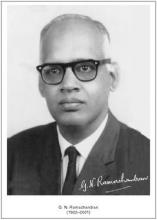
Gopalasamudram Narayanan Ramachandran (8 October 1922 – 7 April 2001) is best known for developing the Ramachandran plot to understand the structure of short chains of amino acids, known as peptides.

Srinivasa Ramanujan (22 December 1887 – 26 April 1920) was a math prodigy and widely considered one of India’s greatest mathematicians. Despite having almost no formal training in mathematics, he made substantial contributions to mathematical analysis, number theory, infinite series and continued fractions.
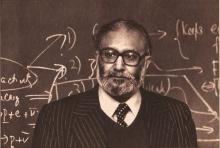
Mohammad Abdus Salam (29 January 1926 – 21 November 1996) was a theoretical physicist and the first Pakistani to receive a Nobel Prize in science.
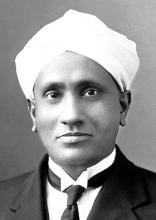
Sir Chandrasekhara Venkata Raman (7 November 1888 – 21 November 1970) was an Indian physicist who performed ground-breaking research in the field of light-scattering.

Mathematician Maryam Mirzakhani (12 May 1977 – 14 July 2017) was the first and only woman and Iranian to date to win the Fields Medal in 2014 for her work on curved surfaces.

Joo-myung Seok (November 13, 1908 – October 6, 1950) was a Korean butterfly entomologist who made important contributions to the taxonomy of the native butterfly species in Korea.
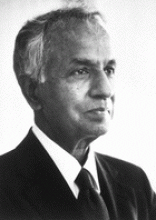
Subrahmanyan Chandrasekhar (19 October 1910 – 21 August 1995) was an Indian astrophysicist who studied the structure and evolution of stars.
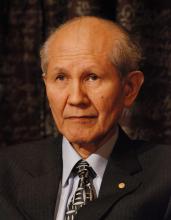
Osamu Shimomura (27 August 1928 – 19 October 2018) was a Japanese organic chemist and marine biologist who dedicated his career to understanding how organisms emitted light.
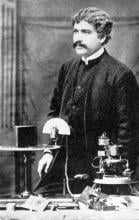
Sir Jagadish Chandra Bose (30 November 1858 – 23 November 1937) was a scientist and inventor who contributed to a wide range of scientific fields such as physics, botany and biology.
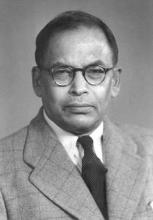
Meghnad Saha (6 October 1893 – 16 February 1956) was an Indian astrophysicist best known for formulating the Saha ionization equation which describes the chemical and physical properties of stars.
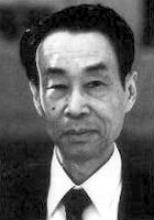
Motoo Kimura (13 November 1924 – 13 November 1994) was a Japanese theoretical population geneticist who is best remembered for developing the neutral theory of molecular evolution.

Chika Kuroda (24 March 1884 – 8 November 1968) was a Japanese chemist whose research focussed on the structures of natural pigments.
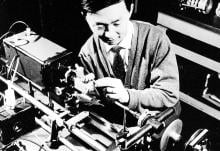
Charles Kuen Kao (Nov. 4, 1933 to Sept. 23, 2018) was an engineer who is regarded as the father of fibre optics. His work in the 1960s on long distance signal transmission using very pure glass fibres revolutionized telecommunications, enabling innovations such as the Internet.

The field of solid-state ionics originated in Europe, but Takehiko Takahashi of Nagoya University in Japan was the first to coin the term ‘solid ionics’ in 1967. ‘Solid-state ionics’ first appeared in 1971 in another of his papers, and was likely a play on ‘solid-state electronics’, another rapidly growing field at the time.

Japanese physicist Ukichiro Nakaya (1900-1962) made the world’s first artificial snowflakes. He started his research on snow crystals in the early 1930s at Hokkaido University, where there is an unlimited supply of natural snow in winter. By taking over 3,000 photographs, he established a classification of natural snow crystals and described their relationship with weather conditions.
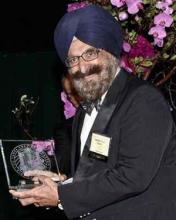
Physicist Narinder Singh Kapany (31 October 1926 – 4 December 2020) pioneered the use of optical fibres to transmit images, and founded several optical technology companies. Born in Punjab, India, he worked at a local optical instruments factory before moving to London for PhD studies at Imperial College. There, he devised a flexible fibrescope to convey images along bundles of glass fibres.
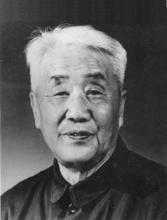
Chinese palaeontologist, archaeologist and anthropologist Pei Wenzhong (January 19, 1904 – September 18, 1982) is regarded as a founder of Chinese anthropology.
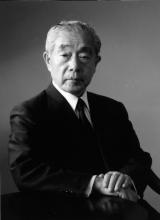
Japanese chemist Kenichi Fukui (4 October 1918 – 9 January 1998) was the first Asian scientist to be awarded the Nobel Prize in Chemistry. Together with Roald Hoffman, he received this honour in 1981 for his independent research into the mechanisms of chemical reactions.
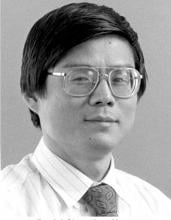
South Korean theoretical physicist Daniel Chonghan Hong (3 March 1956 – 6 July 2002) achieved fame in the public sphere through his research into the physics of popcorn.
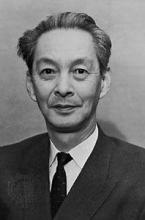
Shinichiro Tomonaga (31 March 1906 – 8 July 1979), together with Richard Feynman and Julian Schwinger, was awarded the Nobel Prize in Physics in 1965, for their contributions to advance the field of quantum electrodynamics. Tomonaga was also a strong proponent of peace, who actively campaigned against the proliferation of nuclear weapons and promoted the peaceful use of nuclear energy.

Known as Mr. Natural Rubber, chemist and researcher B. C. Shekhar (17 November 1929 – 6 September 2006) introduced a number of technical innovations that helped put Malaysia’s natural rubber industry on the world map.

Lin Lanying (7 February 1918 – 4 March 2003) was a Chinese material engineer remembered for her contributions to the field of semiconductor and aerospace materials. Lanying was born into a family who did not believe in educating girls and she was not allowed to go to school.
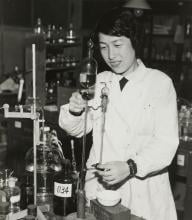
Japanese geochemist Katsuko Saruhashi developed the first method and tools for measuring carbon dioxide in seawater