Newsroom

Press releases on Asia Research News' Newsroom are provided by our partner Institutions keen to connect with  journalists and the public.

National Taiwan University
24 Mar 2026
A research team at National Taiwan University found that abnormal blood flow activates CB1 receptors in endothelial cells, promoting vascular inflammation and dysfunction. Soy-derived isoflavone prodrugs that inhibit CB1 may help protect blood vessels and prevent atherosclerosis.
Xi'an Jiaotong-Liverpool University
24 Mar 2026
A new method that uses nanoparticles could help overcome a manufacturing challenge that has slowed the development of advanced cell-based treatments
Sungkyunkwan University
24 Mar 2026
A research team led by Prof. Boseok Kang at Sungkyunkwan University has uncovered the origin of polarity inversion—a long-standing phenomenon in polymer semiconductors that occurs only in certain materials—attracting significant attention.
Daegu Gyeongbuk Institute of Science and Technology (DGIST)
24 Mar 2026
- Designed a novel peptide (MLPH) using computational modeling to extract only the active region that promotes hair growth - Overcomes the limitations of existing drugs, such as hormone-related side effects or skin irritation and gender limitations - Published in the internationally renowned pharmacology journal Biomedicine & Pharmacotherapy
Daegu Gyeongbuk Institute of Science and Technology (DGIST)
24 Mar 2026
- Set forth the vision of “ushering a sustainable future through creativity and inclusion”
Tohoku University
24 Mar 2026
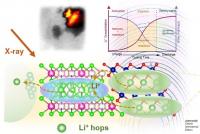
Move over lithium-ion batteries – researchers found a creative way to combine materials (lithium metal and a ceramic surface) that may prove to be better for energy storage used in electric vehicles and portable electronics.
The University of Osaka
24 Mar 2026
Researchers from The University of Osaka studying simple cyanobacteria found that one protein keeps their internal clock ticking reliably, even outside a living cell. By testing over 20 variants with clock periods ranging from 15 to 60 hours, they discovered that timekeeping precision appears to be built directly into the protein itself, independent of cell activity or environmental changes.
Tohoku University
24 Mar 2026
Researchers have discovered a new way to control magnetic “spin” using electric current, enabling states that were previously considered unstable. This breakthrough could move computing beyond simple binary systems by harnessing continuously fluctuating signals. The findings may lead to more powerful and efficient technologies for AI and next-generation devices.
National Taiwan University
24 Mar 2026
Researchers at National Taiwan University developed a unified model that explains how thickness, defects, interface quality, and roughness together control the behavior of ultrathin oxide transistors. The work provides practical design rules for building low-leakage, normally-off devices suitable for future 3D chip stacking.
National Taiwan University
23 Mar 2026
Scientists discovered a natural “brake” protein in immune cells that stops harmful overreactions during serious infections. When this brake is missing, the body’s defense cells go out of control and damage organs, but restoring it could open the door to better treatments for life-threatening sepsis.
fig1
Kavli Institute for the Physics and Mathematics of the Universe (Kavli IPMU)
23 Mar 2026
A team of researchers led by the University of Tokyo Kavli Institute for the Physics and Mathematics of the Universe (Kavli IPMU, WPI) Project Assistant Professor Elisa Ferreira has shown that a discrepancy in a key cosmic measurement in the early universe originates from a subtle statistical interplay between measurements of the cosmic microwave background (CMB) and baryon acoustic oscillations (BAO).
fig1
Kavli Institute for the Physics and Mathematics of the Universe (Kavli IPMU)
23 Mar 2026
A team of researchers led by the University of Tokyo Kavli Institute for the Physics and Mathematics of the Universe (Kavli IPMU, WPI) Project Assistant Professor Elisa Ferreira has shown that a discrepancy in a key cosmic measurement in the early universe originates from a subtle statistical interplay between measurements of the cosmic microwave background (CMB) and baryon acoustic oscillations (BAO).
23 Mar 2026
The Philippine Space Agency (PhilSA), in partnership with the United Nations Office for Outer Space Affairs (UNOOSA) and Thailand’s Geo-Informatics and Space Technology Development Agency (GISTDA), convened the ASEAN Space Situational Awareness (SSA) and Space Traffic Management (STM) Seminar-Workshop on 12-13 March 2026 in Manila.
Duke-NUS Medical School
23 Mar 2026
This study shows that MFSD2A transports key lipids (fat molecules) from the blood into the skin, a process critical for maintaining a healthy skin barrier.
National Taiwan University
20 Mar 2026
Researchers at National Taiwan University have developed a tip-enhanced Raman spectroscopy platform that can identify tiny structural differences in oligosaccharides without fluorescent labels. The method can distinguish glycosidic linkages, estimate chain length, and even follow glycan synthesis in real time.
Springer Nature
20 Mar 2026
A newly developed spray-on fabric coating could allow clothes to be cleaned using only water, reducing water and detergent needs.
National Taiwan University
20 Mar 2026
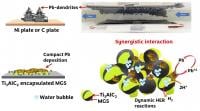
Enhancement of OER has been demonstrated via co-doping of Co/Ni into FeS2, which surpasses the performance of traditional expensive RuO2 as OER electrocatalyst.
Ateneo de Manila University
19 Mar 2026
Ateneo de Manila University has donated a curated collection of its academic journals—spanning topics ranging from precolonial history to modern technology—to the Book Nook at SM North EDSA, one of the Philippines' major malls.
Daegu Gyeongbuk Institute of Science and Technology (DGIST)
19 Mar 2026
- A research team led by Dr. Jinhyo Joseph Yun at DGIST mathematically demonstrates the “nudge effect” of business models, which is published in an international journal - Successfully theorizes the market-creation mechanism of “creative destruction,” the topic recognized by the Nobel Prize in Economic Sciences in 2025
Daegu Gyeongbuk Institute of Science and Technology (DGIST)
19 Mar 2026
- A research team led by DGIST Professor Junghyup Lee implements a core technology for a “high-resolution analog-to-digital converter (ADC)” that eliminates motion interference - Overcomes conflicting circuit design challenges such as low noise and ultra-low power consumption, with strong potential for next-generation medical device applications
Daegu Gyeongbuk Institute of Science and Technology (DGIST)
19 Mar 2026
- Joint educational cooperation with Dowon High School and Hamji High School in Daegu to foster students excelling in science - Embarking on nurturing future regional science and technology talent through tailored support for science-focused schools
National Taiwan University
19 Mar 2026
A study, published in Small, has introduced a breakthrough solution in the form of a 3D-printed, auxetic hydrogel dressing known as MX/CPDs@PBGC.
Guests officiated at the kick-off ceremony. (From left: Ms Jessie Law, Mr Mason Wu, Mr Augustine Lui, Dr Patrick Wong, the Honourable Andrew Yao, Dr the Honourable Starry Lee, Dr Roy Chung, President S. Joe Qin, Mr B K Leung, Mr Huang Liwei and Mr Ernest Chan)
Lingnan University
19 Mar 2026
Lingnan University proudly hosted its signature fundraising event, the Bright Future Charitable Foundation presents: Lingnan University Gala Dinner, held last night (18 March), and raised over HK$3 million. All proceeds will be used to enhance the University’s research facilities, supporting infrastructure, and cutting-edge research projects.
The University of Osaka
19 Mar 2026
This study proposes a thin, compact system for enabling high-contrast projection mapping in brightly lit environments. By precisely controlling light so that only the target object remains unilluminated, high-contrast images can be projected onto the object without darkening the entire space.
Osaka Metropolitan University
19 Mar 2026
Researchers developed high-performance, lead-free piezoelectric thin films on silicon that convert everyday vibrations into electricity. By using strain engineering and a novel sputtering method, they achieved record performance and demonstrated the compatibility of efficient, battery-free MEMS energy harvesters with standard semiconductor manufacturing processes.
Duke-NUS Medical School
18 Mar 2026
The winning prototype is a next-generation healthcare solution designed to address real-world solutions for critical clinical challenges. It’s part of the broader research and innovation curriculum at Duke-NUS, to nurture clinician-innovators and MedTech leaders who can translate breakthrough ideas into solutions that improve patients’ lives.
City University of Hong Kong (CityUHK)
18 Mar 2026
A research team from CityUHK, in collaboration with researchers from the Chinese Mainland, has found that LCMs from household electronics and e-waste can bioaccumulate in marine life, including the endangered Indo-Pacific humpback dolphins and finless porpoises. These compounds can penetrate the blood–brain barrier and accumulate in brain tissue, raising concerns about potential risks to the nervous system and other organs.
National Taiwan University
18 Mar 2026
C-terminal variations, arising from mutations and regulatory processes, can either stabilize or destabilize proteins, challenging the traditional view that aberrant termini primarily trigger degradation.
The University of Osaka
18 Mar 2026
Researchers from The University of Osaka have demonstrated for the first time that images projected using a shadowless projection mapping system can be perceived by observers as changes in color and texture of physical objects themselves, rather than as overlaid imagery
Lingnan University’s Career Expo 2026 attracts more than 135 local organisations and pre-eminent multinational companies, setting a new record.
Lingnan University
18 Mar 2026
Lingnan University is hosting “Career Expo 2026 - Let’s discover the careers bettering you and the world!” on campus from 17 to 20 March. For the first time, there is an on-site emotional support and career counselling zone for local and non-local students as well as graduates. This initiative aims to bridge the psychological support gap for young people as they move from campus to workplace, helping them cultivate a positive mindset to meet professional challenges.