

Diseases
News

05 Mar 2025
Tohoku University
Researchers at Tohoku University have found one more reason to quit smoking: the inhalation of first-hand and/or second-hand smoke may lead to placental abruption in pregnant mothers.

05 Mar 2025
Asia Research News
For International Women's Day, we have prepared a list of women experts who have agreed to share their expertise with journalists. Their expertise include AI, astronomy, medicine and public health, sustainability, women’s rights, and more.

03 Mar 2025
Tohoku University
Glaucoma is called the “silent thief of sight” as many don’t notice until significant, irreversible vision loss has already occurred. A revolutionary early screening tool using AI may stop this thief dead in its tracks.

28 Feb 2025
Osaka Metropolitan University
Popular milk and dairy products in Egypt show over 25% prevalence of E. coli

27 Feb 2025
Osaka Metropolitan University
Advancement in veterinary regenerative medicine can help domestic and endangered wild cats alike

25 Feb 2025
Osaka Metropolitan University
Verifying the Esophageal Hypervigilance and Anxiety Scale for clinical use

20 Feb 2025
Duke-NUS Medical School
As populations age worldwide, diseases like pulmonary fibrosis are increasingly impacting life expectancy and quality.
Duke-NUS researchers have identified that blocking specific proteins in immune cells can significantly reduce or reverse lung scarring.
This discovery paves the way for novel treatments that could potentially reverse damage from pulmonary fibrosis.

03 Feb 2025
Osaka Metropolitan University
Amylase and mucin decrease the effects of ozonated water

28 Jan 2025
Osaka Metropolitan University
Latest findings on the significance and interaction between cell death and cellular senescence in cancer

24 Jan 2025
Duke-NUS Medical School
At Duke-NUS Medical School scientists are pioneering breakthroughs in precision medicine and regenerative therapies, targeting everything from muscle loss to dramatically extending our years of health.

24 Jan 2025
National Institute for Materials Science (NIMS)
A newly designed model system simulates how viruses exit cells, offering potential advancements in targeted drug delivery and biotechnology.

15 Jan 2025
Tohoku University
A research team proposes a method to assess cancer patients for their likelihood to either respond to treatment or relapse.

13 Jan 2025
Asia Research News
Crossing the uncanny valley, Batteries that don’t explode, Tiny climate change fighters, Liver-friendly mushroom & Foetal defence. Read all in the latest Editor's Choice.

19 Dec 2024
Osaka Metropolitan University
Early administration of AHCC at the stage of hepatitis might hold possibility of preventing onset of cirrhosis

12 Dec 2024
Osaka Metropolitan University
Amino acid serine inhibits Clostridium perfringens spore formation

09 Dec 2024
Duke-NUS Medical School
Duke-NUS researchers have discovered that foetuses can manage their own immune responses to combat diseases and infections like Zika

05 Dec 2024
Tohoku University
New research suggesting a link between motor protein Kif23 and microcephaly may be the key to developing more effective treatments for this condition.

18 Nov 2024
Osaka Metropolitan University
SGLT2 inhibitor canagliflozin helps oxygenate kidneys while causing glucose removal through urine

15 Nov 2024
Osaka Metropolitan University
Comprehensive analysis of quantitative changes in various proteins due to aging
13 Nov 2024
Applied Microbiology International is holding a free webinar later this month aimed at connecting, inspiring, and advocating for LGBTQIA+ researchers in microbiology.
This event will provide a supportive platform for microbiologists around the world to share their experiences, challenges, and successes while exploring ways to promote diversity and inclusion within the scientific community.

11 Nov 2024
Asia Research News
King of nanomaterials, Old but new, Probing stardust properties, Two-in-one, The good grain & Brain-inspired electronic skin. Read all in the latest Editor's Choice.

08 Nov 2024
Duke-NUS Medical School
Duke-NUS scientists investigated how an inherited genetic variation common among East Asians contributes to drug resistance in cancer cells, driving more aggressive cancer growth. The team trialled a precision therapy for this group by blocking the action of a protein called MCL-1, successfully killing many of the cancer cells in laboratory studies.

07 Nov 2024
Ateneo de Manila University
The two Pseudo-nitzschia species found in Luzon produce a dangerous neurotoxin that can cause severe sickness and permanent short-term memory loss.

06 Nov 2024
Osaka Metropolitan University
Model mice given extracts and powders show restoration of cognitive and motor functions

06 Nov 2024
National Taiwan University
National Taiwan University researchers highlight the benefits of GLP-1 receptor agonists (GLP-1 RAs) in reducing mortality and severe cardiovascular and renal outcomes for diabetic patients with acute kidney disease (AKD). Using a global dataset and propensity matching, they found significantly lower mortality rates, major cardiovascular events (MACEs), and adverse kidney outcomes (MAKEs) among GLP-1 RA users compared to non-users. These findings underscore the potential for GLP-1 RAs to offer tailored protection against complex diabetic complications, marking an advancement in personalized medicine for managing diabetes-acute kidney disease.

18 Oct 2024
National Taiwan University
Taiwan's New Public Health Preventive Medicine Strategy Achieves Success After 10 Years

17 Oct 2024
Osaka Metropolitan University
Pathogenic system found on plasmid can lead to severe food poisoning symptoms
14 Oct 2024
Not much is known about the extent of Hepatitis A virus (HAV) contamination among Philippine communities, according to researchers, prompting an urgent call for further research and monitoring efforts.

08 Oct 2024
Osaka Metropolitan University
Surgery for discoid lateral meniscus in adolescence could lead to worsening complications and difficult solutions

07 Oct 2024
Asia Research News
Mirror, mirror, in my tank, who’s the biggest fish of all? Sigma bond spotted, Balancing cell membrane, Exploring quantum squeezing and Outbreak preparedness. Read all in the latest Editor's Choice.
Events
Sorry, no events coming up for this topic.
Researchers
Sorry, no researchers coming up for this topic.
- « first
- ‹ previous
- 1
- 2
- 3
Giants in history

Tu Youyou (born 30 December 1930) is a Chinese pharmaceutical scientist who was awarded the 2015 Nobel Prize in Physiology or Medicine for her work on extracting artemisin from sweet wormwood to treat malaria.

Filipina paediatrician and scientist Perla Santos-Ocampo (25 July 1931 – 29 June 2012) made important contributions to treatments and policies that curbed debilitating and sometimes deadly diarrhoea-related diseases and malnutrition in children.

Singaporean physician Oon Chiew Seng (1916 – 31 March 2022) advanced dementia care and research in Singapore, and co-founded the Apex Harmony Lodge, the nation’s first nursing home for residents with dementia.

Vietnamese surgeon Tôn Thất Tùng (10 May 1912 – 7 May 1982) developed a pioneering technique that reduced the risks and mortality rate of liver operations.
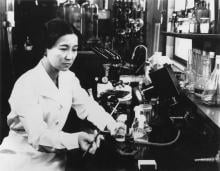
Ruby Sakae Hirose (1904 – 1960) was a Japanese-American scientist whose research contributed significantly to our understanding of blood clotting, allergies and cancer.

Iranian physician and bacteriologist Azar Andami (8 December 1926 – 19 August 1984) developed a cholera vaccine to combat an outbreak that swept through the Middle East, India, Southeast Asia, and Africa in 1937.
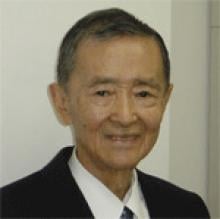
Michiaki Takahashi (17 February 1928 – 16 December 2013) was a Japanese virologist who developed the first chickenpox vaccine.

Irene Ayako Uchida’s (8 April 1917 – 30 July 2013) strides to understand genetic diseases such as Down syndrome paved the way for early screening of chromosomal abnormalities in foetuses.
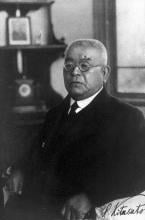
Baron Kitasato Shibasaburo (29 January 1856 – 13 June 1931) was a Japanese physician and bacteriologist whose work led to a new understanding of preventing and treating tetanus, diphtheria and anthrax.
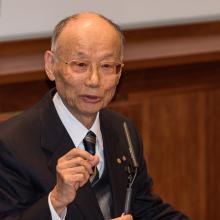
By isolating soil microorganisms and studying the compounds they produce, Satoshi Omura (born 1935) discovered almost 500 organic compounds with unique properties that were produced by these microorganisms, including many new antibiotics.
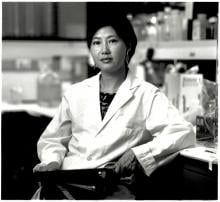
Chinese-American virologist and molecular biologist Flossie Wong-Staal (27 August 1946 – 8 July 2020) was the first scientist to clone HIV and determine the function of its genes.

Maharani Chakravorty (1937 – 2015) was one of India’s earliest molecular biologists whose research paved the way for advances in the treatment of bacterial and viral infections.
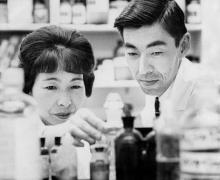
Husband and wife team, Kimishige (3 December 1925 – 6 July 2018) and Teruko Ishizaka (28 September 1926 – 4 June 2019) discovered the antibody class Immunoglobulin E (IgE) that triggers allergic reactions. They also discovered that IgE antibodies attach to white blood cells, known as mast cells, releasing histamine, which causes allergic reactions.
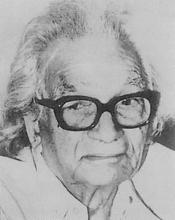
Salimuzzaman Siddiqui (19 October 1897 – 14 April 1994) was an artist and chemist from Pakistan whose research focused on natural products from plants.
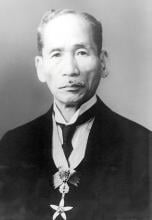
Umetaro Suzuki (7 April 1874 – 20 September 1943) was a Japanese scientist best remembered for his research on beriberi, a disease caused by vitamin B1 deficiency, characterized by limb stiffness, paralysis and pain.
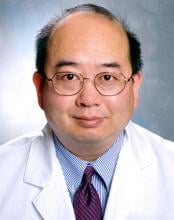
Barry Paw (29 August 1962 – 28 December 2017) was a biologist and oncologist who discovered several novel genes and their functions in red blood cells.

Indian organic chemist Asima Chatterjee (1917 to 2006) studied the medicinal properties of plant products, especially compounds known as vinca alkaloids.

Filipino chemist and pharmacist Manuel A. Zamora (29 March 1870 – 9 July 1929) is best remembered for his discovery of the tiki-tiki formula to combat beriberi, a disease caused by Vitamin B1 deficiency.
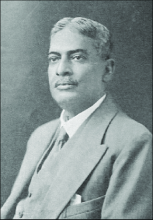
Indian scientist and physician Upendranath Brahmachari (19 December 1873–6 February 1946) is best known for creating a drug called Urea Stibamine, used to safely and reliably treat visceral leishmaniasis (or Kala-azar), a severe infection caused by the Leishmania parasite.
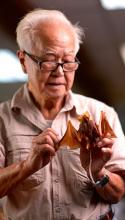
Lim Boo Liat (21 August 1926 – 11 July 2020), a leading authority in the conservation of Malaysia’s biological diversity, had his initial interest in the outdoors piqued by nature lessons in school. Lim, who helped found the National Zoo of Malaysia and re-establish the Malaysian Nature Society, had a particular interest in researching zoonotic diseases associated with small animals.
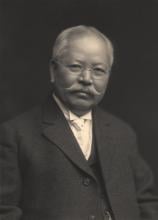
Japanese chemist Takamine Jokichi (3 November 1854 – 22 July 1922) founded the Tokyo Artificial Fertilizer Company, where he isolated a starch-digesting enzyme (named takadiastase) from the fungus Aspergillus oryzae.
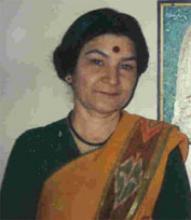
A pioneer of bio-organic chemistry, Darshan Ranganathan (4 June 1941 – 4 June 2001) is remembered for developing a protocol for synthesising imidazole, a compound used to make antifungal drugs and antibiotics. Widely considered India’s most prolific researcher in chemistry, she also published dozens of papers in renowned journals on protein folding, molecular design, chemical simulation of key biological processes, and the synthesis of functional hybrid peptides and nanotubes.