
Science
News
06 Mar 2023
Kanazawa University
Researchers at Kanazawa University report in Nano Letters the discovery of a biomolecular dynamical process likely relevant to gene expression. The process, revealed by means of high-speed atomic force microscopy, involves DNA and its packaging molecules.
06 Mar 2023
The University of Osaka
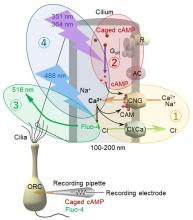
Researchers from Osaka University found that Ca2+ signaling simultaneously performed signal amplification and olfactory adaptation. The results demonstrated that this mysterious phenomenon was segregated inside the cilium. A novel system was used to observe changes in Ca2+ dynamics inside the thin structure of a cilium. Unveiling the mystery of Ca2+ signaling segregation further clarifies the mechanisms underlying the human sense of smell.

02 Mar 2023
City University of Hong Kong (CityUHK)
Existing colour systems, such as RGB and CYMK, are all text-based and require a large range of values to represent different colours, making them difficult to compute and time-consuming to convert. Recently, researchers from City University of Hong Kong (CityU) made a breakthrough by inventing an innovative colour system, called “C235”, based on prime numbers, enabling efficient encoding and effective colour compression. It can unify existing colour systems and has the potential to be applied in various applications, like designing an energy-saving LCD system and colourizing DNA codons.

01 Mar 2023
Osaka Metropolitan University
Osaka Metropolitan University scientists identified about 140,000 molecular clouds in the Milky Way Galaxy from large-scale data of carbon monoxide molecules, observed in detail by the Nobeyama 45-m radio telescope. Using artificial intelligence, the researchers estimated the distance of each of these molecular clouds to determine their size and mass, successfully mapping the distribution of the molecular clouds in the Galaxy in the most detailed manner to date.
24 Feb 2023
Kanazawa University
Researchers at Kanazawa University report in Angewandte Chemie International Edition how the formation and deformation speed of interlocked molecular structures called rotaxanes can be tuned — a discovery that may lead to an enhanced functionality of rotaxanes as building blocks for molecular machines.

23 Feb 2023
Newcastle University in Singapore
Scientists from Oil Crops Research Institute (OCRI) of Chinese Academy of Agricultural Sciences (CAAS), Anhui Agricultural University (Anhui, China), Newcastle University in Singapore, and Huizhou Comvikin Biotechnology Co., Ltd (Guangdong, China) have developed a green and efficient approach to synthesize highly liposoluble and antioxidant L-ascorbyl esters by immobilized lipases.
23 Feb 2023
Duke-NUS Medical School
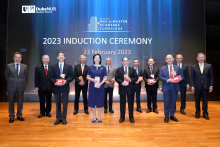
This year’s roster is the third cohort to be inducted into the Hall of Master Academic Clinicians, an honour conferred on exceptional clinician-educators at the SingHealth Duke-NUS Academic Medical Centre.
22 Feb 2023
Osaka Metropolitan University
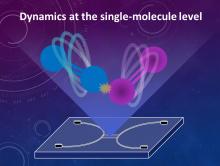
Researchers from Osaka Metropolitan University have developed principles and technologies of nanofluidic devices to freely manipulate nanomaterials, biomaterials, and molecules at the single-molecule level using fundamental technologies such as nanofluidic processing, functional integration, and fluidic control and measurement, which has pioneered the way to integrate various fields under nanofluidics.
21 Feb 2023
Hokkaido University
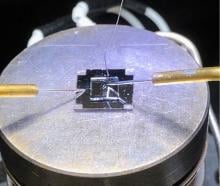
An effective, stable solid-state electrochemical transistor has been developed, heralding a new era in thermal management technology.
17 Feb 2023
Osaka Metropolitan University
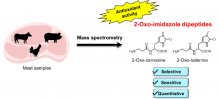
Osaka Metropolitan University scientists found that 2-oxo-imidazole-containing dipeptides (2-oxo-IDPs) exhibit very high antioxidant activity. Furthermore, they established a method to selectively and sensitively detect very small amounts of 2-oxo-IDPs and revealed for the first time that several types of 2-oxo-IDPs are contained in meat, including beef, pork, and chicken.
16 Feb 2023
Osaka Metropolitan University
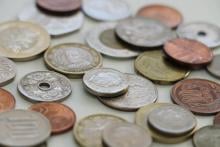
To clarify the mechanism of serial dependence in number perception, a research team from Osaka Metropolitan University conducted two tests, independently asking subjects to estimate the number of coins, or to estimate the value of those coins, shown on-screen for half a second. The results showed that serial dependence was confirmed in both tasks and that the most significant effect on serial dependence was not caused by the last stimuli, but the subjects last response. These results indicate that higher-order cognitive processing has a greater influence on the occurrence of serial dependence.
16 Feb 2023
Duke-NUS Medical School
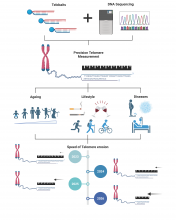
A new approach that ‘baits’ the caps or telomeres protecting the ends of chromosomes could provide information on how rapidly we are ageing and what we need to do to slow it down.
15 Feb 2023
Kanazawa University
In hepatic steatosis, hepatocytes "die," resulting in liver damage. Severe steatosis increases hepatocellular deaths, thus aggravating liver damage. The mechanism is unclear. Using mice, we show that mild steatosis causes apoptosis whereas severe steatosis predominantly causes necroptosis leading to cell rupture. This induces strong inflammation and new cell death, producing further liver damage. We reveal the transcription factor ATF3 to be involved in this process. Our results are expected to contribute to therapeutic method development.
10 Feb 2023
Hokkaido University
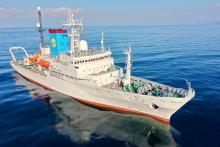
Hydrothermal vents have been identified as a previously undiscovered source of dissolved black carbon in the oceans, furthering the understanding of the role of oceans as a carbon sink.

10 Feb 2023
Osaka Metropolitan University
Osaka Metropolitan University scientists have demonstrated that fish can recognize “it’s me” when they themselves in a picture for the first time in non-human animals. Further testing made it clear that the fish recognize their own face in the pictures like humans.
08 Feb 2023
Osaka Metropolitan University
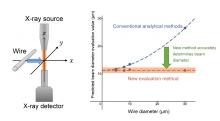
A research group at Osaka Metropolitan University has derived a new evaluation method for the measuring the size X-ray microbeams (diameter) through mathematical analysis. The group then verified the validity of the mathematically derived evaluation method by measuring the diameter of X-ray microbeams using metal wires of various diameters with an X-ray fluorescence analysis system for small areas and found that it was possible to calculate the beam diameter more accurately than the previous conventional evaluation method.
08 Feb 2023
Hokkaido University
Hokkaido University researchers have developed a novel method to design and develop peptide antibiotics in large numbers, which will prove critical to controlling antibiotic resistance.
07 Feb 2023
Hokkaido University
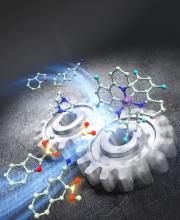
Two catalysts working in tandem enable inexpensive formate salts to perform difficult dearomative reactions, giving products potentially useful for drug development.
06 Feb 2023
The University of Osaka
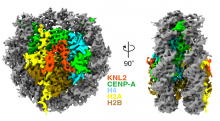
Researchers led by Osaka University used cryogenic electron microscopy to analyze the atomic structure of the centromeric region of the chromosome, essential for cell division. A protein called CENP-A marks the centromere; the researchers showed that during interphase, CENP-A is bound by a protein called KNL2 to maintain the location of the centromere. During mitosis, KNL2 is replaced by CENP-C, allowing correct formation of the kinetochore complex for cell division.
06 Feb 2023
The University of Osaka
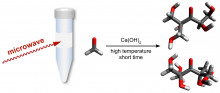
Researchers from Osaka University expanded the synthetic toolkit for preparing valuable chemical precursors from renewable feedstocks. They used microwave irradiation to dramatically improve the selectivity of the formose reaction, forming a simple six- and seven-carbon mixture that can be readily purified. These findings will help the chemicals industry minimize the use of fossil resources and improve the sustainability of manufacturing processes.
05 Feb 2023
Newcastle University in Singapore
Scientists from two Asian universities, namely Universiti Teknologi Malaysia (UTM) and Newcastle University in Singapore, have completed a study to understand how the mechanical behaviour of carbon fibre reinforced epoxy composite laminates could be compromised by moisture seepage.
03 Feb 2023
Hokkaido University
Researchers used a chemical synthesis robot and computationally cost effective A.I. model to successfully predict and validate highly selective catalysts.
02 Feb 2023
The University of Osaka
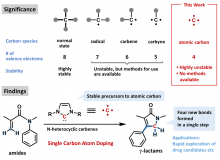
Researchers from Osaka University have used single carbon atom doping to form four chemical bonds in one step. Gamma-lactams (cyclic molecules that are common in antibiotics) were easily synthetically accessible from alpha, beta-unsaturated amides (an important molecule in cancer progression). The team chemically modified an anti-seizure medication in 96% yield, highlighting the work's utility to otherwise synthetically complex aspects of pharmaceutical development. The results of this work could become foundational to drug discovery and development.
01 Feb 2023
The University of Osaka
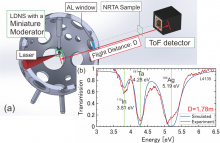
Osaka University researchers investigated the physics of laser-driven neutron sources, and found the relationship between the power and the neutrons generated. They were able to decrease the exposure time needed for neutron absorption experiments, which may be employed in biomedical research.
31 Jan 2023
Hokkaido University
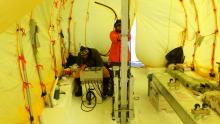
Data stored in ice cores dating back 55 years bring new insight into atmospheric levels of a molecule that can significantly affect weather and climate.
31 Jan 2023
The University of Osaka
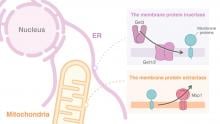
Researchers from Osaka University have shown that a system known as the GET pathway is essential for efficient mitophagy, the process by which mitochondria are removed from cells. The GET pathway targets a protein assembly called the Ppg1–Far complex, which inhibits mitophagy, to the membrane of a part of the cell called the endoplasmic reticulum. When the GET pathway is defective, this complex instead becomes targeted to mitochondria, where it acts to suppress mitophagy.
27 Jan 2023
Hokkaido University
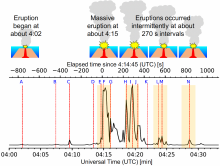
A “back-projection” technique reveals new details of the volcanic eruption in Tonga that literally shook the world.
26 Jan 2023
The University of Osaka
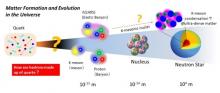
Researchers from Osaka University created a bound state of a proton and a K- meson known as Λ(1405), and measured its mass. The data implied that it consisted of five quarks. This work may help scientists develop a theory of exotic matter that existed in the early Universe or in neutron stars.
25 Jan 2023
The University of Osaka
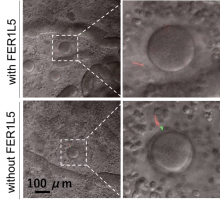
Researchers from Osaka University have identified a protein, FER1L5, that is essential for sperm to acquire fertilizing ability. Sperm from mice lacking this protein were unable to undergo the “acrosome reaction”, which releases molecules that facilitate fertilization, resulting in impaired male fertility. As FER1L5 is also present in human sperm, this work may lead to new diagnostic methods and treatments for male infertility in humans.
24 Jan 2023
Osaka Metropolitan University
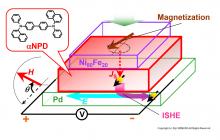
A research group, at the Osaka Metropolitan University Graduate School of Engineering, has succeeded in measuring spin transport in a thin film of αNPD molecules—a material well-known in organic light emitting diodes—at room temperature. They found that this thin molecular film has a spin diffusion length of approximately 62 nm, a length that could have practical applications in developing spintronics technology. In addition, while electricity has been used to control spin transport in the past, the thin molecular film used in this study is photoconductive, allowing spin transport control using visible light.
Giants in history

Chinese-American physicist Tsung-Dao Lee (24 November 1926 – 4 August 2024) was awarded the Nobel Prize for Physics in 1957 together with Chen-Ning Yang for their work challenging the symmetry law in subatomic particles. They were the first Chinese Nobel prize winners, with Lee becoming the second-youngest laureate. Born in Shanghai, he went to the United States on scholarship and studied under another Nobel winner, Enrico Fermi.

Turkish astrophysicist Dilhan Eryurt (29 November 1926 – 13 September 2012) conducted research on how the sun affects environmental conditions on the moon.
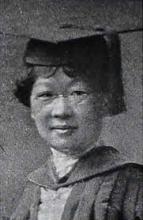
Chinese biochemist Chi Che Wang (1894 - 1979), one of the first Chinese women to study abroad, advanced to prominent research positions at American institutions including the University of Chicago and the Northwestern University Medical School.
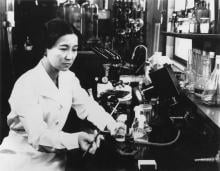
Ruby Sakae Hirose (1904 – 1960) was a Japanese-American scientist whose research contributed significantly to our understanding of blood clotting, allergies and cancer.
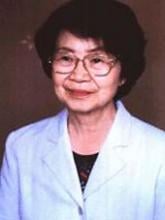
Chinese electron microscopy specialist Li Fanghua (6 January 1932 – 24 January 2020) facilitated the high-resolution imaging of crystal structures by eliminating interference.
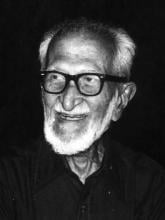
Sálim Moizuddin Abdul Ali (12 November 1896 – 20 June 1987), commonly referred to as the Birdman of India, was the first person to conduct systematic surveys of birds from across India.
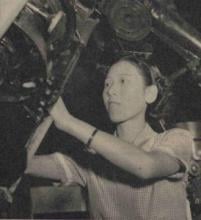
Haisako Koyama (1916 – 1997) was a Japanese solar observer whose dedication to recording sunspots – cooler parts of the sun’s surface that appear dark – produced a sunspot record of historic importance.
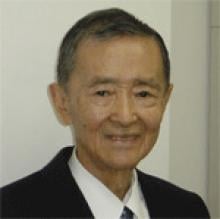
Michiaki Takahashi (17 February 1928 – 16 December 2013) was a Japanese virologist who developed the first chickenpox vaccine.
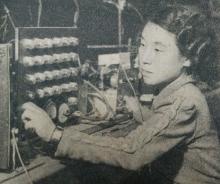
Toshiko Yuasa (11 December 1909 – 1 February 1980) was the first Japanese female physicist whose research on radioactivity shed light on beta decay – the process in which an atom emits a beta particle (electron) and turns into a different element.

Angelita Castro Kelly (1942-2015) was the first female Mission Operations Manager (MOM) of NASA. She spearheaded and supervised the Earth Observing System missions during its developmental stage.
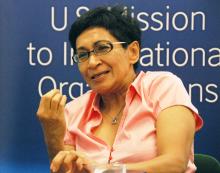
Malaysia’s first astrophysicist, Mazlan binti Othman (born 11 December 1951) was instrumental in launching the country’s first microsatellite, and in sending Malaysia’s first astronaut, Sheikh Muszaphar Shukor, into space.

Bibha Chowdhuri (1913 – 2 June 1991) was an Indian physicist who researched on particle physics and cosmic rays. In 1936, she was the only female to complete a M.Sc. degree at the University of Calcutta.
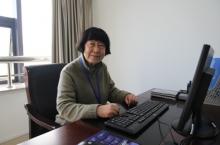
Meemann Chang (born 17 April 1936) is a Chinese palaeontologist who studied the fossils of ancient fish to understand the evolution of life. By examining fossils, she uncovered new insights on how vertebrates, animals with a backbone, migrated from the sea and became adapted to live on land.
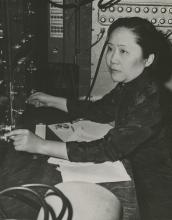
Chien-Shiung Wu (31 May 1912 – 16 February 1997) was an experimental physicist who made several important contributions to nuclear physics. Wu worked on the Manhattan Project – a top-secret program for the production of nuclear weapons during World War II and helped to develop a process for separating uranium into U235 and U238.
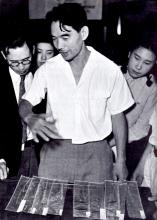
Hitoshi Kihara (1893 – 1986) was one of the most famous Japanese geneticists of the 20th century. One of his most significant contributions was identifying sex chromosomes (X and Y) in flowering plants.
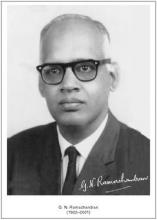
Gopalasamudram Narayanan Ramachandran (8 October 1922 – 7 April 2001) is best known for developing the Ramachandran plot to understand the structure of short chains of amino acids, known as peptides.
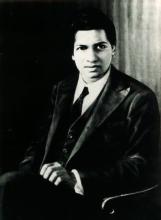
Srinivasa Ramanujan (22 December 1887 – 26 April 1920) was a math prodigy and widely considered one of India’s greatest mathematicians. Despite having almost no formal training in mathematics, he made substantial contributions to mathematical analysis, number theory, infinite series and continued fractions.
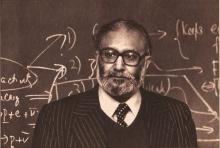
Mohammad Abdus Salam (29 January 1926 – 21 November 1996) was a theoretical physicist and the first Pakistani to receive a Nobel Prize in science.
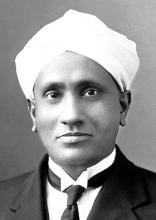
Sir Chandrasekhara Venkata Raman (7 November 1888 – 21 November 1970) was an Indian physicist who performed ground-breaking research in the field of light-scattering.
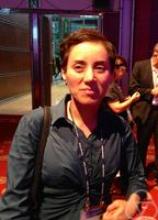
Mathematician Maryam Mirzakhani (12 May 1977 – 14 July 2017) was the first and only woman and Iranian to date to win the Fields Medal in 2014 for her work on curved surfaces.
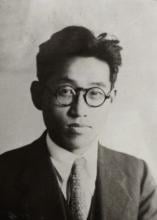
Joo-myung Seok (November 13, 1908 – October 6, 1950) was a Korean butterfly entomologist who made important contributions to the taxonomy of the native butterfly species in Korea.
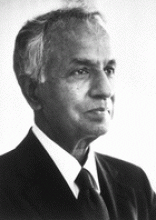
Subrahmanyan Chandrasekhar (19 October 1910 – 21 August 1995) was an Indian astrophysicist who studied the structure and evolution of stars.
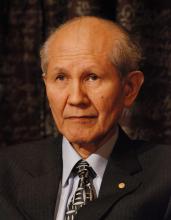
Osamu Shimomura (27 August 1928 – 19 October 2018) was a Japanese organic chemist and marine biologist who dedicated his career to understanding how organisms emitted light.
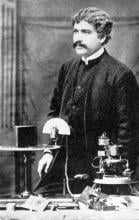
Sir Jagadish Chandra Bose (30 November 1858 – 23 November 1937) was a scientist and inventor who contributed to a wide range of scientific fields such as physics, botany and biology.
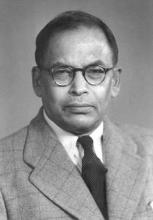
Meghnad Saha (6 October 1893 – 16 February 1956) was an Indian astrophysicist best known for formulating the Saha ionization equation which describes the chemical and physical properties of stars.
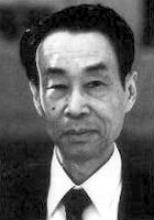
Motoo Kimura (13 November 1924 – 13 November 1994) was a Japanese theoretical population geneticist who is best remembered for developing the neutral theory of molecular evolution.

Chika Kuroda (24 March 1884 – 8 November 1968) was a Japanese chemist whose research focussed on the structures of natural pigments.
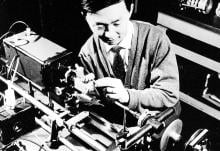
Charles Kuen Kao (Nov. 4, 1933 to Sept. 23, 2018) was an engineer who is regarded as the father of fibre optics. His work in the 1960s on long distance signal transmission using very pure glass fibres revolutionized telecommunications, enabling innovations such as the Internet.
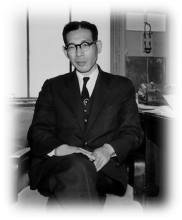
The field of solid-state ionics originated in Europe, but Takehiko Takahashi of Nagoya University in Japan was the first to coin the term ‘solid ionics’ in 1967. ‘Solid-state ionics’ first appeared in 1971 in another of his papers, and was likely a play on ‘solid-state electronics’, another rapidly growing field at the time.
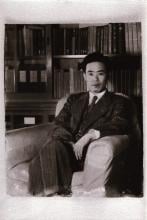
Japanese physicist Ukichiro Nakaya (1900-1962) made the world’s first artificial snowflakes. He started his research on snow crystals in the early 1930s at Hokkaido University, where there is an unlimited supply of natural snow in winter. By taking over 3,000 photographs, he established a classification of natural snow crystals and described their relationship with weather conditions.
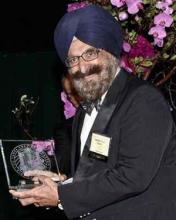
Physicist Narinder Singh Kapany (31 October 1926 – 4 December 2020) pioneered the use of optical fibres to transmit images, and founded several optical technology companies. Born in Punjab, India, he worked at a local optical instruments factory before moving to London for PhD studies at Imperial College. There, he devised a flexible fibrescope to convey images along bundles of glass fibres.
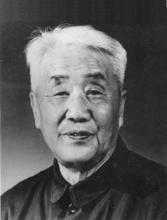
Chinese palaeontologist, archaeologist and anthropologist Pei Wenzhong (January 19, 1904 – September 18, 1982) is regarded as a founder of Chinese anthropology.
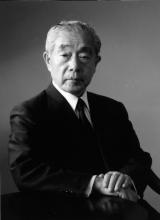
Japanese chemist Kenichi Fukui (4 October 1918 – 9 January 1998) was the first Asian scientist to be awarded the Nobel Prize in Chemistry. Together with Roald Hoffman, he received this honour in 1981 for his independent research into the mechanisms of chemical reactions.
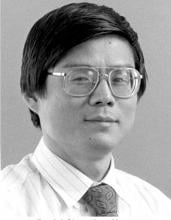
South Korean theoretical physicist Daniel Chonghan Hong (3 March 1956 – 6 July 2002) achieved fame in the public sphere through his research into the physics of popcorn.
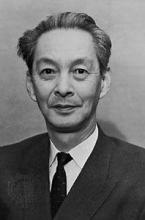
Shinichiro Tomonaga (31 March 1906 – 8 July 1979), together with Richard Feynman and Julian Schwinger, was awarded the Nobel Prize in Physics in 1965, for their contributions to advance the field of quantum electrodynamics. Tomonaga was also a strong proponent of peace, who actively campaigned against the proliferation of nuclear weapons and promoted the peaceful use of nuclear energy.
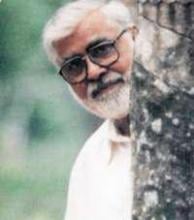
Known as Mr. Natural Rubber, chemist and researcher B. C. Shekhar (17 November 1929 – 6 September 2006) introduced a number of technical innovations that helped put Malaysia’s natural rubber industry on the world map.

Lin Lanying (7 February 1918 – 4 March 2003) was a Chinese material engineer remembered for her contributions to the field of semiconductor and aerospace materials. Lanying was born into a family who did not believe in educating girls and she was not allowed to go to school.
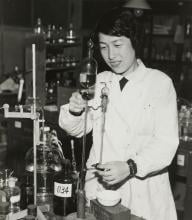
Japanese geochemist Katsuko Saruhashi developed the first method and tools for measuring carbon dioxide in seawater