
Science
News

29 Mar 2023
Osaka Metropolitan University
A group including Osaka Metropolitan University researchers discovered that the rhodopsin—a protein in the eye that detects light—of whale sharks has changed to efficiently detect blue light, which penetrates deep-sea water easily. The amino acid substitutions–one of which is counterintuitively associated with congenital stationary night blindness in humans—aid in detecting the low levels of light in the deep-sea. Although these changes make the whale shark rhodopsin less thermally stable the deep-sea temperature, allows their rhodopsin to keep working. This suggests that the unique adaptation evolved to function in the low-light low-temperature environment where whale sharks live.
27 Mar 2023
Osaka Metropolitan University
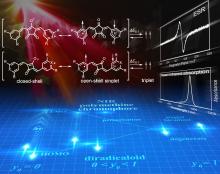
An Osaka Metropolitan University joint research group has discovered that near-infrared absorbing dyes, which had previously been considered to have closed-shell electronic structures, have an intermediate electronic structure, between closed- and open-shell structures. They also found that as the wavelength of near-infrared light that can be absorbed becomes longer the contribution of open-shell forms increases within the dye. These newly discovered characteristics are expected to be utilized to develop new near-infrared absorbing dyes that can absorb longer wavelength near-infrared light.
24 Mar 2023
Nanyang Technological University
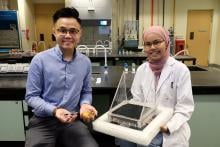
Scientists in Singapore converted fruit waste into a solar absorber called Mxene to develop an efficient and sustainable water desalination process.
23 Mar 2023
Institute of Industrial Science, The University of Tokyo (UTokyo-IIS)
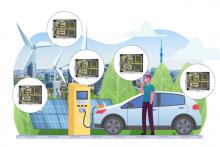
Researchers at The University of Tokyo develop a gate driver for circuit bipolar transistor electronic switches with a timing function robust to changes in current and temperature, which can be used in many industrial control applications
23 Mar 2023
The University of Osaka
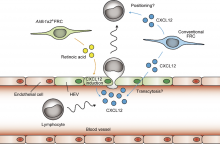
Researchers from Osaka University identified a subset of fibroblastic reticular cells (FRCs) that simultaneously express two proteins, Aldh1a2 and Tie2, making them unique to areas of the omentum called milky spots. Genetic depletion of these cells caused structural disruption of milky spots. The FRCs were critical to the abdominal immune system as they regulated CXCL12 levels, a molecule necessary for lymphocyte recruitment from blood circulation. These insights can help develop novel treatments for intra-abdominal infections.
22 Mar 2023
The University of Osaka
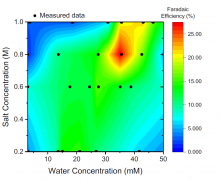
Researchers from SANKEN (The Institute of Scientific and Industrial Research), at Osaka University in collaboration with researchers from Imperial College London (UK) have improved the Faradaic efficiency of the nitrogen reduction reaction into ammonia by straightforward optimization of chemical process parameters. They found that trace water was the probable source of the high selectivity by facilitating incorporation of lithium oxide into the solid electrolyte interphase. These findings will also aid optimization of other analogous reactions, and thus help the chemicals industry optimize the sustainability of one of the most carbon-intensive reactions globally.
21 Mar 2023
Hokkaido University
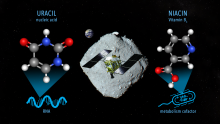
Samples from the asteroid Ryugu collected by the Hayabusa2 mission contain nitrogenous organic compounds, including the nucleobase uracil, which is a part of RNA.

21 Mar 2023
The Education University of Hong Kong (EdUHK)
Dark matter has always been an intriguing topic in astronomy and astrophysics. However, its nature remains one of mankind’s greatest mysteries. All we know is that it has a strong influence in the expansion of our universe and determines the formation of galaxies.
20 Mar 2023
Newcastle University in Singapore
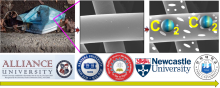
Scientists from Alliance University, Bangalore, Birla Institute of Technology Mesra, Inha University, Hanyang University, South Korea, and Newcastle University in Singapore have developed a new and straightforward approach to turn used COVID-19 facemasks into potential absorbent materials that can be employed for carbon capture from atmosphere.
20 Mar 2023
Newcastle University in Singapore
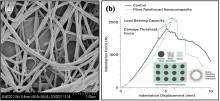
A team of researchers from Universiti Teknologi Malaysia and Universiti Malaysia Pahang has successfully developed an electrospinning method for producing Nylon Nanofibres for use in carbon fibre composites to enhance the impact properties of carbon composites.

20 Mar 2023
Hokkaido University
Parasitic infections in salmonid fish can increase or decrease their vulnerability to angling, depending on their body condition.

18 Mar 2023
Asia Research News
Scientists restore impaired kidney for the first time, How fibre composite fails when wet, Cleaner fish recognize themselves in pictures 🖼️🐟& The source of black carbon in the sea. Read all in the latest Editor's Choice. Plus our magazine Asia Research News 2023 is out now 🎉!
15 Mar 2023
Hokkaido University
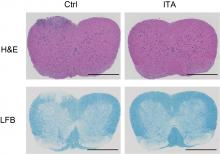
Researchers have revealed the modulatory effect of the anti-inflammatory metabolite itaconate on T helper and T regulatory cells, which may lead to new therapeutic approaches to treating some autoimmune diseases.
14 Mar 2023
Kanazawa University
In a study recently published in the journal ACS Nano, published by American Chemical Society, researchers from Kanazawa University, Kanazawa, Japan, collaborating with University of Washington, Seattle, USA, used frequency modulated atomic force microscopy to reveal the molecular architecture of a genetically designed peptide and its self-organization that forms single-molecule thick crystals on atomically flat graphite surfaces, that offer a potential platform for hybrid technologies such as bioelectronics, biosensors, and protein arrays.
14 Mar 2023
Kanazawa University
Researchers at Kanazawa University report in ACS Nano how high-speed atomic force microscopy can be used to study the biomolecular mechanisms underlying gene editing.

14 Mar 2023
Osaka Metropolitan University
Osaka Metropolitan University scientists succeeded in directly observing how LECs—which are attracting attention as one of the post-organic LEDs—change their electronic state over time during field emission by measuring their optical absorption via lamp light irradiation for the first time. This research method can be applied to all light-emitting devices, including not only LECs but also organic LEDs. This method is expected to reveal detailed electroluminescence processes and lead to the early detection of factors that reduce the efficiency of electroluminescence.

13 Mar 2023
Osaka Metropolitan University
Osaka Metropolitan University scientists successfully quantified the total reactive polysulfide content of 22 different types of vegetables, including onions and garlic. They also revealed that reactive polysulfides are not only found in the leek genus (Allium), such as onions and garlic but also in the cruciferous family of vegetables (Brassicaceae), such as broccoli and cabbage.
13 Mar 2023
The University of Osaka
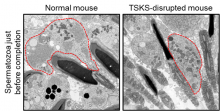
Researchers from Osaka University identified the role of a protein known as testis-specific kinase substrate (TSKS) in the process of spermiation, the release of mature sperm. Analysis of a gene-modified mouse model in which TSKS is disrupted revealed that TSKS is necessary for sperm to eliminate cytoplasm and become streamlined. These findings may lead to the development of diagnostic tests and male contraceptives.
10 Mar 2023
Kavli Institute for the Physics and Mathematics of the Universe (Kavli IPMU)
Asia Research News met five female researchers to learn about their research, what drew them to Kavli IPMU, and their experiences there. These women, from diverse backgrounds, excel in their fields and show what can be achieved when women are not held back.
10 Mar 2023
Kavli Institute for the Physics and Mathematics of the Universe (Kavli IPMU)
Asia Research Newsは同所の女性研究者5名に、彼女らの研究について、そしてなぜKavli IPMUを選んだのか、これまでの同所での経験について話しを聞いた。それぞれ様々な背景を持ち、各分野で卓越している研究者らに、足かせのない女性がいかに飛躍できるかをみせてもらった。
10 Mar 2023
Earth-Life Science Institute (ELSI), Tokyo Institute of Technology
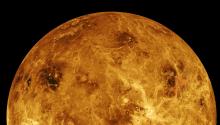
Finding extra-terrestrial life would transform how we view our place in the Universe, but reporting on the search for it poses challenges for scientists and the media.

10 Mar 2023
Earth-Life Science Institute (ELSI), Tokyo Institute of Technology
地球外生命が発見されれば、宇宙における私たちの存在意義に変化をもたらすだろう。しかしその探索に関する報道の在り方は、科学者やメディアにとって未だに大きな課題である。
10 Mar 2023
Kavli Institute for the Physics and Mathematics of the Universe (Kavli IPMU)
One astronomer never thought of leaving Japan, but then he did and became a world best.
10 Mar 2023
Earth-Life Science Institute (ELSI), Tokyo Institute of Technology
A science communication course at the Earth-Life Science Institute (ELSI) in Japan provides graduate students with practical skills to communicate research to a diverse audience.

10 Mar 2023
Earth-Life Science Institute (ELSI), Tokyo Institute of Technology
東京工業大学地球生命研究所(ELSI)のサイエンスコミュニケーションコースでは、大学院生が多様な対象に研究を伝えるための実践的なスキルの習得を目指す。
10 Mar 2023
Hokkaido University
Two novel hypotheses address the “two-fold cost of sex”: one of the biggest enigmas in the evolution of sexual reproduction.
10 Mar 2023
Hokkaido University
The first-ever molecular catalyst specifically tailored for mechanochemical reaction conditions enables high-efficiency transformations at near room temperature.
06 Mar 2023
Osaka Metropolitan University
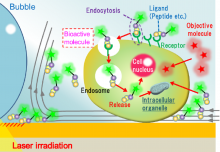
Osaka Metropolitan University researchers have used 100 seconds of laser irradiation to generate convection currents that selectively accelerate biochemical reactions—due to the photothermal effect—by concentrating biofunctional molecules at the cell surface. Using this method, useful molecules can be transported into cells at concentrations a hundred to a thousand times lower than with conventional methods. Furthermore, they also succeeded in selectively introducing small molecules into intracellular organelles usually impossible at low concentrations (hundreds of pmol/L) as well as inducing cell death in targeted cells by concentrating anticancer active peptides into them at concentrations so low that they would not be conventionally effective (several tens of nmol/L).
06 Mar 2023
Kanazawa University
Researchers at Kanazawa University report in Nano Letters the discovery of a biomolecular dynamical process likely relevant to gene expression. The process, revealed by means of high-speed atomic force microscopy, involves DNA and its packaging molecules.
06 Mar 2023
The University of Osaka
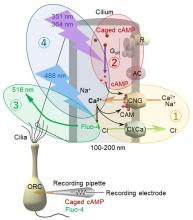
Researchers from Osaka University found that Ca2+ signaling simultaneously performed signal amplification and olfactory adaptation. The results demonstrated that this mysterious phenomenon was segregated inside the cilium. A novel system was used to observe changes in Ca2+ dynamics inside the thin structure of a cilium. Unveiling the mystery of Ca2+ signaling segregation further clarifies the mechanisms underlying the human sense of smell.
Giants in history

Chinese-American physicist Tsung-Dao Lee (24 November 1926 – 4 August 2024) was awarded the Nobel Prize for Physics in 1957 together with Chen-Ning Yang for their work challenging the symmetry law in subatomic particles. They were the first Chinese Nobel prize winners, with Lee becoming the second-youngest laureate. Born in Shanghai, he went to the United States on scholarship and studied under another Nobel winner, Enrico Fermi.

Turkish astrophysicist Dilhan Eryurt (29 November 1926 – 13 September 2012) conducted research on how the sun affects environmental conditions on the moon.

Chinese biochemist Chi Che Wang (1894 - 1979), one of the first Chinese women to study abroad, advanced to prominent research positions at American institutions including the University of Chicago and the Northwestern University Medical School.
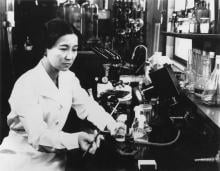
Ruby Sakae Hirose (1904 – 1960) was a Japanese-American scientist whose research contributed significantly to our understanding of blood clotting, allergies and cancer.

Chinese electron microscopy specialist Li Fanghua (6 January 1932 – 24 January 2020) facilitated the high-resolution imaging of crystal structures by eliminating interference.

Sálim Moizuddin Abdul Ali (12 November 1896 – 20 June 1987), commonly referred to as the Birdman of India, was the first person to conduct systematic surveys of birds from across India.

Haisako Koyama (1916 – 1997) was a Japanese solar observer whose dedication to recording sunspots – cooler parts of the sun’s surface that appear dark – produced a sunspot record of historic importance.
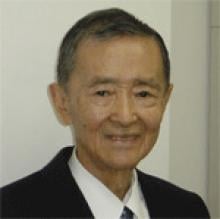
Michiaki Takahashi (17 February 1928 – 16 December 2013) was a Japanese virologist who developed the first chickenpox vaccine.
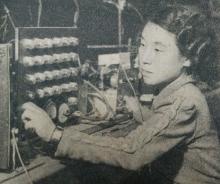
Toshiko Yuasa (11 December 1909 – 1 February 1980) was the first Japanese female physicist whose research on radioactivity shed light on beta decay – the process in which an atom emits a beta particle (electron) and turns into a different element.

Angelita Castro Kelly (1942-2015) was the first female Mission Operations Manager (MOM) of NASA. She spearheaded and supervised the Earth Observing System missions during its developmental stage.
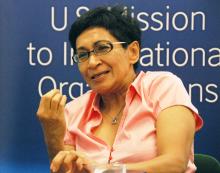
Malaysia’s first astrophysicist, Mazlan binti Othman (born 11 December 1951) was instrumental in launching the country’s first microsatellite, and in sending Malaysia’s first astronaut, Sheikh Muszaphar Shukor, into space.

Bibha Chowdhuri (1913 – 2 June 1991) was an Indian physicist who researched on particle physics and cosmic rays. In 1936, she was the only female to complete a M.Sc. degree at the University of Calcutta.

Meemann Chang (born 17 April 1936) is a Chinese palaeontologist who studied the fossils of ancient fish to understand the evolution of life. By examining fossils, she uncovered new insights on how vertebrates, animals with a backbone, migrated from the sea and became adapted to live on land.

Chien-Shiung Wu (31 May 1912 – 16 February 1997) was an experimental physicist who made several important contributions to nuclear physics. Wu worked on the Manhattan Project – a top-secret program for the production of nuclear weapons during World War II and helped to develop a process for separating uranium into U235 and U238.

Hitoshi Kihara (1893 – 1986) was one of the most famous Japanese geneticists of the 20th century. One of his most significant contributions was identifying sex chromosomes (X and Y) in flowering plants.
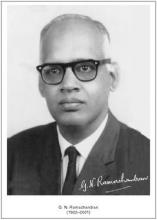
Gopalasamudram Narayanan Ramachandran (8 October 1922 – 7 April 2001) is best known for developing the Ramachandran plot to understand the structure of short chains of amino acids, known as peptides.

Srinivasa Ramanujan (22 December 1887 – 26 April 1920) was a math prodigy and widely considered one of India’s greatest mathematicians. Despite having almost no formal training in mathematics, he made substantial contributions to mathematical analysis, number theory, infinite series and continued fractions.
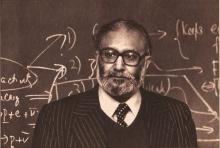
Mohammad Abdus Salam (29 January 1926 – 21 November 1996) was a theoretical physicist and the first Pakistani to receive a Nobel Prize in science.

Sir Chandrasekhara Venkata Raman (7 November 1888 – 21 November 1970) was an Indian physicist who performed ground-breaking research in the field of light-scattering.

Mathematician Maryam Mirzakhani (12 May 1977 – 14 July 2017) was the first and only woman and Iranian to date to win the Fields Medal in 2014 for her work on curved surfaces.

Joo-myung Seok (November 13, 1908 – October 6, 1950) was a Korean butterfly entomologist who made important contributions to the taxonomy of the native butterfly species in Korea.
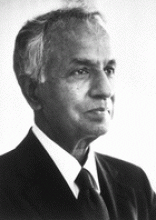
Subrahmanyan Chandrasekhar (19 October 1910 – 21 August 1995) was an Indian astrophysicist who studied the structure and evolution of stars.
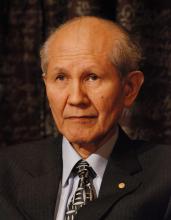
Osamu Shimomura (27 August 1928 – 19 October 2018) was a Japanese organic chemist and marine biologist who dedicated his career to understanding how organisms emitted light.
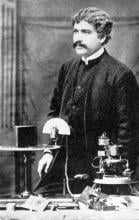
Sir Jagadish Chandra Bose (30 November 1858 – 23 November 1937) was a scientist and inventor who contributed to a wide range of scientific fields such as physics, botany and biology.
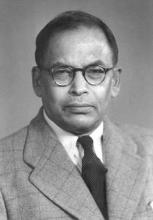
Meghnad Saha (6 October 1893 – 16 February 1956) was an Indian astrophysicist best known for formulating the Saha ionization equation which describes the chemical and physical properties of stars.
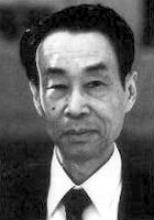
Motoo Kimura (13 November 1924 – 13 November 1994) was a Japanese theoretical population geneticist who is best remembered for developing the neutral theory of molecular evolution.

Chika Kuroda (24 March 1884 – 8 November 1968) was a Japanese chemist whose research focussed on the structures of natural pigments.
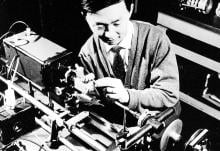
Charles Kuen Kao (Nov. 4, 1933 to Sept. 23, 2018) was an engineer who is regarded as the father of fibre optics. His work in the 1960s on long distance signal transmission using very pure glass fibres revolutionized telecommunications, enabling innovations such as the Internet.
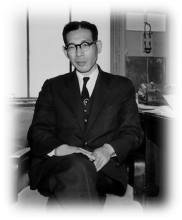
The field of solid-state ionics originated in Europe, but Takehiko Takahashi of Nagoya University in Japan was the first to coin the term ‘solid ionics’ in 1967. ‘Solid-state ionics’ first appeared in 1971 in another of his papers, and was likely a play on ‘solid-state electronics’, another rapidly growing field at the time.

Japanese physicist Ukichiro Nakaya (1900-1962) made the world’s first artificial snowflakes. He started his research on snow crystals in the early 1930s at Hokkaido University, where there is an unlimited supply of natural snow in winter. By taking over 3,000 photographs, he established a classification of natural snow crystals and described their relationship with weather conditions.
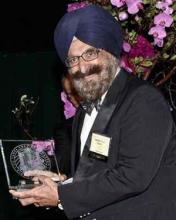
Physicist Narinder Singh Kapany (31 October 1926 – 4 December 2020) pioneered the use of optical fibres to transmit images, and founded several optical technology companies. Born in Punjab, India, he worked at a local optical instruments factory before moving to London for PhD studies at Imperial College. There, he devised a flexible fibrescope to convey images along bundles of glass fibres.
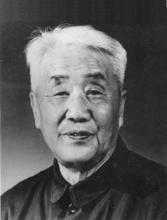
Chinese palaeontologist, archaeologist and anthropologist Pei Wenzhong (January 19, 1904 – September 18, 1982) is regarded as a founder of Chinese anthropology.
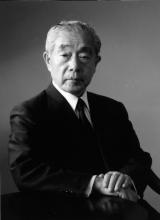
Japanese chemist Kenichi Fukui (4 October 1918 – 9 January 1998) was the first Asian scientist to be awarded the Nobel Prize in Chemistry. Together with Roald Hoffman, he received this honour in 1981 for his independent research into the mechanisms of chemical reactions.
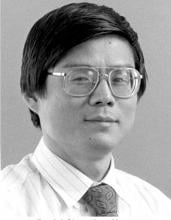
South Korean theoretical physicist Daniel Chonghan Hong (3 March 1956 – 6 July 2002) achieved fame in the public sphere through his research into the physics of popcorn.
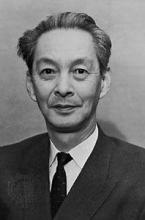
Shinichiro Tomonaga (31 March 1906 – 8 July 1979), together with Richard Feynman and Julian Schwinger, was awarded the Nobel Prize in Physics in 1965, for their contributions to advance the field of quantum electrodynamics. Tomonaga was also a strong proponent of peace, who actively campaigned against the proliferation of nuclear weapons and promoted the peaceful use of nuclear energy.

Known as Mr. Natural Rubber, chemist and researcher B. C. Shekhar (17 November 1929 – 6 September 2006) introduced a number of technical innovations that helped put Malaysia’s natural rubber industry on the world map.

Lin Lanying (7 February 1918 – 4 March 2003) was a Chinese material engineer remembered for her contributions to the field of semiconductor and aerospace materials. Lanying was born into a family who did not believe in educating girls and she was not allowed to go to school.
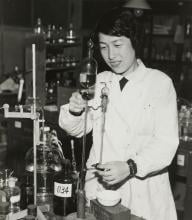
Japanese geochemist Katsuko Saruhashi developed the first method and tools for measuring carbon dioxide in seawater