

Science
News
19 Jan 2023
Tohoku University
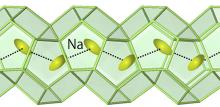
Controlling a material’s thermal conductivity can help insulate our homes, improve the performance of electronic devices, conserve power consumption in cars, and generate greater power efficiency. Now, a group of researchers has unveiled a novel mechanism that leads to further suppression of thermal conductivity in thermoelectric materials, something that will help develop new guidelines for producing high-performance thermoelectric materials.
18 Jan 2023
Kanazawa University
In a study recently published in Cancer Science researchers from Kanazawa University show how some intestinal cancer cells lose their ability to spread as they divide and can be eliminated as the cancer grows.
13 Jan 2023
Hokkaido University
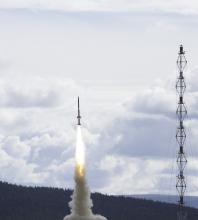
Understanding how dust grains form in interstellar gas could offer significant insights to astronomers and help materials scientists develop useful nanoparticles.
10 Jan 2023
Osaka Metropolitan University
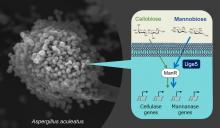
An Osaka Metropolitan University research team analyzed the regulatory mechanisms of carbohydrate-hydrolyzing enzyme production in Aspergillus aculeatus, a filamentous fungus that produces enzymes with an excellent ability to degrade plant biomass. The team found that UDP-glucose 4-epimerase (Uge5), an enzyme known for its involvement in galactose metabolism, also regulates the expression of degrading enzyme genes in A. aculeatus. This is the very first report of Uge5’s roles in selective gene expression in response to different types of inducing sugars in filamentous fungi.

10 Jan 2023
Osaka Metropolitan University
A research team led by Osaka Metropolitan University has revealed a difference in neural activity in response to visual food stimuli, depending on whether those stimuli are presented consciously or unconsciously. Using a questionnaire to assess the study participants, the team found that this difference was associated with their scores on eating behaviors, including emotional eating and cognitive restraint of food intake. These results indicate that eating behavior cannot be understood without taking into account both unconscious and conscious neural processes.
09 Jan 2023
Newcastle University in Singapore
Scientists from five Asian universities, namely Vellore Institute of Technology (VIT), Universiti Putra Malaysia (UPM), Charles Darwin University, National Defence University of Malaysia, and Newcastle University in Singapore have completed and published a comprehensive survey of the complex nature of natural fibre reinforcing composite materials.
06 Jan 2023
Osaka Metropolitan University
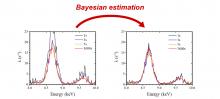
A research group at Osaka Metropolitan University has succeeded in significantly reducing the measurement time of a glass standard sample by applying Bayesian estimation to X-ray fluorescence analysis. The ability to perform rapid non-contact elemental analysis in a nondestructive manner could lead to the widespread use of this technique in many fields, including the analysis of moving industrial products and waste materials while being carried on conveyor belts.
05 Jan 2023
Institute of Industrial Science, The University of Tokyo (UTokyo-IIS)
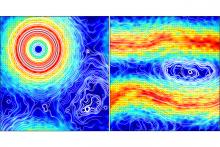
Researchers at The University of Tokyo simulate the phase separation of self-spinning particles, and show that the process differs from other unmixing processes, which may shed light on the organization of bacteria and other organisms
28 Dec 2022
Hokkaido University
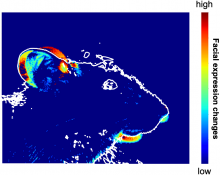
New insights into the opposing actions of serotonin-producing nerve fibres in mice could lead to drugs for treating addictions and major depression.

28 Dec 2022
Tohoku University
Taking Hong Kong’s famous Peak Tram up to Victoria Peak offers stunning views of its central business district, Victoria Harbor, and the surrounding islands. But a team of international scientists has recently discovered that the trams winding journey provides a previously unrecognized situation where our vertical perception gets distorted.
23 Dec 2022
Osaka Metropolitan University
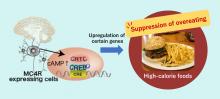
Scientists reveal genetic mechanism associated with high-calorie food-fueled obesity
22 Dec 2022
Osaka Metropolitan University
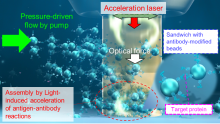
Osaka Metropolitan University scientists discovered the principle of light-induced acceleration of antigen–antibody reaction, allowing for simple, ultrafast, and highly sensitive detection of proteins. The researchers introduced target proteins and probe particles with modified antibodies selectively binding to the target proteins into a small channel and applied irradiation with infrared laser light. They achieved, for the first time, the rapid measurement of trace amounts of attogram-level target proteins after only 3 minutes of laser irradiation. These findings will potentially contribute to breakthroughs in the development of systems for ultra-early diagnosis of various diseases.
21 Dec 2022
Institute of Industrial Science, The University of Tokyo (UTokyo-IIS)
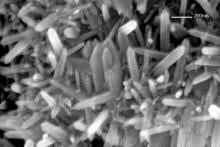
Researchers at The University of Tokyo develop a simple but effective method of bonding polymers with galvanized steel, a material ubiquitous in the automobile industry, to cheaply and easily create a lightweight and durable product.
19 Dec 2022
Tohoku University
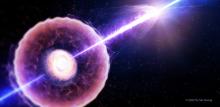
When stars die out, they emit gamma-ray bursts. Although scientist can calculate the explosion energy from dying stars, it is difficult to do when the conversion efficiency is low or unknown. Using light polarization, a research group has found a workaround for this, enabling astronomers to calculate the hidden energy of gamma-ray bursts.
19 Dec 2022
Ehime University
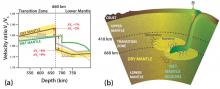
Sound velocities of superhydrous phase B and the presence of water in the Earth’s mantle
19 Dec 2022
The University of Osaka
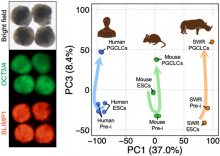
Researchers from Osaka University have developed a culture system using pluripotent cells from southern and northern white rhinos, which was refined to produce primordial germ cell-like cells (PGCLCs). These cells are the equivalent of primordial germ cells, the origin of eggs and sperm. The study marks an important first step in the potential production of northern white rhino gametes, which could be used in breeding programs, and is the first to induce PGCLCs in a wild animal.
16 Dec 2022
Newcastle University in Singapore
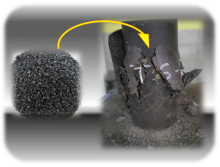
Scientists from Universiti Teknologi Malaysia have reported a novel way to produce reinforced concrete materials using tin slag aggregates, which is a by-product of the smelting process. This way of producing concrete enables tin slag to become a useful material, as well as reducing the amount of natural resources used, which in turn contribute to reducing carbon footprint in the construction industry.
16 Dec 2022
Tohoku University
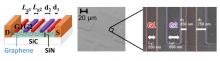
There is a small area on the electromagnetic spectrum occupied by terahertz waves, where conventional electronic devices struggle to operate. Still, engineering devices that can take advantage of terahertz waves are crucial for the development of future wireless technology such as 6G and 7G. Using a graphene transistor, a research team has successfully detected terahertz waves with a fast response and high sensitivity at room temperature.
15 Dec 2022
Tohoku University
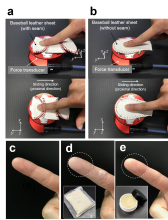
In baseball, even the smallest detail can tip the scales in favor of the batter or the pitcher. A recent publication has highlighted how rosin powder helps maintain a more constant friction when pitching, something that could bring about a fairer playing field in Major League Baseball.
15 Dec 2022
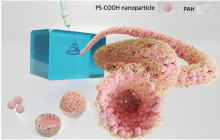
A research team led by the University of Hong Kong (HKU) and Lawrence Berkeley National Laboratory has invented an all-water robotic system that resolves the constraints of bio-inspired robots through revolutionary scientific advances.

15 Dec 2022
Asia Research News
Understanding how bats tolerate viral infections, Material separates water from...water, The virtual sense of touch polished to next level and COVID-19 negatively impacted early-careers and female researchers. Read all in the December's Editor's Choice.
15 Dec 2022
The University of Osaka
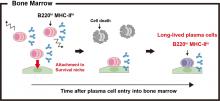
Researchers led by Osaka University generated a time-stamping method to trace the development and survival of plasma cells in the bone marrow and spleen. Using a mouse model in which plasma cells were fluorescently labeled in an inducible manner, they found that plasma cells were continuously replenished by new cells, a small portion of which differentiated into long-lived plasma cells (LLPCs). These findings may aid in the development of new vaccines that efficiently induce LLPCs.

14 Dec 2022
Osaka Metropolitan University
Using cryogenic electron microscopy, a research team from the Research Center for Artificial Photosynthesis (ReCAP) at Osaka Metropolitan University has revealed, for the first time, the structures and binding environments of pigments bound to a protein called a photosynthetic antenna of the marine green macroalga Codium fragile. The team’s results extend our knowledge about the molecular mechanism by which blue-green light—the only light available in deep seawater—is efficiently utilized for photosynthesis.
14 Dec 2022
Daegu Gyeongbuk Institute of Science and Technology (DGIST)
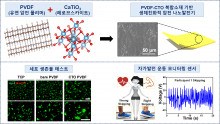
- DGIST Joint Team of Professors Kim Hoe-joon and Hong Seon-ki developed high-efficiency piezoelectric energy harvesting technology using materials harmless to humans
- Attachable to body, generates energy and diagnoses exercise posture... Published in the November issue of ‘Nano Energy’
13 Dec 2022
Osaka Metropolitan University
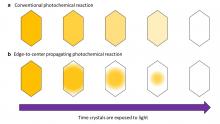
A research group at Osaka Metropolitan University has discovered that 2,5-distyrylpyrazine (DSP) crystals undergo a unique photoreaction. Normally, photoreactive color changes proceed uniformly throughout photomechanical molecular crystals, so that all parts of each crystal change color at the same time. However, when light shines evenly on a DSP crystal, the photoreaction propagates from edge to center, deviating from conventional photochemistry models. The group found that this phenomenon was caused by a surface effect and a cooperative effect, which make reactivity extremely high for molecules at the crystal’s edge and those adjacent to molecules that have already changed color.

12 Dec 2022
Institute for Integrated Cell-Material Sciences (iCeMS) at Kyoto University
Revelations about the mechanisms of two key proteins which maintain the asymmetric distribution of cholesterol within the cell membrane could help understand and treat diseases linked to its imbalance
09 Dec 2022
− The European Commission Approved QDENGA (TAK-003) for Use in Individuals Four Years of Age and Older [i]
− QDENGA Becomes the Only Dengue Vaccine Approved in the EU for Use in Individuals Regardless of Previous Dengue Exposure [i]
07 Dec 2022
Tohoku University
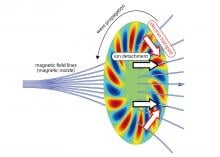
Magnetic nozzle plasma thrusters are thought of as the future of space travel. But one problem has hampered their development – plasma detachment. A recent study has shown that spontaneously excited plasma waves help magnetic nozzles overcome the plasma detachment problem, a rare instance of plasma instabilities having a positive effect on engineering.

06 Dec 2022
World's first research into relationship between rich-in-biodiversity garden greenery and health/well-being launched by University of Tokyo and Sekisui House Ltd.
01 Dec 2022
Hokkaido University
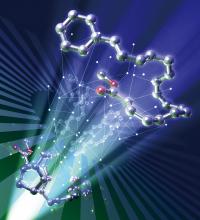
Automated reaction path search method predicts accurate stereochemistry of pericyclic reactions using only target molecule structure.
Giants in history

Chinese-American physicist Tsung-Dao Lee (24 November 1926 – 4 August 2024) was awarded the Nobel Prize for Physics in 1957 together with Chen-Ning Yang for their work challenging the symmetry law in subatomic particles. They were the first Chinese Nobel prize winners, with Lee becoming the second-youngest laureate. Born in Shanghai, he went to the United States on scholarship and studied under another Nobel winner, Enrico Fermi.

Turkish astrophysicist Dilhan Eryurt (29 November 1926 – 13 September 2012) conducted research on how the sun affects environmental conditions on the moon.
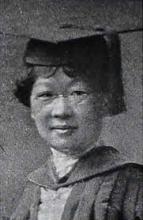
Chinese biochemist Chi Che Wang (1894 - 1979), one of the first Chinese women to study abroad, advanced to prominent research positions at American institutions including the University of Chicago and the Northwestern University Medical School.
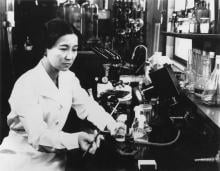
Ruby Sakae Hirose (1904 – 1960) was a Japanese-American scientist whose research contributed significantly to our understanding of blood clotting, allergies and cancer.

Chinese electron microscopy specialist Li Fanghua (6 January 1932 – 24 January 2020) facilitated the high-resolution imaging of crystal structures by eliminating interference.
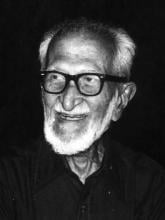
Sálim Moizuddin Abdul Ali (12 November 1896 – 20 June 1987), commonly referred to as the Birdman of India, was the first person to conduct systematic surveys of birds from across India.

Haisako Koyama (1916 – 1997) was a Japanese solar observer whose dedication to recording sunspots – cooler parts of the sun’s surface that appear dark – produced a sunspot record of historic importance.
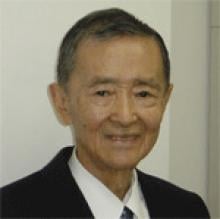
Michiaki Takahashi (17 February 1928 – 16 December 2013) was a Japanese virologist who developed the first chickenpox vaccine.
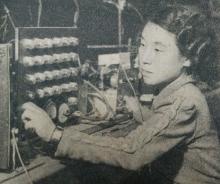
Toshiko Yuasa (11 December 1909 – 1 February 1980) was the first Japanese female physicist whose research on radioactivity shed light on beta decay – the process in which an atom emits a beta particle (electron) and turns into a different element.

Angelita Castro Kelly (1942-2015) was the first female Mission Operations Manager (MOM) of NASA. She spearheaded and supervised the Earth Observing System missions during its developmental stage.
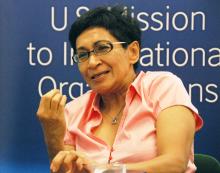
Malaysia’s first astrophysicist, Mazlan binti Othman (born 11 December 1951) was instrumental in launching the country’s first microsatellite, and in sending Malaysia’s first astronaut, Sheikh Muszaphar Shukor, into space.

Bibha Chowdhuri (1913 – 2 June 1991) was an Indian physicist who researched on particle physics and cosmic rays. In 1936, she was the only female to complete a M.Sc. degree at the University of Calcutta.

Meemann Chang (born 17 April 1936) is a Chinese palaeontologist who studied the fossils of ancient fish to understand the evolution of life. By examining fossils, she uncovered new insights on how vertebrates, animals with a backbone, migrated from the sea and became adapted to live on land.
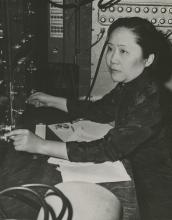
Chien-Shiung Wu (31 May 1912 – 16 February 1997) was an experimental physicist who made several important contributions to nuclear physics. Wu worked on the Manhattan Project – a top-secret program for the production of nuclear weapons during World War II and helped to develop a process for separating uranium into U235 and U238.

Hitoshi Kihara (1893 – 1986) was one of the most famous Japanese geneticists of the 20th century. One of his most significant contributions was identifying sex chromosomes (X and Y) in flowering plants.
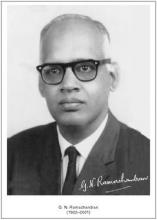
Gopalasamudram Narayanan Ramachandran (8 October 1922 – 7 April 2001) is best known for developing the Ramachandran plot to understand the structure of short chains of amino acids, known as peptides.
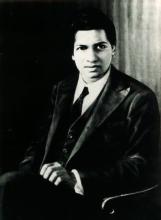
Srinivasa Ramanujan (22 December 1887 – 26 April 1920) was a math prodigy and widely considered one of India’s greatest mathematicians. Despite having almost no formal training in mathematics, he made substantial contributions to mathematical analysis, number theory, infinite series and continued fractions.
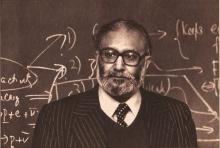
Mohammad Abdus Salam (29 January 1926 – 21 November 1996) was a theoretical physicist and the first Pakistani to receive a Nobel Prize in science.
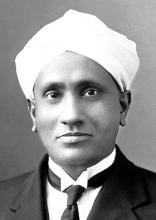
Sir Chandrasekhara Venkata Raman (7 November 1888 – 21 November 1970) was an Indian physicist who performed ground-breaking research in the field of light-scattering.

Mathematician Maryam Mirzakhani (12 May 1977 – 14 July 2017) was the first and only woman and Iranian to date to win the Fields Medal in 2014 for her work on curved surfaces.
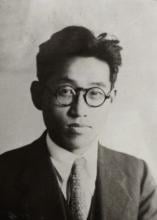
Joo-myung Seok (November 13, 1908 – October 6, 1950) was a Korean butterfly entomologist who made important contributions to the taxonomy of the native butterfly species in Korea.
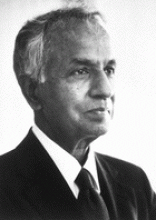
Subrahmanyan Chandrasekhar (19 October 1910 – 21 August 1995) was an Indian astrophysicist who studied the structure and evolution of stars.
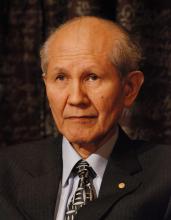
Osamu Shimomura (27 August 1928 – 19 October 2018) was a Japanese organic chemist and marine biologist who dedicated his career to understanding how organisms emitted light.
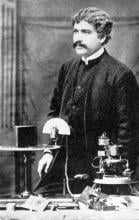
Sir Jagadish Chandra Bose (30 November 1858 – 23 November 1937) was a scientist and inventor who contributed to a wide range of scientific fields such as physics, botany and biology.
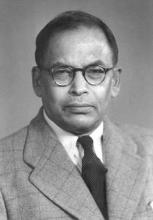
Meghnad Saha (6 October 1893 – 16 February 1956) was an Indian astrophysicist best known for formulating the Saha ionization equation which describes the chemical and physical properties of stars.
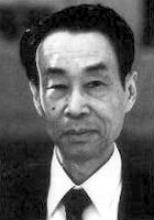
Motoo Kimura (13 November 1924 – 13 November 1994) was a Japanese theoretical population geneticist who is best remembered for developing the neutral theory of molecular evolution.

Chika Kuroda (24 March 1884 – 8 November 1968) was a Japanese chemist whose research focussed on the structures of natural pigments.
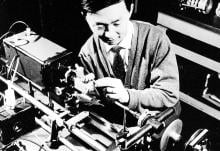
Charles Kuen Kao (Nov. 4, 1933 to Sept. 23, 2018) was an engineer who is regarded as the father of fibre optics. His work in the 1960s on long distance signal transmission using very pure glass fibres revolutionized telecommunications, enabling innovations such as the Internet.
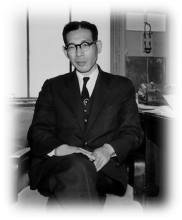
The field of solid-state ionics originated in Europe, but Takehiko Takahashi of Nagoya University in Japan was the first to coin the term ‘solid ionics’ in 1967. ‘Solid-state ionics’ first appeared in 1971 in another of his papers, and was likely a play on ‘solid-state electronics’, another rapidly growing field at the time.
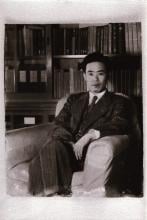
Japanese physicist Ukichiro Nakaya (1900-1962) made the world’s first artificial snowflakes. He started his research on snow crystals in the early 1930s at Hokkaido University, where there is an unlimited supply of natural snow in winter. By taking over 3,000 photographs, he established a classification of natural snow crystals and described their relationship with weather conditions.
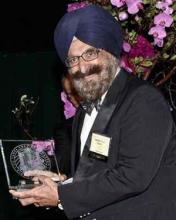
Physicist Narinder Singh Kapany (31 October 1926 – 4 December 2020) pioneered the use of optical fibres to transmit images, and founded several optical technology companies. Born in Punjab, India, he worked at a local optical instruments factory before moving to London for PhD studies at Imperial College. There, he devised a flexible fibrescope to convey images along bundles of glass fibres.
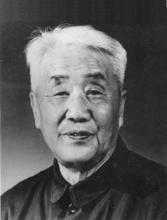
Chinese palaeontologist, archaeologist and anthropologist Pei Wenzhong (January 19, 1904 – September 18, 1982) is regarded as a founder of Chinese anthropology.
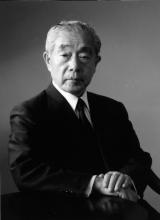
Japanese chemist Kenichi Fukui (4 October 1918 – 9 January 1998) was the first Asian scientist to be awarded the Nobel Prize in Chemistry. Together with Roald Hoffman, he received this honour in 1981 for his independent research into the mechanisms of chemical reactions.
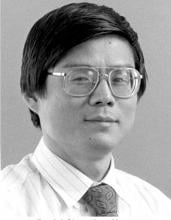
South Korean theoretical physicist Daniel Chonghan Hong (3 March 1956 – 6 July 2002) achieved fame in the public sphere through his research into the physics of popcorn.
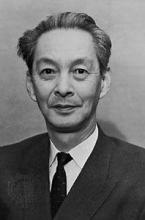
Shinichiro Tomonaga (31 March 1906 – 8 July 1979), together with Richard Feynman and Julian Schwinger, was awarded the Nobel Prize in Physics in 1965, for their contributions to advance the field of quantum electrodynamics. Tomonaga was also a strong proponent of peace, who actively campaigned against the proliferation of nuclear weapons and promoted the peaceful use of nuclear energy.

Known as Mr. Natural Rubber, chemist and researcher B. C. Shekhar (17 November 1929 – 6 September 2006) introduced a number of technical innovations that helped put Malaysia’s natural rubber industry on the world map.

Lin Lanying (7 February 1918 – 4 March 2003) was a Chinese material engineer remembered for her contributions to the field of semiconductor and aerospace materials. Lanying was born into a family who did not believe in educating girls and she was not allowed to go to school.
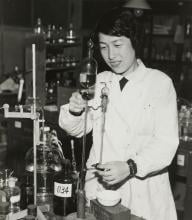
Japanese geochemist Katsuko Saruhashi developed the first method and tools for measuring carbon dioxide in seawater