
Science
News
23 Aug 2022
The University of Osaka
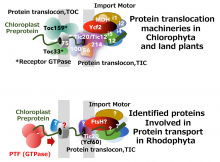
A research group led by Osaka University has found a new class of proteins in the red algae Cyanidioschyzon merolae that are involved in moving proteins across the membranes of chloroplasts – subcompartments that conduct photosynthesis within the cells of organisms such as plants and algae. These findings could be used to boost photosynthesis in several groups of algae that contribute considerably to marine biomass and are commercially farmed.
22 Aug 2022
Osaka Metropolitan University
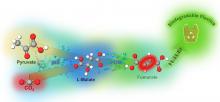
Osaka Metropolitan University researchers have successfully synthesized fumarate (fumaric acid), a raw material for unsaturated polyester resin, by combining carbon dioxide (CO2) with pyruvate (derived from biomass), using two biocatalysts: malate dehydrogenase and fumarase. Fumarate is currently used to make biodegradable plastic like polybutylene succinate from petroleum. However, this research has enabled the synthesis of fumarate without petroleum, consuming only CO2 and biomass-derived pyruvate.
19 Aug 2022
Osaka Metropolitan University
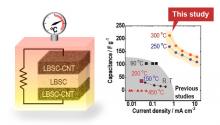
A research group led by Professor Akitoshi Hayashi at the Osaka Metropolitan University Graduate School of Engineering has successfully developed a high-capacity capacitor, an energy storage device—using a solid electrolyte with high deformability—that can operate at high temperatures. With this discovery, high-capacity capacitors can now be made which do not require cooling, this increases their efficiency and allows for new suitable applications.
19 Aug 2022
Hokkaido University
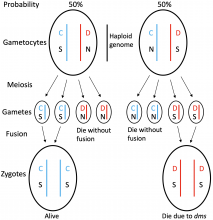
Two novel hypotheses have been proposed that address the “two-fold cost of sex”: one of the biggest enigmas in the evolution of sexual reproduction.
17 Aug 2022
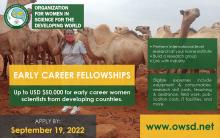
The OWSD Early Career Fellowship is a prestigious award of up to USD 50,000 offered to women who have completed their PhDs in Science, Technology, Engineering and Mathematics (STEM) subjects and are employed at an academic or scientific research institute in one of the listed Science and Technology Lagging Countries (STLCs).

10 Aug 2022
Kanazawa University
Researchers at Kanazawa University report in Communications Biology that using common chemicals for fixing living cell samples for microscopy studies causes membrane proteins to aggregate.
10 Aug 2022
Kanazawa University
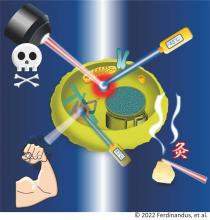
Researchers at Kanazawa University report in ACS Nano the development of a nanoparticle that acts as a heater and a thermometer. Inserting the nanoparticle in living cells results in a heat spot that, by switching it on and off, enables the controlled modulation of local cellular activities.
09 Aug 2022
Institute of Industrial Science, The University of Tokyo (UTokyo-IIS)
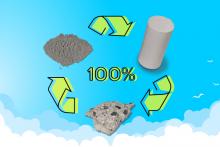
Researchers from the Institute of Industrial Science, The University of Tokyo have used thermal treatments to improve modern recycling of concrete. This work will add value to construction waste and contribute to sustainable development

08 Aug 2022
Institute of Industrial Science, The University of Tokyo (UTokyo-IIS)
Scientists from the Institute of Industrial Science, The University of Tokyo, demonstrate that accounting for liquid preordering is essential to predicting crystal growth
05 Aug 2022
Duke-NUS Medical School
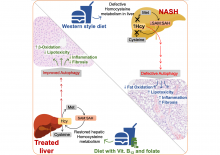
Scientists at Duke-NUS Medical School, Singapore, have found that elevated blood levels of an amino acid called homocysteine correlate strongly with the severity of an advanced form of non-alcoholic fatty liver disease. They also found vitamin B12 and folic acid could potentially prevent and/or delay disease progression.
05 Aug 2022
Tohoku University
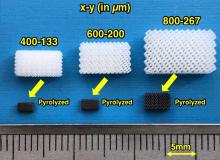
New, easily fabricated, high performance carbon microlattice electrodes could soon be used to make cheaper batteries powered by readily available sodium ions. The approach was published by Tohoku University researchers and colleagues in the journal Small.

28 Jul 2022
The University of Osaka
Researchers from Osaka University and collaborating partners measured intracellular temperature gradients in human-derived cells at unprecedented spatial, temporal, and readout resolution. Intracellular temperature is a fundamental indicator of health, and corresponding gradients are the subject of medical hypotheses as well as potential drug development directions. The results of this work will advance such research by providing a versatile tool that's compatible with standard technology and procedures.
27 Jul 2022
The University of Osaka
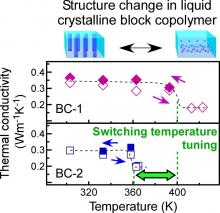
Researchers from Osaka University and collaborating partners used straightforward chemical synthesis to modulate the phase transition of a thermal conductivity-switching block copolymer. Reversible changes in the nanostructured anisotropy in the material corresponded to an approximately two-fold change in the thermal conductivity, over the 27°C to 147°C temperature range. These results will enhance the sustainability of upcoming advanced flexible organic electronics.
26 Jul 2022
Ehime University
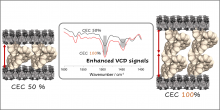
Evidence for Molecular Packing of Monovalent Iridium (III) Complexes within Interlayer Spaces of Sodium Montmorillonite
25 Jul 2022
Kanazawa University
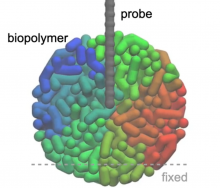
Researchers at Kanazawa University report in The Journal of Physical Chemistry Letters how to simulate 3D atomic force microscopy images of out-of-equilibrium systems involving biomolecules. The approach makes use of a celebrated equation from thermodynamics applicable to non-equilibrium situations.
25 Jul 2022
Hokkaido University
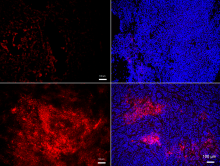
A key molecule for cancer metastasis has been identified as a molecule already known for its involvement in cardiovascular disease, suggesting a possible treatment approach for both diseases simultaneously.

23 Jul 2022
Asia Research News
Researchers create 'time machine' to study ancestor galaxies, Robotics engineers pay attention to matters of the heart, Custom suits for delivery worms, Tough, light structures with superior impact resistance and Virtual training can reduce stress and anxiety. Read all in the July's Editor's Choice plus op-ed: To boost South Korea’s basic science, look to values, not just budgets, this month's Image & Asia Research News 2022 magazine pick - Better memristors for brain-like computing.
22 Jul 2022
Lingnan University
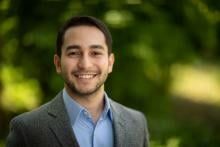
Prof Yusuf Ikbal Oldac, Research Assistant Professor of the School of Graduate Studies of Lingnan University in Hong Kong (LU) has been awarded the Society for Research into Higher Education (SRHE) Newer Researchers Prize for his research proposal entitled “Scientific collaborations between the United Kingdom and Middle Eastern and North African countries in the post-Brexit and post-pandemic world”. He will receive funding to carry out the project, and join the Society’s Research and Development Committee for one year as a new researcher member starting from 1 January 2023.
19 Jul 2022
Newcastle University in Singapore
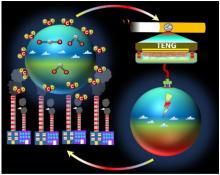
An international team of scientists from India and Singapore has successfully developed a novel method to recycle waste cigarette filters for use in making the triboelectric nano generator, a clean energy generating device.

15 Jul 2022
City University of Hong Kong (CityUHK)
A team co-led by a City University of Hong Kong (CityU) neuroscientist has identified a key mechanism of a biological clock that ensures roundworms stay regular by defecating at steady intervals.
15 Jul 2022
Kanazawa University
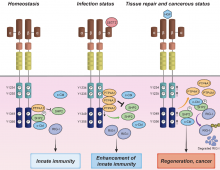
Innate immunity is activated when the pattern recognition receptors (PRRs) recognize pathogen-associated molecular patterns (PAMPs). We show that a liver-derived secretory protein LECT2, a hepatokine, binds to the HGF receptor MET, a proto-oncogene product, to suppress the proliferation signal of MET. LECT2 activates retinoic acid-inducible gene-I, enhancing antiviral and innate immune responses through MET. Thus, LECT2 is an anti-proliferative and immunoregulatory factor that could be a therapeutic target for viral infections and cancer.
07 Jul 2022
Newcastle University in Singapore
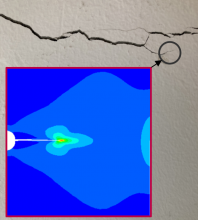
A novel practical way of modelling cracking and toughening of fibre composite materials has been developed. The novel approach also revealed new insights on the fracture behaviour of fibres reinforcing a composite laminate during intralaminar cracking. The new way can be used to complement inspection of laminated structures that are used as primary structures in many industries.
06 Jul 2022
Osaka Metropolitan University
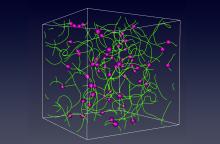
A research group of Professor Makoto Tsubota and Specially Appointed Assistant Professor Satoshi Yui, both from the Graduate School of Science and the Nambu Yoichiro Institute of Theoretical and Experimental Physics, Osaka Metropolitan University, in cooperation with their colleagues from Florida State University and Keio University, revealed that there are laws of vortex diffusion in superfluid helium-4 (He II) at extremely low temperatures, near absolute zero (−273°C). In this study, by conducting a systematic numerical study and comparing the results with experimental observations, the research group found that quantum vortices cause "superdiffusion" over short periods of time and "normal diffusion" over longer periods of time, similar to the movement of pollen in still water.
06 Jul 2022
Kanazawa University
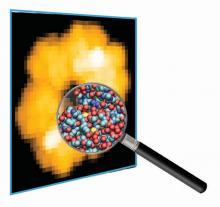
Atomic force microscopy (AFM) allows to visualize the dynamics of single biomolecules during their functional activity. All observations are, however, restricted to regions accessible by a fairly big probing tip during scanning. Hence, AFM images only the biomolecular surface with limited spatial resolution, missing important information required for a detailed understanding of the observed phenomena.

01 Jul 2022
Global Strategy Institute, KAIST
An international forum hosted by the Global Strategy Institute (GSI) at the Korea Advanced Institute of Science and Technology (KAIST) will examine two of the most difficult issues to fight in human history, inequality and injustice. World-renowned experts will provide new insights on how to understand the major forces behind increasing inequalities and social injustice and explore solutions to these intractable problems that are still affecting our world to this day. The 7th of its kind, KAIST GSI’s international forum will be held online on July 6th, 2022 from 9:00 until 10:30 am Korea Standard Time (KST) and livestreamed on KAIST’s YouTube Channel. The theme of the forum is “The Science of Inequality and Injustice.”
30 Jun 2022
The University of Osaka
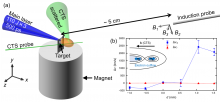
A research team led by Osaka University realized magnetic reconnection driven by electron dynamics in laser-produced plasmas and measured the pure electron outflows. Their findings will be applied not only to space and astrophysical plasmas, but also to magnetic propulsion and fusion plasmas.

29 Jun 2022
Hokkaido University
The skin’s top layer contains a diverse set of hundreds of lipid molecules called ceramides with varying chain lengths that play a vital role in its barrier function.
29 Jun 2022
Osaka Metropolitan University
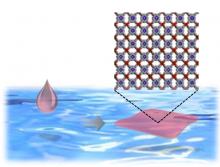
Rie Makiura, Associate Professor at the Graduate School of Engineering, Osaka Metropolitan University has published a review article on the facile synthesis of nanosheet materials with precise regular nanoscale pores. In 2010, Professor Makiura’s research group succeeded in fabricating the world's first MOF (metal-organic framework) nanosheets on the surface of water using a simple low-energy process. The procedure, which involved adding drops of suitably chosen molecular components to the water surface took advantage of the same phenomenon that causes the formation of oil films and led to the creation of nanosheets of exceptional integrity and stability. In the present review article, Professor Makiura describes the MOF nanosheets developed by her group so far and provides a detailed description of their characteristics and comparison with other MOF nanosheets reported around the world. In addition, she describes the formation mechanism of the MOF nanosheets on the water surface.
29 Jun 2022
Kanazawa University
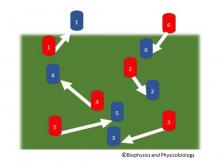
Researchers at Kanazawa University report in Biophysics and Physicobiology how to optimize high-speed atomic force microscopy experiments on live cell membranes, so that moving objects like molecules can be properly followed from frame to frame.
29 Jun 2022
Institute of Industrial Science, The University of Tokyo (UTokyo-IIS)
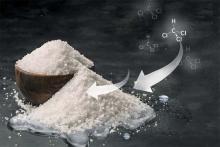
Researchers from the Institute of Industrial Science, The University of Tokyo, find that organic vapors can induce dissolution of molecular salts (i.e., organic deliquescence), similar to water vapor-induced deliquescence
Giants in history

Chinese-American physicist Tsung-Dao Lee (24 November 1926 – 4 August 2024) was awarded the Nobel Prize for Physics in 1957 together with Chen-Ning Yang for their work challenging the symmetry law in subatomic particles. They were the first Chinese Nobel prize winners, with Lee becoming the second-youngest laureate. Born in Shanghai, he went to the United States on scholarship and studied under another Nobel winner, Enrico Fermi.

Turkish astrophysicist Dilhan Eryurt (29 November 1926 – 13 September 2012) conducted research on how the sun affects environmental conditions on the moon.
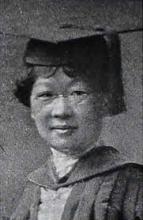
Chinese biochemist Chi Che Wang (1894 - 1979), one of the first Chinese women to study abroad, advanced to prominent research positions at American institutions including the University of Chicago and the Northwestern University Medical School.
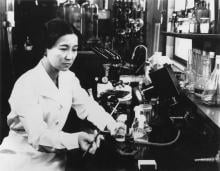
Ruby Sakae Hirose (1904 – 1960) was a Japanese-American scientist whose research contributed significantly to our understanding of blood clotting, allergies and cancer.
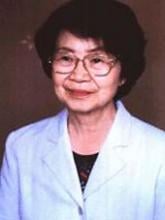
Chinese electron microscopy specialist Li Fanghua (6 January 1932 – 24 January 2020) facilitated the high-resolution imaging of crystal structures by eliminating interference.
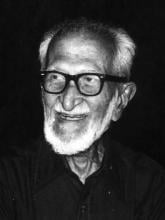
Sálim Moizuddin Abdul Ali (12 November 1896 – 20 June 1987), commonly referred to as the Birdman of India, was the first person to conduct systematic surveys of birds from across India.
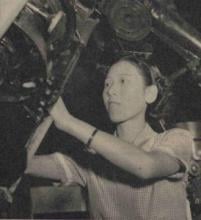
Haisako Koyama (1916 – 1997) was a Japanese solar observer whose dedication to recording sunspots – cooler parts of the sun’s surface that appear dark – produced a sunspot record of historic importance.
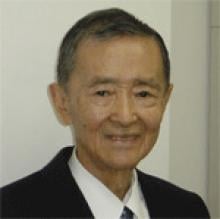
Michiaki Takahashi (17 February 1928 – 16 December 2013) was a Japanese virologist who developed the first chickenpox vaccine.

Toshiko Yuasa (11 December 1909 – 1 February 1980) was the first Japanese female physicist whose research on radioactivity shed light on beta decay – the process in which an atom emits a beta particle (electron) and turns into a different element.

Angelita Castro Kelly (1942-2015) was the first female Mission Operations Manager (MOM) of NASA. She spearheaded and supervised the Earth Observing System missions during its developmental stage.
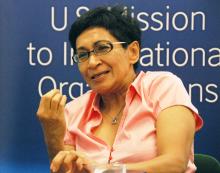
Malaysia’s first astrophysicist, Mazlan binti Othman (born 11 December 1951) was instrumental in launching the country’s first microsatellite, and in sending Malaysia’s first astronaut, Sheikh Muszaphar Shukor, into space.

Bibha Chowdhuri (1913 – 2 June 1991) was an Indian physicist who researched on particle physics and cosmic rays. In 1936, she was the only female to complete a M.Sc. degree at the University of Calcutta.
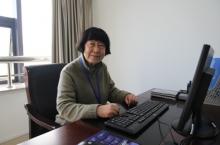
Meemann Chang (born 17 April 1936) is a Chinese palaeontologist who studied the fossils of ancient fish to understand the evolution of life. By examining fossils, she uncovered new insights on how vertebrates, animals with a backbone, migrated from the sea and became adapted to live on land.
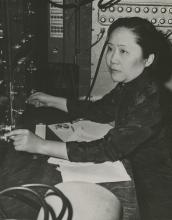
Chien-Shiung Wu (31 May 1912 – 16 February 1997) was an experimental physicist who made several important contributions to nuclear physics. Wu worked on the Manhattan Project – a top-secret program for the production of nuclear weapons during World War II and helped to develop a process for separating uranium into U235 and U238.

Hitoshi Kihara (1893 – 1986) was one of the most famous Japanese geneticists of the 20th century. One of his most significant contributions was identifying sex chromosomes (X and Y) in flowering plants.
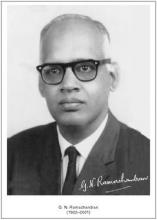
Gopalasamudram Narayanan Ramachandran (8 October 1922 – 7 April 2001) is best known for developing the Ramachandran plot to understand the structure of short chains of amino acids, known as peptides.
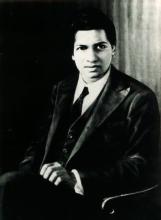
Srinivasa Ramanujan (22 December 1887 – 26 April 1920) was a math prodigy and widely considered one of India’s greatest mathematicians. Despite having almost no formal training in mathematics, he made substantial contributions to mathematical analysis, number theory, infinite series and continued fractions.
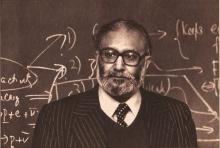
Mohammad Abdus Salam (29 January 1926 – 21 November 1996) was a theoretical physicist and the first Pakistani to receive a Nobel Prize in science.
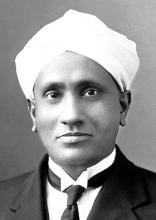
Sir Chandrasekhara Venkata Raman (7 November 1888 – 21 November 1970) was an Indian physicist who performed ground-breaking research in the field of light-scattering.
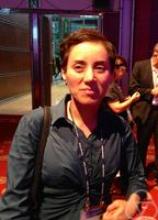
Mathematician Maryam Mirzakhani (12 May 1977 – 14 July 2017) was the first and only woman and Iranian to date to win the Fields Medal in 2014 for her work on curved surfaces.
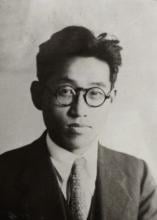
Joo-myung Seok (November 13, 1908 – October 6, 1950) was a Korean butterfly entomologist who made important contributions to the taxonomy of the native butterfly species in Korea.
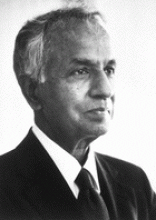
Subrahmanyan Chandrasekhar (19 October 1910 – 21 August 1995) was an Indian astrophysicist who studied the structure and evolution of stars.
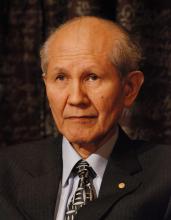
Osamu Shimomura (27 August 1928 – 19 October 2018) was a Japanese organic chemist and marine biologist who dedicated his career to understanding how organisms emitted light.
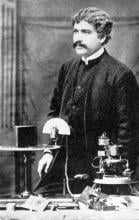
Sir Jagadish Chandra Bose (30 November 1858 – 23 November 1937) was a scientist and inventor who contributed to a wide range of scientific fields such as physics, botany and biology.
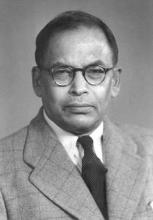
Meghnad Saha (6 October 1893 – 16 February 1956) was an Indian astrophysicist best known for formulating the Saha ionization equation which describes the chemical and physical properties of stars.
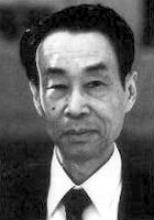
Motoo Kimura (13 November 1924 – 13 November 1994) was a Japanese theoretical population geneticist who is best remembered for developing the neutral theory of molecular evolution.

Chika Kuroda (24 March 1884 – 8 November 1968) was a Japanese chemist whose research focussed on the structures of natural pigments.
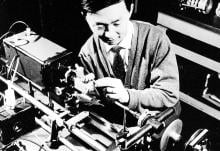
Charles Kuen Kao (Nov. 4, 1933 to Sept. 23, 2018) was an engineer who is regarded as the father of fibre optics. His work in the 1960s on long distance signal transmission using very pure glass fibres revolutionized telecommunications, enabling innovations such as the Internet.
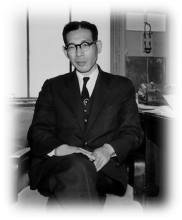
The field of solid-state ionics originated in Europe, but Takehiko Takahashi of Nagoya University in Japan was the first to coin the term ‘solid ionics’ in 1967. ‘Solid-state ionics’ first appeared in 1971 in another of his papers, and was likely a play on ‘solid-state electronics’, another rapidly growing field at the time.
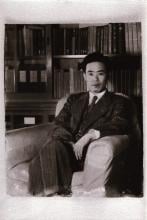
Japanese physicist Ukichiro Nakaya (1900-1962) made the world’s first artificial snowflakes. He started his research on snow crystals in the early 1930s at Hokkaido University, where there is an unlimited supply of natural snow in winter. By taking over 3,000 photographs, he established a classification of natural snow crystals and described their relationship with weather conditions.
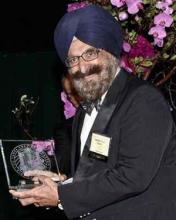
Physicist Narinder Singh Kapany (31 October 1926 – 4 December 2020) pioneered the use of optical fibres to transmit images, and founded several optical technology companies. Born in Punjab, India, he worked at a local optical instruments factory before moving to London for PhD studies at Imperial College. There, he devised a flexible fibrescope to convey images along bundles of glass fibres.
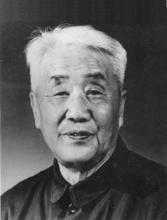
Chinese palaeontologist, archaeologist and anthropologist Pei Wenzhong (January 19, 1904 – September 18, 1982) is regarded as a founder of Chinese anthropology.
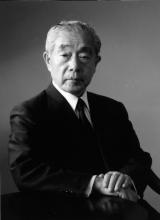
Japanese chemist Kenichi Fukui (4 October 1918 – 9 January 1998) was the first Asian scientist to be awarded the Nobel Prize in Chemistry. Together with Roald Hoffman, he received this honour in 1981 for his independent research into the mechanisms of chemical reactions.
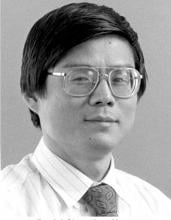
South Korean theoretical physicist Daniel Chonghan Hong (3 March 1956 – 6 July 2002) achieved fame in the public sphere through his research into the physics of popcorn.
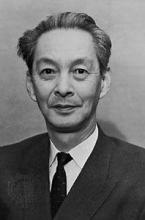
Shinichiro Tomonaga (31 March 1906 – 8 July 1979), together with Richard Feynman and Julian Schwinger, was awarded the Nobel Prize in Physics in 1965, for their contributions to advance the field of quantum electrodynamics. Tomonaga was also a strong proponent of peace, who actively campaigned against the proliferation of nuclear weapons and promoted the peaceful use of nuclear energy.
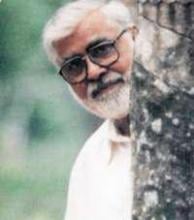
Known as Mr. Natural Rubber, chemist and researcher B. C. Shekhar (17 November 1929 – 6 September 2006) introduced a number of technical innovations that helped put Malaysia’s natural rubber industry on the world map.

Lin Lanying (7 February 1918 – 4 March 2003) was a Chinese material engineer remembered for her contributions to the field of semiconductor and aerospace materials. Lanying was born into a family who did not believe in educating girls and she was not allowed to go to school.
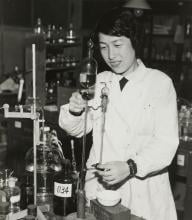
Japanese geochemist Katsuko Saruhashi developed the first method and tools for measuring carbon dioxide in seawater