

Science
News
27 Jun 2022
Tohoku University
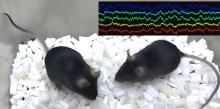
A collaborative research group has discovered electrical brain-wave patterns given off during social interactions in mice. They also observed that mice showing signs of stress, depression, or autism lacked these brain waves. The results reveal more about the mechanics underlying brain activity when socializing.
27 Jun 2022
Ehime University
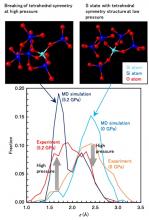
Understanding the structural origin of the anomalous properties of SiO2 liquid and glass is of great interest in a wide range of scientific fields. The fraction of the S state with tetrahedral symmetry structure is considered to be the controlling parameter of the anomalous properties of SiO2 liquid in theoretical studies. However, it has not been well identified in experiments. In this work, we find experimental evidence of tetrahedral symmetry breaking in SiO2 glass under pressure.
24 Jun 2022
The University of Osaka
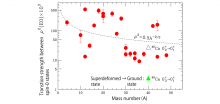
An international team led by Osaka University used experimental measurements and theoretical modeling to better understand the shape formed by the protons and neutrons in the atomic nucleus of calcium-40. They found that destructive interference affects the mixture of elongated and spherical states. This research may help shed light on the reasons for the relative stability of atomic nuclei and how they are formed.

22 Jun 2022
Asia Research News
New dinosaur species used claws to graze along the coast, More accurate rainfall predictions, Magnetism helps futuristic cell research, Do compression garments facilitate muscle recovery? Science journalism and why it matters for democracy and our Image of the month. Read all in the June's Editor's Choice and this month's Asia Research News 2022 magazine pick - Lessons from the dead.

21 Jun 2022
Osaka Metropolitan University
Osaka Metropolitan University scientists detected, for the first time, collective resonance at remarkably high and broad frequency bands. In a magnetic superstructure called a chiral spin soliton lattice (CSL), they found that resonance could occur at such frequencies with small changes in magnetic field strength. The findings suggest CSL-hosting chiral helimagnets as promising materials for future communication technologies.
21 Jun 2022
DOST Advanced Science and Technology Institute
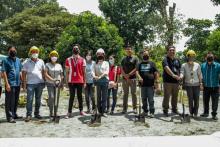
Resilient Education Information Infrastructure for the New Normal (REIINN) project broke ground for the second LokaLTE Base Station on 14 June 2022, commencing the tower's construction in Looc Integrated School, Castillejos, Zambales.
18 Jun 2022
Institute for Integrated Cell-Material Sciences (iCeMS) at Kyoto University
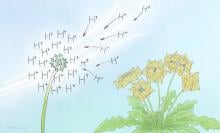
The molecule is unusual and has ‘great potential’ in catalysis, conduction and other applications.
17 Jun 2022
Osaka Metropolitan University
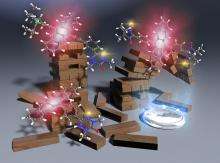
A research group led by Professor Yoshio Teki of the Osaka Metropolitan University Graduate School of Engineering has succeeded in developing a new pentacene derivative that is more than 100 times more photostable than TIPS-pentacene, a photostable pentacene derivative. Additionally, the team has further clarified the ultrafast excited state dynamics in this system. In the pentacene moiety of this system, we were able to demonstrate that the transition from the excited singlet state to the excited triplet state occurs ultrafast in the time region of a 10-13 seconds. In purely organic materials without heavy atoms such as rare metals, such intersystem crossing usually occurs on time scales longer than 10-9 seconds. The empirical results of this study are expected to be applied as a method for stabilizing and developing light-unstable materials in the future.
16 Jun 2022
Hokkaido University
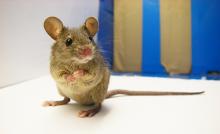
Scientists have revealed the genetic structure and diversity, and inferred the population history, of the wild house mouse across Europe and Asia.
09 Jun 2022
Asia Research News
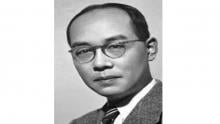
Giants in History: Hideki Yukawa (23 January 1907 – 8 September 1981) was awarded the Nobel Prize in Physics in 1949 for predicting the existence of the pi meson subatomic particle
08 Jun 2022
Kanazawa University
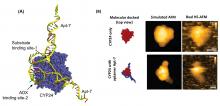
Researchers at Kanazawa University in collaboration with teams from Toyama Prefectural University and BioSeeds Corporation report in ACS Applied Materials & Interfaces the identification of a molecule with enhanced antiproliferative activity in cancer cells. The underlying biomolecular mechanism is the inhibition of an enzyme that is overproduced in several types of cancer.
07 Jun 2022
Ehime University
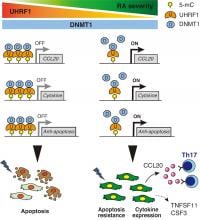
Potential of a novel therapeutic strategy for rheumatoid arthritis by UHRF1 stabilization
We identified an epigenetic regulator UHRF1 that suppresses various pathogeneses in rheumatoid arthritis. The UHRF1 expression level in synovium showed a negative correlation with the severity of pathogenesis in patients with rheumatoid arthritis and mouse arthritis models. In addition, stabilization of the UHRF1 expression achieved improvement of the arthritis pathology. Our results indicate that the stabilization of the UHRF1 protein is a potential therapeutic strategy for rheumatoid arthritis patients.

06 Jun 2022
Institute of Industrial Science, The University of Tokyo (UTokyo-IIS)
Researchers at the Institute of Industrial Science, The University of Tokyo studied the anomalous properties of amorphous solids, including glasses, using computer simulations, and found a common vibrational mechanism underlying them, which may help control the glass properties
05 Jun 2022
Newcastle University in Singapore
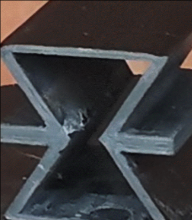
An international team of researchers, co-led by Changfang Zhao, from Nanjing University of Science and Technology, and Kheng Lim Goh (Newcastle University in Singapore), has developed a novel lightweight, high toughness auxetic structure made from plastic composite laminates. The auxetic structure may be used for constructing primary structures in the transport industry, such as electric vehicles, to maximize fuel efficiency.
03 Jun 2022
Hokkaido University
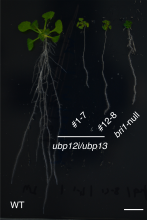
Scientists have revealed two enzymes that regulate protein degradation of proteins in the cell membrane of plants, and established the roles they play in plant growth and development.

03 Jun 2022
Kanazawa University
Tetraphenylammonium, with all four hydrogens of ammonium (NH4+) replaced with benzene rings, has neither been discovered in nature nor chemically synthesized, calling into question whether it could exist. Here, we succeeded in synthesizing tetraphenylammonium for the first time, demonstrating its stable existence. The synthetic strategy used in this study, radical coupling, may be applicable to the synthesis of various related ammoniums with high structural novelty.
02 Jun 2022
Asia Research News
Giants in History: Known for her pioneering contributions to bio-organic chemistry, Darshan Ranganathan (4 June 1941 – 4 June 2001) is considered India’s most prolific chemist.
31 May 2022
Hokkaido University
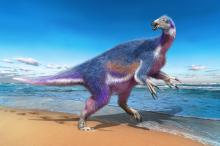
Scientists have described the youngest therizinosaur fossil from Japan and the first in Asia to have been found in marine sediments.
31 May 2022
Osaka Metropolitan University
Dr. Nishikawa at Osaka Metropolitan University focused on the Kondo effect on minimal ferrimagnetism and attempted to elucidate it theoretically. As a result, they found that the Kondo effect occurred via multiple "quantum entangled states" depending on temperature and other factors. They also found that the Kondo effect suppressed electrical conductivity through minimal ferrimagnetism, when usually it is amplified in many other cases.
26 May 2022
Hiroshima University
Researchers in Japan demonstrated the benefits of a new non-radioactive, neutral negative staining reagent by imaging viruses at nanometer-scale.
26 May 2022
Asia Research News
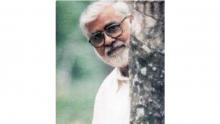
Giants in History: Known as Mr. Natural Rubber, chemist and researcher B. C. Shekhar (17 November 1929 – 6 September 2006) introduced a number of technical innovations that helped put Malaysia’s natural rubber industry on the world map.
19 May 2022
Hokkaido University
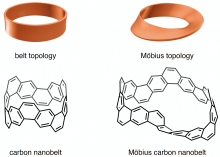
Scientists have synthesized the first belt-shaped molecular nanocarbon with a twisted Möbius band topology—a Möbius carbon nanobelt—that paves the way for the development of nanocarbon materials with complex topological structures.
19 May 2022
Institute for Integrated Cell-Material Sciences (iCeMS) at Kyoto University
Structural color printing creates new pathways for medical diagnostics and miniaturized sensors
19 May 2022
Asia Research News
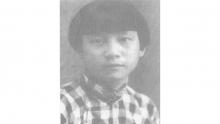
Giants in History: Palaeontologist Yichun Hao (1920 – 2001) co-authored the first Chinese textbooks on palaeontology and micropalaeontology.

16 May 2022
Osaka Metropolitan University
Researchers from the Osaka Metropolitan University Graduate School of Engineering have successfully developed a new technique allowing them to observe gas molecules packing into metal-organic frameworks (MOF) using infrared spectroscopy. Their innovation was to measure polarized light absorption of guest molecules in a MOF film to deduce molecule alignment using this common piece of lab equipment. This method is the first to show guest alignment and does so in real-time, while using an accessible and easily adoptable experimental setup. A short video (4 min) recreating their spectrometer modifications can be found in the Reference section.
13 May 2022
Institute of Industrial Science, The University of Tokyo (UTokyo-IIS)
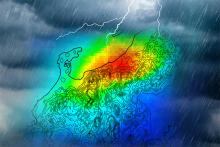
Researchers from the Institute of Industrial Science, The University of Tokyo, develop a novel method for more accurate prediction of local rainfall patterns
13 May 2022
Osaka Metropolitan University
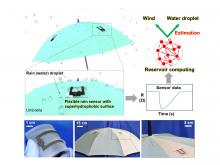
The new multi-tasking weather sensor simultaneously measures rain volume and wind speed. Incorporating machine learning to analyze the output data, a single sensor can provide localized weather data in a timely manner, improving disaster preparedness.

13 May 2022
Asia Research News
Molecular robots work cooperatively in swarms, LED lights made from rice husk, Muonic x-rays safely see inside samples, Making a luminescent material shine brighter and How to counter vaccine hesitancy, Read all in the May Editor's Choice and this month's Asia Research News 2022 magazine pick - Absorbing impact: Inside the Head of a Woodpecker.
12 May 2022
Asia Research News
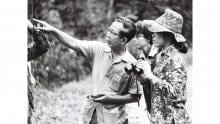
Giants in History: Thai physician and conservationist Boonsong Lekagul (15 December 1907 – 9 February 1992) made major contributions to the preservation of his country’s wildlife by founding organizations including the Association for the Conservation of Wildlife (ACW), writing about Thailand’s natural heritage, and supporting conservation initiatives.
05 May 2022
Asia Research News
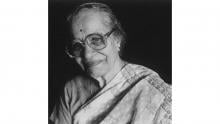
Giants in History: Ground-breaking cancer researcher Kamal Jayasing Ranadive (8 November 1917 – 11 April 2001) advanced the understanding of the causes of leukaemia, breast cancer and oesophageal cancer through the use of animal models.
Giants in history

Chinese-American physicist Tsung-Dao Lee (24 November 1926 – 4 August 2024) was awarded the Nobel Prize for Physics in 1957 together with Chen-Ning Yang for their work challenging the symmetry law in subatomic particles. They were the first Chinese Nobel prize winners, with Lee becoming the second-youngest laureate. Born in Shanghai, he went to the United States on scholarship and studied under another Nobel winner, Enrico Fermi.

Turkish astrophysicist Dilhan Eryurt (29 November 1926 – 13 September 2012) conducted research on how the sun affects environmental conditions on the moon.
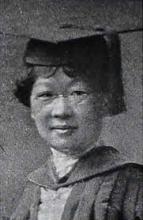
Chinese biochemist Chi Che Wang (1894 - 1979), one of the first Chinese women to study abroad, advanced to prominent research positions at American institutions including the University of Chicago and the Northwestern University Medical School.
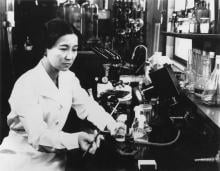
Ruby Sakae Hirose (1904 – 1960) was a Japanese-American scientist whose research contributed significantly to our understanding of blood clotting, allergies and cancer.
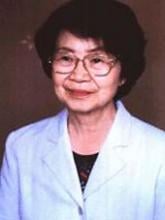
Chinese electron microscopy specialist Li Fanghua (6 January 1932 – 24 January 2020) facilitated the high-resolution imaging of crystal structures by eliminating interference.
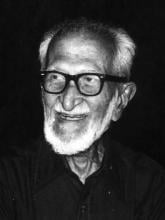
Sálim Moizuddin Abdul Ali (12 November 1896 – 20 June 1987), commonly referred to as the Birdman of India, was the first person to conduct systematic surveys of birds from across India.
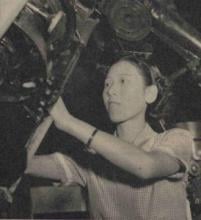
Haisako Koyama (1916 – 1997) was a Japanese solar observer whose dedication to recording sunspots – cooler parts of the sun’s surface that appear dark – produced a sunspot record of historic importance.
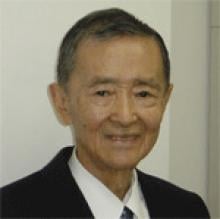
Michiaki Takahashi (17 February 1928 – 16 December 2013) was a Japanese virologist who developed the first chickenpox vaccine.
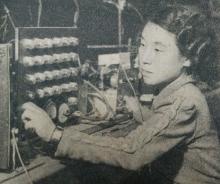
Toshiko Yuasa (11 December 1909 – 1 February 1980) was the first Japanese female physicist whose research on radioactivity shed light on beta decay – the process in which an atom emits a beta particle (electron) and turns into a different element.

Angelita Castro Kelly (1942-2015) was the first female Mission Operations Manager (MOM) of NASA. She spearheaded and supervised the Earth Observing System missions during its developmental stage.
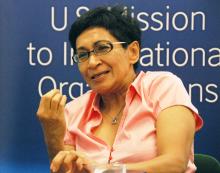
Malaysia’s first astrophysicist, Mazlan binti Othman (born 11 December 1951) was instrumental in launching the country’s first microsatellite, and in sending Malaysia’s first astronaut, Sheikh Muszaphar Shukor, into space.

Bibha Chowdhuri (1913 – 2 June 1991) was an Indian physicist who researched on particle physics and cosmic rays. In 1936, she was the only female to complete a M.Sc. degree at the University of Calcutta.
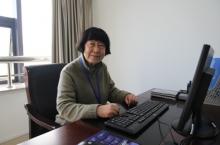
Meemann Chang (born 17 April 1936) is a Chinese palaeontologist who studied the fossils of ancient fish to understand the evolution of life. By examining fossils, she uncovered new insights on how vertebrates, animals with a backbone, migrated from the sea and became adapted to live on land.
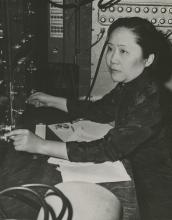
Chien-Shiung Wu (31 May 1912 – 16 February 1997) was an experimental physicist who made several important contributions to nuclear physics. Wu worked on the Manhattan Project – a top-secret program for the production of nuclear weapons during World War II and helped to develop a process for separating uranium into U235 and U238.
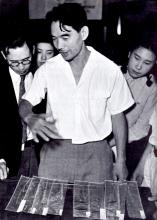
Hitoshi Kihara (1893 – 1986) was one of the most famous Japanese geneticists of the 20th century. One of his most significant contributions was identifying sex chromosomes (X and Y) in flowering plants.
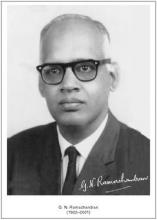
Gopalasamudram Narayanan Ramachandran (8 October 1922 – 7 April 2001) is best known for developing the Ramachandran plot to understand the structure of short chains of amino acids, known as peptides.
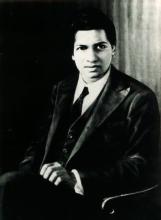
Srinivasa Ramanujan (22 December 1887 – 26 April 1920) was a math prodigy and widely considered one of India’s greatest mathematicians. Despite having almost no formal training in mathematics, he made substantial contributions to mathematical analysis, number theory, infinite series and continued fractions.
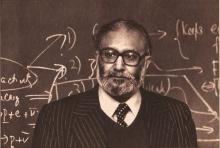
Mohammad Abdus Salam (29 January 1926 – 21 November 1996) was a theoretical physicist and the first Pakistani to receive a Nobel Prize in science.
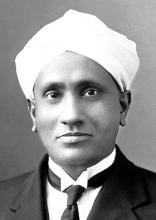
Sir Chandrasekhara Venkata Raman (7 November 1888 – 21 November 1970) was an Indian physicist who performed ground-breaking research in the field of light-scattering.
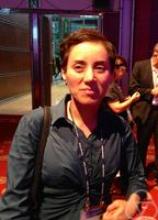
Mathematician Maryam Mirzakhani (12 May 1977 – 14 July 2017) was the first and only woman and Iranian to date to win the Fields Medal in 2014 for her work on curved surfaces.
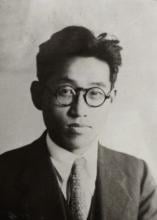
Joo-myung Seok (November 13, 1908 – October 6, 1950) was a Korean butterfly entomologist who made important contributions to the taxonomy of the native butterfly species in Korea.
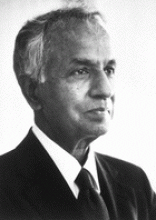
Subrahmanyan Chandrasekhar (19 October 1910 – 21 August 1995) was an Indian astrophysicist who studied the structure and evolution of stars.
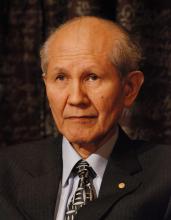
Osamu Shimomura (27 August 1928 – 19 October 2018) was a Japanese organic chemist and marine biologist who dedicated his career to understanding how organisms emitted light.
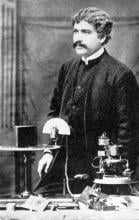
Sir Jagadish Chandra Bose (30 November 1858 – 23 November 1937) was a scientist and inventor who contributed to a wide range of scientific fields such as physics, botany and biology.
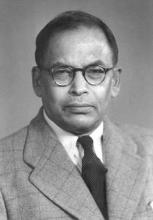
Meghnad Saha (6 October 1893 – 16 February 1956) was an Indian astrophysicist best known for formulating the Saha ionization equation which describes the chemical and physical properties of stars.
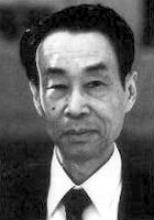
Motoo Kimura (13 November 1924 – 13 November 1994) was a Japanese theoretical population geneticist who is best remembered for developing the neutral theory of molecular evolution.

Chika Kuroda (24 March 1884 – 8 November 1968) was a Japanese chemist whose research focussed on the structures of natural pigments.
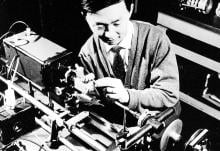
Charles Kuen Kao (Nov. 4, 1933 to Sept. 23, 2018) was an engineer who is regarded as the father of fibre optics. His work in the 1960s on long distance signal transmission using very pure glass fibres revolutionized telecommunications, enabling innovations such as the Internet.
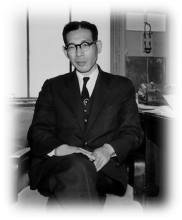
The field of solid-state ionics originated in Europe, but Takehiko Takahashi of Nagoya University in Japan was the first to coin the term ‘solid ionics’ in 1967. ‘Solid-state ionics’ first appeared in 1971 in another of his papers, and was likely a play on ‘solid-state electronics’, another rapidly growing field at the time.
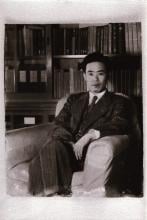
Japanese physicist Ukichiro Nakaya (1900-1962) made the world’s first artificial snowflakes. He started his research on snow crystals in the early 1930s at Hokkaido University, where there is an unlimited supply of natural snow in winter. By taking over 3,000 photographs, he established a classification of natural snow crystals and described their relationship with weather conditions.
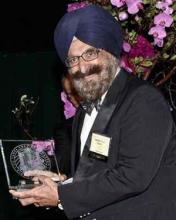
Physicist Narinder Singh Kapany (31 October 1926 – 4 December 2020) pioneered the use of optical fibres to transmit images, and founded several optical technology companies. Born in Punjab, India, he worked at a local optical instruments factory before moving to London for PhD studies at Imperial College. There, he devised a flexible fibrescope to convey images along bundles of glass fibres.
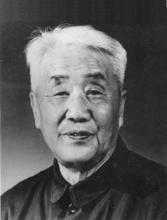
Chinese palaeontologist, archaeologist and anthropologist Pei Wenzhong (January 19, 1904 – September 18, 1982) is regarded as a founder of Chinese anthropology.
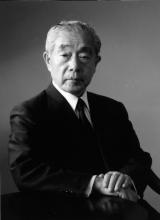
Japanese chemist Kenichi Fukui (4 October 1918 – 9 January 1998) was the first Asian scientist to be awarded the Nobel Prize in Chemistry. Together with Roald Hoffman, he received this honour in 1981 for his independent research into the mechanisms of chemical reactions.
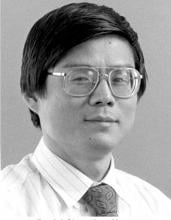
South Korean theoretical physicist Daniel Chonghan Hong (3 March 1956 – 6 July 2002) achieved fame in the public sphere through his research into the physics of popcorn.
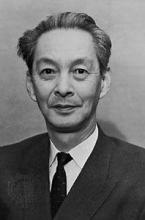
Shinichiro Tomonaga (31 March 1906 – 8 July 1979), together with Richard Feynman and Julian Schwinger, was awarded the Nobel Prize in Physics in 1965, for their contributions to advance the field of quantum electrodynamics. Tomonaga was also a strong proponent of peace, who actively campaigned against the proliferation of nuclear weapons and promoted the peaceful use of nuclear energy.
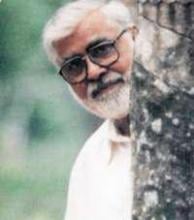
Known as Mr. Natural Rubber, chemist and researcher B. C. Shekhar (17 November 1929 – 6 September 2006) introduced a number of technical innovations that helped put Malaysia’s natural rubber industry on the world map.

Lin Lanying (7 February 1918 – 4 March 2003) was a Chinese material engineer remembered for her contributions to the field of semiconductor and aerospace materials. Lanying was born into a family who did not believe in educating girls and she was not allowed to go to school.
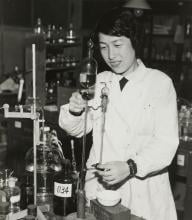
Japanese geochemist Katsuko Saruhashi developed the first method and tools for measuring carbon dioxide in seawater