

Science
News
20 Dec 2021
Horizon Journals
We are pleased to announce that the DEC 2021 issue of the Journal of Humanities & Social Sciences Research (JHSSR), Vol. 3 (2) Dec. 2021 has been published ahead of time on 30 Nov 2021 and is now live at the Journal’s web page. We invite you to explore the seventh issue of our Journal of Humanities & Social Sciences Research with excellent essays.
17 Dec 2021
Hiroshima University
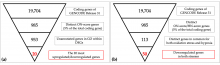
Researchers are closer to understanding potential common features of sources of oxidative stress observed in several diseases, from Parkinson’s disease to cancer.

16 Dec 2021
Institute for Integrated Cell-Material Sciences (iCeMS) at Kyoto University
In a study published in Nature Energy this month, researchers led by Kyoto University’s Institute for Integrated Cell-Material Sciences (iCeMS) describe how nanodiamond-reinforced composite membranes can purify hydrogen from its humid mixtures, making the hydrogen generation processes vastly more efficient and cost-effective.
16 Dec 2021
Singapore University of Technology and Design
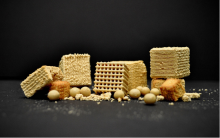
Okara, a soybean byproduct, can now be 3D printed without any additives, boosting food sustainability efforts.
15 Dec 2021
Duke-NUS Medical School
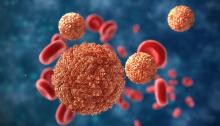
Zika virus infection hijacks glucose metabolism for its own good and to the detriment of infected foetuses.
15 Dec 2021
Tohoku University
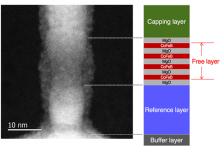
A research group has shown that fast switching down to 3.5 ns in sub-five-nm ultra-small magnetic tunnel junctions can be achieved by engineering relaxation time. The new technology is expected to lead to the replacement of high-speed DRAM with spintronic non-volatile memory.
13 Dec 2021
Hokkaido University
The Akira Suzuki Award and the ICReDD Award, both sponsored by the Tosoh Corporation, were established in 2021 by the Akira Suzuki Award Organizing Committee, led by professors at the Institute for Chemical Reaction Design and Discovery (ICReDD), in commemoration of Professor Akira Suzuki’s winning of the 2010 Nobel Prize in Chemistry and in celebration of his 90th birthday.

09 Dec 2021
Kanazawa University
Using data on electromagnetic (EM) waves and plasma particles measured simultaneously via multiple satellites, an international collaborative research group has discovered the existence of invisible “propagation path” of EM waves and elucidated the mechanism by which EM waves propagate to the ground.

09 Dec 2021
Asia Research News
Micro-plastics cross blood brain barrier, Stomach cancer atlas, Omicron variant isolated, 120-year-old reaction turned on its head and Reporting through the coup, all in the December Editor's Choice. Plus our latest podcast: Decentralization and Democracy in Myanmar.
09 Dec 2021
Asia Research News
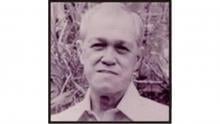
Julian Arca Banzon (13 March 1908 – 13 September 1988) was a biochemist from the Philippines who was a pioneer in alternative fuel research.
03 Dec 2021
Hokkaido University
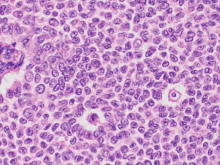
Examination of Japanese cases of gynecological cancer offers a better understanding of the profile of a rare ovarian tumor and could change treatment guidelines.
02 Dec 2021
Institute of Industrial Science, The University of Tokyo (UTokyo-IIS)
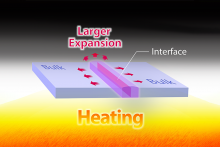
Researchers from the The University of Tokyo Institute of Industrial Science use electron energy loss spectroscopy to understand local thermal behavior at grain boundaries in polycrystals
29 Nov 2021
Hokkaido University
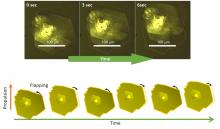
Synthesized microrobots that are capable of converting their mechanical motion into a means of self-propulsion in water have been developed by scientists at Hokkaido University.
29 Nov 2021
Osaka Prefecture University
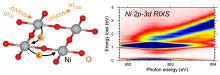
In 2019, a new superconductor was discovered amongst the nickelates (nickel-based oxides), but only now have the underlying physical and chemical similarities with their Periodic-Table twin superconductors, the cuprates, been identified.
25 Nov 2021
Asia Research News
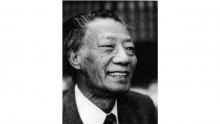
Giants in History: Min Chueh Chang (10 October 1908 – 5 June 1991) was a Chinese-American biologist who studied fertilization in mammalian reproduction.
22 Nov 2021
Daegu Gyeongbuk Institute of Science and Technology (DGIST)
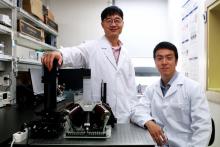
The joint research team of Prof. Hongsoo Choi(DGIST) & Prof. Sung Won Kim(Seoul St. Mary’s Hospital), developed an hNTSC-based microrobot for minimally invasive delivery into the brain tissue via the intranasal pathway
18 Nov 2021
Hokkaido University
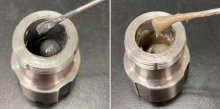
A new method for creating one of chemistry’s most widely used class of compounds could revolutionize industrial processes, making them cheaper, simpler and more environmentally friendly.
18 Nov 2021
Hokkaido University
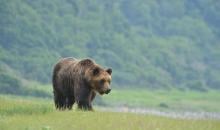
Surveys have revealed an upward trend in the number of brown bears over the past three decades in Hokkaido, Japan's northernmost island. Researchers at Hokkaido University have been investigating the causes and implications of the increase.
18 Nov 2021
Asia Research News
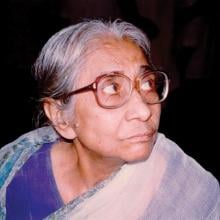
Giants in History: Indian organic chemist Asima Chatterjee (1917 to 2006) studied the medicinal properties of plant products, especially compounds known as vinca alkaloids.
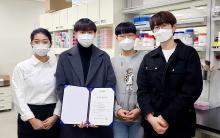
09 Nov 2021
Daegu Gyeongbuk Institute of Science and Technology (DGIST)
Researchers from DGIST explore the role of symbiotic skin bacteria in wound healing for different fish species
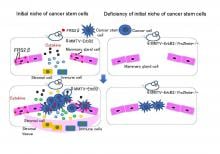
08 Nov 2021
Kanazawa University
We have clarified at the molecular level the mechanism by which a microenvironment, a so-called niche that surrounds cancer cells, is formed in which stromal cells and immune cells are attracted at an initiation stage of breast cancer onset. A molecule called FRS2β is found to be critical for creating this microenvironment. The present finding is expected to be beneficial in prevention, diagnosis and treatment of cancers at the initiation stage.

05 Nov 2021
Asia Research News
Quick seawater test may reveal health of corals, Infectious disease caused by a new nairovirus, Converting CO2 into useful compounds and Automated COVID-19 diagnosis from chest scans all in the November Editor's Choice. Plus our latest podcast: Gender and Conflict in Myanmar.

04 Nov 2021
Asia Research News
Giants in History: Chinese physicist Xie Xide (19 March 1921 – 4 March 2000) was an influential educator and one of China’s pioneer researchers of solid-state physics.
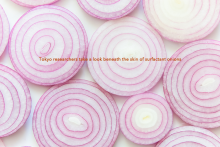
02 Nov 2021
Institute of Industrial Science, The University of Tokyo (UTokyo-IIS)
Researchers from The University of Tokyo Institute of Industrial Science use optical microscopy to form a picture of what’s really going on inside surfactant onions
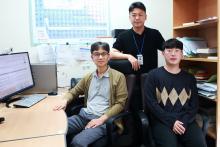
29 Oct 2021
Daegu Gyeongbuk Institute of Science and Technology (DGIST)
Scientists demonstrate that diluting high concentration electrolytes can improve the cycling abilities of lithium metal batteries over a wide range of temperatures

29 Oct 2021
Institute of Industrial Science, The University of Tokyo (UTokyo-IIS)
Researchers from The University of Tokyo Institute of Industrial Science find that drones may be the next generation of communication bases to monitor the ocean and seafloor because of their high-speed positioning, stability, and efficiency.
28 Oct 2021
Osaka Prefecture University
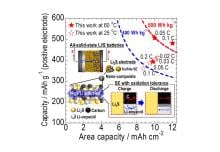
Researchers succeed in developing a lithium sulfide cathode containing a solid electrolyte with high decomposition resistance, enabling the realization of all-solid-state lithium-sulfur batteries that exceed the energy density of lithium-ion batteries
28 Oct 2021
Osaka Prefecture University
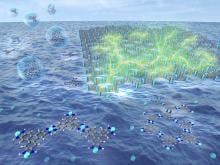
Spontaneous wide-area spreading of oil on water inspires a facile energy-saving route of crafting electrically conductive nanostructures for future sensor/energy devices

28 Oct 2021
Asia Research News
Giants in History: Maqsudul Alam (14 December 1954 – 20 December 2014) was a biologist from Bangladesh who is renowned for his research on genome sequencing.
25 Oct 2021
Hong Kong Baptist University (HKBU)
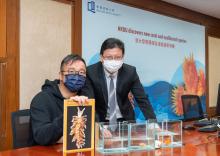
Biologists from Hong Kong Baptist University (HKBU) have discovered in Hong Kong waters a new species of hard coral and two new species of nudibranch, a type of marine mollusc, that have never been identified anywhere else in the world. The discoveries of new species from these commonly seen animal groups are a vivid reflection of Hong Kong’s rich marine biodiversity.
Giants in history

Chinese-American physicist Tsung-Dao Lee (24 November 1926 – 4 August 2024) was awarded the Nobel Prize for Physics in 1957 together with Chen-Ning Yang for their work challenging the symmetry law in subatomic particles. They were the first Chinese Nobel prize winners, with Lee becoming the second-youngest laureate. Born in Shanghai, he went to the United States on scholarship and studied under another Nobel winner, Enrico Fermi.

Turkish astrophysicist Dilhan Eryurt (29 November 1926 – 13 September 2012) conducted research on how the sun affects environmental conditions on the moon.
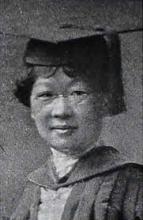
Chinese biochemist Chi Che Wang (1894 - 1979), one of the first Chinese women to study abroad, advanced to prominent research positions at American institutions including the University of Chicago and the Northwestern University Medical School.
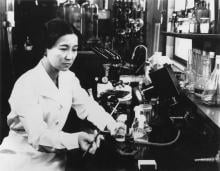
Ruby Sakae Hirose (1904 – 1960) was a Japanese-American scientist whose research contributed significantly to our understanding of blood clotting, allergies and cancer.
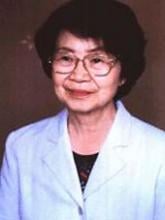
Chinese electron microscopy specialist Li Fanghua (6 January 1932 – 24 January 2020) facilitated the high-resolution imaging of crystal structures by eliminating interference.
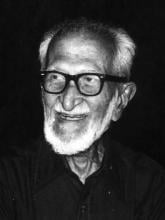
Sálim Moizuddin Abdul Ali (12 November 1896 – 20 June 1987), commonly referred to as the Birdman of India, was the first person to conduct systematic surveys of birds from across India.
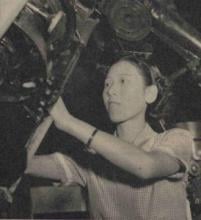
Haisako Koyama (1916 – 1997) was a Japanese solar observer whose dedication to recording sunspots – cooler parts of the sun’s surface that appear dark – produced a sunspot record of historic importance.
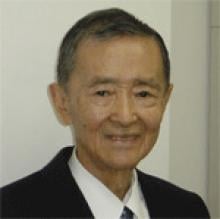
Michiaki Takahashi (17 February 1928 – 16 December 2013) was a Japanese virologist who developed the first chickenpox vaccine.
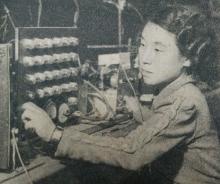
Toshiko Yuasa (11 December 1909 – 1 February 1980) was the first Japanese female physicist whose research on radioactivity shed light on beta decay – the process in which an atom emits a beta particle (electron) and turns into a different element.
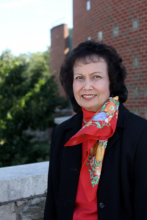
Angelita Castro Kelly (1942-2015) was the first female Mission Operations Manager (MOM) of NASA. She spearheaded and supervised the Earth Observing System missions during its developmental stage.
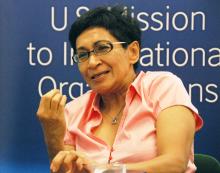
Malaysia’s first astrophysicist, Mazlan binti Othman (born 11 December 1951) was instrumental in launching the country’s first microsatellite, and in sending Malaysia’s first astronaut, Sheikh Muszaphar Shukor, into space.

Bibha Chowdhuri (1913 – 2 June 1991) was an Indian physicist who researched on particle physics and cosmic rays. In 1936, she was the only female to complete a M.Sc. degree at the University of Calcutta.
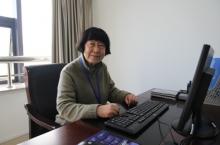
Meemann Chang (born 17 April 1936) is a Chinese palaeontologist who studied the fossils of ancient fish to understand the evolution of life. By examining fossils, she uncovered new insights on how vertebrates, animals with a backbone, migrated from the sea and became adapted to live on land.
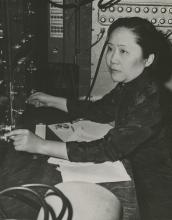
Chien-Shiung Wu (31 May 1912 – 16 February 1997) was an experimental physicist who made several important contributions to nuclear physics. Wu worked on the Manhattan Project – a top-secret program for the production of nuclear weapons during World War II and helped to develop a process for separating uranium into U235 and U238.
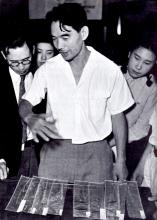
Hitoshi Kihara (1893 – 1986) was one of the most famous Japanese geneticists of the 20th century. One of his most significant contributions was identifying sex chromosomes (X and Y) in flowering plants.
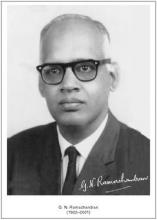
Gopalasamudram Narayanan Ramachandran (8 October 1922 – 7 April 2001) is best known for developing the Ramachandran plot to understand the structure of short chains of amino acids, known as peptides.
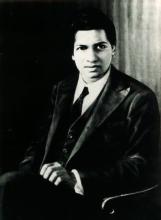
Srinivasa Ramanujan (22 December 1887 – 26 April 1920) was a math prodigy and widely considered one of India’s greatest mathematicians. Despite having almost no formal training in mathematics, he made substantial contributions to mathematical analysis, number theory, infinite series and continued fractions.
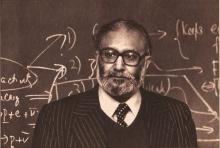
Mohammad Abdus Salam (29 January 1926 – 21 November 1996) was a theoretical physicist and the first Pakistani to receive a Nobel Prize in science.
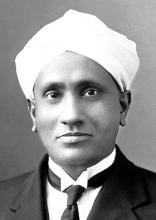
Sir Chandrasekhara Venkata Raman (7 November 1888 – 21 November 1970) was an Indian physicist who performed ground-breaking research in the field of light-scattering.
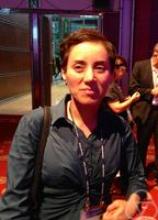
Mathematician Maryam Mirzakhani (12 May 1977 – 14 July 2017) was the first and only woman and Iranian to date to win the Fields Medal in 2014 for her work on curved surfaces.
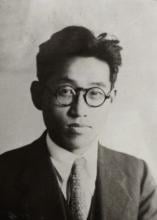
Joo-myung Seok (November 13, 1908 – October 6, 1950) was a Korean butterfly entomologist who made important contributions to the taxonomy of the native butterfly species in Korea.
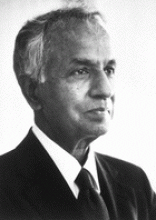
Subrahmanyan Chandrasekhar (19 October 1910 – 21 August 1995) was an Indian astrophysicist who studied the structure and evolution of stars.
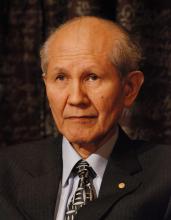
Osamu Shimomura (27 August 1928 – 19 October 2018) was a Japanese organic chemist and marine biologist who dedicated his career to understanding how organisms emitted light.
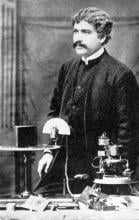
Sir Jagadish Chandra Bose (30 November 1858 – 23 November 1937) was a scientist and inventor who contributed to a wide range of scientific fields such as physics, botany and biology.
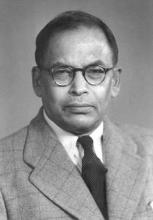
Meghnad Saha (6 October 1893 – 16 February 1956) was an Indian astrophysicist best known for formulating the Saha ionization equation which describes the chemical and physical properties of stars.
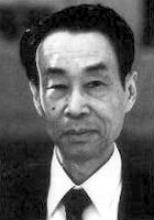
Motoo Kimura (13 November 1924 – 13 November 1994) was a Japanese theoretical population geneticist who is best remembered for developing the neutral theory of molecular evolution.

Chika Kuroda (24 March 1884 – 8 November 1968) was a Japanese chemist whose research focussed on the structures of natural pigments.
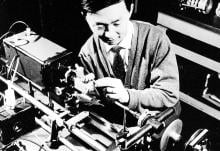
Charles Kuen Kao (Nov. 4, 1933 to Sept. 23, 2018) was an engineer who is regarded as the father of fibre optics. His work in the 1960s on long distance signal transmission using very pure glass fibres revolutionized telecommunications, enabling innovations such as the Internet.
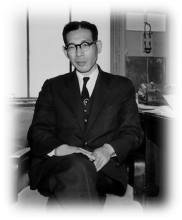
The field of solid-state ionics originated in Europe, but Takehiko Takahashi of Nagoya University in Japan was the first to coin the term ‘solid ionics’ in 1967. ‘Solid-state ionics’ first appeared in 1971 in another of his papers, and was likely a play on ‘solid-state electronics’, another rapidly growing field at the time.
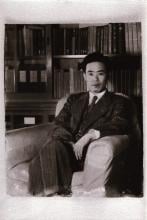
Japanese physicist Ukichiro Nakaya (1900-1962) made the world’s first artificial snowflakes. He started his research on snow crystals in the early 1930s at Hokkaido University, where there is an unlimited supply of natural snow in winter. By taking over 3,000 photographs, he established a classification of natural snow crystals and described their relationship with weather conditions.
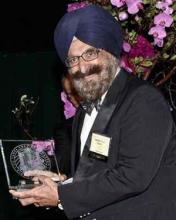
Physicist Narinder Singh Kapany (31 October 1926 – 4 December 2020) pioneered the use of optical fibres to transmit images, and founded several optical technology companies. Born in Punjab, India, he worked at a local optical instruments factory before moving to London for PhD studies at Imperial College. There, he devised a flexible fibrescope to convey images along bundles of glass fibres.
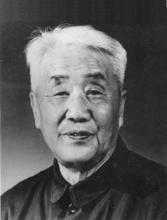
Chinese palaeontologist, archaeologist and anthropologist Pei Wenzhong (January 19, 1904 – September 18, 1982) is regarded as a founder of Chinese anthropology.
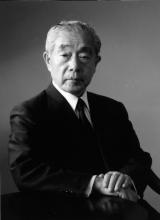
Japanese chemist Kenichi Fukui (4 October 1918 – 9 January 1998) was the first Asian scientist to be awarded the Nobel Prize in Chemistry. Together with Roald Hoffman, he received this honour in 1981 for his independent research into the mechanisms of chemical reactions.
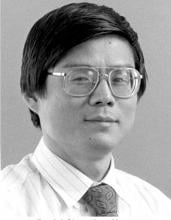
South Korean theoretical physicist Daniel Chonghan Hong (3 March 1956 – 6 July 2002) achieved fame in the public sphere through his research into the physics of popcorn.
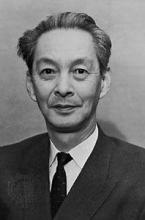
Shinichiro Tomonaga (31 March 1906 – 8 July 1979), together with Richard Feynman and Julian Schwinger, was awarded the Nobel Prize in Physics in 1965, for their contributions to advance the field of quantum electrodynamics. Tomonaga was also a strong proponent of peace, who actively campaigned against the proliferation of nuclear weapons and promoted the peaceful use of nuclear energy.
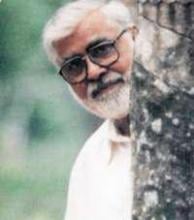
Known as Mr. Natural Rubber, chemist and researcher B. C. Shekhar (17 November 1929 – 6 September 2006) introduced a number of technical innovations that helped put Malaysia’s natural rubber industry on the world map.

Lin Lanying (7 February 1918 – 4 March 2003) was a Chinese material engineer remembered for her contributions to the field of semiconductor and aerospace materials. Lanying was born into a family who did not believe in educating girls and she was not allowed to go to school.
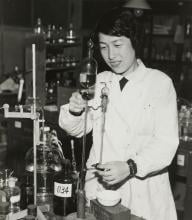
Japanese geochemist Katsuko Saruhashi developed the first method and tools for measuring carbon dioxide in seawater