
Science
News
22 Mar 2022
Australia's national science agency, CSIRO, will tackle Australia's plastic pollution problem, pledging to help Australia reduce 80 per cent of its plastic waste by the end of the decade.

17 Mar 2022
Asia Research News
Giants in History: Woo Jang-choon (8 April 1898 – 10 August 1959) was a Korean-Japanese agricultural scientist and botanist. Woo performed horticultural research, first in Japan, then in Korea.

16 Mar 2022
Asia Research News
Microgravity worms help solve astronaut muscle problems, CO2 recycling and drug development, Remote control of robot hand, Enabling the study of diverse Hepatitis B. Read all in the March's Editor's Choice and even more in the Asia Research News 2022 magazine.
15 Mar 2022
Earth-Life Science Institute (ELSI), Tokyo Institute of Technology
Unlike most traditional Japanese universities, the Earth-Life Science Institute (ELSI) at Tokyo Institute of Technology has created a ‘flat’ and diverse research environment. On its ten-year anniversary, Outgoing Director Kei Hirose shares what is special about the institute and the secret behind its successful management.
15 Mar 2022
Earth-Life Science Institute (ELSI), Tokyo Institute of Technology
The Earth-Life Science Institute (ELSI) based at Tokyo Institute of Technology will reach a turning point this year. For the first time in its 10-year history, it will extend the scope of its initial research theme, "The Origins and Evolution of the Earth and Life", to include searching for evidence of extra-terrestrial life. ELSI’s new director, Yasuhito Sekine, told Asia Research News what they hope to achieve in the next phase and how.
15 Mar 2022
Osaka City University
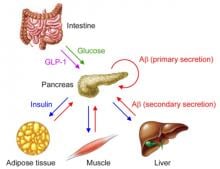
A research group has revealed that amyloid-β (Aβ) detected in blood is secreted from peripheral tissues (pancreas, adipose tissue, skeletal muscle, liver, etc.) that are sensitive to glucose and insulin. Also, that Aβ secreted from peripheral tissues acts as a regulator on pancreatic β-cells to suppress insulin secretion. The results of this study indicate that blood Aβ levels fluctuate significantly with diet, and special care should be taken when using blood samples as a diagnostic marker for Alzheimer's disease, such as taking blood samples during fasting.
14 Mar 2022
Kanazawa University
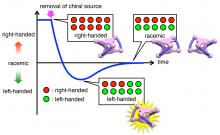
Researchers at Kanazawa University report in Proceedings of the National Academy of Sciences a responsive molecular system that, through chemical reactions, inverses its chirality before becoming racemic.
14 Mar 2022
Hokkaido University
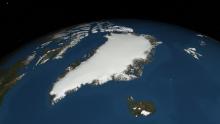
As a result of global warming in the 21st century, the Greenland ice sheet may contribute several metres to sea-level rise in the centuries to come; however, effective climate change mitigation measures will greatly reduce its decay.
14 Mar 2022
Kavli Institute for the Physics and Mathematics of the Universe (Kavli IPMU)
Mathematician Yukari Ito was excited at first to work from home. There was no need to commute to her office at the Kavli Institute for the Physics and Mathematics of the Universe, where she is professor, and she could attend seminars by mathematicians around the world from her living room. But there are also challenges, so she hopes some things will go back to the way they used to be.
14 Mar 2022
Hokkaido University
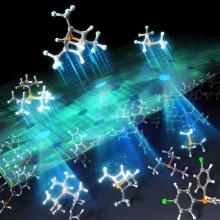
Researchers aim to streamline the time- and resource-intensive process of screening ligands during catalyst design by using virtual ligands.
12 Mar 2022
Hokkaido University
A recent summertime climate pattern could be driving co-occurring European heatwaves and large-scale wildfires over Siberia, Canada and Alaska.
10 Mar 2022
Tohoku University
The Global Navigation Satellite System associated with a Japanese cell phone carrier can enhance monitoring of crustal deformation changes for earthquake early warning models.
10 Mar 2022
Asia Research News
Giants in History: Roseli Ocampo-Friedmann (23 November 1937 – 4 September 2005) was a Filipino-American scientist whose research focused on cyanobacteria and microorganisms that inhabit extreme environments.
09 Mar 2022
Ehime University
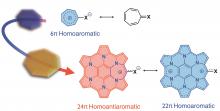
- New HPHAC analogues with an embedded nonbenzenoid aromatic ring have been synthesized.
- The newly synthesized HPHACs exhibit multistep redox properties and their dicationic species showed an aromatic nature based on macrocyclic conjugation.
- Methylation on the nonbenzenoid aromatic ring resulted in the development of "antiaromaticity".
08 Mar 2022
Hokkaido University
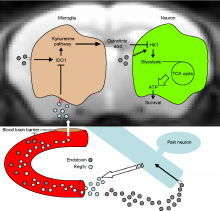
A research team led by the National Institute for Physiological Sciences and joined by Hokkaido University explored the role of pain neurons in the regulation of endotoxic death. They found that peptide named Reg3γ acts as a pain neuron-enriched brain-targeted hormone that protects the host from endotoxic death.
08 Mar 2022
Osaka City University
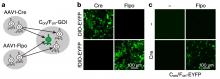
Scientists develop a method to genetically label neurons with a single gene of interest in mice by combining the anterograde transsynaptic spread of adeno-associated virus serotype 1 (AAV1) with intersectional gene expression. In two distinct circuits: the retina/primary visual cortex to the superior colliculus and the bilateral motor cortex to the dorsal striatum, injections of AAV1 expressing either Cre or Flpo recombinases and the Cre/Flpo double-dependent AAV into two upstream regions and the downstream region, respectively, were used to label postsynaptic neurons receiving inputs from the two upstream regions.

08 Mar 2022
Earth-Life Science Institute (ELSI), Tokyo Institute of Technology
A team at Japan’s Earth-Life Science Institute (ELSI), at Tokyo Institute of Technology (Tokyo Tech) is conducting evidence-based outreach to demonstrate why science communication training is so important, with an aim of encouraging other higher education and research institutions to follow its lead.
08 Mar 2022
Institute of Industrial Science, The University of Tokyo (UTokyo-IIS)
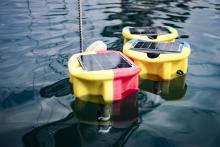
Device designers at the University of Tokyo are developing cheap and accessible ways to monitor and explore the sea.
08 Mar 2022
City University of Hong Kong (CityUHK)
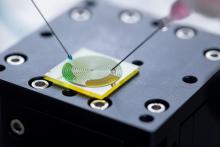
A surprising tree-inspired discovery is helping scientists design surfaces that encourage different liquids to move in varying directions.

03 Mar 2022
The Education University of Hong Kong (EdUHK)
Dr Hou Wai-kai, Associate Professor at the Department of Psychology (PS), The Education University of Hong Kong, has been elected a Fellow of the Association for Psychological Science (APS) for his outstanding contribution to the discipline.

03 Mar 2022
Asia Research News
Giants in History: Gopalasamudram Narayanan Ramachandran (8 October 1922 – 7 April 2001) is best known for developing the Ramachandran plot to understand the structure of short chains of amino acids, known as peptides.

01 Mar 2022
Tohoku University
Our visual processing is facilitated by spaces near the hand in a process known as hand proximity attention. Using a visual phenomenon called the flash-lag effect, researchers showed that proprioceptive information of a hand contributed to hand proximity attention.
28 Feb 2022
Osaka City University
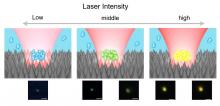
Scientists demonstrate an optical trapping technique using nanotextured black silicon that can efficiently trap polymer chains. By adjusting the laser intensity, these “optical tweezers” can control the florescence color emitted through a local concentration of a perylene-modified polymer solution. From a low intensity blue to high intensity orange, this reversible and fully remote technology can almost reach the entire RGB spectrum.
28 Feb 2022
Ehime University
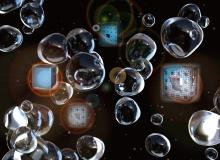
With the aid of mathematics, materials chemistry enables dimension travel, unveiling that all properties of materials are governed by their dimension.
28 Feb 2022
Ehime University
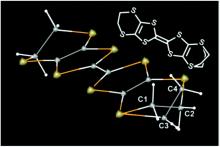
A Detailed comparative study on the structures and electrical properties of related insulators and superconductors
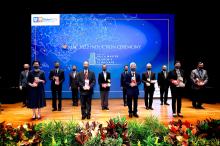
25 Feb 2022
Duke-NUS Medical School
Induction into the Hall of Master Academic Clinicians is the highest accolade for clinical faculty at the SingHealth Duke-NUS Academic Medical Centre. Exemplary clinical faculty members are selected by a special committee for their subject matter mastery, academic excellence and exceptional mentoring for Duke-NUS students.
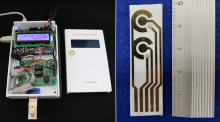
25 Feb 2022
Hokkaido University
Scientists have developed a prototype sensor that could help doctors rapidly measure adenosine triphosphate (ATP) and lactate levels in blood samples from patients, aiding in the rapid assessment of the severity of some diseases.
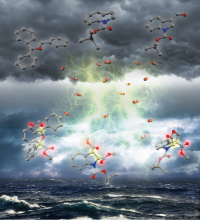
22 Feb 2022
Hokkaido University
Using electricity, a new method offers the possibility of recycling CO2 while also performing a notoriously difficult reaction, producing compounds potentially useful for drug development.
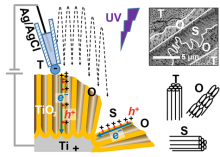
20 Feb 2022
Kanazawa University
In a recent study published in the journal ACS Catalysis researchers from Kanazawa University describe novel scanning electrochemical cell microscopy measurements to determine sites of photoelectrochemical activity in titanium dioxide nanotubes.
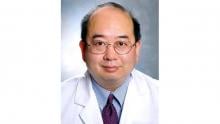
17 Feb 2022
Asia Research News
Giants in History: Barry Paw (29 August 1962 – 28 December 2017) was a biologist and oncologist born in Myanmar who discovered several novel genes and their functions in red blood cells.
Giants in history

Chinese-American physicist Tsung-Dao Lee (24 November 1926 – 4 August 2024) was awarded the Nobel Prize for Physics in 1957 together with Chen-Ning Yang for their work challenging the symmetry law in subatomic particles. They were the first Chinese Nobel prize winners, with Lee becoming the second-youngest laureate. Born in Shanghai, he went to the United States on scholarship and studied under another Nobel winner, Enrico Fermi.

Turkish astrophysicist Dilhan Eryurt (29 November 1926 – 13 September 2012) conducted research on how the sun affects environmental conditions on the moon.
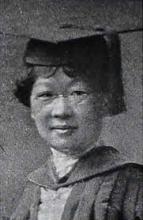
Chinese biochemist Chi Che Wang (1894 - 1979), one of the first Chinese women to study abroad, advanced to prominent research positions at American institutions including the University of Chicago and the Northwestern University Medical School.
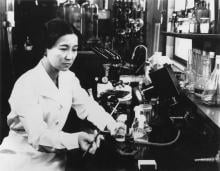
Ruby Sakae Hirose (1904 – 1960) was a Japanese-American scientist whose research contributed significantly to our understanding of blood clotting, allergies and cancer.
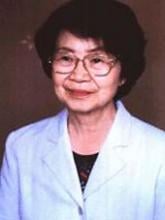
Chinese electron microscopy specialist Li Fanghua (6 January 1932 – 24 January 2020) facilitated the high-resolution imaging of crystal structures by eliminating interference.
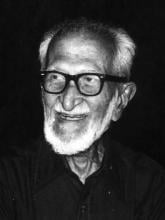
Sálim Moizuddin Abdul Ali (12 November 1896 – 20 June 1987), commonly referred to as the Birdman of India, was the first person to conduct systematic surveys of birds from across India.
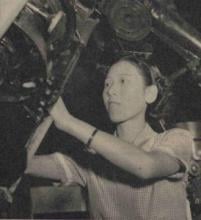
Haisako Koyama (1916 – 1997) was a Japanese solar observer whose dedication to recording sunspots – cooler parts of the sun’s surface that appear dark – produced a sunspot record of historic importance.
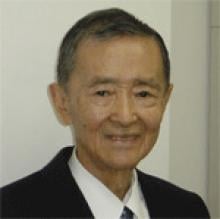
Michiaki Takahashi (17 February 1928 – 16 December 2013) was a Japanese virologist who developed the first chickenpox vaccine.
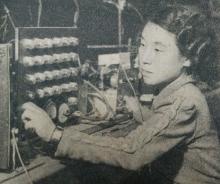
Toshiko Yuasa (11 December 1909 – 1 February 1980) was the first Japanese female physicist whose research on radioactivity shed light on beta decay – the process in which an atom emits a beta particle (electron) and turns into a different element.
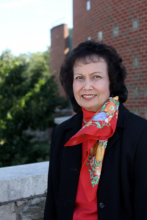
Angelita Castro Kelly (1942-2015) was the first female Mission Operations Manager (MOM) of NASA. She spearheaded and supervised the Earth Observing System missions during its developmental stage.
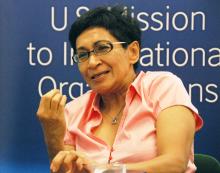
Malaysia’s first astrophysicist, Mazlan binti Othman (born 11 December 1951) was instrumental in launching the country’s first microsatellite, and in sending Malaysia’s first astronaut, Sheikh Muszaphar Shukor, into space.

Bibha Chowdhuri (1913 – 2 June 1991) was an Indian physicist who researched on particle physics and cosmic rays. In 1936, she was the only female to complete a M.Sc. degree at the University of Calcutta.
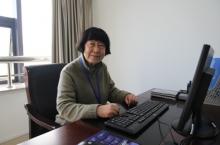
Meemann Chang (born 17 April 1936) is a Chinese palaeontologist who studied the fossils of ancient fish to understand the evolution of life. By examining fossils, she uncovered new insights on how vertebrates, animals with a backbone, migrated from the sea and became adapted to live on land.
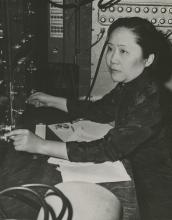
Chien-Shiung Wu (31 May 1912 – 16 February 1997) was an experimental physicist who made several important contributions to nuclear physics. Wu worked on the Manhattan Project – a top-secret program for the production of nuclear weapons during World War II and helped to develop a process for separating uranium into U235 and U238.
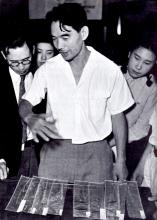
Hitoshi Kihara (1893 – 1986) was one of the most famous Japanese geneticists of the 20th century. One of his most significant contributions was identifying sex chromosomes (X and Y) in flowering plants.
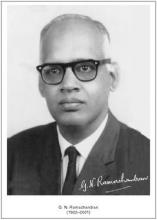
Gopalasamudram Narayanan Ramachandran (8 October 1922 – 7 April 2001) is best known for developing the Ramachandran plot to understand the structure of short chains of amino acids, known as peptides.
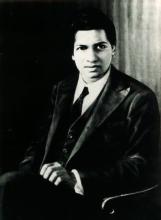
Srinivasa Ramanujan (22 December 1887 – 26 April 1920) was a math prodigy and widely considered one of India’s greatest mathematicians. Despite having almost no formal training in mathematics, he made substantial contributions to mathematical analysis, number theory, infinite series and continued fractions.
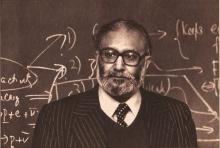
Mohammad Abdus Salam (29 January 1926 – 21 November 1996) was a theoretical physicist and the first Pakistani to receive a Nobel Prize in science.
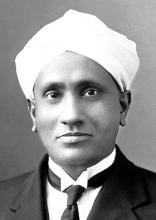
Sir Chandrasekhara Venkata Raman (7 November 1888 – 21 November 1970) was an Indian physicist who performed ground-breaking research in the field of light-scattering.
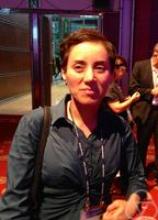
Mathematician Maryam Mirzakhani (12 May 1977 – 14 July 2017) was the first and only woman and Iranian to date to win the Fields Medal in 2014 for her work on curved surfaces.
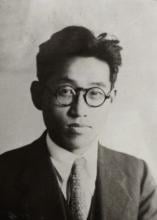
Joo-myung Seok (November 13, 1908 – October 6, 1950) was a Korean butterfly entomologist who made important contributions to the taxonomy of the native butterfly species in Korea.
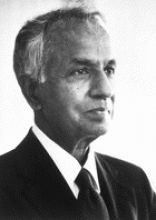
Subrahmanyan Chandrasekhar (19 October 1910 – 21 August 1995) was an Indian astrophysicist who studied the structure and evolution of stars.
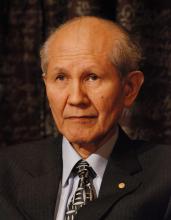
Osamu Shimomura (27 August 1928 – 19 October 2018) was a Japanese organic chemist and marine biologist who dedicated his career to understanding how organisms emitted light.
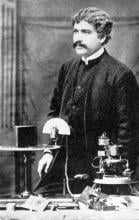
Sir Jagadish Chandra Bose (30 November 1858 – 23 November 1937) was a scientist and inventor who contributed to a wide range of scientific fields such as physics, botany and biology.
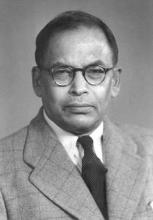
Meghnad Saha (6 October 1893 – 16 February 1956) was an Indian astrophysicist best known for formulating the Saha ionization equation which describes the chemical and physical properties of stars.
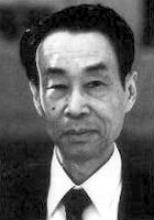
Motoo Kimura (13 November 1924 – 13 November 1994) was a Japanese theoretical population geneticist who is best remembered for developing the neutral theory of molecular evolution.

Chika Kuroda (24 March 1884 – 8 November 1968) was a Japanese chemist whose research focussed on the structures of natural pigments.
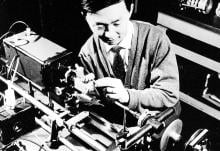
Charles Kuen Kao (Nov. 4, 1933 to Sept. 23, 2018) was an engineer who is regarded as the father of fibre optics. His work in the 1960s on long distance signal transmission using very pure glass fibres revolutionized telecommunications, enabling innovations such as the Internet.
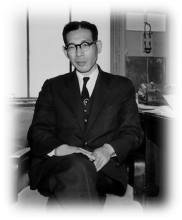
The field of solid-state ionics originated in Europe, but Takehiko Takahashi of Nagoya University in Japan was the first to coin the term ‘solid ionics’ in 1967. ‘Solid-state ionics’ first appeared in 1971 in another of his papers, and was likely a play on ‘solid-state electronics’, another rapidly growing field at the time.
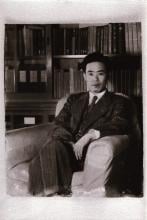
Japanese physicist Ukichiro Nakaya (1900-1962) made the world’s first artificial snowflakes. He started his research on snow crystals in the early 1930s at Hokkaido University, where there is an unlimited supply of natural snow in winter. By taking over 3,000 photographs, he established a classification of natural snow crystals and described their relationship with weather conditions.
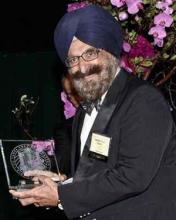
Physicist Narinder Singh Kapany (31 October 1926 – 4 December 2020) pioneered the use of optical fibres to transmit images, and founded several optical technology companies. Born in Punjab, India, he worked at a local optical instruments factory before moving to London for PhD studies at Imperial College. There, he devised a flexible fibrescope to convey images along bundles of glass fibres.
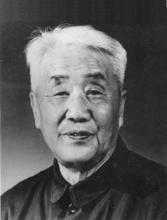
Chinese palaeontologist, archaeologist and anthropologist Pei Wenzhong (January 19, 1904 – September 18, 1982) is regarded as a founder of Chinese anthropology.
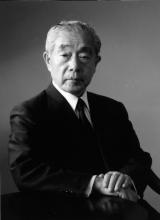
Japanese chemist Kenichi Fukui (4 October 1918 – 9 January 1998) was the first Asian scientist to be awarded the Nobel Prize in Chemistry. Together with Roald Hoffman, he received this honour in 1981 for his independent research into the mechanisms of chemical reactions.
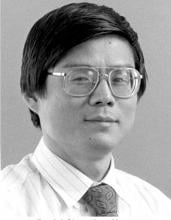
South Korean theoretical physicist Daniel Chonghan Hong (3 March 1956 – 6 July 2002) achieved fame in the public sphere through his research into the physics of popcorn.
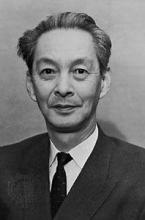
Shinichiro Tomonaga (31 March 1906 – 8 July 1979), together with Richard Feynman and Julian Schwinger, was awarded the Nobel Prize in Physics in 1965, for their contributions to advance the field of quantum electrodynamics. Tomonaga was also a strong proponent of peace, who actively campaigned against the proliferation of nuclear weapons and promoted the peaceful use of nuclear energy.
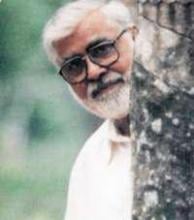
Known as Mr. Natural Rubber, chemist and researcher B. C. Shekhar (17 November 1929 – 6 September 2006) introduced a number of technical innovations that helped put Malaysia’s natural rubber industry on the world map.

Lin Lanying (7 February 1918 – 4 March 2003) was a Chinese material engineer remembered for her contributions to the field of semiconductor and aerospace materials. Lanying was born into a family who did not believe in educating girls and she was not allowed to go to school.
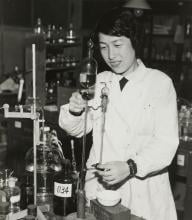
Japanese geochemist Katsuko Saruhashi developed the first method and tools for measuring carbon dioxide in seawater