
Science
News
03 May 2022
Hong Kong Baptist University (HKBU)
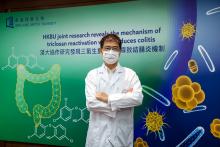
A Hong Kong Baptist University (HKBU) collaborative research study has revealed that certain gut microbial enzymes mediate the reactivation of triclosan (TCS) from its inactive glucuronide metabolite. TCS is an antimicrobial agent commonly used in a wide range of consumer products, and it is associated with the development of colitis.

28 Apr 2022
Asia Research News
Giants in History: Little is known about Ali, a teenager from Sarawak, Malaysia, who was chief assistant to the famous naturalist Alfred Wallace.
27 Apr 2022
Hokkaido University
Hokkaido University researchers have shown how chronic pain leads to maladaptive anxiety in mice, with implications for treatment of chronic pain-related psychiatric disorders in humans.
25 Apr 2022
Hokkaido University
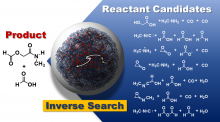
Researchers overcome computational limitations to predict the starting materials of multi-step reactions using only information about the target product molecule.
25 Apr 2022
Institute for Integrated Cell-Material Sciences (iCeMS) at Kyoto University
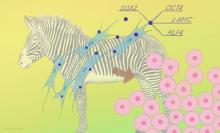
Examination of endangered species’ stem cells unveils ancient genetic links between mammals.
25 Apr 2022
Hokkaido University
A recent infant study suggests that the visual experience in daily life contributes to the emergence of upper visual field bias for faces.
22 Apr 2022
Institute for Integrated Cell-Material Sciences (iCeMS) at Kyoto University
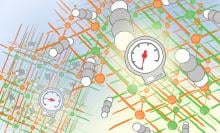
A porous material, which opens to receive highly flammable acetylene and closes to release it, sidesteps the flaws of the existing storage method.

21 Apr 2022
Newcastle University in Singapore
An international team of researchers from India and Singapore has successfully developed a novel coating with enhanced water repellent properties using natural material from the waste crab shell.
21 Apr 2022
Asia Research News
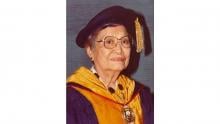
Giants in History: The research of Filipino pharmaceutical chemist Luz Oliveros-Belardo (3 November 1906 – 12 December 1999) focussed on essential oils and other chemicals derived from native Philippine plants.
20 Apr 2022
Hokkaido University
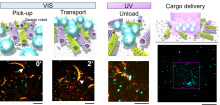
In a global first, scientists have demonstrated that molecular robots are able to accomplish cargo delivery by employing a strategy of swarming, achieving a transport efficiency five times greater than that of single robots.
20 Apr 2022
Kanazawa University
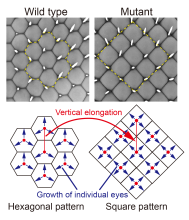
Tile patterns in which the same shape is laid out without gaps are found in the compound eyes of insects. Hexagonal tile patterns are common while shrimp eyes have a square pattern. We investigated tile pattern formation using Drosophila and revealed that the compound eye tile pattern is controlled by a geometrical division mechanism, Voronoi tessellation, in addition to physical constraints determined by the combination of the regular distribution and growth of the individual eyes.

14 Apr 2022
Asia Research News
Bacteria hitchhike on red blood cells, New model simulates effects of exercise on muscles, Argon found in air of ancient atmosphere and Revealing emergent elastic fields of chiral crystals. Read all in the April Editor's Choice and this month's Asia Research News 2022 magazine pick - Asia's race to outsmart antimicrobial resistance.
13 Apr 2022
Hokkaido University
Helping solve social and global environment issues with agriculture, forestry, and oceanography research combined with the latest technologies
12 Apr 2022
Kanazawa University
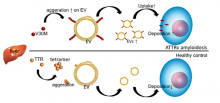
Researchers at Kanazawa University elucidate in Frontiers in Molecular Biosciences how small biocontainers enclosed by membranes are involved in a disease called ATTRv amyloidosis.
10 Apr 2022
Newcastle University in Singapore
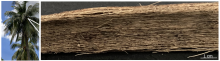
A team of materials researchers from India, Thailand, Malaysia, China and UK has successfully produced a fibre reinforced polymer composite material using natural fibres from the coconut stalk.
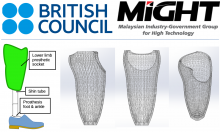
10 Apr 2022
Newcastle University in Singapore
Malaysian and UK medical device and composite materials experts have partnered up to research into using natural fibres for prosthetic limb technology to lower the cost of the prosthesis
08 Apr 2022
Hokkaido University
A team of international researchers, led by Associate Professor Masaki Eda of the Hokkaido University Museum, have discovered that the oldest type of poultry ever domesticated may have been geese. The study involved interdisciplinary research of bones excavated from Tianluoshan site in the lower Yangtze River valley, Zhejiang Province, China.
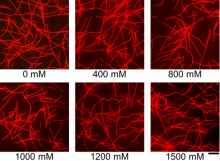
07 Apr 2022
Hokkaido University
The molecule trimethylamine N-oxide (TMAO) can be used to reversibly modulate the rigidity of microtubules, a key component of molecular machines and molecular robots.

07 Apr 2022
Asia Research News
Giants in History: Purnima Sinha (12 October 1927 – 11 July 2015), the first Bengali woman to receive a doctorate in physics, analysed clay structures using x-ray equipment that she built from salvaged World War II-era parts.
06 Apr 2022
Hokkaido University
Climate changes in the tropical Pacific have temporarily put the brakes on rapid warming and ice melting in Greenland.

04 Apr 2022
Earth-Life Science Institute (ELSI), Tokyo Institute of Technology
東京工業大学地球生命研究所(ELSI)は、エビデンスに基づくアウトリーチを展開することで、科学コミュニケーション専門トレーニングの大切さを積極的に発信している。日本の高等教育機関と研究機関での研究アウトリーチ活性化の先駆けとなることを目指す。
04 Apr 2022
Hokkaido University
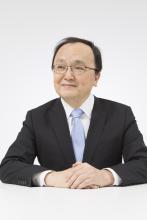
Distinguished Professor Hiroki Shirato of Hokkaido University is one of the nine recipients of the Japan Academy Prize in 2022, for his groundbreaking work on “Biomedical and Engineering Research about Real-time Tumor Tracking Radiotherapy/Particle Beam Therapy against Cancer.”
03 Apr 2022
Earth-Life Science Institute (ELSI), Tokyo Institute of Technology
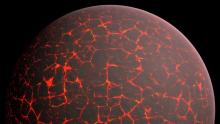
伝統的な日本の大学のカルチャーの殻を破り、フラットで国際的な研究所として注目を集める東京工業大学地球生命研究所(ELSI)。今年で10年目を迎えたELSIの魅力や運営のコツについて廣瀬敬前所長が語った。
01 Apr 2022
Earth-Life Science Institute (ELSI), Tokyo Institute of Technology
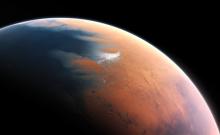
東京工業大学地球生命研究所(ELSI)は今年、転機を迎える。10年前の設立当初からのテーマであった「地球と生命の起源」から踏み出し、地球外生命の可能性まで研究対象を広げていく。次期所長の関根康人教授にこれからのELSIが目指すところを聞いた。
31 Mar 2022
Hokkaido University
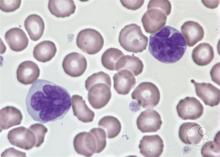
Gene editing technology has been used to pinpoint new molecular targets for treating an aggressive form of leukemia in adults.
31 Mar 2022
Institute of Industrial Science, The University of Tokyo (UTokyo-IIS)
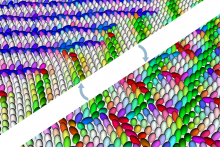
A team led by a Institute of Industrial Science, The University of Tokyo researcher has created a model to probe the role of emergent elastic fields in chiral molecular crystals
31 Mar 2022
Asia Research News
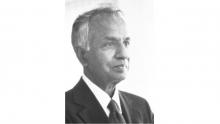
Giants in History: Subrahmanyan Chandrasekhar (19 October 1910 – 21 August 1995) was an Indian astrophysicist who studied the structure and evolution of stars.
30 Mar 2022
Tohoku University
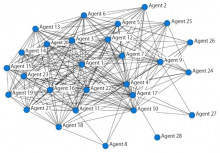
A simulation of stakeholder interactions around geothermal development in Japan provides an agent-based modeling tool for understanding how achieving community consensus is achieved.
30 Mar 2022
Hokkaido University
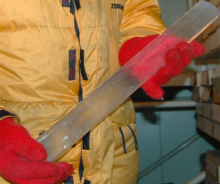
Researchers have discovered argon trapped in air-hydrate crystals in ice cores, which can be used to reconstruct past temperature changes and climate shifts.
24 Mar 2022
Asia Research News
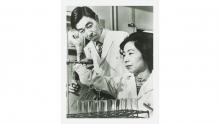
Giants in History: Husband and wife team, Kimishige (3 December 1925 – 6 July 2018) and Teruko Ishizaka (28 September 1926 – 4 June 2019) discovered the antibody class Immunoglobulin E (IgE) that triggers allergic reactions.
Giants in history

Chinese-American physicist Tsung-Dao Lee (24 November 1926 – 4 August 2024) was awarded the Nobel Prize for Physics in 1957 together with Chen-Ning Yang for their work challenging the symmetry law in subatomic particles. They were the first Chinese Nobel prize winners, with Lee becoming the second-youngest laureate. Born in Shanghai, he went to the United States on scholarship and studied under another Nobel winner, Enrico Fermi.

Turkish astrophysicist Dilhan Eryurt (29 November 1926 – 13 September 2012) conducted research on how the sun affects environmental conditions on the moon.
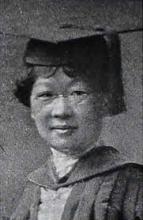
Chinese biochemist Chi Che Wang (1894 - 1979), one of the first Chinese women to study abroad, advanced to prominent research positions at American institutions including the University of Chicago and the Northwestern University Medical School.
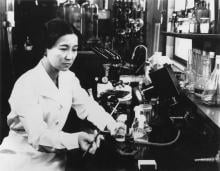
Ruby Sakae Hirose (1904 – 1960) was a Japanese-American scientist whose research contributed significantly to our understanding of blood clotting, allergies and cancer.
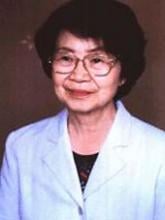
Chinese electron microscopy specialist Li Fanghua (6 January 1932 – 24 January 2020) facilitated the high-resolution imaging of crystal structures by eliminating interference.
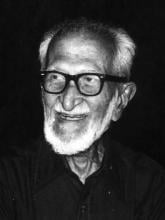
Sálim Moizuddin Abdul Ali (12 November 1896 – 20 June 1987), commonly referred to as the Birdman of India, was the first person to conduct systematic surveys of birds from across India.
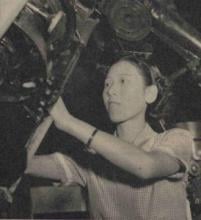
Haisako Koyama (1916 – 1997) was a Japanese solar observer whose dedication to recording sunspots – cooler parts of the sun’s surface that appear dark – produced a sunspot record of historic importance.
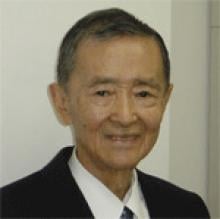
Michiaki Takahashi (17 February 1928 – 16 December 2013) was a Japanese virologist who developed the first chickenpox vaccine.
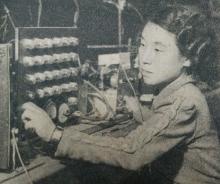
Toshiko Yuasa (11 December 1909 – 1 February 1980) was the first Japanese female physicist whose research on radioactivity shed light on beta decay – the process in which an atom emits a beta particle (electron) and turns into a different element.
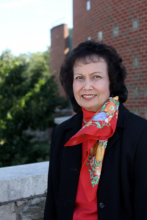
Angelita Castro Kelly (1942-2015) was the first female Mission Operations Manager (MOM) of NASA. She spearheaded and supervised the Earth Observing System missions during its developmental stage.
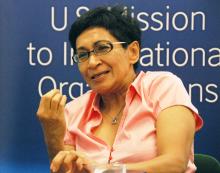
Malaysia’s first astrophysicist, Mazlan binti Othman (born 11 December 1951) was instrumental in launching the country’s first microsatellite, and in sending Malaysia’s first astronaut, Sheikh Muszaphar Shukor, into space.

Bibha Chowdhuri (1913 – 2 June 1991) was an Indian physicist who researched on particle physics and cosmic rays. In 1936, she was the only female to complete a M.Sc. degree at the University of Calcutta.
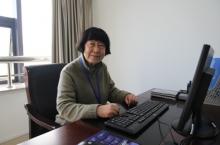
Meemann Chang (born 17 April 1936) is a Chinese palaeontologist who studied the fossils of ancient fish to understand the evolution of life. By examining fossils, she uncovered new insights on how vertebrates, animals with a backbone, migrated from the sea and became adapted to live on land.
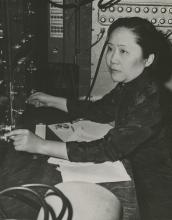
Chien-Shiung Wu (31 May 1912 – 16 February 1997) was an experimental physicist who made several important contributions to nuclear physics. Wu worked on the Manhattan Project – a top-secret program for the production of nuclear weapons during World War II and helped to develop a process for separating uranium into U235 and U238.
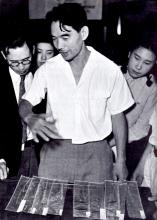
Hitoshi Kihara (1893 – 1986) was one of the most famous Japanese geneticists of the 20th century. One of his most significant contributions was identifying sex chromosomes (X and Y) in flowering plants.
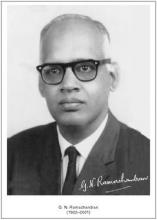
Gopalasamudram Narayanan Ramachandran (8 October 1922 – 7 April 2001) is best known for developing the Ramachandran plot to understand the structure of short chains of amino acids, known as peptides.
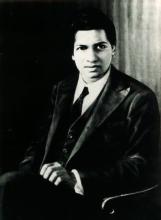
Srinivasa Ramanujan (22 December 1887 – 26 April 1920) was a math prodigy and widely considered one of India’s greatest mathematicians. Despite having almost no formal training in mathematics, he made substantial contributions to mathematical analysis, number theory, infinite series and continued fractions.
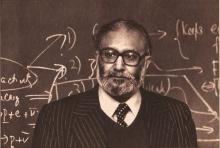
Mohammad Abdus Salam (29 January 1926 – 21 November 1996) was a theoretical physicist and the first Pakistani to receive a Nobel Prize in science.
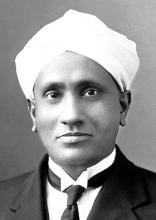
Sir Chandrasekhara Venkata Raman (7 November 1888 – 21 November 1970) was an Indian physicist who performed ground-breaking research in the field of light-scattering.
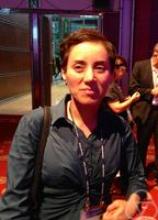
Mathematician Maryam Mirzakhani (12 May 1977 – 14 July 2017) was the first and only woman and Iranian to date to win the Fields Medal in 2014 for her work on curved surfaces.
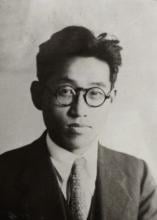
Joo-myung Seok (November 13, 1908 – October 6, 1950) was a Korean butterfly entomologist who made important contributions to the taxonomy of the native butterfly species in Korea.
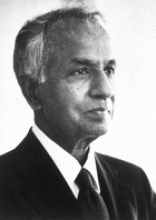
Subrahmanyan Chandrasekhar (19 October 1910 – 21 August 1995) was an Indian astrophysicist who studied the structure and evolution of stars.
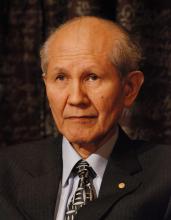
Osamu Shimomura (27 August 1928 – 19 October 2018) was a Japanese organic chemist and marine biologist who dedicated his career to understanding how organisms emitted light.
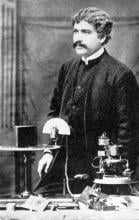
Sir Jagadish Chandra Bose (30 November 1858 – 23 November 1937) was a scientist and inventor who contributed to a wide range of scientific fields such as physics, botany and biology.
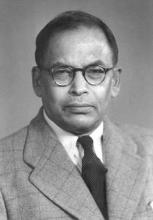
Meghnad Saha (6 October 1893 – 16 February 1956) was an Indian astrophysicist best known for formulating the Saha ionization equation which describes the chemical and physical properties of stars.
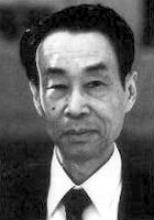
Motoo Kimura (13 November 1924 – 13 November 1994) was a Japanese theoretical population geneticist who is best remembered for developing the neutral theory of molecular evolution.

Chika Kuroda (24 March 1884 – 8 November 1968) was a Japanese chemist whose research focussed on the structures of natural pigments.
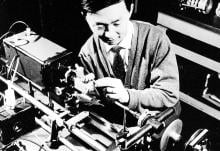
Charles Kuen Kao (Nov. 4, 1933 to Sept. 23, 2018) was an engineer who is regarded as the father of fibre optics. His work in the 1960s on long distance signal transmission using very pure glass fibres revolutionized telecommunications, enabling innovations such as the Internet.
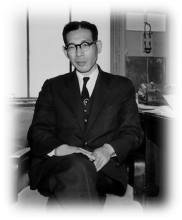
The field of solid-state ionics originated in Europe, but Takehiko Takahashi of Nagoya University in Japan was the first to coin the term ‘solid ionics’ in 1967. ‘Solid-state ionics’ first appeared in 1971 in another of his papers, and was likely a play on ‘solid-state electronics’, another rapidly growing field at the time.
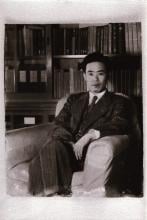
Japanese physicist Ukichiro Nakaya (1900-1962) made the world’s first artificial snowflakes. He started his research on snow crystals in the early 1930s at Hokkaido University, where there is an unlimited supply of natural snow in winter. By taking over 3,000 photographs, he established a classification of natural snow crystals and described their relationship with weather conditions.
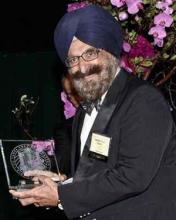
Physicist Narinder Singh Kapany (31 October 1926 – 4 December 2020) pioneered the use of optical fibres to transmit images, and founded several optical technology companies. Born in Punjab, India, he worked at a local optical instruments factory before moving to London for PhD studies at Imperial College. There, he devised a flexible fibrescope to convey images along bundles of glass fibres.
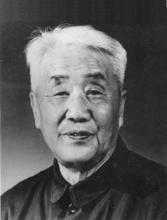
Chinese palaeontologist, archaeologist and anthropologist Pei Wenzhong (January 19, 1904 – September 18, 1982) is regarded as a founder of Chinese anthropology.
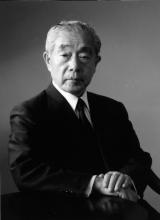
Japanese chemist Kenichi Fukui (4 October 1918 – 9 January 1998) was the first Asian scientist to be awarded the Nobel Prize in Chemistry. Together with Roald Hoffman, he received this honour in 1981 for his independent research into the mechanisms of chemical reactions.
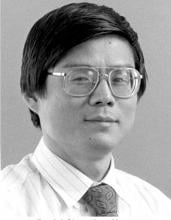
South Korean theoretical physicist Daniel Chonghan Hong (3 March 1956 – 6 July 2002) achieved fame in the public sphere through his research into the physics of popcorn.
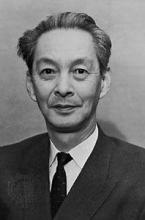
Shinichiro Tomonaga (31 March 1906 – 8 July 1979), together with Richard Feynman and Julian Schwinger, was awarded the Nobel Prize in Physics in 1965, for their contributions to advance the field of quantum electrodynamics. Tomonaga was also a strong proponent of peace, who actively campaigned against the proliferation of nuclear weapons and promoted the peaceful use of nuclear energy.
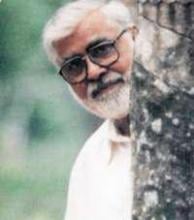
Known as Mr. Natural Rubber, chemist and researcher B. C. Shekhar (17 November 1929 – 6 September 2006) introduced a number of technical innovations that helped put Malaysia’s natural rubber industry on the world map.

Lin Lanying (7 February 1918 – 4 March 2003) was a Chinese material engineer remembered for her contributions to the field of semiconductor and aerospace materials. Lanying was born into a family who did not believe in educating girls and she was not allowed to go to school.
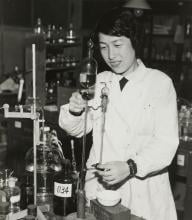
Japanese geochemist Katsuko Saruhashi developed the first method and tools for measuring carbon dioxide in seawater