

Science
News
28 Sep 2022
Lingnan University
Lingnan University (LU) in Hong Kong highly values research and knowledge transfer that generate social impact and demonstrate care for the community. LU honoured 72 LU faculty members for their outstanding performance in research and contributions to knowledge transfer in raising the community’s quality of life and contribution to society during the 2021/22 and 2022/23 academic years.
28 Sep 2022
The University of Osaka
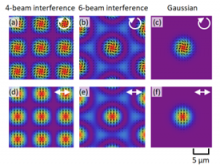
Osaka University researchers showed how to use laser beam interference to construct chiral structures. By using computer simulations, they were able to predict the final light pattern and optical radiation force distribution of any collection of light sources. This work may lead to cheaper optical devices and sensors.

27 Sep 2022
Duke-NUS Medical School
Scientists have pinpointed a protein in lysosomes that is involved in recycling a crucial fatty component of cell membranes to keep cells healthy.

26 Sep 2022
Hokkaido University
Hokkaido University researchers find a new way of producing the industrially important propylene that is more energy efficient than existing approaches—and in the process turns carbon dioxide into another usable resource. Their pioneering catalyst design thus contributes to the carbon neutralization of the petrochemical industry.

22 Sep 2022
Institute of Industrial Science, The University of Tokyo (UTokyo-IIS)
Researchers at The University of Tokyo grow a nanoscale layer of a superconducting material on top of a nitride-semiconductor substrate, which may help facilitate the integration of quantum qubits with existing microelectronics
22 Sep 2022
Duke-NUS Medical School
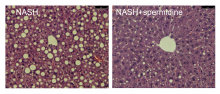
A pathway that malfunctions in advanced non-alcoholic fatty liver disease could be fixed with the aid of spermidine, a compound naturally found in bodily cells and certain whole foods.
22 Sep 2022
Duke-NUS Medical School
Scientists have uncovered how Coxsackievirus B3, the most common cause for viral heart inflammation, takes advantage of a specific heart sensor to trigger chronic inflammation that can lead to heart failure.
22 Sep 2022
Hiroshima University
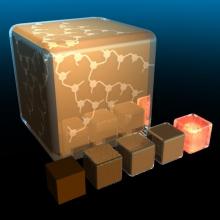
Researchers found a new way to reduce carbon dioxide (CO2) emissions by wrapping copper nanocubes with an organic layer, solving instability and selectivity problems with copper nanocubes in catalysis, and improving how this electrocatalyst converts CO2 into organic molecules.
22 Sep 2022
Asia Research News
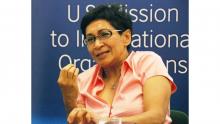
Giants in History: Malaysia’s first astrophysicist, Mazlan binti Othman (born 11 December 1951) was instrumental in launching the country’s first microsatellite, and in sending Malaysia’s first astronaut, Sheikh Muszaphar Shukor, into space.
20 Sep 2022
Institute of Industrial Science, The University of Tokyo (UTokyo-IIS)
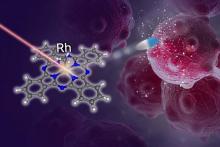
Researchers from The Institute of Industrial Science, The University of Tokyo have developed a streamlined photo-uncaging system for photodynamic cancer therapy, using a pulse of light for tumor-specific activation of a cancer-fighting agent
20 Sep 2022
Institute of Industrial Science, The University of Tokyo (UTokyo-IIS)
A research group led by the Institute of Industrial Science, The University of Tokyo, finds that sensory neurons in human skin modulate melanocytes via the secretion of Repulsive Guidance Molecule B
20 Sep 2022
Ehime University
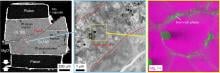
The activity of deep-focus earthquakes, which increases with depths from ~400 km to a peak at ~600 km, is enigmatic because conventional brittle failure is unlikely to occur at elevated pressures. Our experiments showed that formation of thin weak layers filled with nano-crystalline olivine/wadsleyite, upon the pressure-induced phase transition of olivine, is the major cause of deep-focus earthquakes on the metastable olivine wedge in deep slabs.
16 Sep 2022
Institute of Industrial Science, The University of Tokyo (UTokyo-IIS)
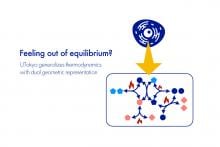
Scientists from The University of Tokyo formulated nonlinear, nonequilibrium energy dissipation relationships using methods from geometry to better understand the kinetics of irreversible chemical processes
15 Sep 2022
Duke-NUS Medical School
Cellular structures called mitochondria depend on microproteins to assist and control the assembly of a protein chain that extracts energy from nutrients, according to a new study by scientists in Singapore.

15 Sep 2022
Osaka Metropolitan University
Demonstration of embodied cognition mechanisms in the brain could have implications for artificial intelligence.

15 Sep 2022
Asia Research News
Giants in History: Sir Mokshagundam Srinivasa Shastry Vishveshwarayya (15 September 1860 – 14 April 1962) is widely regarded as India’s most outstanding engineer.

13 Sep 2022
Duke-NUS Medical School
A commentary in Nature Medicine advocates the proper application of artificial intelligence in healthcare and warns of the dangers when machine learning algorithms are misused.
13 Sep 2022
Duke-NUS Medical School
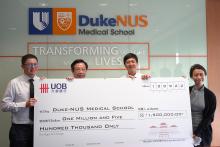
The Memorandum of Understanding signed between The Ngee Ann Kongsi and Duke-NUS Medical School emphasises the need for more research as treatment and prevention options are currently limited for conditions such as Parkinson’s disease.
13 Sep 2022
Osaka Metropolitan University
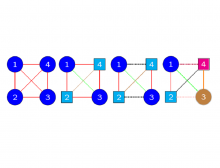
An international research team led by scientists from Osaka Metropolitan University has developed a method to identify symmetries in multi-dimensional data using Bayesian statistical techniques. Bayesian statistics has been in the spotlight in recent years due to improvements in computer performance and its potential applications in artificial intelligence. However, this statistical approach requires complex calculations of integrals, which are often considered approximations only. In their new study, the research team successfully derived new exact integral formulas. Their findings contribute to improving the accuracy of methods to identify data symmetries, possibly extending their applications to wider areas of interest, such as genetic analysis.
12 Sep 2022
Institute of Industrial Science, The University of Tokyo (UTokyo-IIS)
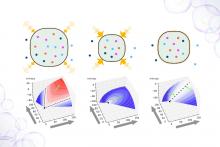
Researchers at The University of Tokyo create a geometric representation of thermodynamic systems and apply it to self-replicating processes, which may help improve our understanding of the physical constraints of living organisms
09 Sep 2022
Hiroshima University
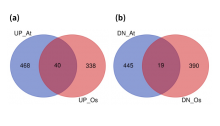
Researchers at Hiroshima University are closer to identifying the molecular processes underlying how floods deprive plants of oxygen — and how to engineer hardier crops.
07 Sep 2022
Hokkaido University
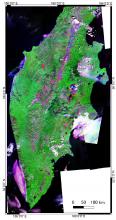
Scientists have quantified the glacier mass loss on the Kamchatka Peninsula; the accelerated loss in the region since the turn of the millennium is likely to increase in the short term.
06 Sep 2022
The University of Osaka
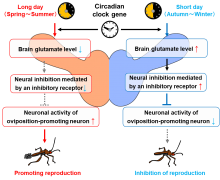
Researchers from Osaka University have found that photoperiod variation in bean bugs is regulated by genes involved in maintaining circadian rhythm via the neurotransmitter glutamate. The discovery of this mechanistic link between the biological clock and seasonal variation may have important implications for seasonal adaptation in other animals, given the conservation of glutamate across many species.
05 Sep 2022
Tohoku University
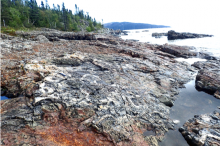
The Gunflint Formation, which straddles Lake Superior’s northwestern shore, contains a treasure trove of geological clues about the evolution of life. After a recent geological reassessment of this area, a research team has unearthed new types of microfossils dating 1.9 billion years. The landmark discovery will help scientists pinpoint the timing and factors that ushered in the evolution of prokaryotes to eukaryotes.
05 Sep 2022
Ehime University
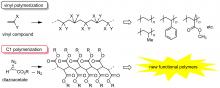
The research team directed by H. Shimomoto and E. Ihara in Ehime University successfully developed a new Pd-based initiating system affording carbon–carbon main-chain polymers bearing end-functional groups. This achievement will contribute to progress in the field of polymer chemistry and will allow us to develop new types of functional polymers.
01 Sep 2022
The University of Osaka
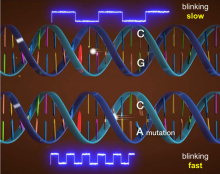
Researchers from Osaka University and collaborating partners detected unique fluorescence blinking patterns in experiments of electron transfer to single DNA molecules. They used these patterns to identify mRNA glioma point mutations in cell culture. The results of this work could help simplify surgical biopsies, enable real-time targeted therapy, and advance scientific understanding of cancer progression.
31 Aug 2022
The University of Osaka
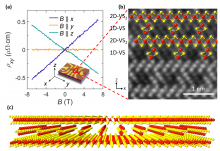
Researchers from Osaka University and collaborating partners used common nanofabrication procedures to fabricate versatile metal semiconductor superlattices. These superlattices exhibit a long-sought physical phenomenon—the anisotropic anomalous Hall effect at room temperature. This research will help improve the density of data storage, as well as the functionality of other technologies that also depend on advances in the microelectronics industry.
29 Aug 2022
Osaka Metropolitan University
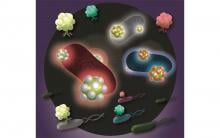
Osaka Metropolitan University scientists developed a simple, rapid method for identifying food poisoning-inducing bacteria based on color differences in the scattered light of composite structures consisting of gold, silver, and copper nanoparticles and polymer particles. Using these composites as test labels bound to specific bacteria, the researchers detected food poisoning bacteria E. coli O26, E. coli O157, and S. aureus as white, red, and blue scattered light, respectively, under the microscope. This new method enables simultaneous identification of multiple bacterial species within one hour, significantly shortening the usual 48-hour time requirement for conventional bacterial tests.
23 Aug 2022
Institute for Integrated Cell-Material Sciences (iCeMS) at Kyoto University
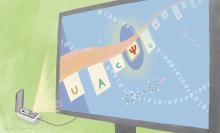
Two new approaches could help scientists use existing sequencing technology to better-distinguish RNA changes that affect how their genetic code is read.
23 Aug 2022
Tohoku University
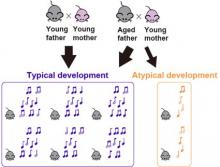
A baby’s cry is a form of communication used to attract attention from adult caregivers, and every baby cries in a similar but distinct way. An international research team has studied the vocal behavior of baby mice, called pups, to determine how the age of the father affects the pups’ vocal communication and body weight development. Their study will help them better understand vocal development in human babies.
Giants in history

Chinese-American physicist Tsung-Dao Lee (24 November 1926 – 4 August 2024) was awarded the Nobel Prize for Physics in 1957 together with Chen-Ning Yang for their work challenging the symmetry law in subatomic particles. They were the first Chinese Nobel prize winners, with Lee becoming the second-youngest laureate. Born in Shanghai, he went to the United States on scholarship and studied under another Nobel winner, Enrico Fermi.

Turkish astrophysicist Dilhan Eryurt (29 November 1926 – 13 September 2012) conducted research on how the sun affects environmental conditions on the moon.
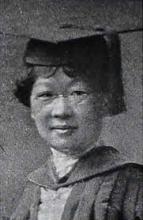
Chinese biochemist Chi Che Wang (1894 - 1979), one of the first Chinese women to study abroad, advanced to prominent research positions at American institutions including the University of Chicago and the Northwestern University Medical School.
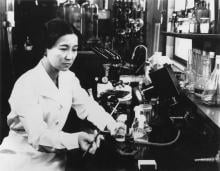
Ruby Sakae Hirose (1904 – 1960) was a Japanese-American scientist whose research contributed significantly to our understanding of blood clotting, allergies and cancer.
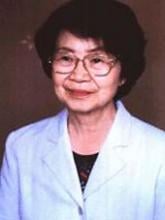
Chinese electron microscopy specialist Li Fanghua (6 January 1932 – 24 January 2020) facilitated the high-resolution imaging of crystal structures by eliminating interference.
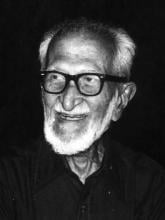
Sálim Moizuddin Abdul Ali (12 November 1896 – 20 June 1987), commonly referred to as the Birdman of India, was the first person to conduct systematic surveys of birds from across India.
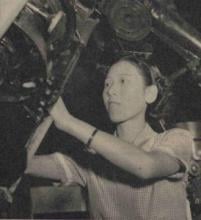
Haisako Koyama (1916 – 1997) was a Japanese solar observer whose dedication to recording sunspots – cooler parts of the sun’s surface that appear dark – produced a sunspot record of historic importance.
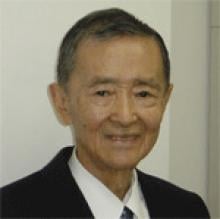
Michiaki Takahashi (17 February 1928 – 16 December 2013) was a Japanese virologist who developed the first chickenpox vaccine.
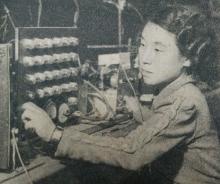
Toshiko Yuasa (11 December 1909 – 1 February 1980) was the first Japanese female physicist whose research on radioactivity shed light on beta decay – the process in which an atom emits a beta particle (electron) and turns into a different element.

Angelita Castro Kelly (1942-2015) was the first female Mission Operations Manager (MOM) of NASA. She spearheaded and supervised the Earth Observing System missions during its developmental stage.
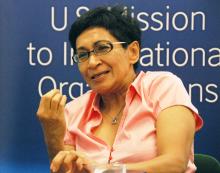
Malaysia’s first astrophysicist, Mazlan binti Othman (born 11 December 1951) was instrumental in launching the country’s first microsatellite, and in sending Malaysia’s first astronaut, Sheikh Muszaphar Shukor, into space.

Bibha Chowdhuri (1913 – 2 June 1991) was an Indian physicist who researched on particle physics and cosmic rays. In 1936, she was the only female to complete a M.Sc. degree at the University of Calcutta.
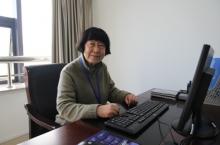
Meemann Chang (born 17 April 1936) is a Chinese palaeontologist who studied the fossils of ancient fish to understand the evolution of life. By examining fossils, she uncovered new insights on how vertebrates, animals with a backbone, migrated from the sea and became adapted to live on land.
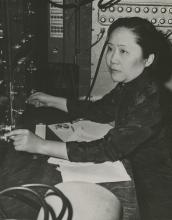
Chien-Shiung Wu (31 May 1912 – 16 February 1997) was an experimental physicist who made several important contributions to nuclear physics. Wu worked on the Manhattan Project – a top-secret program for the production of nuclear weapons during World War II and helped to develop a process for separating uranium into U235 and U238.
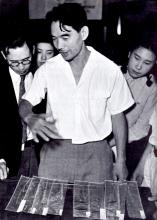
Hitoshi Kihara (1893 – 1986) was one of the most famous Japanese geneticists of the 20th century. One of his most significant contributions was identifying sex chromosomes (X and Y) in flowering plants.
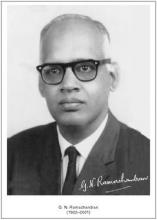
Gopalasamudram Narayanan Ramachandran (8 October 1922 – 7 April 2001) is best known for developing the Ramachandran plot to understand the structure of short chains of amino acids, known as peptides.
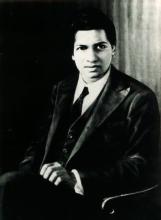
Srinivasa Ramanujan (22 December 1887 – 26 April 1920) was a math prodigy and widely considered one of India’s greatest mathematicians. Despite having almost no formal training in mathematics, he made substantial contributions to mathematical analysis, number theory, infinite series and continued fractions.
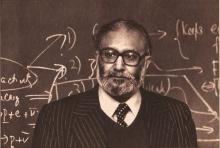
Mohammad Abdus Salam (29 January 1926 – 21 November 1996) was a theoretical physicist and the first Pakistani to receive a Nobel Prize in science.
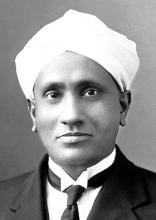
Sir Chandrasekhara Venkata Raman (7 November 1888 – 21 November 1970) was an Indian physicist who performed ground-breaking research in the field of light-scattering.
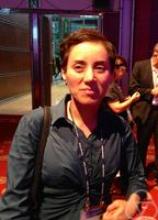
Mathematician Maryam Mirzakhani (12 May 1977 – 14 July 2017) was the first and only woman and Iranian to date to win the Fields Medal in 2014 for her work on curved surfaces.
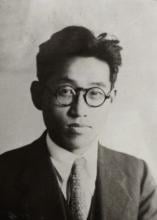
Joo-myung Seok (November 13, 1908 – October 6, 1950) was a Korean butterfly entomologist who made important contributions to the taxonomy of the native butterfly species in Korea.
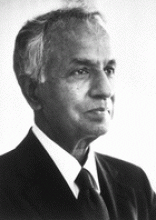
Subrahmanyan Chandrasekhar (19 October 1910 – 21 August 1995) was an Indian astrophysicist who studied the structure and evolution of stars.
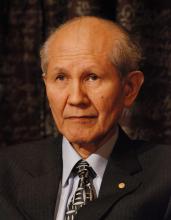
Osamu Shimomura (27 August 1928 – 19 October 2018) was a Japanese organic chemist and marine biologist who dedicated his career to understanding how organisms emitted light.
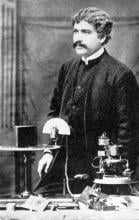
Sir Jagadish Chandra Bose (30 November 1858 – 23 November 1937) was a scientist and inventor who contributed to a wide range of scientific fields such as physics, botany and biology.
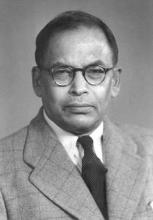
Meghnad Saha (6 October 1893 – 16 February 1956) was an Indian astrophysicist best known for formulating the Saha ionization equation which describes the chemical and physical properties of stars.
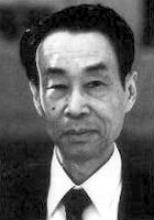
Motoo Kimura (13 November 1924 – 13 November 1994) was a Japanese theoretical population geneticist who is best remembered for developing the neutral theory of molecular evolution.

Chika Kuroda (24 March 1884 – 8 November 1968) was a Japanese chemist whose research focussed on the structures of natural pigments.
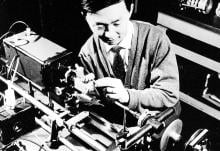
Charles Kuen Kao (Nov. 4, 1933 to Sept. 23, 2018) was an engineer who is regarded as the father of fibre optics. His work in the 1960s on long distance signal transmission using very pure glass fibres revolutionized telecommunications, enabling innovations such as the Internet.
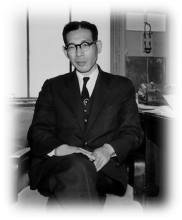
The field of solid-state ionics originated in Europe, but Takehiko Takahashi of Nagoya University in Japan was the first to coin the term ‘solid ionics’ in 1967. ‘Solid-state ionics’ first appeared in 1971 in another of his papers, and was likely a play on ‘solid-state electronics’, another rapidly growing field at the time.
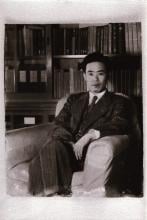
Japanese physicist Ukichiro Nakaya (1900-1962) made the world’s first artificial snowflakes. He started his research on snow crystals in the early 1930s at Hokkaido University, where there is an unlimited supply of natural snow in winter. By taking over 3,000 photographs, he established a classification of natural snow crystals and described their relationship with weather conditions.
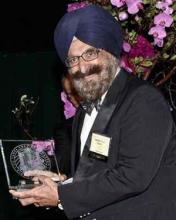
Physicist Narinder Singh Kapany (31 October 1926 – 4 December 2020) pioneered the use of optical fibres to transmit images, and founded several optical technology companies. Born in Punjab, India, he worked at a local optical instruments factory before moving to London for PhD studies at Imperial College. There, he devised a flexible fibrescope to convey images along bundles of glass fibres.
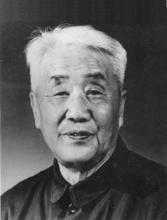
Chinese palaeontologist, archaeologist and anthropologist Pei Wenzhong (January 19, 1904 – September 18, 1982) is regarded as a founder of Chinese anthropology.
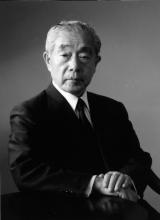
Japanese chemist Kenichi Fukui (4 October 1918 – 9 January 1998) was the first Asian scientist to be awarded the Nobel Prize in Chemistry. Together with Roald Hoffman, he received this honour in 1981 for his independent research into the mechanisms of chemical reactions.
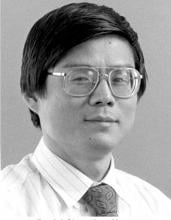
South Korean theoretical physicist Daniel Chonghan Hong (3 March 1956 – 6 July 2002) achieved fame in the public sphere through his research into the physics of popcorn.
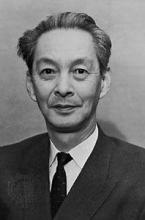
Shinichiro Tomonaga (31 March 1906 – 8 July 1979), together with Richard Feynman and Julian Schwinger, was awarded the Nobel Prize in Physics in 1965, for their contributions to advance the field of quantum electrodynamics. Tomonaga was also a strong proponent of peace, who actively campaigned against the proliferation of nuclear weapons and promoted the peaceful use of nuclear energy.
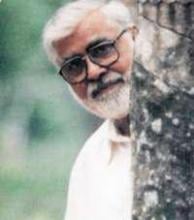
Known as Mr. Natural Rubber, chemist and researcher B. C. Shekhar (17 November 1929 – 6 September 2006) introduced a number of technical innovations that helped put Malaysia’s natural rubber industry on the world map.

Lin Lanying (7 February 1918 – 4 March 2003) was a Chinese material engineer remembered for her contributions to the field of semiconductor and aerospace materials. Lanying was born into a family who did not believe in educating girls and she was not allowed to go to school.
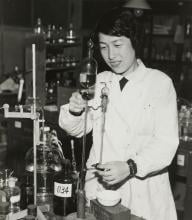
Japanese geochemist Katsuko Saruhashi developed the first method and tools for measuring carbon dioxide in seawater