

Engineering & Technology Materials Science and Engineering
News
01 Oct 2026
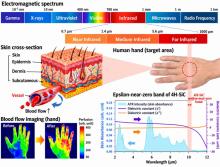
This study published in Advanced Science reports a wavelength-matched far-infrared approach for enhancing peripheral blood circulation using silicon carbide (SiC), which exhibits epsilon-near-zero behavior near 10.3 μm. By matching the selective thermal emission of SiC with the low-absorption optical window of human skin, the study demonstrates enhanced cutaneous blood flow compared with a conventional broadband graphite emitter. After 20 minutes of irradiation, SiC increased blood perfusion by 30.2%, compared with 18.6% for graphite, while maintaining skin temperature below 36 °C and without significant changes in blood pressure or heart rate. These results demonstrate the potential of wavelength-selective ENZ emitters for localized and thermally safe biomedical thermal modulation.
30 Sep 2026
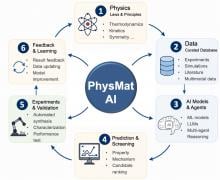
Correlation does not imply causation. Using AI to discover new materials is becoming more common, but data-driven approaches sometimes rely heavily on correlations and make testing AI-based predictions difficult. A new perspective paper published by Tohoku University researchers developed a framework for incorporating physics-based principles into AI to generate more interpretable, testable, and meaningful predictions.
29 Sep 2026
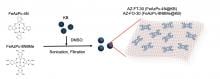
What if the blue pigment in your ink or dye could help power the future of clean energy? A research group has fine-tuned blue pigment molecules to create a blue-pigment based catalyst that is high-performing and free of the more expensive platinum.
18 Sep 2026
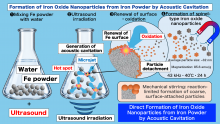
Rust usually takes months or years to form naturally, but researchers at Tohoku University found a way to speed it up dramatically. By blasting iron powder in water with ultrasound, they triggered the formation of spinel-type iron oxide nanoparticles in as little as 24 hours, no chemicals required. The technique could offer a greener route to materials used in magnets, catalysts, and biomedical applications.
15 Sep 2026
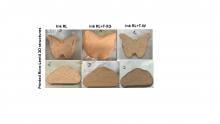
SUTD researchers have turned minimally processed rice and lentil flours into 3D-printable pastes that cook into distinctly textured foods, offering a route to complete-protein vegetarian meals that do not depend on refined protein isolates.
11 Sep 2026
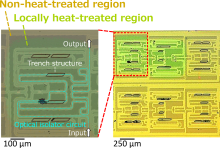
Kyocera Corporation and Tohoku University have developed a new technology that integrates optical isolators directly onto silicon photonics chips using laser annealing. Building on their previous collaboration, the two organizations will continue working toward commercialization and more efficient, sustainable information technologies.

10 Sep 2026
For decades, scientists have understood proteins primarily through two defining features: their amino acid sequence and their three-dimensional structure. This framework has driven major advances in biology, biotechnology, and medicine, culminating in recent artificial intelligence tools capable of predicting protein structures with remarkable accuracy. Yet a fundamental challenge remains: even when a protein's sequence and structure are known, predicting its function, interactions, and behavior often remains difficult.
An international team of researchers from Japan, Finland, Italy, and the United States now reports evidence that part of this missing information may lie in an often-overlooked component of proteins: the highly organized water surrounding them. In a study accepted for publication in Nature Communications, the team provides the first direct three-dimensional visualization of sequence-dependent hydration architectures surrounding peptide assemblies at sub-nanometer resolution using advanced three-dimensional atomic force microscopy (3D-AFM) (Fig.1).
10 Sep 2026
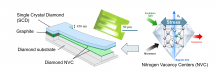
When tiny devices called MEMS (used in microphones, biosensors) undergo physical stress, their performance is compromised. Researchers found a new way to track this stress using a sensor that is part of the device.

09 Sep 2026
Researchers at Tohoku University have discovered that changing the number of layers in a crystal can systematically tune both the magnetic and topological properties of a material. By synthesizing a brand-new compound, the team showed how adding spacer layers shifts magnetic order from antiferromagnetic to ferrimagnetic - while also producing a highly tilted "type-II" Dirac electron state that can't exist for particles in a vacuum.
09 Sep 2026
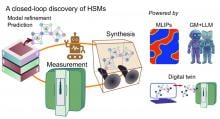
Finding better materials to store hydrogen safely and efficiently is key to clean energy, but AI models trained on incomplete data can recommend candidates that don't actually work in practice. An international team led by Tohoku University, drawing on insight from 69 researchers, has proposed a "physics-aware" framework that combines thermodynamic constraints, reproducible data, and real experimental feedback to make AI-guided materials discovery more reliable. The roadmap could help accelerate the search for practical hydrogen storage solutions to support future clean-energy systems.
08 Sep 2026
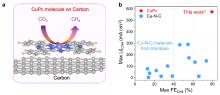
Scientists have turned a common blue pigment into a powerful tool for fighting climate change. Researchers at Tohoku University, Hokkaido University, and AZUL Energy created a copper phthalocyanine catalyst that converts carbon dioxide directly into methane fuel in a single step, reaching nearly 80% efficiency and sustaining performance for 80+ hours. The breakthrough could make carbon recycling more practical and scalable using an inexpensive, readily available material.
04 Sep 2026
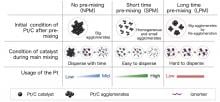
A new study shows that the Pt/C catalyst state before ionomer addition governs later ink dispersion and electrochemical Pt accessibility.
04 Sep 2026
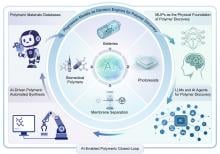
Researchers at Tohoku University have combined multiple tools to create an automated, self-improving AI workflow that may improve our search for polymer material candidates so that it is less expensive, less costly, and more environmentally friendly.
02 Sep 2026
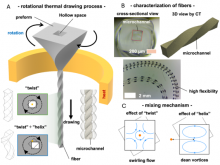
Researchers develop a new fabrication method for creating twisted microchannels inside polymer fibers, enabling efficient mixing of minute amounts of liquid.
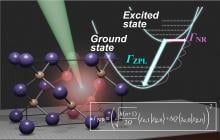
25 Aug 2026
Researchers from the University of Osaka have developed a fast computational framework that predicts the optical performance of quantum color centers without being restricted to a specific host material. By replacing computationally intensive calculations with simple theoretical formulas and procedures, the method enables rapid screening of promising quantum materials spanning ultraviolet to telecommunication wavelengths.

25 Aug 2026
The low-temperature process produces low-loss silicon nitride waveguides on an eight-inch wafer and an octave-spanning spectrum.
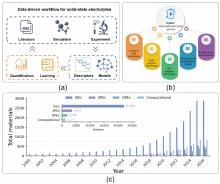
25 Aug 2026
As solid-state electrolyte research grows, so does the amount of data. The problem is that much of it remains scattered across the literature. That is where researchers at WPI-AIMR, Tohoku University, come in — with DigBat, a new platform designed to bring this information together and help map the growing landscape of solid-state electrolyte research. By connecting data from across the field, DigBat can help researchers see relationships more clearly and point toward promising directions for future battery materials research.
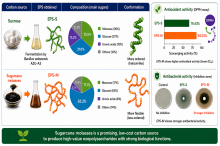
19 Aug 2026
Feeding bacteria a cheap agricultural by-product enables the production of high-value biomaterials with promising biomedical and industrial applications.
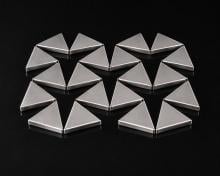
18 Aug 2026
A new auxetic composite sandwich improved vibration damping by up to eightfold while avoiding the added thickness and external limiters often used in passive isolation systems.

13 Aug 2026
Black hole "blast", Bacteria-detecting robot, A crab's tale, Sensors that remember, and Silk in cycling. Plus submission deadline for 2027 magazine. Read all in the latest Editor's Choice.
08 Aug 2026
Smart polymers and natural rubber research point to greener materials through durability, repairability and lifecycle design.
05 Aug 2026
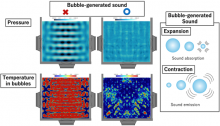
Numerical model explains why increasing ultrasonic power reduces chemical reaction rates in sonochemistry
03 Aug 2026
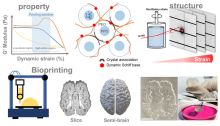
Researchers at National Taiwan University have designed a shear-protective hydrogel bioink that enables high-resolution bioprinting of pickable neural tissue patches with high cell survival.
30 Jul 2026
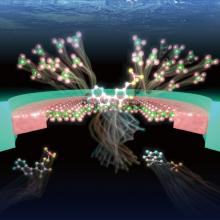
Researchers from the University of Osaka and collaborating institutions developed an autonomous solid-state nanopore that combines sensing, memory, and signal generation in a single device. Unlike conventional nanopores, the sensor continually reshapes itself through chemical reactions, producing unique electrical signatures as molecules pass through, providing a basis for memory. The device successfully identified a variety of nucleotides and amino acids, providing a new platform for molecular sensing and future iontronic computing.
28 Jul 2026
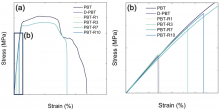
When plastics are recycled, their strength gets weakened over time as the long molecular chains gradually break down under repeated exposure to heat and moisture. However, a research group has added a chain extender to the recycling process, allowing polymer chains to reconnect, and a plastic tensile strength to return to normal.

23 Jul 2026
A review maps how modern diagnostics and reversible materials can help museums protect silk, leather, paper and wood with less damage.
23 Jul 2026
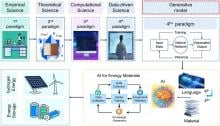
Discovering the materials needed for cleaner energy technologies has long been a slow process - but AI could change that. Researchers at Tohoku University have developed a closed-loop AI framework that continuously learns from experiments to identify promising energy materials faster and at lower cost. The approach could accelerate the development of next-generation batteries, hydrogen storage and other low-carbon technologies.

22 Jul 2026
A plant enzyme recovered collagen from lambskin trimmings at higher yield than acid or pepsin extraction while preserving its structure.
17 Jul 2026
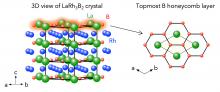
Graphene revolutionized materials science after its discovery in 2004. Its list of potential applications is long, but its use in high-temperature superconductors has been stymied by weak electron interactions. Researchers from Tohoku University have recently created a stable version of boron graphene on the surface of a three-dimensional crystal, potentially overcoming this limitation and opening a pathway toward more energy-efficient electronic devices.

17 Jul 2026
Silk-reinforced bicycle tyres outperformed nylon controls and showed lower impacts in a gate-to-gate life cycle assessment.
Events

16 Dec 2026 to 18 Dec 2026
Researchers, industry specialists and innovators will gather in Bangkok for the 7th International Conference on Materials Research and Innovation (7th ICMARI 2026), bringing together expertise in polymers, rubber, circular materials and advanced materials.

18 Mar 2022
What does it take for Additive Manufacturing (AM) to move beyond? This webinar will continue explore the grand challenges of AM and its potential for growth.

09 Dec 2020 to 11 Dec 2020
The 20th International Nanotechnology Exhibition & Conference will be held in onsite-online hybrid format.
03 Nov 2020
The Singapore Centre for 3D Printing is pleased to share our first online webinar in collaboration with HP-NTU Digital Manufacturing Corporate Lab.

South Korea's Ulsan National Institute of Science and Technology (UNIST), jointly with Ulsan Metropolitan City, held the "Graphene Symposium in Ulsan" on Wednesday, May 8, 2019.
Researchers

Dr. Umedjon Khalilov is a computational materials scientist with over 20 years of experience in atomistic modeling of nanostructures. His research integrates molecular dynamics (MD), Monte Carlo (MC), and density functional theory (DFT) simulations to investigate the synthesis, stability, and functionality of carbon-based and silicon-based nanomaterials. He has led or contributed to numerous international projects focused on hydrogen storage, carbon nanotube growth, and surface reactions in plasma environments. Dr. Khalilov is also actively involved in AI-driven materials discovery and collaborative platforms bridging simulation with experiment.
He has authored 40+ peer-reviewed publications in leading journals.

Group Leader at the Magnetic Functional Device Group, the Research Center for Magnetic and Spintronic Materials at the National Institute for Materials Science (NIMS), Japan.

I am an efficient Professor able to Develop courses with IT skills & sound teaching skills in a manner attractive to students. I have vast experience in supervising postgraduate research & Contribute in a well manner to the ongoing academic development of the School’s postgraduate courses and research.

Professor Mikiya Fujii is an expert on materials informatics at Nara Institute of Science and Technology (NAIST), Japan.

Prof Jun Suzuki is a biochemist and the deputy director at the Institute for Integrated Cell-Material Sciences (iCeMS), Kyoto University, Japan.

Group Leader, Frontier Molecules Group, Nanomaterials Field, Research Center for Materials Nanoarchitectonics (MANA) at the National Institute for Materials Science (NIMS), Japan.

Lecturer at the Institute for Integrated Cell-Material Sciences (iCeMS), Kyoto University, Japan.

I'm currently an adjunct professor at the Asian Institute of Management in Manila. I crafted a course called Art-Science Thinking based on my dissertation on Culture as Transformative Innovation: Filipino Care in the Practice of Family Medicine. Since 2017, my consultancy & studio has been collaborating with the Dept. of Science & Technology in the Philippines.

Professor Dae-hyun Nam is dedicated to advancing electrocatalysts for sustainable energy conversion and storage. By leveraging expertise in materials science, engineering, and chemistry, he aims to address pressing energy and environmental challenges, paving the way for a sustainable future.

Taweechai Amornsakchai is an Associate Professor at Mahidol University. With a Ph.D. in Polymer Physics, his research focuses on reinforcing plastics with pineapple leaf fiber and exploring pineapple stem starch for biodegradable packaging.

Chameera Udawattha, a pioneering architect and researcher, investigates eco-friendly construction materials, exploring alternative solutions for construction and building issues. His work promotes sustainable building practices.

Dr Fabien Grasset is a Research Director at the Centre national de la recherche scientifique (CNRS) and currently serving as Director of Research for Rennes Institute of Chemical Sciences (ISCR). His areas of expertise include materials chemistry, solid-state chemistry, nanotechnology, nanoparticles, optical coatings and thin films.
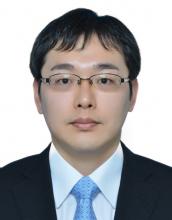
Taishi Yokoi is an Associate Professor of the Institute of Biomaterials and Bioengineering at Tokyo Medical and Dental University. His research areas include biomedical engineering, inorganic compounds and inorganic materials chemistry.

Dr Naoka Nagamura is senior researcher at the National Institute for Materials Science (NIMS) and visiting associate professor at Tokyo University of Science. She researches advanced materials, electrochemistry and photoemission spectroscopy.
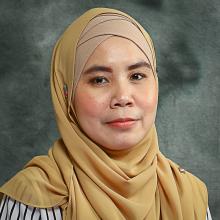
Ts Dr. Siti Kudnie Sahari is a senior lecturer at the Department of Electrical and Electronic Engineering, Faculty of Engineering, Universiti Malaysia Sarawak (UNIMAS). Her current research interests include thin film, advanced semiconductor materials, semiconductor processing and solar devices.

Professor Alex Jen Kwan-yue is Chair Professor of Materials Science and Director of the Hong Kong Institute for Clean Energy at the City University of Hong Kong (CityU). His expertise includes the use of molecular engineering and self-assembly for hybrid materials.
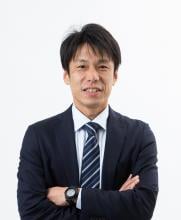
Dr. Hiroki Ago is a Distinguished Professor of the Global Innovation Center at Kyushu University. His research focuses on nanomaterials, particularly graphene and related 2D materials, and their applications.
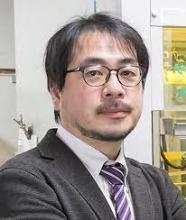
Prof. Hiroshi Yabu is a Professor and Principal Investigator at the Advanced Institute for Materials Research (WPI-AIMR) at Tohoku University. His research interests include self-organization, biomimetics, and bio-inspired materials for energy and low environmental impacts.
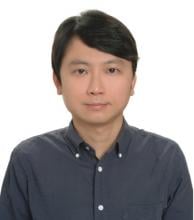
Dr. Zong-Hong Lin is a Professor at the Institute of Biomedical Engineering, National Tsing Hua University and at the Department of Biomedical Engineering, National Taiwan University.

Her current research focuses on the synthesis of semiconducting polymers for organic electronics and has published >100 papers in this area of research.

Prof Yang obtained his bachelor degree from Peking University in 2001, and PhD from Princeton University in 2007. His research interest includes the development of advanced alloys, including metallic glasses, high entropy alloys, low dimensional metals/ceramics and metamaterials.

Zunaida Zakaria is researcher at Faculty of Chemical Engineering Technology, Universiti Malaysia Perlis (UniMAP). She has more than 15 years of experience in Polymeric Materials, Processing, and Characterization. Her main research interest are in Polymeric Foam, Syntactic Foam, Epoxy Macroballoon, Failure Mechanism in Polymeric Foam, Microbeads/Porous, and Activated Carbon from RHA for wastewater treatment.

Ridha is a Senior Lecturer in the Department of Mechanical Engineering and is jointly an associate member of Advanced Manufacturing and Materials Processing (AMMP) Center at the University of Malaya.

Robert E Simpson is an Associate Professor at the Singapore University of Technology and Design (SUTD). Rob’s research interests are focused on designing new materials for applications in electronics, photonics, data storage, and biosensing.
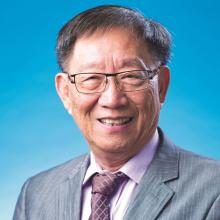
Professor Liu Chain-Tsuan is University Distinguished Professor at City University of Hong Kong, and Senior Fellow of the Hong Kong Institute for Advanced Study (HKIAS).

His research focuses on functional surfaces, bioinspired antifouling coatings, and medical antifouling materials.
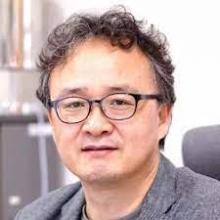
Professor Jong- Soo Lee's research interest is in designing a new type of multifunctional nanoparticles for energy related devices.

Prof. Jooyong Kim's research interest includes the development of smart fashion products based on electronic textiles.

Dr. Chi Cuong Vu is currently a research assistant at Soongsil University, Seoul, South Korea where he focuses on developing flexible wearable sensors and their applications in human activity monitoring or personal healthcare.

Dr. Eng. Hafsa Jamshaid C Text FTI is working as Associate Professor at National Textile University. She is an experienced textile professional in the field of weaving, knitting technologies for technical fabrics and composites.
Giants in history

Lin Lanying (7 February 1918 – 4 March 2003) was a Chinese material engineer remembered for her contributions to the field of semiconductor and aerospace materials. Lanying was born into a family who did not believe in educating girls and she was not allowed to go to school.