

Japan
News
18 Jan 2023
Kanazawa University
In a study recently published in Cancer Science researchers from Kanazawa University show how some intestinal cancer cells lose their ability to spread as they divide and can be eliminated as the cancer grows.
17 Jan 2023
The University of Osaka
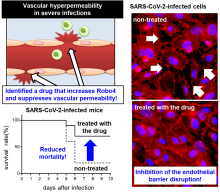
Researchers led by Osaka University demonstrated the role of endothelial cell-specific protein Roundabout4 (Robo4) in the reduction of vascular permeability and mortality in mouse models of severe infection. The research team identified a drug inhibitor that increased Robo4 expression and reduced mortality in sepsis and SARS-CoV-2 mouse models of infection. These findings may aid in the development of drugs to reduce the mortality rate of severe infectious diseases.
13 Jan 2023
Hokkaido University
Understanding how dust grains form in interstellar gas could offer significant insights to astronomers and help materials scientists develop useful nanoparticles.
12 Jan 2023
Osaka Metropolitan University
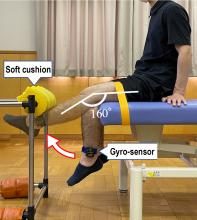
Osaka Metropolitan University scientists delved into the relationship between gait function and knee extension velocity after total knee arthroplasty and compared the effects of various factors on walking. The results reveal that knee extension velocity, measured while seated, on the operated side was the most important determinant of gait function. These findings are expected to contribute to the development of new rehabilitation programs for efficient gait function improvement.
12 Jan 2023
Osaka Metropolitan University
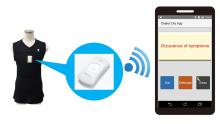
An Osaka Metropolitan University research group recorded the autonomic nervous system activity in patients with irritable bowel syndrome (IBS) and healthy subjects using a wearable device and a proprietary smartphone application to record daily life events such as defecation and sleep. As a result, they found that sympathetic nervous system activity was activated in IBS patients from 2 minutes before defecation and continued until 9 minutes after defecation. Further research is expected to improve the quality of life of IBS patients and elucidate the pathophysiology.
12 Jan 2023
Hiroshima University
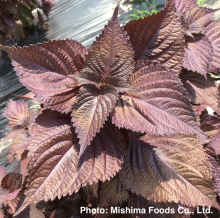
A team of Japanese researchers created a high-quality genome assembly of red perilla, a step toward harnessing the plant’s potentially useful bioactive chemicals — and its medicinal properties.
10 Jan 2023
Osaka Metropolitan University
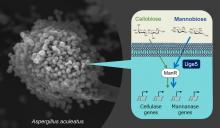
An Osaka Metropolitan University research team analyzed the regulatory mechanisms of carbohydrate-hydrolyzing enzyme production in Aspergillus aculeatus, a filamentous fungus that produces enzymes with an excellent ability to degrade plant biomass. The team found that UDP-glucose 4-epimerase (Uge5), an enzyme known for its involvement in galactose metabolism, also regulates the expression of degrading enzyme genes in A. aculeatus. This is the very first report of Uge5’s roles in selective gene expression in response to different types of inducing sugars in filamentous fungi.

10 Jan 2023
Osaka Metropolitan University
A research team led by Osaka Metropolitan University has revealed a difference in neural activity in response to visual food stimuli, depending on whether those stimuli are presented consciously or unconsciously. Using a questionnaire to assess the study participants, the team found that this difference was associated with their scores on eating behaviors, including emotional eating and cognitive restraint of food intake. These results indicate that eating behavior cannot be understood without taking into account both unconscious and conscious neural processes.
06 Jan 2023
Osaka Metropolitan University
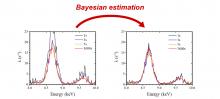
A research group at Osaka Metropolitan University has succeeded in significantly reducing the measurement time of a glass standard sample by applying Bayesian estimation to X-ray fluorescence analysis. The ability to perform rapid non-contact elemental analysis in a nondestructive manner could lead to the widespread use of this technique in many fields, including the analysis of moving industrial products and waste materials while being carried on conveyor belts.
05 Jan 2023
Hokkaido University
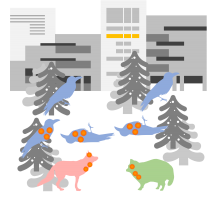
Researchers at Hokkaido University have revealed the effects of high pathogenicity avian influenza virus infection on an Ezo red fox and a Japanese raccoon dog, linking their infection to a recorded die-off of crows.
05 Jan 2023
Institute of Industrial Science, The University of Tokyo (UTokyo-IIS)
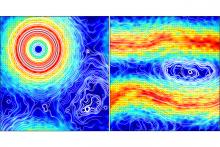
Researchers at The University of Tokyo simulate the phase separation of self-spinning particles, and show that the process differs from other unmixing processes, which may shed light on the organization of bacteria and other organisms

04 Jan 2023
The University of Osaka
Researchers from Osaka University found that dietary supplementation with tricaprin results in coronary artery plaque regression and resolution of symptoms in patients with triglyceride deposit cardiomyovasculopathy, a treatment-resistant form of coronary artery disease. These findings represent a conceptually novel treatment for coronary atherosclerosis that paves the way toward establishing a multi-faceted approach to caring for patients with this condition.
28 Dec 2022
Hokkaido University
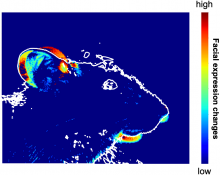
New insights into the opposing actions of serotonin-producing nerve fibres in mice could lead to drugs for treating addictions and major depression.
27 Dec 2022
Ehime University
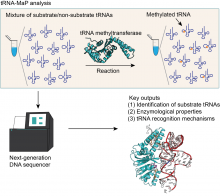
tRNA-MaP can rapidly analyze the specificity of tRNA m1A22 methyltransferase (TrmK) for substrate tRNAs.
23 Dec 2022
Osaka Metropolitan University
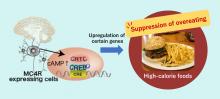
Scientists reveal genetic mechanism associated with high-calorie food-fueled obesity
23 Dec 2022
Hiroshima University
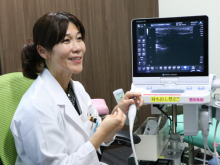
The ability to see what’s happening inside the body in real-time and at a high resolution is a capability that ultrasound grants orthopedists at a low cost to patients. Ultrasound-guided diagnosis, however, remains relatively new in the field. Dr. Yuko Nakashima is here to change that for Japan with the help of her fellow “e-girls.”
22 Dec 2022
Osaka Metropolitan University
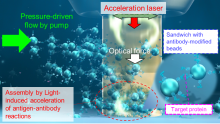
Osaka Metropolitan University scientists discovered the principle of light-induced acceleration of antigen–antibody reaction, allowing for simple, ultrafast, and highly sensitive detection of proteins. The researchers introduced target proteins and probe particles with modified antibodies selectively binding to the target proteins into a small channel and applied irradiation with infrared laser light. They achieved, for the first time, the rapid measurement of trace amounts of attogram-level target proteins after only 3 minutes of laser irradiation. These findings will potentially contribute to breakthroughs in the development of systems for ultra-early diagnosis of various diseases.
21 Dec 2022
Institute of Industrial Science, The University of Tokyo (UTokyo-IIS)
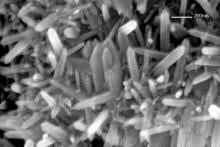
Researchers at The University of Tokyo develop a simple but effective method of bonding polymers with galvanized steel, a material ubiquitous in the automobile industry, to cheaply and easily create a lightweight and durable product.
20 Dec 2022
Hokkaido University
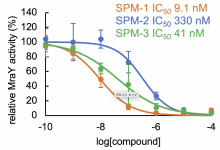
Researchers have designed and synthesized analogs of a new antibiotic that is effective against multidrug-resistant bacteria, opening a new front in the fight against these infections.
19 Dec 2022
The University of Osaka
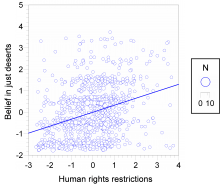
Researchers from Osaka University found that the “belief in just deserts”, which is the idea that infected individual deserves to be infected, was associated with attitudes about government restrictions during public health emergencies in the context of the COVID-19 global pandemic. This information could lead to new strategies for combating discrimination, prejudice, and stigma against COVID-19 patients.
19 Dec 2022
Osaka Metropolitan University
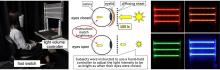
An Osaka Metropolitan University scientist measured the light transmittance of the eyelids when the eyes are closed, and found that perceived closed-eye brightness is significantly stronger than previously reported. The influence of color was also observed, with red light perceived as brighter and blue light perceived as darker. Additionally, there were significant differences between experimental participants; for some, their perception of brightness barely differed between open- and closed-eye conditions.
19 Dec 2022
Ehime University
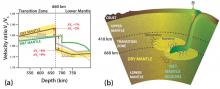
Sound velocities of superhydrous phase B and the presence of water in the Earth’s mantle
19 Dec 2022
Ehime University
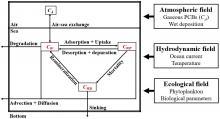
The Kuroshio regulates the air-sea exchange of PCBs
19 Dec 2022
The University of Osaka
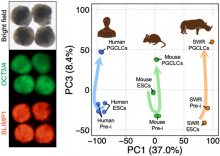
Researchers from Osaka University have developed a culture system using pluripotent cells from southern and northern white rhinos, which was refined to produce primordial germ cell-like cells (PGCLCs). These cells are the equivalent of primordial germ cells, the origin of eggs and sperm. The study marks an important first step in the potential production of northern white rhino gametes, which could be used in breeding programs, and is the first to induce PGCLCs in a wild animal.
16 Dec 2022
Hiroshima University
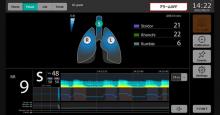
Scientists developed a novel device that predicts whether an ICU patient taken off mechanical ventilation is likely to suffer from respiratory emergencies, helping critical care teams to provide immediate life-saving interventions.
15 Dec 2022
The University of Osaka
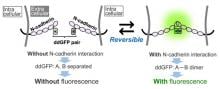
Researchers led by Osaka University report the development of INCIDER, a fluorescent sensor system that enables high-contrast microscopic imaging of temporal changes in cellular interactions mediated by the N-cadherin molecule. This sensor system, which emits much brighter fluorescence than the currently used system while detecting these interactions, is expected to have a wide range of applications in developmental biology, neuroscience, and other fields.
15 Dec 2022
The University of Osaka
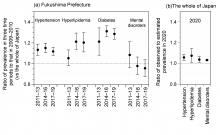
A study by Osaka University has shown that the prevalence of non-communicable diseases, which included hypertension, hyperlipidemia, diabetes, and mental disorders, increased after the Fukushima disaster and the COVID-19 outbreak. These findings emphasize the importance of improving post-disaster health promotion strategies and recommendations.
15 Dec 2022
The University of Osaka
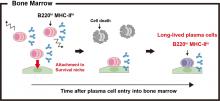
Researchers led by Osaka University generated a time-stamping method to trace the development and survival of plasma cells in the bone marrow and spleen. Using a mouse model in which plasma cells were fluorescently labeled in an inducible manner, they found that plasma cells were continuously replenished by new cells, a small portion of which differentiated into long-lived plasma cells (LLPCs). These findings may aid in the development of new vaccines that efficiently induce LLPCs.
14 Dec 2022
Hokkaido University
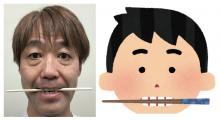
Training individuals to inhibit imitation of others increases empathy and allows them to recognize facial expressions in others regardless of their situations.

14 Dec 2022
Osaka Metropolitan University
Using cryogenic electron microscopy, a research team from the Research Center for Artificial Photosynthesis (ReCAP) at Osaka Metropolitan University has revealed, for the first time, the structures and binding environments of pigments bound to a protein called a photosynthetic antenna of the marine green macroalga Codium fragile. The team’s results extend our knowledge about the molecular mechanism by which blue-green light—the only light available in deep seawater—is efficiently utilized for photosynthesis.
Researchers
Sorry, no researchers coming up for this topic.
Giants in history

Japanese biochemist Akira Endo (1933 – 2024) discovered the first statin, called mevastatin, which lowered cholesterol levels in the blood by inhibiting a key enzyme in the cholesterol biosynthesis pathway. His work laid the foundation for the development of statins to help patients lower their blood cholesterol levels and reduce their risk of heart disease or stroke.
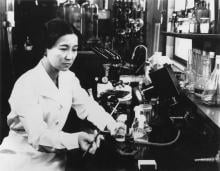
Ruby Sakae Hirose (1904 – 1960) was a Japanese-American scientist whose research contributed significantly to our understanding of blood clotting, allergies and cancer.
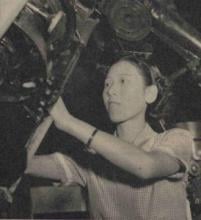
Haisako Koyama (1916 – 1997) was a Japanese solar observer whose dedication to recording sunspots – cooler parts of the sun’s surface that appear dark – produced a sunspot record of historic importance.
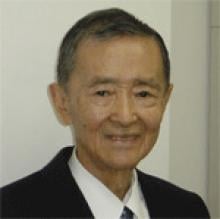
Michiaki Takahashi (17 February 1928 – 16 December 2013) was a Japanese virologist who developed the first chickenpox vaccine.
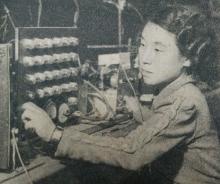
Toshiko Yuasa (11 December 1909 – 1 February 1980) was the first Japanese female physicist whose research on radioactivity shed light on beta decay – the process in which an atom emits a beta particle (electron) and turns into a different element.
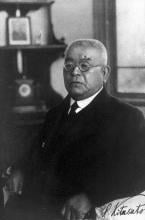
Baron Kitasato Shibasaburo (29 January 1856 – 13 June 1931) was a Japanese physician and bacteriologist whose work led to a new understanding of preventing and treating tetanus, diphtheria and anthrax.
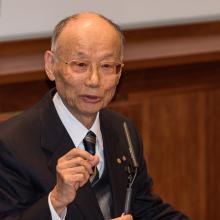
By isolating soil microorganisms and studying the compounds they produce, Satoshi Omura (born 1935) discovered almost 500 organic compounds with unique properties that were produced by these microorganisms, including many new antibiotics.
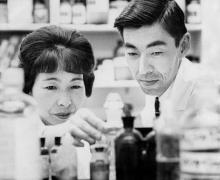
Husband and wife team, Kimishige (3 December 1925 – 6 July 2018) and Teruko Ishizaka (28 September 1926 – 4 June 2019) discovered the antibody class Immunoglobulin E (IgE) that triggers allergic reactions. They also discovered that IgE antibodies attach to white blood cells, known as mast cells, releasing histamine, which causes allergic reactions.
Husband and wife team, Kimishige (3 December 1925 – 6 July 2018) and Teruko Ishizaka (28 September 1926 – 4 June 2019) discovered the antibody class Immunoglobulin E (IgE) that triggers allergic reactions. They also discovered that IgE antibodies attach to white blood cells, known as mast cells, releasing histamine, which causes allergic reactions.
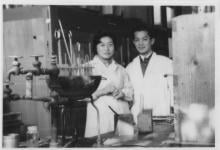
Reiji Okazaki (8 October 1930 – 1 August 1975) and Tsuneko (7 June 1933) were a Japanese couple who discovered Okazaki fragments – short sequences of DNA that are synthesized during DNA replication and linked together to form a continuous strand.
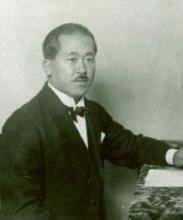
In 1915, Koichi Ichikawa along with pathologist Katsusaburo Yamagiwa became the first to prove that chronic exposure to chemicals can cause cancer.
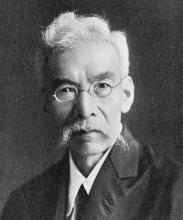
In 1915, pathologist Katsusaburo Yamagiwa and his research assistant Koichi Ichikawa became the first to prove that chronic exposure to chemicals can cause cancer.
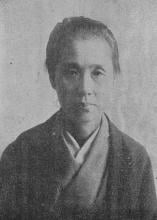
Ogino Ginko (3 March 1851 – 23 June 1913) was the first registered female doctor to practise modern medicine in Japan.
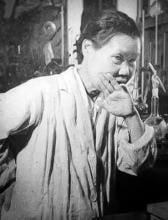
Michiyo Tsujimura (17 September 1888 – 1 June 1969) was a Japanese agricultural scientist and biochemist recognized for her research of green tea components.
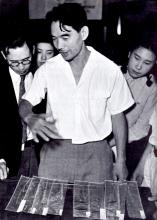
Hitoshi Kihara (1893 – 1986) was one of the most famous Japanese geneticists of the 20th century. One of his most significant contributions was identifying sex chromosomes (X and Y) in flowering plants.
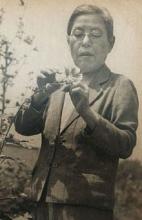
Kono Yasui (16 February 1880 – 24 March 1971) was a Japanese botanist who researched the genetics of poppies, corn and spiderworts and surveyed the plants that had been affected by the nuclear fallout after the atomic bombings of Hiroshima and Nagasaki.
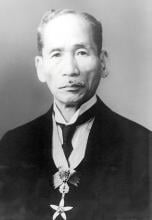
Umetaro Suzuki (7 April 1874 – 20 September 1943) was a Japanese scientist best remembered for his research on beriberi, a disease caused by vitamin B1 deficiency, characterized by limb stiffness, paralysis and pain.
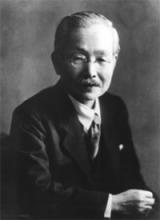
Kikunae Ikeda (8 October 1864 – 3 May 1936) was a Japanese chemist who discovered the fifth basic taste, umami.
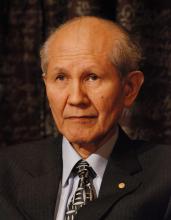
Osamu Shimomura (27 August 1928 – 19 October 2018) was a Japanese organic chemist and marine biologist who dedicated his career to understanding how organisms emitted light.
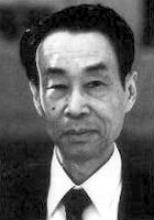
Motoo Kimura (13 November 1924 – 13 November 1994) was a Japanese theoretical population geneticist who is best remembered for developing the neutral theory of molecular evolution.

Chika Kuroda (24 March 1884 – 8 November 1968) was a Japanese chemist whose research focussed on the structures of natural pigments.
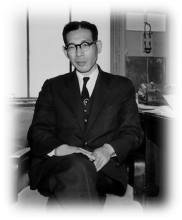
The field of solid-state ionics originated in Europe, but Takehiko Takahashi of Nagoya University in Japan was the first to coin the term ‘solid ionics’ in 1967. ‘Solid-state ionics’ first appeared in 1971 in another of his papers, and was likely a play on ‘solid-state electronics’, another rapidly growing field at the time.
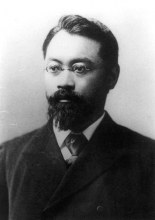
The techniques that make industrial pearl culturing possible were developed over a century ago at the Misaki Marine Biological Station in Japan. The station’s first director, Professor Kakichi Mitsukuri, emphasized to Kokichi Mikimoto in 1890 that stimulating pearl sac formation was important for pearl growth, and they went on to successfully develop methods for culturing pearls.
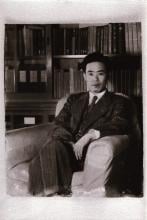
Japanese physicist Ukichiro Nakaya (1900-1962) made the world’s first artificial snowflakes. He started his research on snow crystals in the early 1930s at Hokkaido University, where there is an unlimited supply of natural snow in winter. By taking over 3,000 photographs, he established a classification of natural snow crystals and described their relationship with weather conditions.
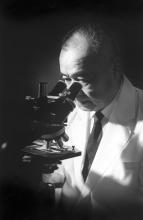
Minoru Shirota (April 23, 1899 – March 10, 1982) was a Japanese microbiologist who invented the popular fermented drink Yakult.
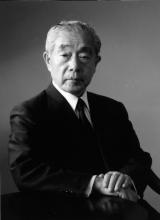
Japanese chemist Kenichi Fukui (4 October 1918 – 9 January 1998) was the first Asian scientist to be awarded the Nobel Prize in Chemistry. Together with Roald Hoffman, he received this honour in 1981 for his independent research into the mechanisms of chemical reactions.
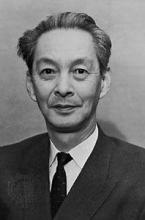
Shinichiro Tomonaga (31 March 1906 – 8 July 1979), together with Richard Feynman and Julian Schwinger, was awarded the Nobel Prize in Physics in 1965, for their contributions to advance the field of quantum electrodynamics. Tomonaga was also a strong proponent of peace, who actively campaigned against the proliferation of nuclear weapons and promoted the peaceful use of nuclear energy.
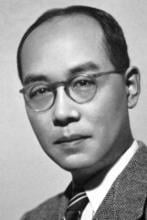
Hideki Yukawa (23 January 1907 – 8 September 1981) was awarded the Nobel Prize in Physics in 1949 for predicting the existence of the pi meson subatomic particle. Japan’s first Nobel laureate, Yakawa also expressed his support for nuclear disarmament by signing the Russell–Einstein Manifesto in 1955.
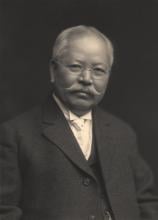
Japanese chemist Takamine Jokichi (3 November 1854 – 22 July 1922) founded the Tokyo Artificial Fertilizer Company, where he isolated a starch-digesting enzyme (named takadiastase) from the fungus Aspergillus oryzae.
Tsuneko (7 June 1933) and Reiji Okazaki (8 October 1930 – 1 August 1975) were a Japanese couple who discovered Okazaki fragments – short sequences of DNA that are synthesized during DNA replication and linked together to form a continuous strand.
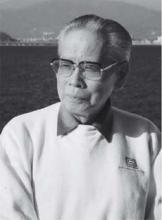
A Japanese surgeon, Tetsuzo Akutsu (20 August 1922 – 9 August 2007) built the first artificial heart capable of keeping an animal alive.
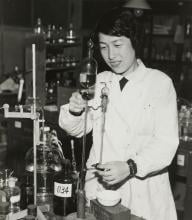
Japanese geochemist Katsuko Saruhashi developed the first method and tools for measuring carbon dioxide in seawater