
Japan
News
10 Mar 2023
Kavli Institute for the Physics and Mathematics of the Universe (Kavli IPMU)
Asia Research News met five female researchers to learn about their research, what drew them to Kavli IPMU, and their experiences there. These women, from diverse backgrounds, excel in their fields and show what can be achieved when women are not held back.
10 Mar 2023
Kavli Institute for the Physics and Mathematics of the Universe (Kavli IPMU)
Asia Research Newsは同所の女性研究者5名に、彼女らの研究について、そしてなぜKavli IPMUを選んだのか、これまでの同所での経験について話しを聞いた。それぞれ様々な背景を持ち、各分野で卓越している研究者らに、足かせのない女性がいかに飛躍できるかをみせてもらった。
10 Mar 2023
Earth-Life Science Institute (ELSI), Tokyo Institute of Technology
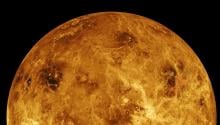
Finding extra-terrestrial life would transform how we view our place in the Universe, but reporting on the search for it poses challenges for scientists and the media.
10 Mar 2023
Earth-Life Science Institute (ELSI), Tokyo Institute of Technology
地球外生命が発見されれば、宇宙における私たちの存在意義に変化をもたらすだろう。しかしその探索に関する報道の在り方は、科学者やメディアにとって未だに大きな課題である。
10 Mar 2023
Kavli Institute for the Physics and Mathematics of the Universe (Kavli IPMU)
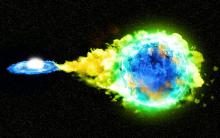
One astronomer never thought of leaving Japan, but then he did and became a world best.
10 Mar 2023
National Institute for Materials Science (NIMS)
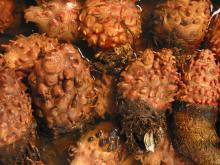
Hi-tech electrocatalysts made from seashells and waste animal blood could help build sustainable batteries, fuel cells and other electrochemical systems.
10 Mar 2023
National Institute for Materials Science (NIMS)
A model that rapidly searches through large amounts of materials could find sustainable alternatives to existing composites.
10 Mar 2023
National Institute for Materials Science (NIMS)
2.5-dimensional materials promise new applications for artificial intelligence, electronics, automobiles and the energy sector.
10 Mar 2023
Earth-Life Science Institute (ELSI), Tokyo Institute of Technology
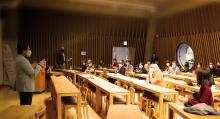
A science communication course at the Earth-Life Science Institute (ELSI) in Japan provides graduate students with practical skills to communicate research to a diverse audience.

10 Mar 2023
Earth-Life Science Institute (ELSI), Tokyo Institute of Technology
東京工業大学地球生命研究所(ELSI)のサイエンスコミュニケーションコースでは、大学院生が多様な対象に研究を伝えるための実践的なスキルの習得を目指す。

10 Mar 2023
National Institute for Materials Science (NIMS)
Machine learning algorithms allow analysis and characterization of the atomic arrangement of silicon surface superstructures without the need for human expertise.
10 Mar 2023
Hokkaido University
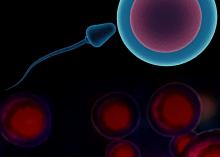
Two novel hypotheses address the “two-fold cost of sex”: one of the biggest enigmas in the evolution of sexual reproduction.
10 Mar 2023
National Institute for Materials Science (NIMS)
Scientists at Tokyo Medical and Dental University have discovered a new type of bone repairing material that could be used to more precisely fix bone defects.

10 Mar 2023
National Institute for Materials Science (NIMS)
An international collaboration is developing coating materials that could make windows better insulators.
10 Mar 2023
Hokkaido University
The first-ever molecular catalyst specifically tailored for mechanochemical reaction conditions enables high-efficiency transformations at near room temperature.
06 Mar 2023
Osaka Metropolitan University
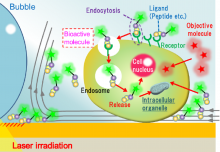
Osaka Metropolitan University researchers have used 100 seconds of laser irradiation to generate convection currents that selectively accelerate biochemical reactions—due to the photothermal effect—by concentrating biofunctional molecules at the cell surface. Using this method, useful molecules can be transported into cells at concentrations a hundred to a thousand times lower than with conventional methods. Furthermore, they also succeeded in selectively introducing small molecules into intracellular organelles usually impossible at low concentrations (hundreds of pmol/L) as well as inducing cell death in targeted cells by concentrating anticancer active peptides into them at concentrations so low that they would not be conventionally effective (several tens of nmol/L).
06 Mar 2023
Kanazawa University
Researchers at Kanazawa University report in Nano Letters the discovery of a biomolecular dynamical process likely relevant to gene expression. The process, revealed by means of high-speed atomic force microscopy, involves DNA and its packaging molecules.
06 Mar 2023
The University of Osaka
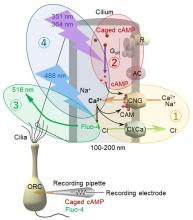
Researchers from Osaka University found that Ca2+ signaling simultaneously performed signal amplification and olfactory adaptation. The results demonstrated that this mysterious phenomenon was segregated inside the cilium. A novel system was used to observe changes in Ca2+ dynamics inside the thin structure of a cilium. Unveiling the mystery of Ca2+ signaling segregation further clarifies the mechanisms underlying the human sense of smell.

05 Mar 2023
Hiroshima University
Brain shrinkage patterns tied to low trust have links to depression vulnerability that can alert to its early detection even before symptoms appear.
02 Mar 2023
Hokkaido University
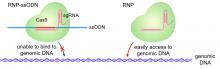
Lipid nanoparticles have been used to encapsulate CRISPR-Cas9 and deliver it to cells in mice, where it was highly effective at knocking down expression of a target protein.
02 Mar 2023
The University of Osaka
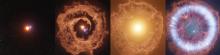
An international research team has discovered the first example of a supernova, known as SN 2018ivc, showing an unprecedented rebrightening at millimeter wavelengths about one year after the explosion.
With the help of the Atacama Large Millimeter/submillimeter Array -- or ALMA -- the analysis revealed that the dying massive star ejected a large amount of its envelope due to a strong binary interaction with a companion star that took place about 1500 years before the explosion.
In a paper published in The Astrophysical Journal Letters, the team posits that this rebrightening event in SN 2018ivc provides a missing link between supernovae -- or SN -- that occur in binary star systems and those that involve solitary massive stars.

01 Mar 2023
Osaka Metropolitan University
Osaka Metropolitan University scientists identified about 140,000 molecular clouds in the Milky Way Galaxy from large-scale data of carbon monoxide molecules, observed in detail by the Nobeyama 45-m radio telescope. Using artificial intelligence, the researchers estimated the distance of each of these molecular clouds to determine their size and mass, successfully mapping the distribution of the molecular clouds in the Galaxy in the most detailed manner to date.
27 Feb 2023
Tohoku University
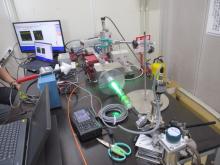
A collaborative research group from Tohoku University and the Toyohashi University of Technology has invented a new and efficient method to create metallic plasmas from solid metals under a strong magnetic field in a microwave resonator.
24 Feb 2023
Osaka Metropolitan University
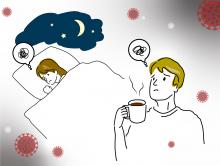
A research group from the Osaka Metropolitan University Graduate School of Medicine conducted a survey of 285 patients regarding the long-term aftereffects of COVID-19. As a result, they revealed that more than half of COVID-19 patients still had residual symptoms, even close to a year afterward. It became clear that fatigue, abnormalities in senses of taste and smell, hair loss, and sleep disorders could persist, regardless of the severity of the initial COVID-19.
24 Feb 2023
Kanazawa University
Researchers at Kanazawa University report in Angewandte Chemie International Edition how the formation and deformation speed of interlocked molecular structures called rotaxanes can be tuned — a discovery that may lead to an enhanced functionality of rotaxanes as building blocks for molecular machines.
24 Feb 2023
Hokkaido University
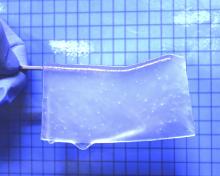
Synthetic hydrogels were shown to provide an effective scaffold for neuronal tissue growth in areas of brain damage, providing a possible approach for brain tissue reconstruction.
22 Feb 2023
Osaka Metropolitan University
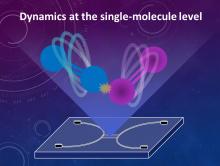
Researchers from Osaka Metropolitan University have developed principles and technologies of nanofluidic devices to freely manipulate nanomaterials, biomaterials, and molecules at the single-molecule level using fundamental technologies such as nanofluidic processing, functional integration, and fluidic control and measurement, which has pioneered the way to integrate various fields under nanofluidics.
21 Feb 2023
Hokkaido University
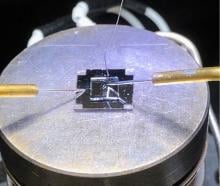
An effective, stable solid-state electrochemical transistor has been developed, heralding a new era in thermal management technology.
21 Feb 2023
Hokkaido University
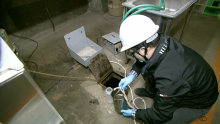
Sifting through sewage for SARS-CoV-2 genetic material could help authorities tailor infection control policies.
17 Feb 2023
Osaka Metropolitan University
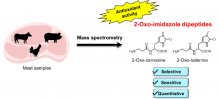
Osaka Metropolitan University scientists found that 2-oxo-imidazole-containing dipeptides (2-oxo-IDPs) exhibit very high antioxidant activity. Furthermore, they established a method to selectively and sensitively detect very small amounts of 2-oxo-IDPs and revealed for the first time that several types of 2-oxo-IDPs are contained in meat, including beef, pork, and chicken.
Researchers
Sorry, no researchers coming up for this topic.
Giants in history

Japanese biochemist Akira Endo (1933 – 2024) discovered the first statin, called mevastatin, which lowered cholesterol levels in the blood by inhibiting a key enzyme in the cholesterol biosynthesis pathway. His work laid the foundation for the development of statins to help patients lower their blood cholesterol levels and reduce their risk of heart disease or stroke.
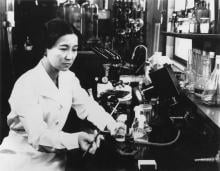
Ruby Sakae Hirose (1904 – 1960) was a Japanese-American scientist whose research contributed significantly to our understanding of blood clotting, allergies and cancer.
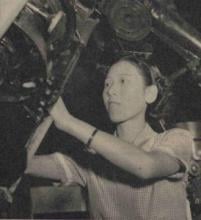
Haisako Koyama (1916 – 1997) was a Japanese solar observer whose dedication to recording sunspots – cooler parts of the sun’s surface that appear dark – produced a sunspot record of historic importance.
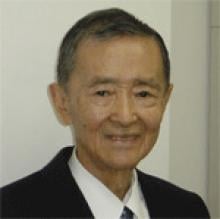
Michiaki Takahashi (17 February 1928 – 16 December 2013) was a Japanese virologist who developed the first chickenpox vaccine.
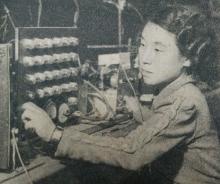
Toshiko Yuasa (11 December 1909 – 1 February 1980) was the first Japanese female physicist whose research on radioactivity shed light on beta decay – the process in which an atom emits a beta particle (electron) and turns into a different element.
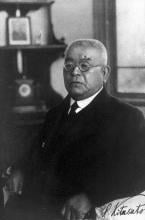
Baron Kitasato Shibasaburo (29 January 1856 – 13 June 1931) was a Japanese physician and bacteriologist whose work led to a new understanding of preventing and treating tetanus, diphtheria and anthrax.
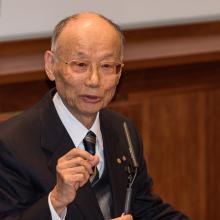
By isolating soil microorganisms and studying the compounds they produce, Satoshi Omura (born 1935) discovered almost 500 organic compounds with unique properties that were produced by these microorganisms, including many new antibiotics.
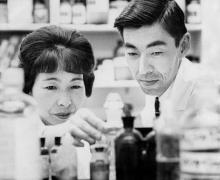
Husband and wife team, Kimishige (3 December 1925 – 6 July 2018) and Teruko Ishizaka (28 September 1926 – 4 June 2019) discovered the antibody class Immunoglobulin E (IgE) that triggers allergic reactions. They also discovered that IgE antibodies attach to white blood cells, known as mast cells, releasing histamine, which causes allergic reactions.
Husband and wife team, Kimishige (3 December 1925 – 6 July 2018) and Teruko Ishizaka (28 September 1926 – 4 June 2019) discovered the antibody class Immunoglobulin E (IgE) that triggers allergic reactions. They also discovered that IgE antibodies attach to white blood cells, known as mast cells, releasing histamine, which causes allergic reactions.
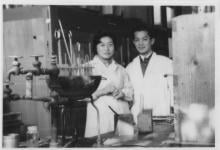
Reiji Okazaki (8 October 1930 – 1 August 1975) and Tsuneko (7 June 1933) were a Japanese couple who discovered Okazaki fragments – short sequences of DNA that are synthesized during DNA replication and linked together to form a continuous strand.
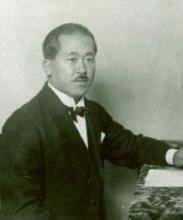
In 1915, Koichi Ichikawa along with pathologist Katsusaburo Yamagiwa became the first to prove that chronic exposure to chemicals can cause cancer.
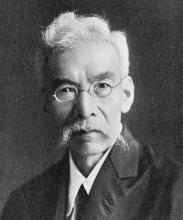
In 1915, pathologist Katsusaburo Yamagiwa and his research assistant Koichi Ichikawa became the first to prove that chronic exposure to chemicals can cause cancer.
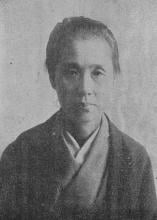
Ogino Ginko (3 March 1851 – 23 June 1913) was the first registered female doctor to practise modern medicine in Japan.
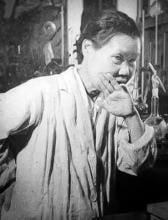
Michiyo Tsujimura (17 September 1888 – 1 June 1969) was a Japanese agricultural scientist and biochemist recognized for her research of green tea components.
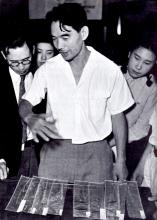
Hitoshi Kihara (1893 – 1986) was one of the most famous Japanese geneticists of the 20th century. One of his most significant contributions was identifying sex chromosomes (X and Y) in flowering plants.
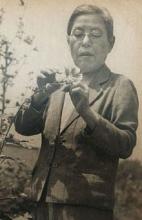
Kono Yasui (16 February 1880 – 24 March 1971) was a Japanese botanist who researched the genetics of poppies, corn and spiderworts and surveyed the plants that had been affected by the nuclear fallout after the atomic bombings of Hiroshima and Nagasaki.
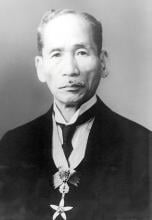
Umetaro Suzuki (7 April 1874 – 20 September 1943) was a Japanese scientist best remembered for his research on beriberi, a disease caused by vitamin B1 deficiency, characterized by limb stiffness, paralysis and pain.
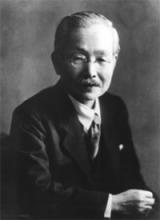
Kikunae Ikeda (8 October 1864 – 3 May 1936) was a Japanese chemist who discovered the fifth basic taste, umami.
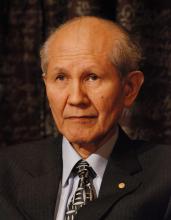
Osamu Shimomura (27 August 1928 – 19 October 2018) was a Japanese organic chemist and marine biologist who dedicated his career to understanding how organisms emitted light.
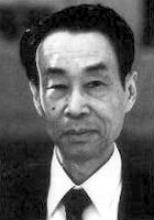
Motoo Kimura (13 November 1924 – 13 November 1994) was a Japanese theoretical population geneticist who is best remembered for developing the neutral theory of molecular evolution.

Chika Kuroda (24 March 1884 – 8 November 1968) was a Japanese chemist whose research focussed on the structures of natural pigments.
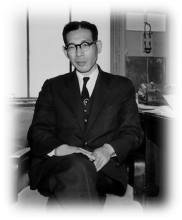
The field of solid-state ionics originated in Europe, but Takehiko Takahashi of Nagoya University in Japan was the first to coin the term ‘solid ionics’ in 1967. ‘Solid-state ionics’ first appeared in 1971 in another of his papers, and was likely a play on ‘solid-state electronics’, another rapidly growing field at the time.
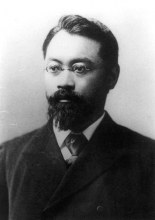
The techniques that make industrial pearl culturing possible were developed over a century ago at the Misaki Marine Biological Station in Japan. The station’s first director, Professor Kakichi Mitsukuri, emphasized to Kokichi Mikimoto in 1890 that stimulating pearl sac formation was important for pearl growth, and they went on to successfully develop methods for culturing pearls.
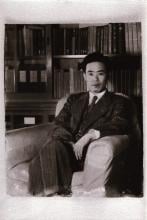
Japanese physicist Ukichiro Nakaya (1900-1962) made the world’s first artificial snowflakes. He started his research on snow crystals in the early 1930s at Hokkaido University, where there is an unlimited supply of natural snow in winter. By taking over 3,000 photographs, he established a classification of natural snow crystals and described their relationship with weather conditions.
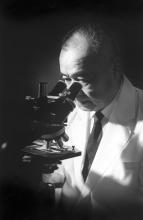
Minoru Shirota (April 23, 1899 – March 10, 1982) was a Japanese microbiologist who invented the popular fermented drink Yakult.
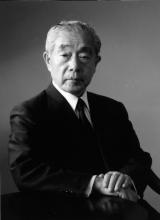
Japanese chemist Kenichi Fukui (4 October 1918 – 9 January 1998) was the first Asian scientist to be awarded the Nobel Prize in Chemistry. Together with Roald Hoffman, he received this honour in 1981 for his independent research into the mechanisms of chemical reactions.
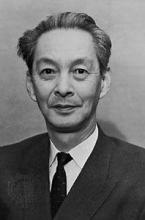
Shinichiro Tomonaga (31 March 1906 – 8 July 1979), together with Richard Feynman and Julian Schwinger, was awarded the Nobel Prize in Physics in 1965, for their contributions to advance the field of quantum electrodynamics. Tomonaga was also a strong proponent of peace, who actively campaigned against the proliferation of nuclear weapons and promoted the peaceful use of nuclear energy.
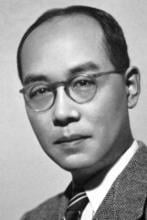
Hideki Yukawa (23 January 1907 – 8 September 1981) was awarded the Nobel Prize in Physics in 1949 for predicting the existence of the pi meson subatomic particle. Japan’s first Nobel laureate, Yakawa also expressed his support for nuclear disarmament by signing the Russell–Einstein Manifesto in 1955.
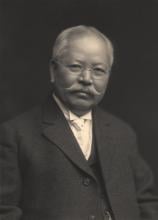
Japanese chemist Takamine Jokichi (3 November 1854 – 22 July 1922) founded the Tokyo Artificial Fertilizer Company, where he isolated a starch-digesting enzyme (named takadiastase) from the fungus Aspergillus oryzae.
Tsuneko (7 June 1933) and Reiji Okazaki (8 October 1930 – 1 August 1975) were a Japanese couple who discovered Okazaki fragments – short sequences of DNA that are synthesized during DNA replication and linked together to form a continuous strand.
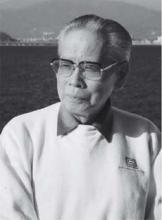
A Japanese surgeon, Tetsuzo Akutsu (20 August 1922 – 9 August 2007) built the first artificial heart capable of keeping an animal alive.
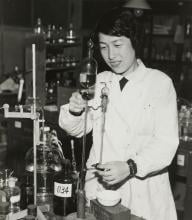
Japanese geochemist Katsuko Saruhashi developed the first method and tools for measuring carbon dioxide in seawater