

Japan
News
07 Sep 2022
Hokkaido University
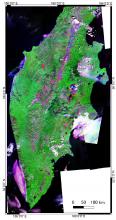
Scientists have quantified the glacier mass loss on the Kamchatka Peninsula; the accelerated loss in the region since the turn of the millennium is likely to increase in the short term.
06 Sep 2022
The University of Osaka
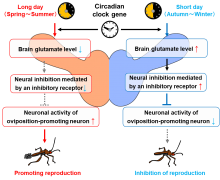
Researchers from Osaka University have found that photoperiod variation in bean bugs is regulated by genes involved in maintaining circadian rhythm via the neurotransmitter glutamate. The discovery of this mechanistic link between the biological clock and seasonal variation may have important implications for seasonal adaptation in other animals, given the conservation of glutamate across many species.

06 Sep 2022
Kavli Institute for the Physics and Mathematics of the Universe (Kavli IPMU)
Researchers have used giant lobes of gamma radiation to find that a small satellite galaxy of the Milky Way filled with dark matter, but whose emissions are more likely the result of millisecond pulsars blasting out cosmic particles.
05 Sep 2022
Ehime University
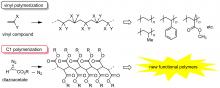
The research team directed by H. Shimomoto and E. Ihara in Ehime University successfully developed a new Pd-based initiating system affording carbon–carbon main-chain polymers bearing end-functional groups. This achievement will contribute to progress in the field of polymer chemistry and will allow us to develop new types of functional polymers.
01 Sep 2022
The University of Osaka
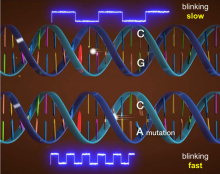
Researchers from Osaka University and collaborating partners detected unique fluorescence blinking patterns in experiments of electron transfer to single DNA molecules. They used these patterns to identify mRNA glioma point mutations in cell culture. The results of this work could help simplify surgical biopsies, enable real-time targeted therapy, and advance scientific understanding of cancer progression.
31 Aug 2022
The University of Osaka
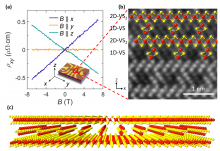
Researchers from Osaka University and collaborating partners used common nanofabrication procedures to fabricate versatile metal semiconductor superlattices. These superlattices exhibit a long-sought physical phenomenon—the anisotropic anomalous Hall effect at room temperature. This research will help improve the density of data storage, as well as the functionality of other technologies that also depend on advances in the microelectronics industry.

30 Aug 2022
Osaka Metropolitan University
Researchers at Osaka Metropolitan University have observed "baby stars" in the Small Magellanic Cloud, having an environment similar to the early universe. Toward one of the baby stars, they found molecular outflow, which has similar properties to those seen in the Milky Way galaxy, giving a new perspective on the birth of stars.
29 Aug 2022
Osaka Metropolitan University
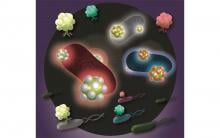
Osaka Metropolitan University scientists developed a simple, rapid method for identifying food poisoning-inducing bacteria based on color differences in the scattered light of composite structures consisting of gold, silver, and copper nanoparticles and polymer particles. Using these composites as test labels bound to specific bacteria, the researchers detected food poisoning bacteria E. coli O26, E. coli O157, and S. aureus as white, red, and blue scattered light, respectively, under the microscope. This new method enables simultaneous identification of multiple bacterial species within one hour, significantly shortening the usual 48-hour time requirement for conventional bacterial tests.
29 Aug 2022
Tohoku University
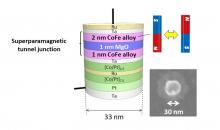
Tohoku University scientists in Japan have developed a mathematical description of what happens within tiny magnets as they fluctuate between states when an electric current and magnetic field are applied. Their findings, published in the journal Nature Communications, could act as the foundation for engineering more advanced computers that can quantify uncertainty while interpreting complex data.
26 Aug 2022
Osaka Metropolitan University
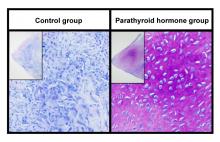
The meniscus—a cartilage cushion in the knee—can be damaged by sports injuries or aging, but rarely heals on its own. A torn meniscus is often treated with resection, which is doomed to degeneration of the articular cartilage. For knees that have had the meniscus resected, meniscus reconstruction using autologous tendons has been performed in some countries, including Japan, but the results have not been consistent. A research group at the Department of Orthopedic Surgery, Graduate School of Medicine, Osaka Metropolitan University discovered an extra step that changes transplanted tendon tissue to make it similar to the original meniscus, providing better knee cartilage protection. They found that parathyroid hormone, a drug used to treat osteoporosis, acted on tendon-derived cells to promote chondrogenic differentiation, which recreated a meniscus-like tissue.
26 Aug 2022
Osaka Metropolitan University
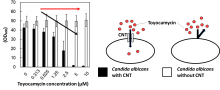
Osaka Metropolitan University researchers have clarified that an adenosine analog—the antibiotic toyocamycin—is taken up into cells by a concentrative nucleoside transporter (CNT) in Candida albicans, an opportunistic yeast fungus that causes candidiasis infections. This was also true of the human CNT3 protein. They found that C. albicans CNT and human CNT3 proteins take up similar molecules at different rates depending on their molecular size and structure. These results are expected to lead to the development of new antifungal drugs that are effective only against C. albicans and safe for humans.
26 Aug 2022
Ehime University
Immunity in Chronic Hepatitis B and innovative treatment development
24 Aug 2022
The University of Osaka
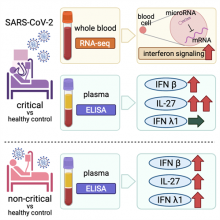
Researchers led by Osaka University performed RNA-sequencing analysis of whole blood samples from patients with severe COVID-19 and healthy controls to evaluate differences in messenger RNA and microRNA expression. The interferon signaling pathway was found to be activated in patients with severe COVID-19, and measurement of interferon proteins in the plasma revealed that interferon-β and interferon-λ1 play an important role in the severity of COVID-19.
23 Aug 2022
Institute for Integrated Cell-Material Sciences (iCeMS) at Kyoto University
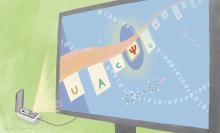
Two new approaches could help scientists use existing sequencing technology to better-distinguish RNA changes that affect how their genetic code is read.
23 Aug 2022
The University of Osaka
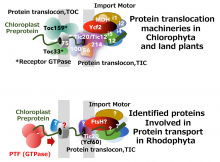
A research group led by Osaka University has found a new class of proteins in the red algae Cyanidioschyzon merolae that are involved in moving proteins across the membranes of chloroplasts – subcompartments that conduct photosynthesis within the cells of organisms such as plants and algae. These findings could be used to boost photosynthesis in several groups of algae that contribute considerably to marine biomass and are commercially farmed.
22 Aug 2022
Hokkaido University
Scientists show that there is a close association between clinical cases of COVID-19 and viral loads in wastewater, with the viral loads picking up to two days before the cases were detected.
22 Aug 2022
Osaka Metropolitan University
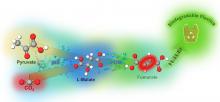
Osaka Metropolitan University researchers have successfully synthesized fumarate (fumaric acid), a raw material for unsaturated polyester resin, by combining carbon dioxide (CO2) with pyruvate (derived from biomass), using two biocatalysts: malate dehydrogenase and fumarase. Fumarate is currently used to make biodegradable plastic like polybutylene succinate from petroleum. However, this research has enabled the synthesis of fumarate without petroleum, consuming only CO2 and biomass-derived pyruvate.
22 Aug 2022
The University of Osaka
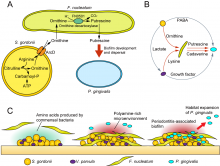
Researchers led by Osaka University shed light on a metabolic network integrated by an oral microbe Fusobacterium nucleatum (F. nucleatum). Analysis of co-cultures of F. nucleatum with other commensal oral bacteria revealed that metabolic cross-feeding enables F. nucleatum to increase the production of the polyamines putrescine and cadaverine, thereby promoting the development of periodontitis. The nutritional interactions of F. nucleatum may serve as potential targets for the development of new methods to prevent periodontal disease.

19 Aug 2022
Hiroshima University
Adults self-report their pain on a one to 10 numerical score, while children can point to an equivalent face scale — from a green smiling face to a red crying face — to indicate their pain. Newborns, however, cannot say a number or point to a face, leaving it up to their caregivers to identify and evaluate any pain they may be in. Until the turn of this century, a significant number of clinicians did not recognize that neonates could even experience pain, resulting in infrequent, nonstandard training for medical workers. Now, researchers are reporting that a flexible e-learning program improves neonate pain management knowledge and skills for nurses.
19 Aug 2022
Osaka Metropolitan University
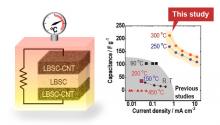
A research group led by Professor Akitoshi Hayashi at the Osaka Metropolitan University Graduate School of Engineering has successfully developed a high-capacity capacitor, an energy storage device—using a solid electrolyte with high deformability—that can operate at high temperatures. With this discovery, high-capacity capacitors can now be made which do not require cooling, this increases their efficiency and allows for new suitable applications.
19 Aug 2022
Tohoku University
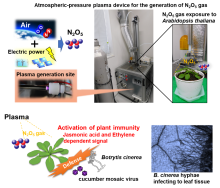
The flash of lightning and the dance of auroras contain a fourth state of matter known as plasma, which researchers have harnessed to produce a gas that may activate plant immunity against wide-spread diseases. The team, based at Tohoku University in Japan, published their findings on June 24 in PLOS One.
19 Aug 2022
Osaka Metropolitan University
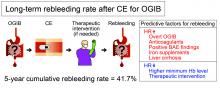
Osaka Metropolitan University researchers conducted a large-scale clinical study to identify long-term rebleeding rates and predictors of rebleeding after capsule endoscopy (CE) in patients with obscure gastrointestinal bleeding (OGIB). The results revealed that the overall cumulative rebleeding rate in the five years after CE was as high as 41.7%, and they also suggested the need for particularly careful follow-up in patients with liver cirrhosis, those taking anticoagulants, or those with previous massive bleeding. The study offers an important finding in considering the long-term follow-up regarding OGIB, and might contribute to future clinical guidelines for OGIB treatment.
19 Aug 2022
Hokkaido University
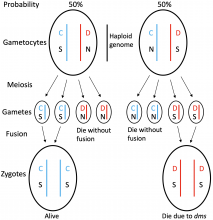
Two novel hypotheses have been proposed that address the “two-fold cost of sex”: one of the biggest enigmas in the evolution of sexual reproduction.
17 Aug 2022
The University of Osaka
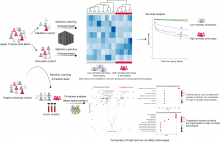
Osaka University researchers used a large dataset of trauma patients in Japan to determine the characteristics and biomarkers most strongly associated with mortality risk by employing machine learning methods. This work may help improve the practice of emergency medicine.
17 Aug 2022
The University of Osaka
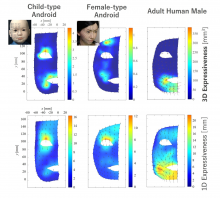
Osaka University researcher devises a scale for quantifying of the ability of android to produce artificial facial expressions. By measuring the range of motion compared with humans, this work may lead to more expressive robot helpers.
16 Aug 2022
Osaka Metropolitan University
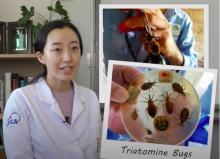
A two-year nationwide survey in El Salvador signals potential active transmission of Chagas disease and identifies areas where insect vectors have high parasite infection rates.
12 Aug 2022
Hokkaido University
Rare earth metals, when linked, can act as a conduit for energy flow, and show promise for the development of novel materials.

10 Aug 2022
Kanazawa University
Researchers at Kanazawa University report in Communications Biology that using common chemicals for fixing living cell samples for microscopy studies causes membrane proteins to aggregate.
10 Aug 2022
Kanazawa University
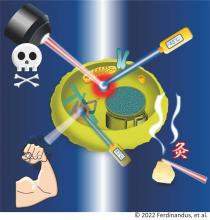
Researchers at Kanazawa University report in ACS Nano the development of a nanoparticle that acts as a heater and a thermometer. Inserting the nanoparticle in living cells results in a heat spot that, by switching it on and off, enables the controlled modulation of local cellular activities.
09 Aug 2022
Institute of Industrial Science, The University of Tokyo (UTokyo-IIS)
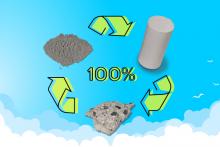
Researchers from the Institute of Industrial Science, The University of Tokyo have used thermal treatments to improve modern recycling of concrete. This work will add value to construction waste and contribute to sustainable development
Researchers
Sorry, no researchers coming up for this topic.
Giants in history

Japanese biochemist Akira Endo (1933 – 2024) discovered the first statin, called mevastatin, which lowered cholesterol levels in the blood by inhibiting a key enzyme in the cholesterol biosynthesis pathway. His work laid the foundation for the development of statins to help patients lower their blood cholesterol levels and reduce their risk of heart disease or stroke.
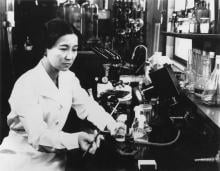
Ruby Sakae Hirose (1904 – 1960) was a Japanese-American scientist whose research contributed significantly to our understanding of blood clotting, allergies and cancer.
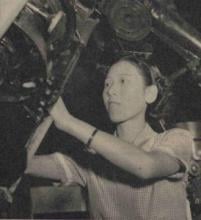
Haisako Koyama (1916 – 1997) was a Japanese solar observer whose dedication to recording sunspots – cooler parts of the sun’s surface that appear dark – produced a sunspot record of historic importance.
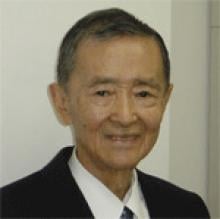
Michiaki Takahashi (17 February 1928 – 16 December 2013) was a Japanese virologist who developed the first chickenpox vaccine.
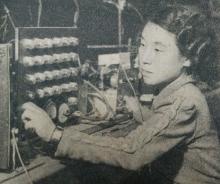
Toshiko Yuasa (11 December 1909 – 1 February 1980) was the first Japanese female physicist whose research on radioactivity shed light on beta decay – the process in which an atom emits a beta particle (electron) and turns into a different element.
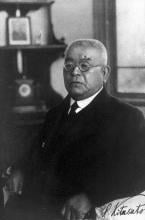
Baron Kitasato Shibasaburo (29 January 1856 – 13 June 1931) was a Japanese physician and bacteriologist whose work led to a new understanding of preventing and treating tetanus, diphtheria and anthrax.
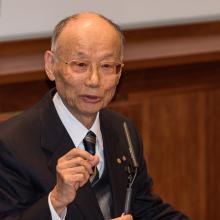
By isolating soil microorganisms and studying the compounds they produce, Satoshi Omura (born 1935) discovered almost 500 organic compounds with unique properties that were produced by these microorganisms, including many new antibiotics.
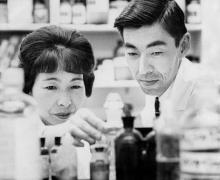
Husband and wife team, Kimishige (3 December 1925 – 6 July 2018) and Teruko Ishizaka (28 September 1926 – 4 June 2019) discovered the antibody class Immunoglobulin E (IgE) that triggers allergic reactions. They also discovered that IgE antibodies attach to white blood cells, known as mast cells, releasing histamine, which causes allergic reactions.
Husband and wife team, Kimishige (3 December 1925 – 6 July 2018) and Teruko Ishizaka (28 September 1926 – 4 June 2019) discovered the antibody class Immunoglobulin E (IgE) that triggers allergic reactions. They also discovered that IgE antibodies attach to white blood cells, known as mast cells, releasing histamine, which causes allergic reactions.
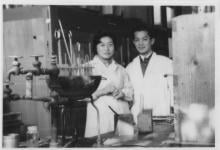
Reiji Okazaki (8 October 1930 – 1 August 1975) and Tsuneko (7 June 1933) were a Japanese couple who discovered Okazaki fragments – short sequences of DNA that are synthesized during DNA replication and linked together to form a continuous strand.
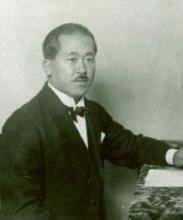
In 1915, Koichi Ichikawa along with pathologist Katsusaburo Yamagiwa became the first to prove that chronic exposure to chemicals can cause cancer.
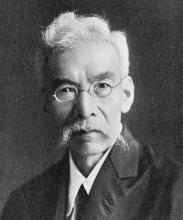
In 1915, pathologist Katsusaburo Yamagiwa and his research assistant Koichi Ichikawa became the first to prove that chronic exposure to chemicals can cause cancer.
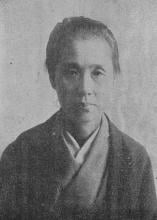
Ogino Ginko (3 March 1851 – 23 June 1913) was the first registered female doctor to practise modern medicine in Japan.
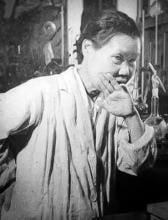
Michiyo Tsujimura (17 September 1888 – 1 June 1969) was a Japanese agricultural scientist and biochemist recognized for her research of green tea components.
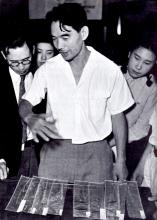
Hitoshi Kihara (1893 – 1986) was one of the most famous Japanese geneticists of the 20th century. One of his most significant contributions was identifying sex chromosomes (X and Y) in flowering plants.
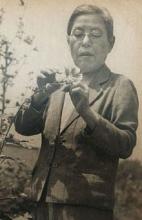
Kono Yasui (16 February 1880 – 24 March 1971) was a Japanese botanist who researched the genetics of poppies, corn and spiderworts and surveyed the plants that had been affected by the nuclear fallout after the atomic bombings of Hiroshima and Nagasaki.
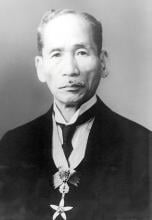
Umetaro Suzuki (7 April 1874 – 20 September 1943) was a Japanese scientist best remembered for his research on beriberi, a disease caused by vitamin B1 deficiency, characterized by limb stiffness, paralysis and pain.
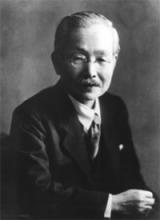
Kikunae Ikeda (8 October 1864 – 3 May 1936) was a Japanese chemist who discovered the fifth basic taste, umami.
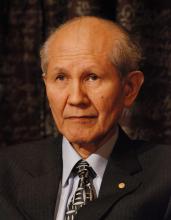
Osamu Shimomura (27 August 1928 – 19 October 2018) was a Japanese organic chemist and marine biologist who dedicated his career to understanding how organisms emitted light.
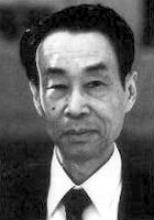
Motoo Kimura (13 November 1924 – 13 November 1994) was a Japanese theoretical population geneticist who is best remembered for developing the neutral theory of molecular evolution.

Chika Kuroda (24 March 1884 – 8 November 1968) was a Japanese chemist whose research focussed on the structures of natural pigments.
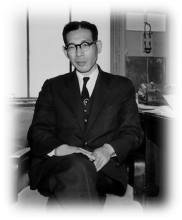
The field of solid-state ionics originated in Europe, but Takehiko Takahashi of Nagoya University in Japan was the first to coin the term ‘solid ionics’ in 1967. ‘Solid-state ionics’ first appeared in 1971 in another of his papers, and was likely a play on ‘solid-state electronics’, another rapidly growing field at the time.
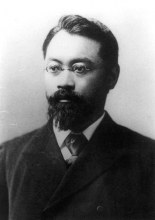
The techniques that make industrial pearl culturing possible were developed over a century ago at the Misaki Marine Biological Station in Japan. The station’s first director, Professor Kakichi Mitsukuri, emphasized to Kokichi Mikimoto in 1890 that stimulating pearl sac formation was important for pearl growth, and they went on to successfully develop methods for culturing pearls.
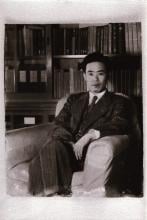
Japanese physicist Ukichiro Nakaya (1900-1962) made the world’s first artificial snowflakes. He started his research on snow crystals in the early 1930s at Hokkaido University, where there is an unlimited supply of natural snow in winter. By taking over 3,000 photographs, he established a classification of natural snow crystals and described their relationship with weather conditions.
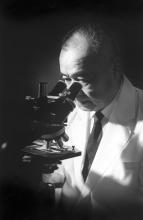
Minoru Shirota (April 23, 1899 – March 10, 1982) was a Japanese microbiologist who invented the popular fermented drink Yakult.
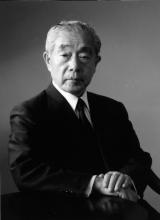
Japanese chemist Kenichi Fukui (4 October 1918 – 9 January 1998) was the first Asian scientist to be awarded the Nobel Prize in Chemistry. Together with Roald Hoffman, he received this honour in 1981 for his independent research into the mechanisms of chemical reactions.
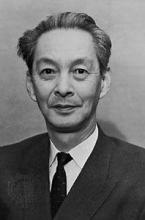
Shinichiro Tomonaga (31 March 1906 – 8 July 1979), together with Richard Feynman and Julian Schwinger, was awarded the Nobel Prize in Physics in 1965, for their contributions to advance the field of quantum electrodynamics. Tomonaga was also a strong proponent of peace, who actively campaigned against the proliferation of nuclear weapons and promoted the peaceful use of nuclear energy.
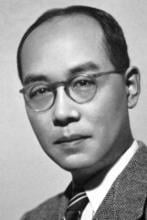
Hideki Yukawa (23 January 1907 – 8 September 1981) was awarded the Nobel Prize in Physics in 1949 for predicting the existence of the pi meson subatomic particle. Japan’s first Nobel laureate, Yakawa also expressed his support for nuclear disarmament by signing the Russell–Einstein Manifesto in 1955.
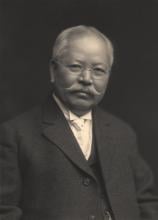
Japanese chemist Takamine Jokichi (3 November 1854 – 22 July 1922) founded the Tokyo Artificial Fertilizer Company, where he isolated a starch-digesting enzyme (named takadiastase) from the fungus Aspergillus oryzae.
Tsuneko (7 June 1933) and Reiji Okazaki (8 October 1930 – 1 August 1975) were a Japanese couple who discovered Okazaki fragments – short sequences of DNA that are synthesized during DNA replication and linked together to form a continuous strand.
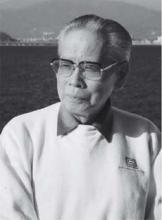
A Japanese surgeon, Tetsuzo Akutsu (20 August 1922 – 9 August 2007) built the first artificial heart capable of keeping an animal alive.
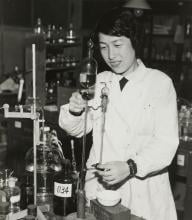
Japanese geochemist Katsuko Saruhashi developed the first method and tools for measuring carbon dioxide in seawater