

Japan
News
12 Oct 2023
Osaka Metropolitan University
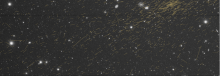
Osaka Metropolitan University scientists, in cooperation with researchers from the National Astronomical Observatory of Japan, have captured cosmic-ray extensive air showers with unprecedented precision using the prime-focus wide field camera mounted on the Subaru Telescope, situated atop Mauna Kea in Hawaii. Analyzing approximately 17,000 images captured between 2014 and 2020, they pinpointed 13 images containing extensive air showers, with a number of particle tracks far exceeding the usual count.

12 Oct 2023
Institute of Industrial Science, The University of Tokyo (UTokyo-IIS)
Researchers from the Institute of Industrial Science, The University of Tokyo, synthesize a two-center zinc complex that absorbs visible light as a solid and in solution.
12 Oct 2023
The University of Osaka
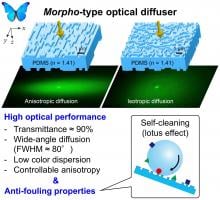
Researchers at Osaka University developed a nanostructured light diffuser that provides balanced lighting by diffracting blue and red light, and can be cleaned by simple rinsing with water. The diffuser consists of cheap materials and can be shaped with common tools. A protective glass coating maintains the diffuser’s optical performance yet adds durability. This work might improve the visual performance of everyday lighting displays.
11 Oct 2023
The University of Osaka
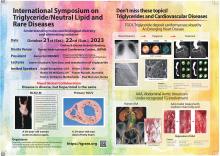
The International Symposium on Triglyceride/Neutral Lipid and Rare Diseases will be held at the Kyoto International Conference Center on October 21 and 22, 2023. The symposium is organized by the International Symposium on Triglyceride/Neutral Lipid and Rare Diseases Conference Committee, which is led by Dr. Ken-ichi Hirano (Graduate School of Medicine, Osaka University) and the Japan Intractable Diseases (Nanbyo) Research Foundation.
10 Oct 2023
Kanazawa University
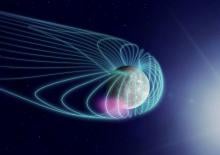
Observations during two flybys by the Mio spacecraft as part of the BepiColombo International Mercury Exploration Project have revealed that chorus waves occur quite locally in the dawn sector of Mercury. Mercury's magnetic field is about 1% of that of Earth, and it was unclear whether chorus waves would be generated like on Earth. The present study reveals that the chorus waves are the driving source of Mercury’s X-ray auroras, whose mechanism was not understood.
10 Oct 2023
The University of Osaka
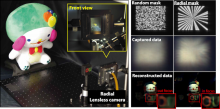
To extend the depth of field in mask-based lensless cameras, researchers from Osaka University replaced conventionally coded masks with a radial-coded mask optimized to balance the frequency response. As a result, the point spread function depends less on distance, and subjects at various depths can be clearly imaged. Experiments in simulation and on a prototype show that the depth of field of the camera is extended when the proposed radial mask is used.
06 Oct 2023
Osaka Metropolitan University
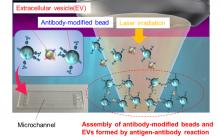
Osaka Metropolitan University researchers have used the power of laser light to accelerate the reaction between cancer cell-derived extracellular vesicles—a kind of nanoparticle—and antibody-modified microparticles. The three-dimensional structure of the resulting aggregates was then analyzed using a confocal optical system. The results demonstrated the ability to measure, within 5 minutes, approximately 1,000 to 10,000 nanoscale EVs contained in a 500 nL sample.
05 Oct 2023
Hokkaido University
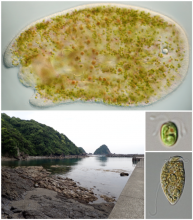
Acoels have been found to host a wide diversity of symbiotic, photosynthetic microalgae.
05 Oct 2023
The University of Osaka
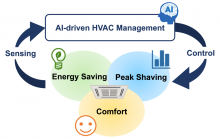
Researchers from Osaka University have developed a data-driven AI algorithm for controlling the heating and cooling of an office building. The system does not require ambient sensors or specific knowledge of the building’s rooms. During heating operations, the system was able to achieve energy savings of up to 30%, which can represent significant reductions to cost and environmental impact.
03 Oct 2023
The University of Osaka
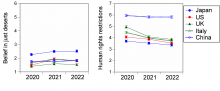
The researchers from Osaka University showed how two psychological factors, belief in just deserts (BJD) and human rights restrictions (HRR), differ across countries. BJD tended to be higher in Japan and lower in the UK, whereas HRR was higher in China and lower in Japan. Public health messages for high-HRR individuals could potentially be used effectively to reduce disease-related discrimination and prejudice.
02 Oct 2023
Osaka Metropolitan University
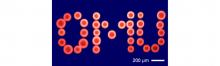
Researchers at Osaka Metropolitan University have succeeded in printing uniformly sized droplets with a diameter of approximately 100 µm using a liquid film of fluorescent ink. This ink, with a viscosity roughly 100 times that of water, was irradiated with an optical vortex, resulting in prints of exceptional positional accuracy at the micrometer scale.
02 Oct 2023
The University of Osaka
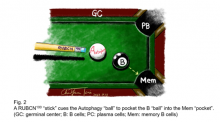
The authors discovered a shorter isoform of Rubicon called RUBCN100, which enhances autophagy in B cells.
02 Oct 2023
The University of Osaka
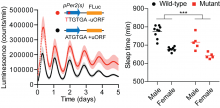
The authors identified a structure in the circadian mRNA Period2 that affects the sleep-wake cycle. The results indicate how translation and post-transcriptional processes influence the body’s internal clock and its impact on sleep patterns.
29 Sep 2023
Hokkaido University
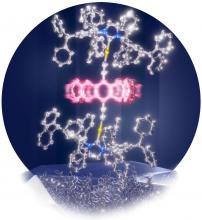
Concave, umbrella-like metal complexes provide space to enable the largest molecular rotor operational in the solid-state.
21 Sep 2023
Tohoku University
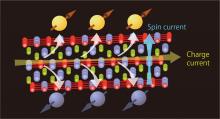
A recent discovery in spintronics could potentially transform future electronics. A group of researchers have revealed the key role of cobalt-tin-sulfur in reducing energy consumption, unlocking new possibilities for high-speed, low-power spintronic devices.
20 Sep 2023
The University of Osaka
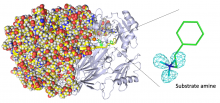
A team led by researchers at SANKEN (The Institute of Scientific and Industrial Research), at Osaka University has used neutron crystallography to image all of the atoms in a radical intermediate of a copper amine oxidase enzyme. They disclosed previously unknown details, such as precise conformational changes, that help to explain the enzyme's biochemistry. This work might help researchers engineer enzymes that facilitate unusual chemistry or are highly efficient at room temperature that are useful in chemical industry.

15 Sep 2023
Hiroshima University
A reanalysis of studies on night shift naps reveals the ideal snoozing schedule that may help combat fatigue and drowsiness when staying up all night.
15 Sep 2023
The University of Osaka
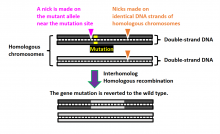
Researchers led by Osaka University developed a novel genome editing technique known as NICER, which results in significantly fewer off-target mutations than CRISPR/Cas9 editing. The technique uses a different type of enzyme that makes single-stranded “nicks” in the DNA. Repair of these nicks is more efficient and accurate than repair of double-strand breaks caused by the current CRISPR/Cas9 editing. This technique represents a novel approach for the treatment of genetic diseases caused by heterozygous mutations.
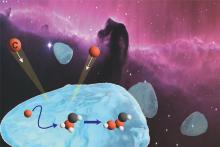
14 Sep 2023
Hokkaido University
Lab-based studies reveal how carbon atoms diffuse on the surface of interstellar ice grains to form complex organic compounds, crucial to reveal the chemical complexity in the universe.
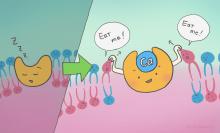
14 Sep 2023
Institute for Integrated Cell-Material Sciences (iCeMS) at Kyoto University
Scientists have found that extracellular calcium mediates the activation of a membrane protein that waves the flag signalling cell death
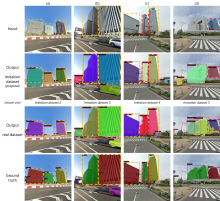
14 Sep 2023
The University of Osaka
To address the lack of suitable training data for deep-learning semantic segmentation models in urban landscaping, researchers from Osaka University developed a method that generates a training dataset without the need for real images or a model of an existing city. The method, which is based on procedural modelling and image-to-image techniques, enables segmentation models to achieve comparable performance under some conditions at a fraction of the cost of real dataset generation.
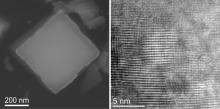
13 Sep 2023
Hokkaido University
Systematic copper doping boosts all-solar utilization in tungstic acid nanocrystals.
12 Sep 2023
Osaka Metropolitan University
Researchers at Osaka Metropolitan University have developed a measurement technique that rapidly measures the number of viable bacteria in food products. They have succeeded in drastically reducing the inspection time from 2 days to about 1 hour. With this technology, it will be possible to confirm food safety before shipment from factories and prevent food poisoning.
12 Sep 2023
Hiroshima University
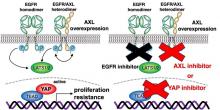
AXL and EGFR inhibitors combined hold promise in fighting certain head, neck, and lung cancers
12 Sep 2023
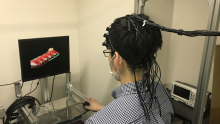
Patients with a specific form of chronic indigestion react differently to images of food, compared to healthy control subjects or patients with irritable bowel syndrome.
11 Sep 2023
Hokkaido University
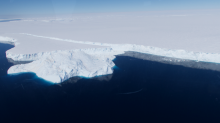
An international team of scientists has successfully conducted large-scale helicopter-based observations along the coast of East Antarctica and has identified pathways through which warm ocean water flows from the open ocean into ice shelf cavities for the first time.
11 Sep 2023
The University of Osaka
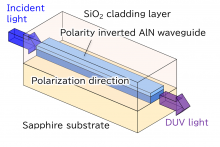
A research team led by researchers from Osaka University created an aluminum-nitride device that can convert visible light into deep-ultraviolet light through the process of second harmonic generation. This work can lead to the development of practical devices that can sterilize surfaces with ultraviolet radiation while using less energy.

11 Sep 2023
Hokkaido University
Elusive fundamental particles called neutrinos are predicted to interact unexpectedly with photons under extreme conditions.
07 Sep 2023
Kanazawa University
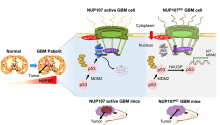
Researchers at Kanazawa University report in Cell Reports how alterations in the nuclear pores lead to the degradation of anti-tumor proteins.
06 Sep 2023
Tohoku University
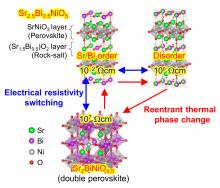
Researchers scientists have unlocked a new realm of possibilities for non-volatile phase change memory, a type of electronic memory capable of retaining data even without power. Traditionally, researchers have relied on chalcogenides, materials with reversible electrical properties during transitions between crystalline and amorphous states. But an exciting alternative has emerged in the form of layered nickelates, complex oxide materials composed of nickel ions. These nickelates, with their unique layered structure and thermally reversible switching of room-temperature electrical resistivity, offer superior performance and sustainability potential.
Researchers
Sorry, no researchers coming up for this topic.
Giants in history

Japanese biochemist Akira Endo (1933 – 2024) discovered the first statin, called mevastatin, which lowered cholesterol levels in the blood by inhibiting a key enzyme in the cholesterol biosynthesis pathway. His work laid the foundation for the development of statins to help patients lower their blood cholesterol levels and reduce their risk of heart disease or stroke.
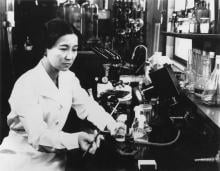
Ruby Sakae Hirose (1904 – 1960) was a Japanese-American scientist whose research contributed significantly to our understanding of blood clotting, allergies and cancer.
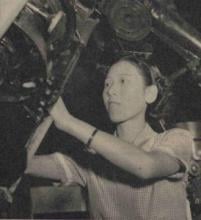
Haisako Koyama (1916 – 1997) was a Japanese solar observer whose dedication to recording sunspots – cooler parts of the sun’s surface that appear dark – produced a sunspot record of historic importance.
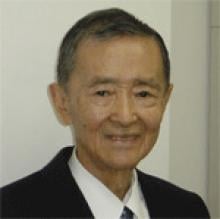
Michiaki Takahashi (17 February 1928 – 16 December 2013) was a Japanese virologist who developed the first chickenpox vaccine.
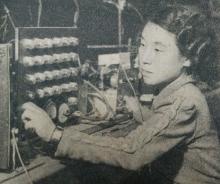
Toshiko Yuasa (11 December 1909 – 1 February 1980) was the first Japanese female physicist whose research on radioactivity shed light on beta decay – the process in which an atom emits a beta particle (electron) and turns into a different element.
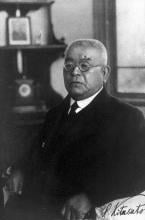
Baron Kitasato Shibasaburo (29 January 1856 – 13 June 1931) was a Japanese physician and bacteriologist whose work led to a new understanding of preventing and treating tetanus, diphtheria and anthrax.
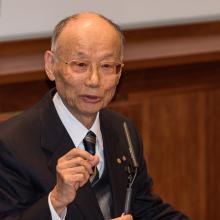
By isolating soil microorganisms and studying the compounds they produce, Satoshi Omura (born 1935) discovered almost 500 organic compounds with unique properties that were produced by these microorganisms, including many new antibiotics.
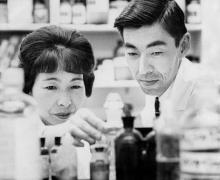
Husband and wife team, Kimishige (3 December 1925 – 6 July 2018) and Teruko Ishizaka (28 September 1926 – 4 June 2019) discovered the antibody class Immunoglobulin E (IgE) that triggers allergic reactions. They also discovered that IgE antibodies attach to white blood cells, known as mast cells, releasing histamine, which causes allergic reactions.
Husband and wife team, Kimishige (3 December 1925 – 6 July 2018) and Teruko Ishizaka (28 September 1926 – 4 June 2019) discovered the antibody class Immunoglobulin E (IgE) that triggers allergic reactions. They also discovered that IgE antibodies attach to white blood cells, known as mast cells, releasing histamine, which causes allergic reactions.
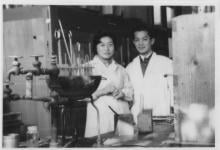
Reiji Okazaki (8 October 1930 – 1 August 1975) and Tsuneko (7 June 1933) were a Japanese couple who discovered Okazaki fragments – short sequences of DNA that are synthesized during DNA replication and linked together to form a continuous strand.
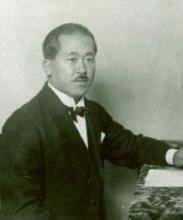
In 1915, Koichi Ichikawa along with pathologist Katsusaburo Yamagiwa became the first to prove that chronic exposure to chemicals can cause cancer.
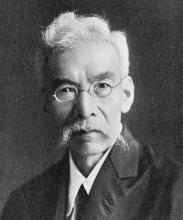
In 1915, pathologist Katsusaburo Yamagiwa and his research assistant Koichi Ichikawa became the first to prove that chronic exposure to chemicals can cause cancer.
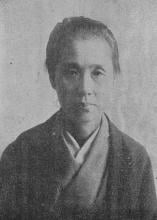
Ogino Ginko (3 March 1851 – 23 June 1913) was the first registered female doctor to practise modern medicine in Japan.
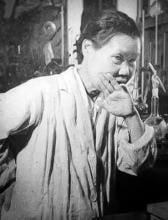
Michiyo Tsujimura (17 September 1888 – 1 June 1969) was a Japanese agricultural scientist and biochemist recognized for her research of green tea components.
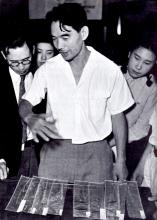
Hitoshi Kihara (1893 – 1986) was one of the most famous Japanese geneticists of the 20th century. One of his most significant contributions was identifying sex chromosomes (X and Y) in flowering plants.
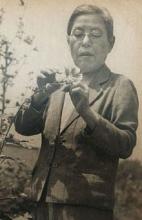
Kono Yasui (16 February 1880 – 24 March 1971) was a Japanese botanist who researched the genetics of poppies, corn and spiderworts and surveyed the plants that had been affected by the nuclear fallout after the atomic bombings of Hiroshima and Nagasaki.
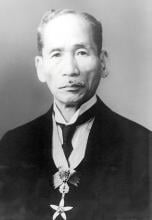
Umetaro Suzuki (7 April 1874 – 20 September 1943) was a Japanese scientist best remembered for his research on beriberi, a disease caused by vitamin B1 deficiency, characterized by limb stiffness, paralysis and pain.
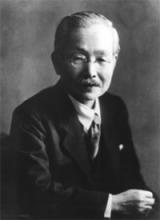
Kikunae Ikeda (8 October 1864 – 3 May 1936) was a Japanese chemist who discovered the fifth basic taste, umami.
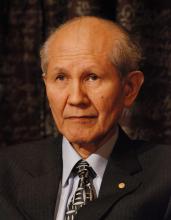
Osamu Shimomura (27 August 1928 – 19 October 2018) was a Japanese organic chemist and marine biologist who dedicated his career to understanding how organisms emitted light.
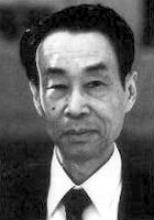
Motoo Kimura (13 November 1924 – 13 November 1994) was a Japanese theoretical population geneticist who is best remembered for developing the neutral theory of molecular evolution.

Chika Kuroda (24 March 1884 – 8 November 1968) was a Japanese chemist whose research focussed on the structures of natural pigments.
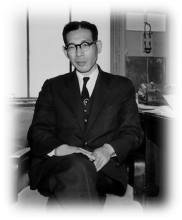
The field of solid-state ionics originated in Europe, but Takehiko Takahashi of Nagoya University in Japan was the first to coin the term ‘solid ionics’ in 1967. ‘Solid-state ionics’ first appeared in 1971 in another of his papers, and was likely a play on ‘solid-state electronics’, another rapidly growing field at the time.
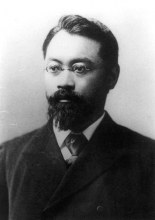
The techniques that make industrial pearl culturing possible were developed over a century ago at the Misaki Marine Biological Station in Japan. The station’s first director, Professor Kakichi Mitsukuri, emphasized to Kokichi Mikimoto in 1890 that stimulating pearl sac formation was important for pearl growth, and they went on to successfully develop methods for culturing pearls.
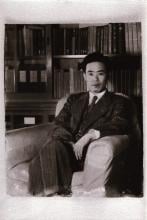
Japanese physicist Ukichiro Nakaya (1900-1962) made the world’s first artificial snowflakes. He started his research on snow crystals in the early 1930s at Hokkaido University, where there is an unlimited supply of natural snow in winter. By taking over 3,000 photographs, he established a classification of natural snow crystals and described their relationship with weather conditions.
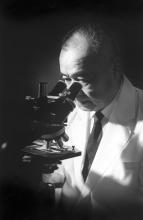
Minoru Shirota (April 23, 1899 – March 10, 1982) was a Japanese microbiologist who invented the popular fermented drink Yakult.
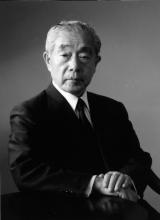
Japanese chemist Kenichi Fukui (4 October 1918 – 9 January 1998) was the first Asian scientist to be awarded the Nobel Prize in Chemistry. Together with Roald Hoffman, he received this honour in 1981 for his independent research into the mechanisms of chemical reactions.
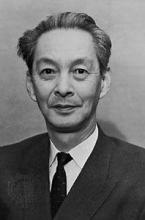
Shinichiro Tomonaga (31 March 1906 – 8 July 1979), together with Richard Feynman and Julian Schwinger, was awarded the Nobel Prize in Physics in 1965, for their contributions to advance the field of quantum electrodynamics. Tomonaga was also a strong proponent of peace, who actively campaigned against the proliferation of nuclear weapons and promoted the peaceful use of nuclear energy.
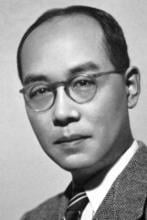
Hideki Yukawa (23 January 1907 – 8 September 1981) was awarded the Nobel Prize in Physics in 1949 for predicting the existence of the pi meson subatomic particle. Japan’s first Nobel laureate, Yakawa also expressed his support for nuclear disarmament by signing the Russell–Einstein Manifesto in 1955.
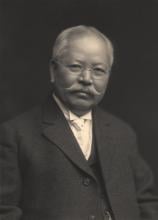
Japanese chemist Takamine Jokichi (3 November 1854 – 22 July 1922) founded the Tokyo Artificial Fertilizer Company, where he isolated a starch-digesting enzyme (named takadiastase) from the fungus Aspergillus oryzae.
Tsuneko (7 June 1933) and Reiji Okazaki (8 October 1930 – 1 August 1975) were a Japanese couple who discovered Okazaki fragments – short sequences of DNA that are synthesized during DNA replication and linked together to form a continuous strand.
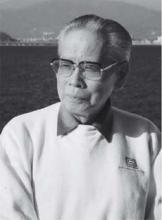
A Japanese surgeon, Tetsuzo Akutsu (20 August 1922 – 9 August 2007) built the first artificial heart capable of keeping an animal alive.
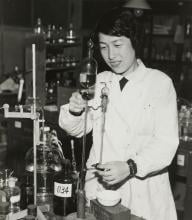
Japanese geochemist Katsuko Saruhashi developed the first method and tools for measuring carbon dioxide in seawater