

Nature Communications
About Nature Communications
Nature Communications is an open access journal that publishes high-quality research from all areas of the natural sciences. Papers published by the journal represent important advances of significance to specialists within each field.
- Website: https://www.nature.com/ncomms/
News
23 Oct 2026
Singapore University of Technology and Design
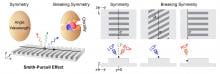
SUTD researchers have discovered that the light electrons emit as they skim past a grating has always carried a hidden handedness, and that twisting the grating or nudging the beam sideways turns a plain silicon structure into a chiral, broadly tunable light source.

22 Oct 2026
YOKOHAMA National University
Scientists introduce tiny holes in silicon to slow down light, improving the efficiency of data signal conversion
22 Oct 2026
Singapore University of Technology and Design
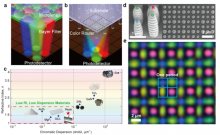
SUTD researchers have designed and 3D-printed microscopic colour routers that can capture clearer images in dim conditions without the light losses of conventional filters.
21 Oct 2026
National Taiwan University
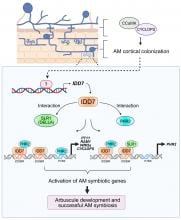
Researchers at National Taiwan University have identified a rice protein that helps plants establish beneficial partnerships with soil fungi. The protein, IDD7, works with regulators of growth and nutrient responses to switch on genes needed for successful root–fungus cooperation.
12 Oct 2026
National Taiwan University
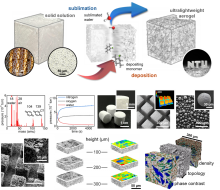
Researchers at National Taiwan University (NTU), a collaboration from the College of Engineering, College of Medicine, and the National Taiwan University Hospital (NTUH), have developed a revolutionary method for producing aerogels, introducing what they describe as the world's first purely gaseous-born aerogel fabrication platform.
05 Oct 2026
The University of Osaka
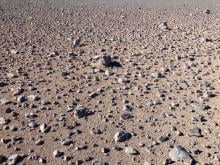
Researchers at the University of Osaka have developed a method for distinguishing the L- and D-forms of amino acids based on current waveforms generated by single molecules passing through a nanogap. The L/D ratio of amino acids is a potential biosignature of life. Major features of the amino acid composition were captured for astrobiologically relevant samples. The method could be used to develop electrical instruments for extraterrestrial life detection.
05 Oct 2026
National Taiwan University
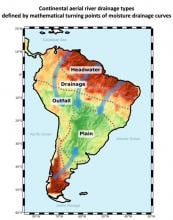
Bringing together expertise in geography, atmospheric sciences and civil engineering, a National Taiwan University team has discovered that invisible “rivers in the sky” form drainage systems much like rivers on land. Their new method identifies the critical upwind areas that sustain rainfall, offering a new perspective on land and water management.

01 Oct 2026
Duke-NUS Medical School
Analysis of 3.8 million immune cells from nearly 2,000 people reveals distinct waves of immune ageing and sex-specific changes that may help explain differences in age-related and autoimmune diseases.
28 Sep 2026
Kanazawa University
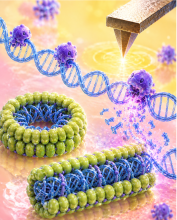
Researchers at the Nano Life Science Institute (WPI-NanoLSI) at Kanazawa University have directly visualized how enzymes find and break DNA molecules in real time. Using high-speed atomic force microscopy, the team followed individual enzymes as they moved along DNA and found that they repeatedly returned to vulnerable regions before breaking them apart. The findings reveal how the structure of DNA influences its vulnerability to enzymatic breakdown.
The research was led by Richard Wong and his team was Jingge Yang, Yujia Qiu, Keesiang Lim and Toshio Ando.

10 Sep 2026
Kanazawa University
For decades, scientists have understood proteins primarily through two defining features: their amino acid sequence and their three-dimensional structure. This framework has driven major advances in biology, biotechnology, and medicine, culminating in recent artificial intelligence tools capable of predicting protein structures with remarkable accuracy. Yet a fundamental challenge remains: even when a protein's sequence and structure are known, predicting its function, interactions, and behavior often remains difficult.
An international team of researchers from Japan, Finland, Italy, and the United States now reports evidence that part of this missing information may lie in an often-overlooked component of proteins: the highly organized water surrounding them. In a study accepted for publication in Nature Communications, the team provides the first direct three-dimensional visualization of sequence-dependent hydration architectures surrounding peptide assemblies at sub-nanometer resolution using advanced three-dimensional atomic force microscopy (3D-AFM) (Fig.1).
03 Sep 2026
Hiroshima University
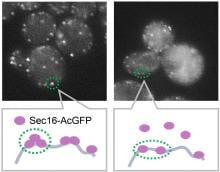
A study in budding yeast suggests that changes in membrane lipids trigger a braking system that slows internal protein transport when the endoplasmic reticulum comes under stress, comparable to modern logistics networks where shipments are slowed when distribution hubs are under stress.

03 Sep 2026
Institute of Industrial Science, The University of Tokyo (UTokyo-IIS)
A team led by researchers from the Institute of Industrial Science, The University of Tokyo shows that controlling the spin of hydrogen atoms can regulate chemical reactions
02 Sep 2026
National Taiwan University
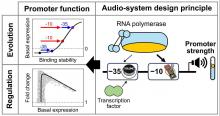
Gene regulation research mainly focuses on transcription factors. However, recent studies reveal core promoters as a critical yet overlooked component shaping the evolution and engineering of transcriptional regulation.
02 Sep 2026
Ehime University
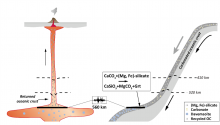
Subducted Carbonates Drive Deep Carbon Cycling and Reshape Mantle Discontinuity Structure
25 Aug 2026
Kanazawa University
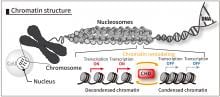
Developmental disorders, including autism, entail challenges in social life; as the number of affected individuals has risen, this has become a significant societal concern. Using a mouse model, we demonstrate that a mutation in CHD8, a gene associated with autism spectrum disorder, causes abnormal differentiation of ventral progenitor cells, leading to autistic-like behavior in adulthood. This should lead to the elucidation of mechanisms underlying autism onset during brain development and to the advancement of therapeutics.
24 Aug 2026
National Taiwan University
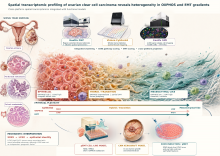
Ovarian clear cell carcinoma (OCCC) has a higher prevalence among East Asian women and is characterized by poor clinical outcomes. An interdisciplinary team led by Professor Ruby Yun-Ju Huang at National Taiwan University College of Medicine has established a comprehensive spatial atlas of OCCC, revealing how distinct tumor cell populations are organized within the same tumor and identifying a key molecular regulator of tumor plasticity.
20 Aug 2026
National Taiwan University
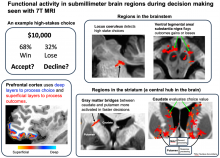
Scientists have identified submillimeter gray matter nuclei in the human brain involved in the distinct stages of processing information when making rapid, high-stakes decisions. These findings provide critical insights for precise targeting of the neural substrates that govern human choice behavior.
20 Aug 2026
The University of Osaka
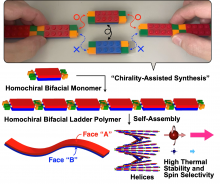
Researchers from the University of Osaka have developed a new class of chiral semiconducting polymers that can generate highly spin-polarized electrical currents. The team’s unique molecular design allows the polymers to self-assemble into helical structures that efficiently filter electron spins, offering a promising platform for future spintronic devices and clean-energy technologies.
05 Aug 2026
Tohoku University
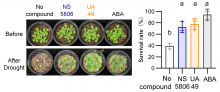
As climate change drives up temperatures worldwide and water becomes scarce, how can we make sure crops survive? Tohoku University researchers have identified a new class of small molecules that enhances plant drought tolerance.
05 Aug 2026
National Taiwan University
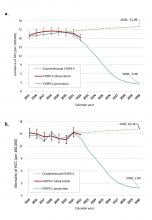
A county-wide program in Taiwan combined risk-based screening with decentralized treatment, dramatically improving hepatitis C diagnosis and cure while projecting liver cancer and mortality reductions that meet the World Health Organization's elimination targets by 2030.1.

05 Aug 2026
Springer Nature
The flowering plant Saxifraga candelabrum has been confirmed as a new carnivorous lineage, according to research published in Nature Communications, supporting a prediction made by Charles Darwin about the plants.
31 Jul 2026
National Taiwan University
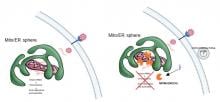
Researchers at National Taiwan University engineer an ENDOG anchoring on mitochondrial surface, namely MOM-ENDOG, which expression efficiently degrades the viral RNA transcripts synthesized at mitochondrial sites without causing nuclear DNA damages. Delivery of modified mRNA encoding wild-type but not catalytic-dead MOM-ENDOG markedly suppresses the propagation of VSV, Influenza, Dengue, and Zika virus.
30 Jul 2026
National Taiwan University
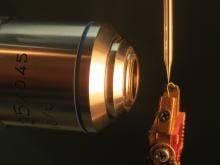
Using direct electrical recordings from individual lysosomes, researchers discovered that sugar chains attached to the lysosomal ion channel TPC2 act as a molecular brake. Because TPC2 dysfunction has been linked to viral infections, neurodegenerative disorders and cancer, the findings may provide a new framework for understanding disease mechanisms and developing more targeted ways to regulate lysosomal signaling.

29 Jul 2026
Institute of Industrial Science, The University of Tokyo (UTokyo-IIS)
Researchers from the Institute of Industrial Science, The University of Tokyo experimentally demonstrate unique optical behavior from a long-sought aperiodic pattern

28 Jul 2026
Institute for Integrated Cell-Material Sciences (iCeMS) at Kyoto University
Researchers find that fluctuations in nanopore structure are the key factor influencing their performance

24 Jul 2026
National Taiwan University
Researchers at Academia Sinica and National Taiwan University used advanced methyl NMR spectroscopy to reveal how dozens of cancer-associated mutations disrupt the long-range communication network that enables the tumor suppressor BAP1 to function, creating the largest experimental molecular map of BAP1 mutations to date. The findings uncover a previously hidden mechanism underlying cancer-associated BAP1 dysfunction and provide a foundation for developing future therapies that target protein dynamics and allosteric regulation rather than the active site alone.
23 Jul 2026
Hiroshima University
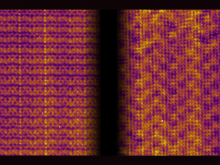
Researchers reveal how electronic patterns emerge and can be controlled in the graphene-like quantum material CeTe₃.
23 Jul 2026
Tohoku University
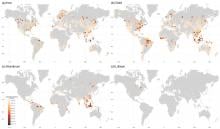
The battle against environmental degradation is complex. Green technologies can be both part of the solution and part of the problem, a recent study has revealed. Researchers from Tohoku University and the National Institute for Environmental Studies have utilized remote sensing and machine learning to reveal the impacts mining for minerals in green technologies has on biodiversity.
23 Jul 2026
Osaka Metropolitan University
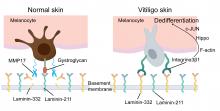
Researchers find dormant pigment cells in vitiligo patches, suggesting a new treatment strategy
20 Jul 2026
City University of Hong Kong (CityUHK)
A research team led by Professor Sai Kishore Ravi from SEE at CityUHK has successfully demonstrated how mechanical vibrations can be harnessed to drive the production of useful chemicals from water.