
Engineering & Technology
News
07 Oct 2026
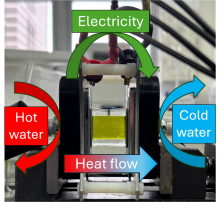
Water-based electrochemical devices could help convert low-temperature waste heat into electricity. However, much remains unknown about how they work, and detailed measurements at National Taiwan University are now revealing their inner workings and genuine operational efficiency.
06 Oct 2026
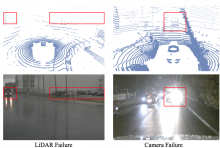
SUTD researchers have developed novel solutions that keep an autonomous vehicle’s perception accurate in rain, darkness and unfamiliar cities.
06 Oct 2026
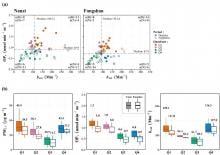
Published in Journal of Hazardous Materials, a new study reveals that atmospheric particles can have high harmful potential even when visibility is only slightly reduced, and that water-soluble organic matter and particle water content help determine whether these two effects occur together. Researchers also found that nitrate can strongly reduce visibility without causing a similar increase in harmful potential, suggesting that pollution-control strategies should consider both effects.
05 Oct 2026
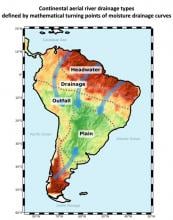
Bringing together expertise in geography, atmospheric sciences and civil engineering, a National Taiwan University team has discovered that invisible “rivers in the sky” form drainage systems much like rivers on land. Their new method identifies the critical upwind areas that sustain rainfall, offering a new perspective on land and water management.
02 Oct 2026
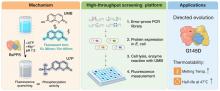
The lab at National Taiwan University has developed a simple fluorescence-based method to rapidly test the activity of an enzyme that phosphorylates phenolic compounds. This new platform makes it much easier to screen thousands of enzyme variants and provides a practical tool for exploring and improving phenolic compound–phosphorylating enzymes.
01 Oct 2026
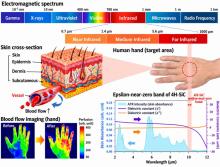
This study published in Advanced Science reports a wavelength-matched far-infrared approach for enhancing peripheral blood circulation using silicon carbide (SiC), which exhibits epsilon-near-zero behavior near 10.3 μm. By matching the selective thermal emission of SiC with the low-absorption optical window of human skin, the study demonstrates enhanced cutaneous blood flow compared with a conventional broadband graphite emitter. After 20 minutes of irradiation, SiC increased blood perfusion by 30.2%, compared with 18.6% for graphite, while maintaining skin temperature below 36 °C and without significant changes in blood pressure or heart rate. These results demonstrate the potential of wavelength-selective ENZ emitters for localized and thermally safe biomedical thermal modulation.

01 Oct 2026
Researchers at SUTD have built a robotic platform that can be dropped from the air onto remote waters and sail autonomously using wind energy, pairing rapid aerial deployment with the potential for long duration marine monitoring.
30 Sep 2026
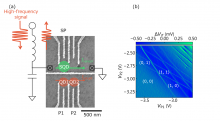
Researchers at Tohoku University and collaborators have demonstrated key technologies for controlling and measuring electrons in zinc oxide quantum dots, an important step toward developing spin-based quantum devices. Their results provide a new platform for exploring how electron spins behave in this promising material.
30 Sep 2026
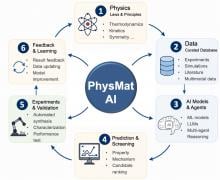
Correlation does not imply causation. Using AI to discover new materials is becoming more common, but data-driven approaches sometimes rely heavily on correlations and make testing AI-based predictions difficult. A new perspective paper published by Tohoku University researchers developed a framework for incorporating physics-based principles into AI to generate more interpretable, testable, and meaningful predictions.
29 Sep 2026
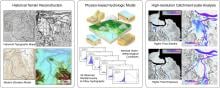
Researchers at Tohoku University ran flood simulations on current-day Marumori Town, Japan, and compared it to data from over one hundred years ago. Their analysis shows how flood risk changes as we install anti-flooding infrastructure, and how this also affects where communities deem it safe to put down roots.
29 Sep 2026
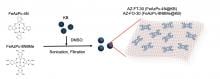
What if the blue pigment in your ink or dye could help power the future of clean energy? A research group has fine-tuned blue pigment molecules to create a blue-pigment based catalyst that is high-performing and free of the more expensive platinum.

25 Sep 2026
New laser-powered technology rapidly gathers microscopic targets for faster, more sensitive and selective detection
24 Sep 2026
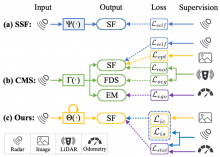
IterFlow uses camera images and vehicle motion data during training to help 4D radar estimate how objects move, reducing reliance on costly LiDAR supervision.

24 Sep 2026
A four-legged robot completed a marathon in 4 hours and 19 minutes alongside human runners, on a single battery charge
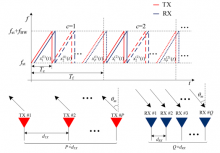
22 Sep 2026
- Division of Mobility Technology and JuKwang Precision Co., Ltd. jointly develop a real-time, low-power “ultra-high-resolution radar algorithm”
- Industry-academia collaboration with a local company opens new possibilities for applications in autonomous driving and intelligent robotics
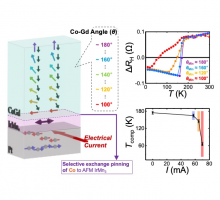
22 Sep 2026
- DGIST Professor Jung-Il Hong’s team successfully controls magnetic properties using only “current pulses,” without complex chemical processing
- Reorienting only the material’s internal spins lowers the compensation temperature by up to 110 K
- The study was published in the international journal Advanced Functional Materials
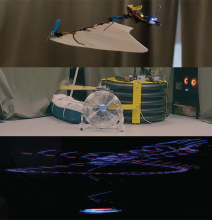
18 Sep 2026
By giving a maple-seed-inspired robot the ability to plan ahead, researchers improved its flight accuracy without adding motors or mechanical complexity.
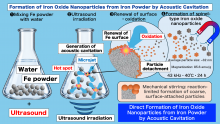
18 Sep 2026
Rust usually takes months or years to form naturally, but researchers at Tohoku University found a way to speed it up dramatically. By blasting iron powder in water with ultrasound, they triggered the formation of spinel-type iron oxide nanoparticles in as little as 24 hours, no chemicals required. The technique could offer a greener route to materials used in magnets, catalysts, and biomedical applications.
15 Sep 2026
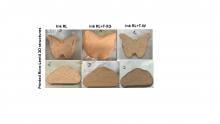
SUTD researchers have turned minimally processed rice and lentil flours into 3D-printable pastes that cook into distinctly textured foods, offering a route to complete-protein vegetarian meals that do not depend on refined protein isolates.

15 Sep 2026
AI-powered cyborg cockroaches, Undiagnosed kidney disease, Plants as genetic engineers, AI and mental workload, Carnivorous plants confirm Darwin prediction, Moisture conveyor belt and Forever chemicals in furry friends. Read all in the latest Editor's Choice.
14 Sep 2026
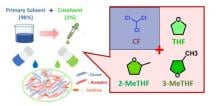
Researchers from National Taiwan University have developed a simple solvent-mixing strategy that optimizes the microstructures of all-polymer organic solar cells, enabling ultrafast energy transfer and boosting power conversion efficiency beyond 17%.
11 Sep 2026
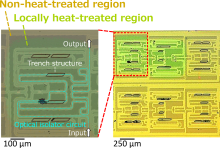
Kyocera Corporation and Tohoku University have developed a new technology that integrates optical isolators directly onto silicon photonics chips using laser annealing. Building on their previous collaboration, the two organizations will continue working toward commercialization and more efficient, sustainable information technologies.

10 Sep 2026
For decades, scientists have understood proteins primarily through two defining features: their amino acid sequence and their three-dimensional structure. This framework has driven major advances in biology, biotechnology, and medicine, culminating in recent artificial intelligence tools capable of predicting protein structures with remarkable accuracy. Yet a fundamental challenge remains: even when a protein's sequence and structure are known, predicting its function, interactions, and behavior often remains difficult.
An international team of researchers from Japan, Finland, Italy, and the United States now reports evidence that part of this missing information may lie in an often-overlooked component of proteins: the highly organized water surrounding them. In a study accepted for publication in Nature Communications, the team provides the first direct three-dimensional visualization of sequence-dependent hydration architectures surrounding peptide assemblies at sub-nanometer resolution using advanced three-dimensional atomic force microscopy (3D-AFM) (Fig.1).
10 Sep 2026
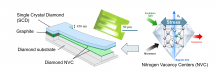
When tiny devices called MEMS (used in microphones, biosensors) undergo physical stress, their performance is compromised. Researchers found a new way to track this stress using a sensor that is part of the device.

09 Sep 2026
Researchers at Tohoku University have discovered that changing the number of layers in a crystal can systematically tune both the magnetic and topological properties of a material. By synthesizing a brand-new compound, the team showed how adding spacer layers shifts magnetic order from antiferromagnetic to ferrimagnetic - while also producing a highly tilted "type-II" Dirac electron state that can't exist for particles in a vacuum.
09 Sep 2026
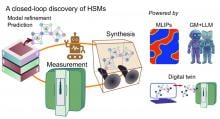
Finding better materials to store hydrogen safely and efficiently is key to clean energy, but AI models trained on incomplete data can recommend candidates that don't actually work in practice. An international team led by Tohoku University, drawing on insight from 69 researchers, has proposed a "physics-aware" framework that combines thermodynamic constraints, reproducible data, and real experimental feedback to make AI-guided materials discovery more reliable. The roadmap could help accelerate the search for practical hydrogen storage solutions to support future clean-energy systems.
08 Sep 2026
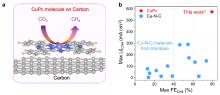
Scientists have turned a common blue pigment into a powerful tool for fighting climate change. Researchers at Tohoku University, Hokkaido University, and AZUL Energy created a copper phthalocyanine catalyst that converts carbon dioxide directly into methane fuel in a single step, reaching nearly 80% efficiency and sustaining performance for 80+ hours. The breakthrough could make carbon recycling more practical and scalable using an inexpensive, readily available material.
08 Sep 2026
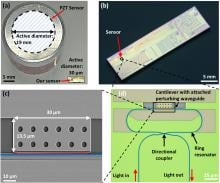
- Professors Sangyoon Han and Jaesok Yu’s teams use semiconductor fabrication processes to develop a “non-contact, ultra-high-sensitivity” ultrasonic receiver
- Detects MHz-range ultrasound through the air without the need for gel, achieving a 25,000-fold improvement in responsivity per unit sensing area
- Expected to revolutionize precision nondestructive testing of contamination-sensitive components such as semiconductor wafers and secondary batteries
- Published in Photonics Research, a renowned international journal in the field of optics
05 Sep 2026
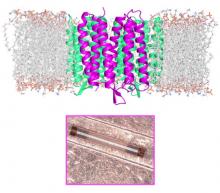
New technique provides high-resolution structures of notoriously difficult proteins
04 Sep 2026
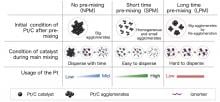
A new study shows that the Pt/C catalyst state before ionomer addition governs later ink dispersion and electrochemical Pt accessibility.
Events

16 Dec 2026 to 18 Dec 2026
Researchers, industry specialists and innovators will gather in Bangkok for the 7th International Conference on Materials Research and Innovation (7th ICMARI 2026), bringing together expertise in polymers, rubber, circular materials and advanced materials.
29 Jun 2026
This talk for The Newcastle University in Singapore Summer Camp 2026 undergraduates provided an Overview of Singapore’s commitment and challenges to achieving Net-Zero Carbon Emissions, the causes and effects of Global Warming and Environmental Sustainability. Monday, 29 June 2026, 2.15-3.15pm, Venue: Ngee Ann Academy, 391A Orchard Rd, Tower A, Singapore 238873.

17 Sep 2026 to 19 Sep 2026
Step into the Future at Taiwan Innotech Expo 2026!
Get ready for one of Asia’s premier innovation events — Taiwan Innotech Expo (TIE), happening September 17–19, 2026 at Taipei World Trade Center Hall 1!
02 Nov 2026 to 05 Nov 2026
International Conference on Electrostatic Precipitation ICESP will take place in Taipei, Taiwan, on November 2-5, 2026.
09 Apr 2026 to 11 Apr 2026
Market Validate • Technology Transfer • Foresight Technology
Celebrating the Silver Jubilee 25 Years of Innovation Excellence

04 Nov 2026 to 05 Nov 2026
Explore a future of human-centred education powered by AI and technology. Discover innovative tools and platforms in a free-to-attend exhibition featuring over 200+ education technology providers.
09 Apr 2026 to 10 Apr 2026
GITEX AI ASIA, Asia’s Largest and Most Global Tech, Startup & Digital Investments Event, returns to Marina Bay Sands, Singapore on 9–10 April 2026.
18 May 2026 to 20 May 2026
For over 35 years, ITEX has been the premier event in Asia for inventors and investors to connect and collaborate. Held at the KL Convention Centre in Malaysia, ITEX offers a unique opportunity to showcase your inventions to a global audience and propel your ideas forward.

07 Apr 2026 to 09 Apr 2026
ASIAWATER 2026, ‘The Region's Leading Water and Wastewater Platform for Developing
Asia,’ returns from 7–9 April 2026 at Kuala Lumpur Convention Centre (KLCC), Malaysia.

21 Jan 2026 to 23 Jan 2026
From January 21–23, 2026, join the global education community at COEX Hall A & B in Seoul for Education Korea 2026, a premier event exploring the future of education and EdTech.

19 Nov 2025 to 23 Nov 2025
GNSS Indonesia Summit & Expo 2025 is Indonesia’s first international-scale GNSS event, organized by Universitas Indonesia and taking place on 19–23 November 2025. The event will be held in conjunction with the United Nations/UNOOSA Workshop, co-organized by UI and BRIN.
28 Oct 2025 to 29 Oct 2025
Discover how AI is reshaping industries at World AI Show Malaysia 2025.
Connect with global innovators, business leaders, and policymakers to explore real-world use cases driving progress in finance, healthcare, manufacturing, and smart cities.

28 Oct 2025 to 30 Oct 2025
The global pursuit of sustainability demands not just dialogue but decisive innovation. Answering this call, the MTE 2025: Sustainable Development Goals International Innovation Awards (MTE: SDG 2025) returns this October with a powerful agenda. Taking place virtually from 28–30 October 2025, the event stands as a premier platform that elevates innovations with real-world impact and high commercialization potential.

29 Oct 2025 to 31 Oct 2025
TechInnovation 2025 is Asia’s premier platform for innovation and business transformation, organised by IPI Singapore, a subsidiary of Enterprise Singapore. Now in its 13th edition, the event will take place from 29 - 31 October 2025 at Sands Expo & Convention Centre, Level 3 Heliconia and Hibiscus Ballroom, Singapore, bringing together global innovators, startups, corporate leaders, and government agencies for three days of insights, networking, and partnerships.

06 Nov 2025 to 07 Nov 2025
With the theme "Future-Proofing Digital Infrastructure: Harnessing AI for Enhanced Security and Resilience", CS Summit 2025 will delve into how the integration of AI and state-of-the-art cyber security technologies can bolster digital infrastructure against cyber threats.

16 Oct 2025 to 18 Oct 2025
Step into the Future at Taiwan Innotech Expo 2025!
01 Oct 2025 to 02 Oct 2025
Bett Asia returns to Malaysia! Bett Asia is one of the region’s most influential education technology Leadership Summit and Expo, uniting over 2,000 senior education leaders, policymakers, and pioneering EdTech providers under one roof. As part of the global Bett community, it leverages nearly 40 years of experience to shape the future of learning across Southeast Asia and beyond.

05 Nov 2025 to 06 Nov 2025
Explore innovative solutions from 250 of the world’s top education technology providers, alongside 60 cutting-edge EdTech start-ups, all showcasing their latest advancements in a free-to-attend exhibition.

23 Jul 2025 to 27 Jul 2025
2025 BIO Asia–Taiwan International Conference and Exhibition will be held on July 23-27, 2025 at the Nangang Exhibition Center, Taipei, Taiwan with the theme “Next Wave of Biotech Opportunities”.

12 Mar 2025 to 13 Mar 2025
Discover how AI and digitalization are transforming the Global Biopharma Industry. Join industry leaders at the Biologics Digitalization & AI World conference.
20 Feb 2025 to 22 Feb 2025
Prepare to witness groundbreaking innovations and technological advancements at the Malaysia Technology Expo (MTE) 2025, the premier platform for showcasing transformative technologies aimed at fostering a sustainable world. This highly anticipated event will take place from 20-22 February 2025 at the World Trade Centre Kuala Lumpur, offering a hybrid format that combines the best of both physical and virtual experiences.

10 Jan 2025
The UMDT Demo Day is the culmination of Universiti Malaya's prestigious Deep Tech Accelerator Programme, a transformative initiative designed to empower researchers, scientists, and innovators.
29 May 2025 to 30 May 2025
For over 35 years, ITEX has been the premier event in Asia for inventors and investors to connect and collaborate. Held at the KL Convention Centre in Malaysia, ITEX offers a unique opportunity to showcase your inventions to a global audience and propel your ideas forward.
18 Dec 2024 to 20 Dec 2024
The SEGT IIA features a comprehensive range of categories that cover the spectrum of sustainable and green technologies.

23 Oct 2024 to 24 Oct 2024
The Summit will feature more than 30 speaking sessions, 3 panel discussions, covering a wide array of essential topics - (i) cyber security professional, (ii) cyber security solution, (iii) emerging technologies, (iv) legislation and regulations or (v) privacy and compliance, ensuring a comprehensive and engaging experience for all attendees.

16 Oct 2024 to 18 Oct 2024
The Malaysia Technology Expo (MTE) 2024: Sustainable Development Goals International Innovation Awards & Expo (SDG IIAE) stands at the forefront of global efforts to foster innovative solutions that advance the United Nations Sustainable Development Goals (SDGs). As we navigate the critical decade of action towards 2030, this prestigious event serves as a beacon of inspiration, showcasing groundbreaking innovations and facilitating meaningful dialogue among the brightest minds across the globe.

28 Oct 2024 to 30 Oct 2024
Asia's premier technology-matching platform which connects the innovation and technology ecosystems from Singapore and beyond, TechInnovation, IPI’s flagship brokerage event, will return to Singapore for its 12th edition.

22 Aug 2024 to 24 Aug 2024
International Conference on Advanced Robotics and Intelligent Systems (ARIS & NCAR 2024) serves as an innovation-driven catalyst for global dialogues in advancing science and technology spanning over 40 topics. To navigate the landscape of science and technology, the conference highlights interdisciplinary faculty interactions and promotes transnational research collaborations to map out cutting-edge scientific ecosystems of future in the ever-evolving world. The conference would be held from August 22 to 24, 2024 at National Taiwan University (NTU) in Taiwan.

02 Oct 2024 to 03 Oct 2024
Join us in Kuala Lumpur, Malaysia from 2-3 October 2024 for Bett Asia 2024. Our Leadership Summit and Expo provides a unique platform for ministers, senior leaders and changemakers to connect meaningfully and engage deeply in impactful conversations, set against an intimate and innovative backdrop.
Researchers
Dr. Changfang Zhao, is a Associate Professor at Hefei University of Technology. He is an active and young scholar, born on September 19, 1995. His research activities are focused on fiber reinforced plastics, mechanical metamaterials, and some engineering structures. He received his Bachelor’s degree and Doctorate in Engineering from Nanjing University of Science and Technology (NJUST) in Jun. 2018 and Jun. 2023, respectively. From Nov. 2021 to Oct. 2022, he was a joint-training Ph.D. student at the National University of Singapore, supported by a scholarship from the Ministry of Education of China (i.e., CSC). From Jan. 2022 to Nov. 2022, he conducted collaborative research at Newcastle University (UK) as a Visiting Scholar. From Jul. 2023 to Jul. 2025, he was employed as a Postdoctoral Fellow at Tsinghua University. From Jan. 2025 to Jan. 2026, he was appointed as a Visiting Professor at Lomonosov Moscow State University.
To date, he has published over 100 papers and obtained over 10 patents. He currently serves as the host for the National Natural Science Foundation of China, the China Postdoctoral Science Foundation, and the Postdoctoral Fellowship Program of CPSF. He has served as host for the China Scholarship Council, the Postgraduate Research & Practice Innovation Program of Jiangsu Province, and the Excellent Doctor Training Fund of NJUST. He has been the recipient of the National Scholarship for Doctoral Students from the Ministry of Education of China, the President’s Medal from NJUST, the ScienceFather Young Scientist Award, and the IAAM Young Scientist Medal. He is a member of both the Chinese Society for Composite Materials and the Chinese Society of Theoretical and Applied Mechanics. It is also noteworthy that he is a Vebleo Fellow Jr. He currently serves as a Guest Editor for the journals of Polym. Int., Polymers, Adv. Polym. Technol., Front. Mater., and Processes. Additionally, he is a peer reviewer for the journals of Addit. Manuf., Compos. Part B-Eng., Int. J. Impact Eng., Thin-Walled Struct., Ocean Eng., Compos. Struct., J. Alloys Compd., etc. He maintains an open, interdisciplinary, and pure research attitude, embracing a commitment to rigorous scientific inquiry.
Prof. Lin focuses on technological advancement of circular waste-based biorefinery for sustainable production of chemicals, materials and fuels, that contributes to reduction of environmental burden of waste disposal and resource efficiency.

Galvin is a multidisciplinary academic, educator, and entrepreneur with a proven track record of excellence in business, education, and innovation.

Ardy Arsyad, Ir., Ph.D., is an Associate Professor of Geotechnical Earthquake Engineering with extensive academic and professional experience in civil and geotechnical engineering. He earned his Ph.D. from Kyushu University, Japan (2012), a Master’s degree from the University of Adelaide, Australia (2008), and a Bachelor’s in Civil Engineering from Hasanuddin University, Indonesia (2001), followed by a professional engineer certification from ITB (2021). Dr. Arsyad has served as a geotechnical and structural engineer at Yodya Karya and is currently the Head of the Soil Mechanics Laboratory at PT. Tawang Rekatama. He has been involved as an expert in numerous national infrastructure projects including airports, dams, ports, slope stabilization, and seismic hazard assessments across Indonesia and Timor Leste. He is a certified professional engineer with memberships in HATTI, AARGI, ASCE, and other professional organizations, and actively contributes to national committees and expert panels under the Ministry of Public Works and other agencies. Dr. Arsyad has authored books and international publications on topics such as liquefaction, ground response, and CO₂ injection in rocks, and is a recipient of prestigious awards including the JSPS Young Researcher Fellowship, Endeavour Postdoctoral Award, and multiple international scholarships.

Dr. Farman Ali is an accomplished researcher and academic specializing in UAV communications, free space optics, nonlinear optical systems, and AI-integrated communication technologies. He is currently serving as a Postdoctoral Researcher at Nanjing University of Aeronautics and Astronautics, China, where he is engaged in cutting-edge research in UAV-to-ground/ship communication modeling, AI-driven optical systems, and channel modeling under urban and maritime conditions.
Previously, Dr. Ali held the position of Associate Professor and ORIC In-charge at Qurtuba University of Science and IT, Pakistan, where he also convened the Occupational Safety and Health Committee within the Faculty of Engineering. With a Ph.D. in Electrical Engineering from Iqra National University (2019), an M.S. from Sarhad University (2014), and a Bachelor's in Electrical Engineering (2011), his educational foundation underpins his prolific research output.
Dr. Ali has authored over 70 peer-reviewed articles in leading journals including IEEE Transactions, Optics & Laser Technology, and Fiber and Integrated Optics, amassing over 645 citations, with an h-index of 15 and an i10-index of 24. His work has contributed to major projects funded by the Chinese National Key Research Program, European Union Horizon 2020, and multiple Middle Eastern and European academic grants.
In addition to his research, he has also contributed to innovation through patents, notably in UAV-based maritime communication models. Dr. Ali’s interdisciplinary expertise bridges optical networks, machine learning, and wireless communications, making him a key contributor to the future of 5G+ and next-generation aerial communication systems.

Dr. Muhammad Abdul Basit is an established academician who is concomitantly working in science and arts, accomplishing the publications of multiple books as well as more than 100 international research publications in the field of nanomaterials, thin-film techniques, and photoenergy applications. Dr. completed did his PhD & Post-Doc. from Hanyang University, south Korea and currently serving as an Associate Professor at the Institute of Space Technology, Pakistan where he is leading the Nanomaterials for Advanced Energy Applications research group and lab. Dr. Basit has won multiple intellectual capability awards from various agencies such as HEC Pakistan, PCK Korea and DAAD-Germany.

Dr. Umedjon Khalilov is a computational materials scientist with over 20 years of experience in atomistic modeling of nanostructures. His research integrates molecular dynamics (MD), Monte Carlo (MC), and density functional theory (DFT) simulations to investigate the synthesis, stability, and functionality of carbon-based and silicon-based nanomaterials. He has led or contributed to numerous international projects focused on hydrogen storage, carbon nanotube growth, and surface reactions in plasma environments. Dr. Khalilov is also actively involved in AI-driven materials discovery and collaborative platforms bridging simulation with experiment.
He has authored 40+ peer-reviewed publications in leading journals.

Group Leader at the Magnetic Functional Device Group, the Research Center for Magnetic and Spintronic Materials at the National Institute for Materials Science (NIMS), Japan.

I am an efficient Professor able to Develop courses with IT skills & sound teaching skills in a manner attractive to students. I have vast experience in supervising postgraduate research & Contribute in a well manner to the ongoing academic development of the School’s postgraduate courses and research.

Professor Mikiya Fujii is an expert on materials informatics at Nara Institute of Science and Technology (NAIST), Japan.

Prof Jun Suzuki is a biochemist and the deputy director at the Institute for Integrated Cell-Material Sciences (iCeMS), Kyoto University, Japan.

Group Leader, Frontier Molecules Group, Nanomaterials Field, Research Center for Materials Nanoarchitectonics (MANA) at the National Institute for Materials Science (NIMS), Japan.

Lecturer at the Institute for Integrated Cell-Material Sciences (iCeMS), Kyoto University, Japan.

Dr.-Ing Masria Mustafa is currently an Associate Professor at the School of Civil Engineering, College of Engineering, Universiti Teknologi MARA (UiTM), Selangor, Malaysia. Her research interests include traffic simulation and modelling, traffic operations and control, road safety, and the advancement of women in transportation. To date, she has published numerous papers in national and international journals and proceedings. Additionally, she is actively involved in community-based programmes, such as advocating road safety for school children.

Prof. In-Kyu Moon is a Professor at the Department of Robotics Engineering, DGIST, and the Director of DGIST-Swiss CHUV-EPFL Global Research Lab

I'm currently an adjunct professor at the Asian Institute of Management in Manila. I crafted a course called Art-Science Thinking based on my dissertation on Culture as Transformative Innovation: Filipino Care in the Practice of Family Medicine. Since 2017, my consultancy & studio has been collaborating with the Dept. of Science & Technology in the Philippines.
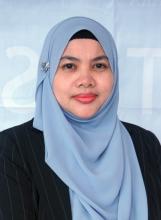
Norhafezah binti Kasmuri has obtained her Degree in Civil and Environmental Engineering from Universiti Kebangsaan Malaysia in 2001. She has received her Master of Science in Water Resources Engineering and Management (WAREM) from Universitat Stuttgart, Germany in 2004. She has completed her study of Doctor of Philosophy in Chemical Engineering from Swansea University, Wales, the United Kingdom in 2014. She has been serving UiTM since August 2014 as a senior lecturer at the School of Civil Engineering, College of Engineering, Universiti Teknologi MARA, Shah Alam.
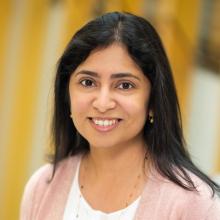
Professor Madhu Bhaskaran is a Fellow of the Australian Academy of Technology and Engineering. She is a multi-award winning electronics engineer and innovator. She proudly co-leads Women in STEMM Australia.
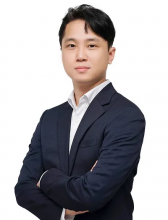
Professor Dae-hyun Nam is dedicated to advancing electrocatalysts for sustainable energy conversion and storage. By leveraging expertise in materials science, engineering, and chemistry, he aims to address pressing energy and environmental challenges, paving the way for a sustainable future.

ChM. Ts. Dr. Uganeeswary Suparmaniam, AMIChemE (UK) is a multiple award-winning young scientist, sustainability advocate, and climate activist attached to the HICoE-Centre for Biofuel and Biochemical Research, Institute of Self-Sustainable Building, PETRONAS University of Technology, Malaysia.

Sierin Lim is an Associate Professor of Bioengineering at the School of Chemistry, Chemical Engineering and Biotechnology and the Associate Dean (Global Partnerships) at the Graduate College of Nanyang Technological University, Singapore (NTU). Her research group focuses on the design and engineering of biological entities for applications in health and the environment. She is the co-founder of Women@NTU, Society of Women in Engineering (SWE@SG) and Promotion of Women in Engineering, Research and Science (POWERS) programme.

Taweechai Amornsakchai is an Associate Professor at Mahidol University. With a Ph.D. in Polymer Physics, his research focuses on reinforcing plastics with pineapple leaf fiber and exploring pineapple stem starch for biodegradable packaging.
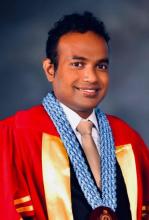
Chameera Udawattha, a pioneering architect and researcher, investigates eco-friendly construction materials, exploring alternative solutions for construction and building issues. His work promotes sustainable building practices.
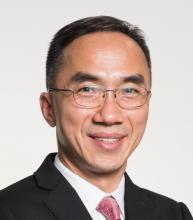
Prof Matthew Tan is a Food Security Specialist and an Aquaculture veteran with more than 20 years’ experience in the Agri-Tech Industry.
He is currently driving several sustainability projects in the area of Carbon Neutral Engineering and specializes in Aquaculture & Agriculture carbon credit & sequestration with regards to regenerative & restorative activities in the areas of habitat conservation, biodiversity, CSR aquaculture and use of climate smart technologies with the aim to develop true impact projects to reduce carbon emissions, plastic waste, protect biodiversity, and drive conservation and investment into local communities as he assist companies with their Carbon Transition Strategy and Planning.
Dr Fabien Grasset is a Research Director at the Centre national de la recherche scientifique (CNRS) and currently serving as Director of Research for Rennes Institute of Chemical Sciences (ISCR). His areas of expertise include materials chemistry, solid-state chemistry, nanotechnology, nanoparticles, optical coatings and thin films.
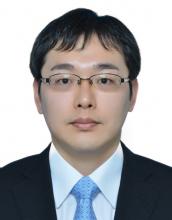
Taishi Yokoi is an Associate Professor of the Institute of Biomaterials and Bioengineering at Tokyo Medical and Dental University. His research areas include biomedical engineering, inorganic compounds and inorganic materials chemistry.
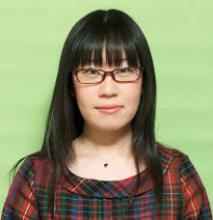
Dr Naoka Nagamura is senior researcher at the National Institute for Materials Science (NIMS) and visiting associate professor at Tokyo University of Science. She researches advanced materials, electrochemistry and photoemission spectroscopy.
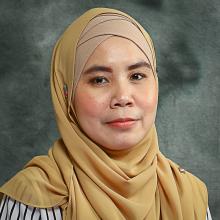
Ts Dr. Siti Kudnie Sahari is a senior lecturer at the Department of Electrical and Electronic Engineering, Faculty of Engineering, Universiti Malaysia Sarawak (UNIMAS). Her current research interests include thin film, advanced semiconductor materials, semiconductor processing and solar devices.
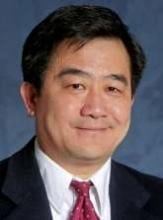
Professor Alex Jen Kwan-yue is Chair Professor of Materials Science and Director of the Hong Kong Institute for Clean Energy at the City University of Hong Kong (CityU). His expertise includes the use of molecular engineering and self-assembly for hybrid materials.
Giants in history

Rajeshwari Chatterjee (24 January 1922 – 3 September 2010) was the first female engineer from Karnataka in India.
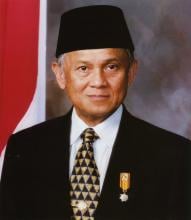
Bacharuddin Jusuf Habibie (25 June 1936 – 11 September 2019) was an Indonesian engineer who was President of Indonesia from 1998 to 1999.

Abdus Suttar Khan (c. 1941 – 31 January 2008) was a Bangladeshi engineer who spent a significant part of his career conducting aerospace research with NASA, United Technology and Alstom.
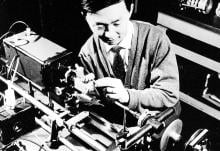
Charles Kuen Kao (Nov. 4, 1933 to Sept. 23, 2018) was an engineer who is regarded as the father of fibre optics. His work in the 1960s on long distance signal transmission using very pure glass fibres revolutionized telecommunications, enabling innovations such as the Internet.
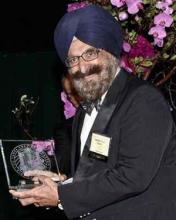
Physicist Narinder Singh Kapany (31 October 1926 – 4 December 2020) pioneered the use of optical fibres to transmit images, and founded several optical technology companies. Born in Punjab, India, he worked at a local optical instruments factory before moving to London for PhD studies at Imperial College. There, he devised a flexible fibrescope to convey images along bundles of glass fibres.

Chinese physicist Xie Xide (19 March 1921 – 4 March 2000) was an influential educator and one of China’s pioneer researchers of solid-state physics.

Sir Mokshagundam Srinivasa Shastry Vishveshwarayya (15 September 1860 – 14 April 1962) is widely regarded as India’s most outstanding engineer. In a career that spanned almost his entire life, Vishveshwarayya played a pivotal role in several engineering projects, including designing the Krishnarajasagara dam that is still the source of irrigation and drinking water for parts of Karnataka today.
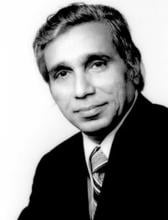
Fazlur Rahman Khan (3 April 1929 – 27 March 1982) was a Bangladeshi-American structural engineer and architect who invented the tube principle, which formed the basis for modern skyscraper design.

Lin Lanying (7 February 1918 – 4 March 2003) was a Chinese material engineer remembered for her contributions to the field of semiconductor and aerospace materials. Lanying was born into a family who did not believe in educating girls and she was not allowed to go to school.

Gregorio Y. Zara (8 March 1902 – 15 October 1978) was a Filipino engineer and physicist best remembered for inventing the first two-way video telephone. Zara’s video telephone invention enabled the caller and recipient to see each other while conversing, laying the foundation for video-conferencing