

Japan
News
23 Nov 2026
Osaka Metropolitan University
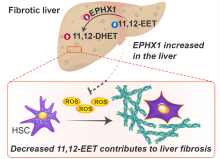
Targeting the enzyme showed promising results for a future treatment
22 Nov 2026
National Institute for Materials Science (NIMS)
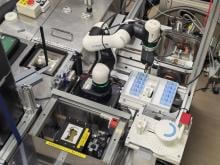
A new system that heats, X-rays, and tests structural metals paves the way for AI to design its own experiments.
20 Nov 2026
Ehime University
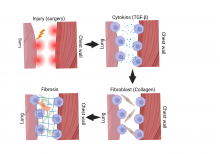
Intrathoracic adhesions can develop after thoracic surgery and increase the risk of complications during repeat surgery. However, the mechanisms underlying their formation remain poorly understood. In this study, we aimed to understand how these adhesions form and identify potential targets to prevent or reduce them. First, we established a mouse model of intrathoracic adhesions using talc. Through gene expression analysis, we found that macrophages, a type of immune cell, gather on the injured lung surface and contribute to the accumulation and activation of collagen-producing cells. Furthermore, when macrophages were removed using a drug, the accumulation of collagen-producing cells was reduced, and pleural adhesions were significantly decreased. These findings suggest that targeting macrophage-driven fibrosis may offer a new approach to preventing and treating intrathoracic adhesions.
20 Nov 2026
Kanazawa University
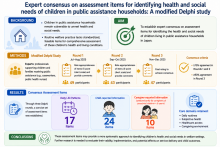
Researchers at Kanazawa University and Kobe University proposed a set of assessment items to identify the health and living conditions of children living in public assistance households. Developed through a three-round modified Delphi study involving welfare professionals from nine municipalities across Japan, the items are intended to support a shared framework for child support and information sharing in municipal welfare practice.
20 Nov 2026
Osaka Metropolitan University
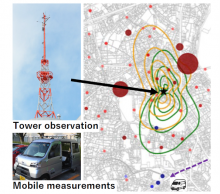
Urban measurements of methane and ethane gas reveal overlooked sources
20 Nov 2026
The University of Osaka
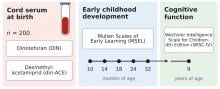
Researchers from the University of Osaka have found that two common neonicotinoid insecticides were present in over half of the 200 umbilical cord serum samples included in their study. The concentrations of these two neonicotinoids – dinotefuran and desmethyl-acetamiprid – were not associated with neurodevelopmental measures from 10 to 32 months of age but were associated with processing speed and perceptual reasoning at 9 years, suggesting domain- and age-specific associations rather than sustained or uniform patterns of association.
19 Nov 2026
Ehime University
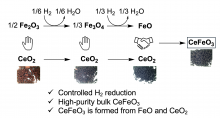
A research team including Ehime University successfully synthesized high-purity CeFeO3, a difficult-to-produce cerium–iron mixed oxide, using hydrogen reduction. By optimizing hydrogen concentration and gas flow rate, they achieved a phase purity of up to 99 mol%. The team also clarified the formation mechanism and identified factors that hinder synthesis. This method provides a foundation for future research into applications in magnetic materials and catalysis.
19 Nov 2026
Hokkaido University
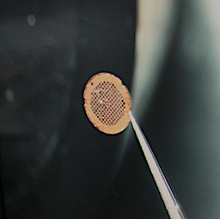
Researchers use a novel approach to simultaneously induce and observe atomic rearrangements in real time, discovering a rare form of silver with unusual properties.
19 Nov 2026
The University of Osaka
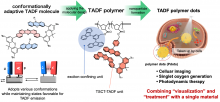
A team led by researchers at the University of Osaka, in collaboration with the University of British Columbia (UBC), has developed a novel polymer material allowing fluorescent cell imaging and potential light-activated disease treatment by generating cell-damaging singlet oxygen. In tests, tiny particles of this material, called polymer dots, retained their fluorescence in water, were taken up by cells, and enabled both imaging and light-triggered cell damage. Supported by JST's ASPIRE program, this international collaborative research lays the groundwork for multifunctional nanotheranostic technologies that integrate imaging and therapy within a single nanoscale platform.
18 Nov 2026
The University of Osaka
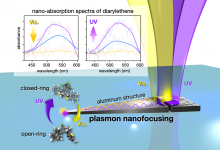
Researchers at the University of Osaka demonstrated nanoscale optical switching of a photochromic molecule using ultraviolet and visible light. By employing plasmon nanofocusing, they concentrated both wavelengths at the same location on an aluminum nanostructure, enabling repeated switching between two molecular states within a region estimated to be only a few tens of nanometers across. This technique could advance miniaturized optical memories, optically controlled electronics, and nanoscale chemical reactions.
17 Nov 2026
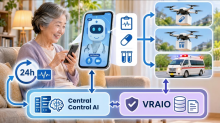
Proposing the “Clinical AI License,” a new system enabling independent initial diagnosis and prescribing.
A Perspective article by Yusaku Fujii, Professor at Gunma University, “Toward a Clinical AI License for Independent Initial Diagnosis and Prescribing in Primary Care,” has been published in the international journal AI (MDPI).
17 Nov 2026
Osaka Metropolitan University
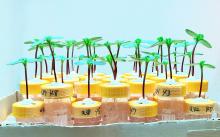
Selective light composition determines sunflower seedling outcomes
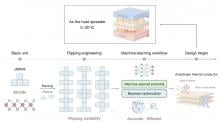
17 Nov 2026
Institute of Industrial Science, The University of Tokyo (UTokyo-IIS)
Researchers from the Institute of Industrial Science, The University of Tokyo use machine learning to design flipped stacks of Janus MoSSe layers that block heat flow between layers but not along them, a promising feature for 3D chips
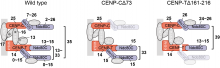
17 Nov 2026
The University of Osaka
Researchers from the University of Osaka have quantified the protein copy numbers of components of the kinetochore protein structure, critical for cell division. The assembly of the outer kinetochore onto the constitutive inner kinetochore was shown to occur through two redundant mechanisms, meaning assembly can proceed if one route is disrupted. This study provides new insight into the process of protein assembly into the structures that are critical for accurate cell division.
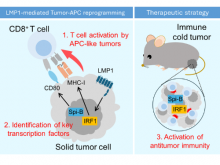
16 Nov 2026
Hiroshima University
LMP1, an Epstein-Barr virus protein, has a “Mr. Hyde” side that can promote cancer and a “Dr. Jekyll” side that can spur antitumor immune responses. In a study published in Cell Reports, researchers traced key parts of that antitumor effect to the transcription factors Spi-B and IRF1, then showed that expressing the two without LMP1 activated CD8+ T cells and suppressed tumor growth in mice.
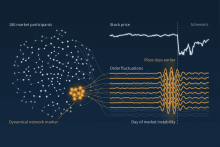
13 Nov 2026
Institute of Industrial Science, The University of Tokyo (UTokyo-IIS)
Researchers from The University of Tokyo and Rikkyo University applied a theory first used to detect a pre-disease state to order data from the Tokyo Stock Exchange

12 Nov 2026
Osaka Metropolitan University
Climate-related changes in forest structure and tree composition revealed by long-term monitoring
12 Nov 2026
The University of Osaka
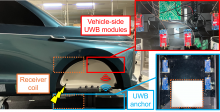
Researchers at the University of Osaka and collaborators developed an ultra-wideband (UWB) radio-based positioning method for electric vehicle wireless charging. By combining signal travel times, phase differences, and calibration, the system accurately estimates the position and orientation of a vehicle's charging coil relative to a charging pad. Laboratory experiments using a scaled-down vehicle mockup achieved median errors of 2.32 millimeters and 0.25 degrees, a promising step toward automated wireless charging for self-driving vehicles.
11 Nov 2026
Osaka Metropolitan University
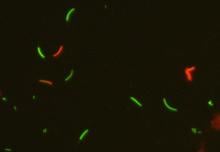
Okinawa rail embryo successfully developed after artificial insemination using frozen-thawed sperm
10 Nov 2026
The University of Osaka
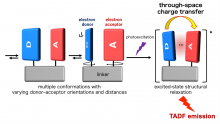
An international research team led by the University of Osaka has created specially designed, flexible molecules that efficiently generate orange-to-red light. Unlike many earlier designs, the molecules do not need to be locked into a rigid shape to work well. These new materials could be used in the screens of smartphones and televisions and, with further development, could also be used for biological imaging.
10 Nov 2026
The University of Osaka
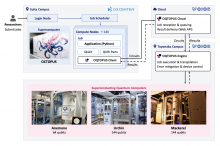
Researchers at The University of Osaka have developed SEAFOOD, a platform linking the OCTOPUS supercomputer with domestically developed superconducting quantum computers through the open-source OQTOPUS software. This marks Japan’s first integration of a domestically developed quantum computer and a supercomputer installed at the same university. A quantum chemistry demonstration confirmed their ability to work together in a single workflow, opening possibilities for advances in materials design and drug discovery.
09 Nov 2026
Osaka Metropolitan University
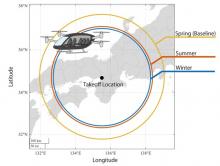
Why electric air taxis may fly shorter distances in summer and winter than in spring
09 Nov 2026
The University of Osaka
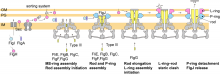
A team of researchers at the University of Osaka has revealed the stepwise mechanism by which bacteria assemble a molecular bushing around the drive shaft of the flagellar motor. The ring first forms while tightly bound to the shaft and is then released from its surface, allowing it to support the high-speed, low-friction rotation required for bacterial movement. By clarifying how a complex biological machine can assemble itself with remarkable precision, this discovery provides valuable design principles for artificial nanomachines and may contribute to future technologies such as efficient drug-delivery systems and other biomedical devices.

06 Nov 2026
Hiroshima University
Since 2023, researchers in Japan have conducted scientific and technical studies and explored possible contributions to PRIMA, a far-infrared space telescope mission designed to investigate how planets form, how galaxies and their black holes grow together, and how dust and heavy elements build up across the universe.
05 Nov 2026
Osaka Metropolitan University
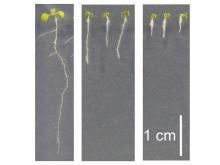
Researchers uncover a new mechanism for moving boron through plant roots.
04 Nov 2026
Kanazawa University
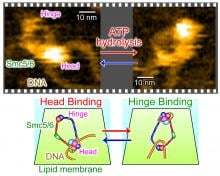
Researchers at Kanazawa University and the National Institute of Genetics in Japan have used high-speed atomic force
microscopy to observe how a group of proteins known as Smc5/6 interacts with DNA. The images reveal how this structure opens and closes, captures DNA and brings separate sections together. The researchers also observed Smc5/6 holding twisted sections of DNA in place, producing more tightly packed arrangements. The findings provide new insights into the molecular processes that contribute to the maintenance and repair of genetic material.
04 Nov 2026
Osaka Metropolitan University
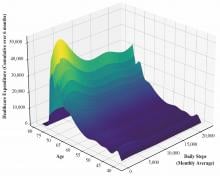
Healthcare costs fall from a peak at just 2,500 steps a day then plateau near 11,000
04 Nov 2026
The University of Osaka
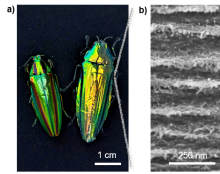
A team led by researchers from the University of Osaka has devised a unique technology that forms layers of the natural substances pectin and cellulose to produce biodegradable, sustainable materials that are as highly reflective as metals. These materials, some of which can reflect 95% of light, have a wide range of potential applications in sensors, anti-counterfeiting systems, and specialized windows capable of keeping houses cool.
02 Nov 2026
Kanazawa University
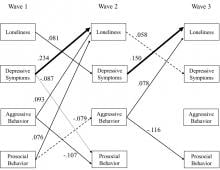
A research team led by Associate Professor Yasuo Murayama of Kanazawa University identified longitudinal associations among loneliness, depressive symptoms, and social behaviors in children affected by the 2024 Noto Peninsula Earthquake. The findings highlight the importance of integrated mental health support for children in disaster-affected communities.
02 Nov 2026
The University of Osaka
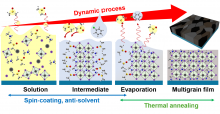
Researchers at The University of Osaka developed an automated robotic system that monitors perovskite film formation in real time while tracking environmental and processing conditions. By combining these measurements with automated characterization and machine learning, the system identifies factors affecting film quality and optimizes antisolvent coating. The approach produced a perovskite solar cell with 24.4% efficiency, demonstrating its potential for faster, more reproducible photovoltaic research.
Events
11 Nov 2025
The Joint 'PCST Japan Symposium' and '7th JSF Conference' will be held from 11 to 13 November 2025 in Tokyo, Japan organised by Japan Scicom Forum (JSF) and hosted by Earth-Life Science Institute (ELSI), Tokyo.
The joint symposium will focus on the strategic development of science communication and public engagement in Asia by highlighting innovative practices and solutions from around the world for engaging diverse audiences in non-Western contexts to create a sustainable ecosystem within the region.

08 Oct 2025
Meet your potential business partners in this Asia's Largest Partnering Event.
08 Jun 2025
The 2025 Symposium on VLSI Technology and Circuits will be held on June 8-12, 2025, JST. All the meetings will be held at RIHGA Royal Hotel Kyoto, Horikawa Shiokoji, Shimogyo ku , Kyoto 600 8237, Japan.
Held as a five-day at the Rihga Royal Hotel, as well as selected presentations and panel sessions, the Symposium will feature advanced VLSI technology developments, innovative circuit designs, and the applications they enable, such as artificial intelligence, machine learning, IoT, wearable/implantable biomedical applications, big data, cloud / edge computing, virtual reality (VR) / augmented reality (AR), robotics, and autonomous vehicles.
The weeklong Symposium will continue its reputation as the microelectronics industry’s premiere international conference integrating technology, circuits, and systems with a range and scope unlike any other conferences. In addition to the technical presentations, the Symposium program will feature a demonstration session, evening panel discussions, joint focus sessions, short courses, and workshops.

26 May 2025
Tohoku University Hospital

18 Mar 2025
This Forum will be held on 18 March 2025 in Kobe, Japan, and will be hybrid (on-site and virtual).

26 Aug 2025
ISFMS 2025 is anticipated to attract over 200 participants, including
a diverse international community of researchers, professionals, and
experts in the field of molecular sciences as well as the broader life science community


08 Feb 2025
A symposium that will discuss how to address multifaceted challenges of inequality and promote science for sustainability will take place in person and online on February 8, 2025.

23 Jul 2024
The Asia-Pacific Network for Global Change Research (APN), in collaboration with the Institute for Global Environmental Strategies (IGES) and Future Earth Japan, will host the Partnerships for Sustainability session (PS-2) at the International Forum for Sustainable Asia and the Pacific on 23 July 2024 at 15:30-16:30 (JST/GMT +09:00), Pacifico, Yokohama and via Zoom.
24 Oct 2023
This Forum will take place on 24 October 2023 in Kobe, Japan. It will be held in hybrid format (on-site and virtual).

21 Nov 2023
Japan Scicom Forum brings together communicators, writers, scientists and journalists in Japan. Registration is free and the event will be in English.

11 Oct 2023
Meet your potential business partners in this Partnering Event. Asia's Largest Partnering will be held in both digitally and physically.
23 Dec 2022
This Forum will take place on 23rd December 2022 in Kobe, Japan. It will be held in hybrid format (on-site and on-line).

13 Feb 2022
A joint forum by APN, ADRC, JICA Kansai, and Graduate School of Disaster Resilience and Governance, University of Hyogo

26 Jan 2022
Since 2001, the "nano tech" exhibition is one of largest exhibition in the world held in Tokyo, Japan. In 2022, it will be held in On-site and On-line format as a Hybrid event.
09 Sep 2021
Tohoku University will be hosting the 8th German-Japanese (HeKKSaGOn) University Presidents' Conference from Sept 9-10. The online event includes an Academic Conference on the first day that is open to the general public. See article for details.

09 Sep 2021
Earth-Life Science Institute (ELSI) will launch a new Master-PhD course on origin-of-life science and astrobiology at Tokyo Institute of Technology. The five-year ELSI course is open for domestic and international students who wish to tackle fundamental questions in natural science such as the origin and evolution of living planets. ELSI will provide financial support (as salary of a research assistant) for all the students, except for ones who are going to be supported by JSPS DC fellowships (Japan) or equivalent fellowships.

12 Oct 2021
The Asia's Largest Partnering “BioJapan” will be held both digitally and physically. Meet your potential business partners in this Partnering Event!

14 Jul 2021
Intelligent Mobility 2021 will offer a platform for industry experts, thought leaders, policy makers, city planners and researchers to discuss the future of mobility, growth opportunities emerging as a result of disruptive innovation, and the potential impact of new business models.

10 Mar 2021
Upcoming side event at the 7th Asia-Pacific Climate Change Adaptation Forum: Partnerships to harmonize science information and knowledge at regional scales for enabling adaptation
26 Mar 2021
Springer Nature and the University of Tokyo to hold SDGs Symposium 2021, “Interdisciplinary science solutions for food, water, climate and ecosystems Sustainable Development Goals”

09 Mar 2021
The SciREX Open Forum’s 10th session will invite Dr. Yoichiro Matsumoto who assumed the position of the 2nd S&T Advisor to Japan's Minister of Foreign Affairs as a speaker to talk about what we can see from the pandemic, how S&T Diplomacy should be in the ongoing pandemic, and what actually can be done.

24 Feb 2021
INTERPHEX Week Osaka is Asia's leading exhibition for pharmaceutical industry, consists of 2 exhibitions for pharmaceutical technologies - INTERPHEX OSAKA (Manufacturing & Packaging) and PharmaLab Expo OSAKA (Pharma R&D and Drug Discovery).


09 Dec 2020
The 20th International Nanotechnology Exhibition & Conference will be held in onsite-online hybrid format.

25 Nov 2020
Asia's Leading Pharma & Bio Tech Show will be held as scheduled from November 25-27, 2020 at Makuhari Messe, Japan. It will be held both on-site and online.

10 Jul 2020
Tohoku University is hosting an online lecture on COVID-19 on July 10. Led by top virologist Hitoshi Oshitani, the panel will share the latest on the pandemic, and discuss how history, culture and religion can help us understand the challenges ahead.

04 Jul 2020
Tohoku University's Graduate School of Education is hosting a three-part webinar series on how the COVID-19 pandemic is transforming education in the Asia-Pacific region. The event is in English and open to everyone. But spots are limited and registration is required.
Details: https://bit.ly/2MT2UFA
14 Oct 2020
Asia's Premier Partnering Event for the Global Biotechnology Industry. This year’s exhibition will be held as originally planned at Pacifico Yokohama. BioJapan partnering is available both physically and virtually. Plus some seminars will be available online.

19 Mar 2020
Institute for the Advanced Study of Human Biology(ASHBi) holds the annual symposium with twenty-one speakers who are leading human biology including human development, genetics, and evolution.
Researchers

Professor Mikiya Fujii is an expert on materials informatics at Nara Institute of Science and Technology (NAIST), Japan.

National Institute for Materials Science (NIMS)
Group Leader, Frontier Molecules Group, Nanomaterials Field, Research Center for Materials Nanoarchitectonics (MANA) at the National Institute for Materials Science (NIMS), Japan.

I am a japanese physician-scientist in gastroenterology, especially in neurogastroenterology.
Hokkaido University
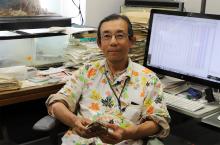
Dr. Eisuke Hasegawa is an Associate Professor at the Graduate School of Agriculture, Hokkaido University, where he heads the Animal Ecology Laboratory. His research interests include animal ecology; evolutionary biology; natural selection; sociality; and ethology.
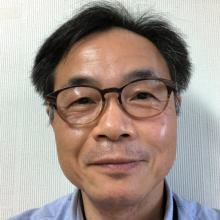
Dr. Yukio Yasui is an Associate Professor at Kagawa University. He has dedicated his research work to ecology, ethology and evolutionary biology studies, with his more recent work on the evolution of sex.
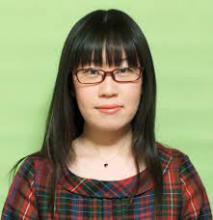
National Institute for Materials Science (NIMS)
Dr Naoka Nagamura is senior researcher at the National Institute for Materials Science (NIMS) and visiting associate professor at Tokyo University of Science. She researches advanced materials, electrochemistry and photoemission spectroscopy.
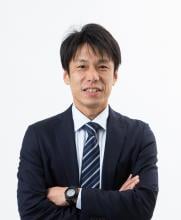
Dr. Hiroki Ago is a Distinguished Professor of the Global Innovation Center at Kyushu University. His research focuses on nanomaterials, particularly graphene and related 2D materials, and their applications.
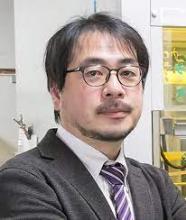
Tohoku University
Prof. Hiroshi Yabu is a Professor and Principal Investigator at the Advanced Institute for Materials Research (WPI-AIMR) at Tohoku University. His research interests include self-organization, biomimetics, and bio-inspired materials for energy and low environmental impacts.
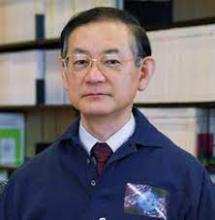
Kavli Institute for the Physics and Mathematics of the Universe (Kavli IPMU)
Ken’ichi Nomoto is a visiting senior scientist at Kavli IPMU and Professor Emeritus at The University of Tokyo. He is one of the best experts in the world in astronomy and astrophysics, particularly on stellar evolution and supernovae. He was awarded the Order of the Sacred Treasure by the Japanese government in 2020.
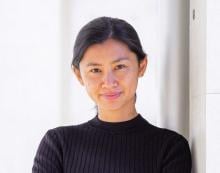
Kavli Institute for the Physics and Mathematics of the Universe (Kavli IPMU)
Jia Liu is the Director of the Center for Data-Driven Discovery and associate professor at CMB Group at Kavli IPMU. Her research integrates data science techniques in the study of large-scale structures of the universe (dark matter, halos, filaments, voids).

Kavli Institute for the Physics and Mathematics of the Universe (Kavli IPMU)
Elisa Ferreira is Assistant Professor at the Kavli IPMU and at the Institute of Physics of the University of São Paulo. Her research deals with the interface between cosmology, astrophysics, and high energy physics, focusing mostly on dark energy and dark matter.
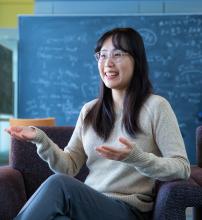
Kavli Institute for the Physics and Mathematics of the Universe (Kavli IPMU)
Man Wai Cheung is a Project Researcher and the first Chien-Shiung Wu Prize Postdoctoral Fellow at KAVLI Institute for the Physics and Mathematics of the Universe (Kavli IPMU). Her research lies in the interplay between algebraic geometry, combinatorics and representation theory.
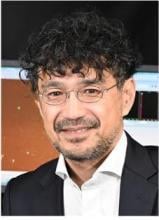
Hokkaido University
Dr. Akira Kakugo is an Associate Professor at Hokkaido University. He has researched biomolecular motors and swarming of active matters.
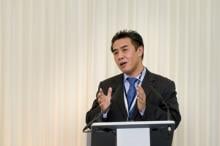
Kyoto University
Dr. So Iwata is a Professor at the Graduate School of Medicine Kyoto University and the Group Director of the SACLA Science Research Group, RIKEN SPring-8 Center. He has investigated how specialized membrane channels remove antimicrobial drugs from inside bacterial cells.
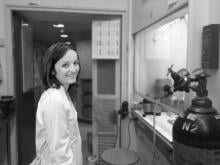
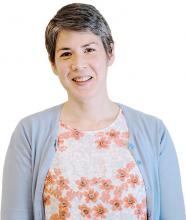
Her current research focuses on the synthesis of semiconducting polymers for organic electronics and has published >100 papers in this area of research.
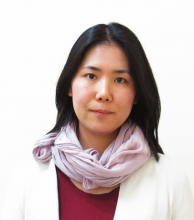
Assistant Professor Izumi Fukunaga grew up in Japan and Malaysia and went to London to study neuroscience. Her research focuses on how sensory circuits in the brain function.

Professor Gail Tripp is a neurobiologist who established the OIST Children’s Research Center to undertake research on the nature, etiology and management of ADHD with English and Japanese speaking children and families.

Assistant Professsor Lauren Sallan is a fish paleobiologist who uses big data — the fossil record — to study how some species win and others lose. Her multiple TED Talks on the evolution of fishes, mass extinction and paleontology have received over 3 million views.
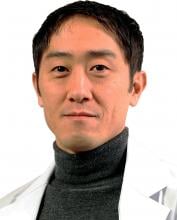
Professor Shinya Maenosono leads his research group at Japan Advanced Institute of Science and Technology (JAIST). His research in JAIST has focused on two main areas of interest in the field of materials chemistry and nanotechnology. The first area involved wet chemical synthesis of semiconductor nanoparticles with controlled size, shape and composition for energy conversion device applications. The second area has focused on the synthesis and bioapplication development of monometallic and alloyed multimetallic nanoparticles.
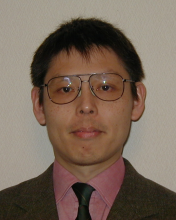
Osaka City University
Prof. Shigekawa's research interest includes fabrication of heterointerfaces and advanced hybrid semiconductor devices such as multijunction solar cells and heterojunction bipolar transistors using surface activated bonding and their characterization.
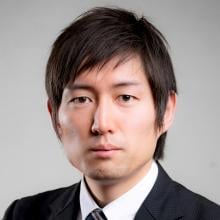
National Institute for Materials Science (NIMS)
Ken-ichi Uchida is a group leader in the Spin Caloritronics Group, Research Center for Magnetic and Spintronic Materials under the National Institute for Materials Science (NIMS), Japan
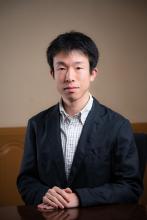
National Institute for Materials Science (NIMS)
Satoshi Ishii is a principal researcher at International Center for Materials Nanoarchitectonics (MANA), National Institute for Materials Science (NIMS), Japan. He also holds an adjunct associate professorship at University of Tsukuba.
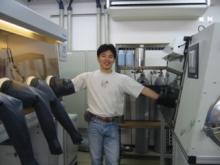
Institute for Integrated Cell-Material Sciences (iCeMS) at Kyoto University
Hiroshi Kageyama is a professor in the Institute for Integrated Cell-Material Sciences (iCeMS), Kyoto University, Japan.
Earth-Life Science Institute (ELSI), Tokyo Institute of Technology
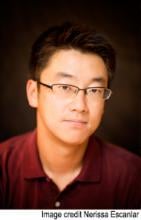
Tomohiro Mochizuki is a specially-appointed assistant professor at Earth-Life Science Institute (ELSI) - Tokyo Institute of Technology.

Earth-Life Science Institute (ELSI), Tokyo Institute of Technology
Mayuko Nakagawa is a biochemist at Earth-Life Science Institute (ELSI) based at the Tokyo Institute of Technology, Japan.
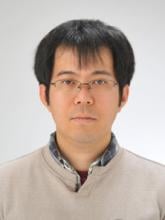
Hitoshi Gomi is an Earth scientist at Earth-Life Science Institute (ELSI) based at the Tokyo Institute of Technology, Japan.
Earth-Life Science Institute (ELSI), Tokyo Institute of Technology
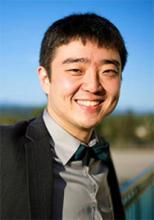
Tony Z. Jia is a researcher at Japan’s Earth-Life Science Institute (ELSI), based at the Tokyo Institute of Technology. His research focuses on astrobiology, prebiotic chemistry, and origins of life.
Giants in history

Japanese biochemist Akira Endo (1933 – 2024) discovered the first statin, called mevastatin, which lowered cholesterol levels in the blood by inhibiting a key enzyme in the cholesterol biosynthesis pathway. His work laid the foundation for the development of statins to help patients lower their blood cholesterol levels and reduce their risk of heart disease or stroke.
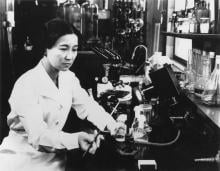
Ruby Sakae Hirose (1904 – 1960) was a Japanese-American scientist whose research contributed significantly to our understanding of blood clotting, allergies and cancer.

Haisako Koyama (1916 – 1997) was a Japanese solar observer whose dedication to recording sunspots – cooler parts of the sun’s surface that appear dark – produced a sunspot record of historic importance.
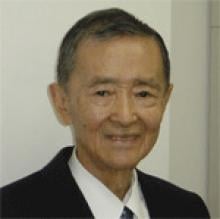
Michiaki Takahashi (17 February 1928 – 16 December 2013) was a Japanese virologist who developed the first chickenpox vaccine.

Toshiko Yuasa (11 December 1909 – 1 February 1980) was the first Japanese female physicist whose research on radioactivity shed light on beta decay – the process in which an atom emits a beta particle (electron) and turns into a different element.
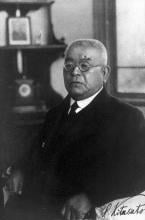
Baron Kitasato Shibasaburo (29 January 1856 – 13 June 1931) was a Japanese physician and bacteriologist whose work led to a new understanding of preventing and treating tetanus, diphtheria and anthrax.
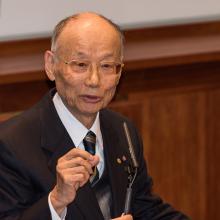
By isolating soil microorganisms and studying the compounds they produce, Satoshi Omura (born 1935) discovered almost 500 organic compounds with unique properties that were produced by these microorganisms, including many new antibiotics.
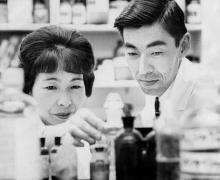
Husband and wife team, Kimishige (3 December 1925 – 6 July 2018) and Teruko Ishizaka (28 September 1926 – 4 June 2019) discovered the antibody class Immunoglobulin E (IgE) that triggers allergic reactions. They also discovered that IgE antibodies attach to white blood cells, known as mast cells, releasing histamine, which causes allergic reactions.
Husband and wife team, Kimishige (3 December 1925 – 6 July 2018) and Teruko Ishizaka (28 September 1926 – 4 June 2019) discovered the antibody class Immunoglobulin E (IgE) that triggers allergic reactions. They also discovered that IgE antibodies attach to white blood cells, known as mast cells, releasing histamine, which causes allergic reactions.
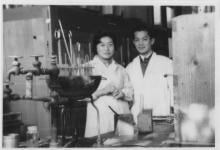
Reiji Okazaki (8 October 1930 – 1 August 1975) and Tsuneko (7 June 1933) were a Japanese couple who discovered Okazaki fragments – short sequences of DNA that are synthesized during DNA replication and linked together to form a continuous strand.
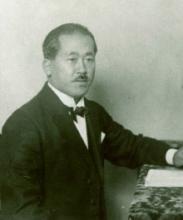
In 1915, Koichi Ichikawa along with pathologist Katsusaburo Yamagiwa became the first to prove that chronic exposure to chemicals can cause cancer.
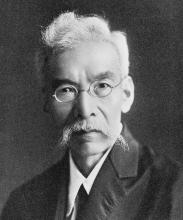
In 1915, pathologist Katsusaburo Yamagiwa and his research assistant Koichi Ichikawa became the first to prove that chronic exposure to chemicals can cause cancer.
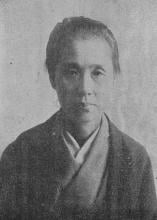
Ogino Ginko (3 March 1851 – 23 June 1913) was the first registered female doctor to practise modern medicine in Japan.

Michiyo Tsujimura (17 September 1888 – 1 June 1969) was a Japanese agricultural scientist and biochemist recognized for her research of green tea components.

Hitoshi Kihara (1893 – 1986) was one of the most famous Japanese geneticists of the 20th century. One of his most significant contributions was identifying sex chromosomes (X and Y) in flowering plants.
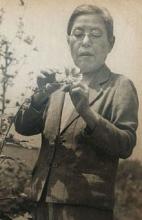
Kono Yasui (16 February 1880 – 24 March 1971) was a Japanese botanist who researched the genetics of poppies, corn and spiderworts and surveyed the plants that had been affected by the nuclear fallout after the atomic bombings of Hiroshima and Nagasaki.
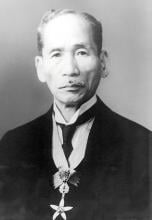
Umetaro Suzuki (7 April 1874 – 20 September 1943) was a Japanese scientist best remembered for his research on beriberi, a disease caused by vitamin B1 deficiency, characterized by limb stiffness, paralysis and pain.
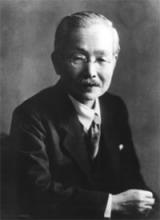
Kikunae Ikeda (8 October 1864 – 3 May 1936) was a Japanese chemist who discovered the fifth basic taste, umami.
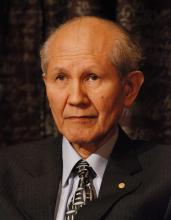
Osamu Shimomura (27 August 1928 – 19 October 2018) was a Japanese organic chemist and marine biologist who dedicated his career to understanding how organisms emitted light.
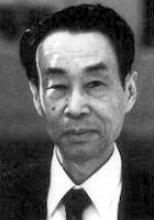
Motoo Kimura (13 November 1924 – 13 November 1994) was a Japanese theoretical population geneticist who is best remembered for developing the neutral theory of molecular evolution.

Chika Kuroda (24 March 1884 – 8 November 1968) was a Japanese chemist whose research focussed on the structures of natural pigments.
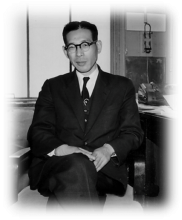
The field of solid-state ionics originated in Europe, but Takehiko Takahashi of Nagoya University in Japan was the first to coin the term ‘solid ionics’ in 1967. ‘Solid-state ionics’ first appeared in 1971 in another of his papers, and was likely a play on ‘solid-state electronics’, another rapidly growing field at the time.
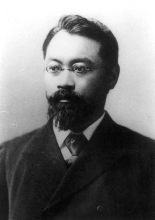
The techniques that make industrial pearl culturing possible were developed over a century ago at the Misaki Marine Biological Station in Japan. The station’s first director, Professor Kakichi Mitsukuri, emphasized to Kokichi Mikimoto in 1890 that stimulating pearl sac formation was important for pearl growth, and they went on to successfully develop methods for culturing pearls.

Japanese physicist Ukichiro Nakaya (1900-1962) made the world’s first artificial snowflakes. He started his research on snow crystals in the early 1930s at Hokkaido University, where there is an unlimited supply of natural snow in winter. By taking over 3,000 photographs, he established a classification of natural snow crystals and described their relationship with weather conditions.
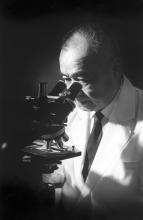
Minoru Shirota (April 23, 1899 – March 10, 1982) was a Japanese microbiologist who invented the popular fermented drink Yakult.
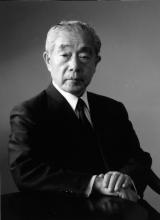
Japanese chemist Kenichi Fukui (4 October 1918 – 9 January 1998) was the first Asian scientist to be awarded the Nobel Prize in Chemistry. Together with Roald Hoffman, he received this honour in 1981 for his independent research into the mechanisms of chemical reactions.
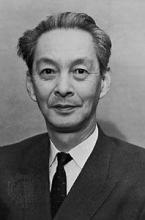
Shinichiro Tomonaga (31 March 1906 – 8 July 1979), together with Richard Feynman and Julian Schwinger, was awarded the Nobel Prize in Physics in 1965, for their contributions to advance the field of quantum electrodynamics. Tomonaga was also a strong proponent of peace, who actively campaigned against the proliferation of nuclear weapons and promoted the peaceful use of nuclear energy.
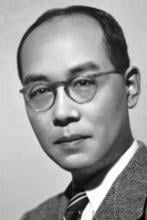
Hideki Yukawa (23 January 1907 – 8 September 1981) was awarded the Nobel Prize in Physics in 1949 for predicting the existence of the pi meson subatomic particle. Japan’s first Nobel laureate, Yakawa also expressed his support for nuclear disarmament by signing the Russell–Einstein Manifesto in 1955.
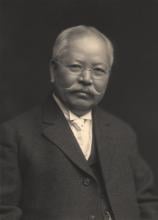
Japanese chemist Takamine Jokichi (3 November 1854 – 22 July 1922) founded the Tokyo Artificial Fertilizer Company, where he isolated a starch-digesting enzyme (named takadiastase) from the fungus Aspergillus oryzae.
Tsuneko (7 June 1933) and Reiji Okazaki (8 October 1930 – 1 August 1975) were a Japanese couple who discovered Okazaki fragments – short sequences of DNA that are synthesized during DNA replication and linked together to form a continuous strand.
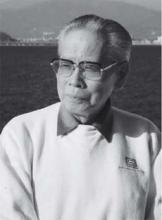
A Japanese surgeon, Tetsuzo Akutsu (20 August 1922 – 9 August 2007) built the first artificial heart capable of keeping an animal alive.
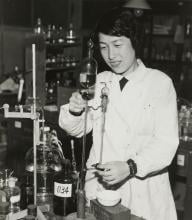
Japanese geochemist Katsuko Saruhashi developed the first method and tools for measuring carbon dioxide in seawater