

Earth Sciences
News
27 Oct 2026
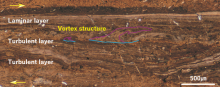
Evidence from an ancient fault may help understand how earthquakes cause tsunamis
19 Oct 2026
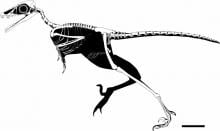
A newly discovered Jurassic bird from China appears to have lived a land-based, flightless lifestyle, suggesting that the earliest birds had a greater diversity of lifestyles than previously recognized

13 Oct 2026
Land is sinking in some major cities worldwide, including Mexico City, Mexico and Medan, Indonesia, according to a new study of satellite observations

09 Oct 2026
DNA breakdown in real time, How crystals bend without breaking, Mini-brain for Parkinson’s,
Heavy water helps weather forecasts, Exploring fish diversity and Mindfulness and self-stigma. Read it all in this month's Editor's Choice
06 Oct 2026
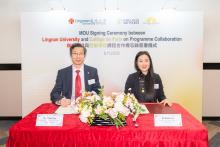
The Short-legged Horned Toad (Boulenophrys brachykolos), listed as endangered on the International Union for Conservation of Nature (IUCN) Red List of Threatened Species, is the only known small frog species in Hong Kong belonging to the genus Boulenophrys of the family Megophryidae. A study led by the Division of Science at Lingnan University has found that the Lantau Island population of the Short-legged Horned Toad shows clear genetic divergence from other local populations, along with several notable differences in the mating calls of males. The research team suggests that the Lantau population represents an early stage of speciation. Geographical isolation of Lantau Island from other landmasses likely contributed to these unique evolutionary traits. The team recommends treating the Lantau population as a separate conservation unit in future.
05 Oct 2026
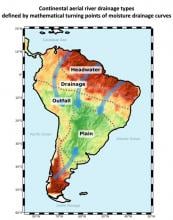
Bringing together expertise in geography, atmospheric sciences and civil engineering, a National Taiwan University team has discovered that invisible “rivers in the sky” form drainage systems much like rivers on land. Their new method identifies the critical upwind areas that sustain rainfall, offering a new perspective on land and water management.
29 Sep 2026
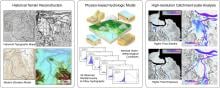
Researchers at Tohoku University ran flood simulations on current-day Marumori Town, Japan, and compared it to data from over one hundred years ago. Their analysis shows how flood risk changes as we install anti-flooding infrastructure, and how this also affects where communities deem it safe to put down roots.
17 Sep 2026
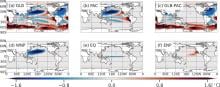
Climate models contain biases that can affect the reliability of future climate projections. We investigated how sea surface temperature (SST) biases affect the North Pacific westerly jet. In 34 of 35 climate models, the jet was located farther south when SSTs were simulated rather than prescribed from observations. Additional experiments showed that SST biases, particularly in the northwestern Pacific, play an important role in this southward shift.

15 Sep 2026
AI-powered cyborg cockroaches, Undiagnosed kidney disease, Plants as genetic engineers, AI and mental workload, Carnivorous plants confirm Darwin prediction, Moisture conveyor belt and Forever chemicals in furry friends. Read all in the latest Editor's Choice.

10 Sep 2026
Nationwide Japanese survey reveals how cultural worldviews relate to environmental policy support

10 Sep 2026
Two new papers published in Nature offer new insights into how this group of ancient humans looked, evolved, and behaved.
03 Sep 2026
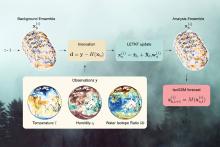
Isotopes of atmospheric water leave fingerprints that can improve weather modelling
02 Sep 2026
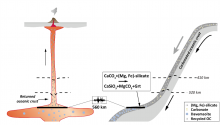
Subducted Carbonates Drive Deep Carbon Cycling and Reshape Mantle Discontinuity Structure
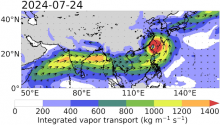
06 Aug 2026
The new research may pave the way for accurately forecasting heavy monsoon rains up to several days in advance.
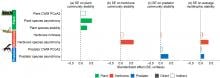
23 Jul 2026
Researchers investigate factors that drive ecosystem stability at multiple, rather than a single, level of the food chain.
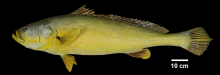
23 Jul 2026
The Chinese bahaba (Bahaba taipingensis), a marine fish species endemic to the Chinese coast and known as the “Panda of the Sea”, is a critically endangered species and one of the few marine fish listed as a first-class protected wild animal in China. Collaborative research led by the Division of Science at Lingnan University has now developed a cost-effective environmental DNA (eDNA) monitoring qPCR approach specifically designed for the Chinese bahaba. Using the new technology, the research has detected traces of the species in western Hong Kong SAR waters, marking the first scientific discovery of the fish in the city in over a decade. The researcher highlights that the technology enables experts to monitor the species non-invasively and to evaluate conservation outcomes without capturing or disturbing rare marine animals, thus providing important scientific evidence to assist in marine conservation planning in China.
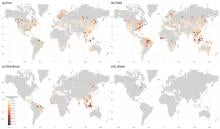
23 Jul 2026
The battle against environmental degradation is complex. Green technologies can be both part of the solution and part of the problem, a recent study has revealed. Researchers from Tohoku University and the National Institute for Environmental Studies have utilized remote sensing and machine learning to reveal the impacts mining for minerals in green technologies has on biodiversity.

16 Jul 2026
Early rice gets the flower, Exercising against cancer, Efficient artificial photosynthesis, New “living pink rocks”, Unlocking megathrust earthquakes, Longevity protein demystified and Death gene paradox. Read all in the latest Editor's Choice.
15 Jul 2026
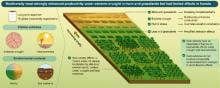
During years of extreme drought, drier grasslands showed the strongest positive effects of biodiversity on productivity.
01 Jul 2026
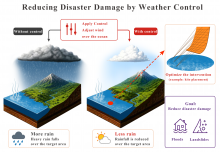
Black-box optimization, particularly Bayesian optimization, is a practical approach for weather-intervention design, achieving meaningful rainfall reduction even under a very limited budget of expensive weather simulations, finding effective actions with only a small number of trials.
01 Jul 2026
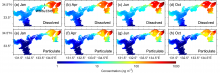
Variability, transport, and fate of riverine perfluorooctanoic acid (PFOA) in a heavily PFOA-impacted coastal sea
29 Jun 2026
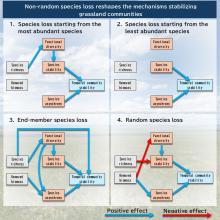
The resilience of grassland ecosystems is dependent more on which species are lost and in what order, rather than the total number of species lost
26 Jun 2026
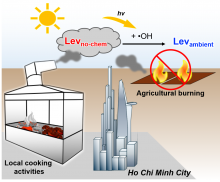
Study suggests PM2.5 source apportionment may be significantly biased

15 Jun 2026
South-facing green walls help lower temperatures in indoor and outdoor environments
12 Jun 2026
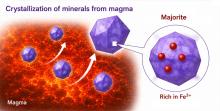
High-pressure experiments show that majorite can store moderate amounts of ferric iron.
09 Jun 2026
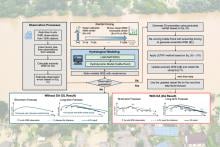
Researchers at the Institute of Industrial Science, The University of Tokyo (UTokyo-IIS) have developed a real-time data assimilation system that substantially improves streamflow and flood forecasting accuracy across Japan.
08 Jun 2026
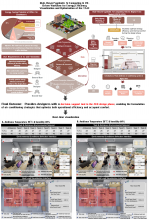
In the context of global decarbonization, reducing energy consumption in the building sector is an urgent issue. We have developed a next-generation building energy evaluation model that combines rule-based symbolic AI computing with VR technology. This model enables real-time visualization and simultaneous evaluation of the energy-saving effects and indoor thermal comfort during the design stage of a Zero-Energy Building. This approach will have a wide range of applications in the design of next-generation smart buildings.
04 Jun 2026
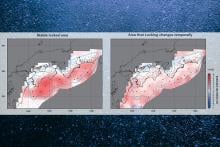
Researchers from Institute of Industrial Science, The University of Tokyo analyzed Nankai Trough seafloor displacement data, detecting previously unknown variations in the locking strength between tectonic plates
29 May 2026
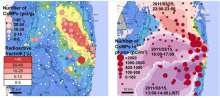
By quantitatively analyzing 100 soil samples collected across Fukushima Prefecture in 2011, researchers found that cesium-rich microparticles (CsMPs) were distributed over a wide area, with abundances ranging from 0 to 52.3 particles g⁻¹ and accounting for up to 61.9% of the total radioactivity in some samples. Their results further revealed that most CsMPs originated from a single radioactive plume released on 15 March 2011, whereas later emissions contained mainly water-soluble cesium rather than particulate CsMPs.

22 May 2026
A study published in Scientific Reports looked into how the Great Pyramid of Khufu in the Giza pyramid complex in Egypt withstood earthquakes without sustaining serious damage over the approximately 4,600 years since it was built,
Events

21 Oct 2026 to 23 Oct 2026
Showcase and connect with our global community of leading research experts, industry representatives and practitioners at the 2026 International Conference on Agriculture Sciences (ICAS 2026) in Bologna, Italy!

18 Sep 2025 to 20 Sep 2025
With the theme "Earth, Energy, and Environment: Navigating the Future," National Geoscience Conference (NGC) 2025 is the premier gathering of geoscience professionals, researchers, and students.

18 Mar 2025
This Forum will be held on 18 March 2025 in Kobe, Japan, and will be hybrid (on-site and virtual).

09 Jun 2025 to 13 Jun 2025
The annual meeting of the Asian Society of Ichthyologists and the Indo-Pacific Fish Conference will take place in Taipei, Taiwan, on June 9-13, 2025.
11 Nov 2024 to 08 Dec 2024
Looking to make a meaningful impact on regional research and scientific capacity development in the Asia-Pacific region? The APN’s 2024 Call for Proposals invites you to submit proposals that tackle global change challenges, foster regional partnerships and support the development of sustainable solutions.
18 Dec 2024 to 20 Dec 2024
The SEGT IIA features a comprehensive range of categories that cover the spectrum of sustainable and green technologies.

26 Nov 2024 to 28 Nov 2024
The Global Development Conference (GDC) 2024 will take place in Suva, Fiji from November 26-28, 2024 on the theme - Global Synergies: Climate Resilience Strategies for a Sustainable Tomorrow. It is being organised in partnership with the University of the South Pacific and the Government of Fiji.

16 Oct 2024 to 18 Oct 2024
The Malaysia Technology Expo (MTE) 2024: Sustainable Development Goals International Innovation Awards & Expo (SDG IIAE) stands at the forefront of global efforts to foster innovative solutions that advance the United Nations Sustainable Development Goals (SDGs). As we navigate the critical decade of action towards 2030, this prestigious event serves as a beacon of inspiration, showcasing groundbreaking innovations and facilitating meaningful dialogue among the brightest minds across the globe.

23 Jul 2024
The Asia-Pacific Network for Global Change Research (APN), in collaboration with the Institute for Global Environmental Strategies (IGES) and Future Earth Japan, will host the Partnerships for Sustainability session (PS-2) at the International Forum for Sustainable Asia and the Pacific on 23 July 2024 at 15:30-16:30 (JST/GMT +09:00), Pacifico, Yokohama and via Zoom.

01 Oct 2024 to 03 Oct 2024
The Geological Society of Malaysia is pleased to announce that the 37th National Geoscience Conference (NGC 2024) will be held at Kuala Lumpur during 1st-3rd October 2024.
08 Mar 2024
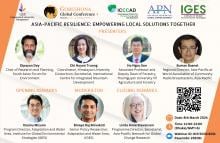
The Asia-Pacific Network for Global Change Research (APN), in collaboration with the Institute for Global Environmental Strategies (IGES), will host the Asia-Pacific Resilience: Empowering Local Solutions Together session at the Fourth Annual #Gobeshona Global Conference (#GGC4) on 8 March 2024 at 11:00-13:00 (Dhaka/GMT+6) or 14:00-16:00 (Japan/GMT+9).
10 Mar 2024
This Forum will take place on 10 March 2024 in Kobe, Japan. It will be held in a hybrid format (on-site and virtual).
09 Nov 2023 to 10 Nov 2023
Seeking to build experience in collaborative regional research and scientific capacity development in the Asia-Pacific region? Interested in writing grant proposals for global environmental change projects? Come and join our open capacity building seminars to receive grant proposal writing guidance and an introduction to the Asia-Pacific Network for Global Change Research (APN)'s 2023 Call for Proposals. Two seminars are available on the 9th and 10th of November, and we warmly welcome participation from early career professionals and global change practitioners in the Asia-Pacific region.

19 Dec 2023 to 21 Dec 2023
Embrace Innovation and Illuminate the Future with MTE 2023
Sustainable Energy and Green Technology International Innovation
Awards

24 Aug 2023
Using Data for Sustainability: An evening of Short Talks and Networking
17 Oct 2022 to 21 Oct 2022
The event is the first in the region focused on recognizing innovations, initiatives, programmes and ideas which contribute to sustainability, eradicating poverty, improving well-being, protecting our planet, and building peace and prosperity.

13 Feb 2022
A joint forum by APN, ADRC, JICA Kansai, and Graduate School of Disaster Resilience and Governance, University of Hyogo

07 Dec 2022 to 08 Dec 2022
Natural Disasters Expo Asia is transforming the Singapore Expo on the 7th & 8th of December 2022 into the ultimate event for the management and mitigation of disasters and will welcome experts around the globe to source the latest revolutionary solutions to calamity management and mitigation.
25 Oct 2021 to 27 Oct 2021
12 Oct 2021 to 14 Oct 2021
The Global Change Impact Studies Centre, in collaboration with regional partners, is organizing a training workshop entitled “Monsoon variability and extremes in changing climate” from 12-14 October 2021.

09 Sep 2021 to 10 Sep 2021
Earth-Life Science Institute (ELSI) will launch a new Master-PhD course on origin-of-life science and astrobiology at Tokyo Institute of Technology. The five-year ELSI course is open for domestic and international students who wish to tackle fundamental questions in natural science such as the origin and evolution of living planets. ELSI will provide financial support (as salary of a research assistant) for all the students, except for ones who are going to be supported by JSPS DC fellowships (Japan) or equivalent fellowships.

01 Jun 2021 to 30 Jun 2021
The Ocean Celebration event runs 1-30 June 2021 and is organized by the Borneo Marine Research Institute of Universiti Malaysia Sabah.

25 Oct 2021 to 29 Oct 2021
First in the region focused on recognizing innovations, initiatives, programmes and ideas which contribute to sustainability, eradicating poverty, improving well-being, protecting our planet, and building peace and prosperity.

12 Mar 2021 to 19 Mar 2021
The APRU-IRIDeS Multi-hazards Program is hosting a two-part webinar series, looking back at the 2011 Great East Japan Earthquake and Tsunami. The panels will draw on lessons learnt and explore disaster mitigation strategies for the future. Open to all, registration required.

10 Mar 2021
Upcoming side event at the 7th Asia-Pacific Climate Change Adaptation Forum: Partnerships to harmonize science information and knowledge at regional scales for enabling adaptation
26 Mar 2021
Springer Nature and the University of Tokyo to hold SDGs Symposium 2021, “Interdisciplinary science solutions for food, water, climate and ecosystems Sustainable Development Goals”
Researchers

I am a scientist with a broad interest in climate science. Currently my research focuses on understanding climate variability across scales, climate change, extreme weather and climate events, weather and climate risks, and the economics of climate change. I am a Professor and Project Leader at the Center for Climate Physics, Institute for Basic Science, Pusan National University. I teach in the Department of Carbon Neutrality and Climate Change. I am also active in organizing EGU activities.

I am working as lecturer in Jenderal Soedirman University, Central Java, Indonesia. I focus on geology research, specifically in geochemistry for oil and gas. I really like observing geological phenomena, especially earthquakes and also do a lot of research related to geoparks.I have experience worked within the oil and gas sector for the better part of 15 years in technical and commercial environments.

I am currently taking my role in the Geosciences Department, Universitas Indonesia, as Assistant Professor, focusing on Sedimentology and Petroleum Geology.

My research experiences include earthquake source physics, numerical modeling, seismic delay time tomography, and earthquake monitoring. Currently, my research includes dynamic rupture simulation on geometrically complex faults, high frequency earthquake source model, and machine learning in earthquake source. Also, I am interested in observational seismology and high performance computing.

Dr. Syed is accomplished environmental and climate scientists. He supervised PhD and Post-Doc researches on climate, environment, water, remote sensing (optical & RADAR, hyperspectral, LiDAR) atmospheric modeling.

Afroz Shah is an earthquake scientist, educator, and National Geographic Explorer who specializes in structural geology and seismic hazards. He is a Senior Assistant Professor at the Department of Geosciences, Universiti Brunei Darussalam (UBD). His research focuses on earthquake-causing faults and the deformation of lithospheric plates, particularly in South and Southeast Asia. Afroz earned his Ph.D. in 2010 from James Cook University, Australia, followed by a postdoctoral fellowship at the Earth Observatory of Singapore (2013). He began his academic career as a Senior Lecturer in Structural Geology at Curtin Sarawak, Malaysia, before joining UBD, where he leads geoscience education and outreach initiatives.

Sadia Salim is an environmental and public health researcher working on climate change, planetary and environmental health, WASH, sustainability, education and empowerment, and grassroots community development and resilience in vulnerable regions.

Wan F. A. Jusoh is currently a Senior Lecturer in Biodiversity and Conservation and serves as the Honours Program Director (Malaysia) at the School of Science, Monash University Malaysia. Her research focuses on the intersection of biodiversity and the history of natural heritage, ranging from studying flashing fireflies to reconstructing timelines of how ecosystems have evolved.

I'm currently an adjunct professor at the Asian Institute of Management in Manila. I crafted a course called Art-Science Thinking based on my dissertation on Culture as Transformative Innovation: Filipino Care in the Practice of Family Medicine. Since 2017, my consultancy & studio has been collaborating with the Dept. of Science & Technology in the Philippines.
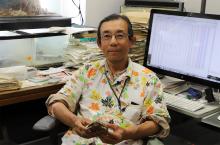
Dr. Eisuke Hasegawa is an Associate Professor at the Graduate School of Agriculture, Hokkaido University, where he heads the Animal Ecology Laboratory. His research interests include animal ecology; evolutionary biology; natural selection; sociality; and ethology.
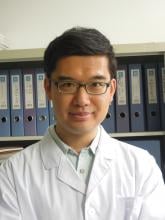
Dr. Zheng Chen is an environmental chemist and associate professor at Xi'an Jiaotong-Liverpool University. His research interests include nutrient recycling from agricultural waste, soil contamination and remediation.

Dr. An is an associate professor at the School of Energy and Environment, City University of Hong Kong (CityU), where she also heads the Water and Membrane Technologies Laboratory.
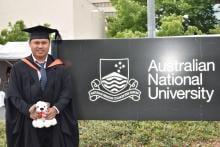
A researcher/program director at ALARM - for land & environmental justice and climate & environmental integration in development planning of Myanmar & a graduate of YAU (Myanmar), AIT (Thailand) & ANU (Australia).
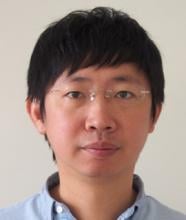
Dr. Brian Man Yu Bon is currently serving as an Assistant Professor in Department of Science and Environmental Studies, The Education University of Hong Kong.

An energetic and talented researcher with a strong desire to build a career within the research industry. Passionate, self-motivated individual with a drive to succeed, with excellent organizational skills. Highly efficient and methodical with a good eye for detail with a proactive approach to performance and data accuracy.

Morshed Hossan Molla, Ph.D. Research Fellow in the Department of Geography and Environmental Studies, University of Chittagong and working at YPSA (Young Power in Social Action) as a Research, Monitoring & Evaluation Officer, Chittagong, Bangladesh. He received B.Sc. (Honours) and MS (thesis) Degrees in the Department of Geography and Environmental Studies, University of Chittagong in 2009 and 2011 respectively. He received also M.Phil degree from the same department in the field of Water Resource Management. He has attended a number of national and international conferences and published more than thirty research articles in national and international journals and books, mainly on urban service delivery (supply water), urban environment & environmental health, climate change & disaster management, and water resources management. He has a desire to contribute to different aspects of the planning process for underprivileged groups.

Dr. Irina's research focuses on sustainability, including an analysis of environmental management, the urban environment, climate change adaptation and mitigation, and education for sustainable development, or ESD, and its application in real-world contexts.
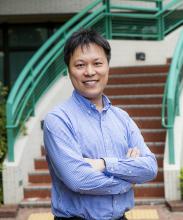
Dr. Lewis's research interests focus on sustainable tourism with particular emphasis on nature-based tourism in protected areas, environmental education, and environmental conservation.
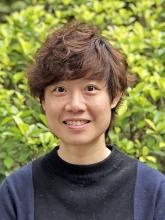
Prof. Paulina's areas of specialization include air pollution, urban climate, GIS modeling and environmental health. Her research interests focus on examining the effects of air pollution and urban heat islands on health-related problems in densely populated cities.
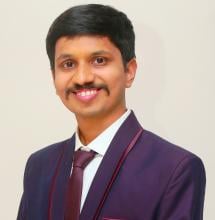

Tomohiro Mochizuki is a specially-appointed assistant professor at Earth-Life Science Institute (ELSI) - Tokyo Institute of Technology.

Mayuko Nakagawa is a biochemist at Earth-Life Science Institute (ELSI) based at the Tokyo Institute of Technology, Japan.
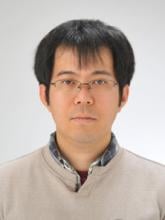
Hitoshi Gomi is an Earth scientist at Earth-Life Science Institute (ELSI) based at the Tokyo Institute of Technology, Japan.

Takeshi Horinouchi is a professor at the Faculty of Environmental Earth Science, Hokkaido University, Japan.
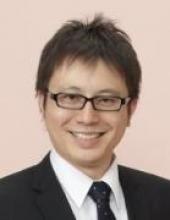
Daisuke Hirano is an assistant professor at the Ocean and Sea Ice Dynamics Group, the Institute of Low Temperature Science of Hokkaido University, Japan.
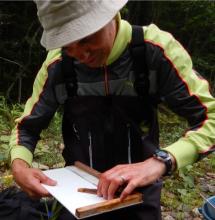
Jorge García Molinos is an aquatic ecologist broadly interested in global change ecology and macroecology.

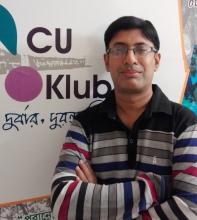
I completed B.Sc. (Honours) and M.Sc. in Marine Sciences from University of Chittagong, Bangladesh, M.Phil in Fishereis Technology from University of Calcutta, India and Ph.D. in Environmental Sciences from the Jahangirnagar University, Bangladesh.
I am working as a Program Manager of a Non-Government Organization YPSA (Young Power in Social Action), Bangladesh on Climate Change Adaptation related issues. I have 12 years of Professional experiences of working in a NGO for work on climate change issue, environmental management and human rights issues.
I have a keen interest in climate change, fisheries management, coastal pollutions and environmental assessment. I am author of 70 national and international publication based on climate change, aquatic biodiversity and environmental management issues that are available in Google Scholar and ResearchGate.
Research interest
climate change, fisheries management, aquatic biodiversity, environmental pollution monitoring
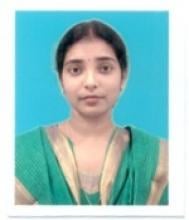
Dr NK Prasanna is currently working as Principal Scientist & Editor, Indian Journal of Biochemistry & Biophysics, Research Journals Division at CSIR-National Institute of Science Communication and Policy Research, New Delhi. Before joining CSIR (NIScPR), she was at IIT Guwahati. Dr Prasanna completed her Ph.D from Institute of Medical Sciences, Banaras Hindu University, Varanasi.
In CSIR-NIScPR, She served one important flagship journals viz. Indian journal of Biochemistry and Biophysics (IJBB; ISSN: 0301-1208). IJBB is a premier Scopus-indexed monthly peer-reviewed research journal that publishes original research articles in the subject area of biochemistry and biophysics
Giants in history

Tetsuya Theodore Fujita (23 October 1920 – 19 November 1998) was a Japanese-American meteorologist who created the Fujita scale that classifies the strength of tornadoes based on damage to structures and vegetation.

Archana Sharma (16 February 1932 - 14 January 2008) conducted research into plant and human genetics that expanded the understanding of both botany and human health. In relation to botany, she uncovered the means by which asexually-reproducing plants evolve into new species.
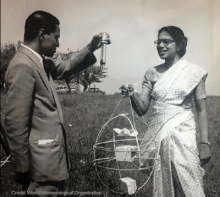
Anna Mani (23 August 1918 – 16 August 2001) was an Indian meteorologist who contributed significantly to the understanding of solar radiation, ozone and wind energy by developing a wide range of measurement tools. One of India’s pioneering female scientists, Mani excelled in the male-dominated area of meteorology and became the Deputy Director-General of the India Meteorological Department.

Meemann Chang (born 17 April 1936) is a Chinese palaeontologist who studied the fossils of ancient fish to understand the evolution of life. By examining fossils, she uncovered new insights on how vertebrates, animals with a backbone, migrated from the sea and became adapted to live on land.

Rinchen Barsbold (born 21 December 1935) is a Mongolian palaeontologist and geologist who was instrumental in discovering and recovering one of the largest dinosaur collections in the world from the Gobi Desert in Mongolia and China.
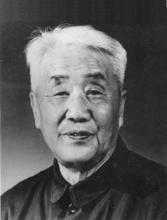
Chinese palaeontologist, archaeologist and anthropologist Pei Wenzhong (January 19, 1904 – September 18, 1982) is regarded as a founder of Chinese anthropology.
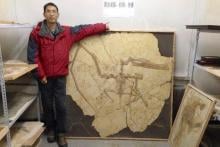
Lü Junchang (1965–9 October 2018) was a Chinese palaeontologist who is remembered as one of the most important dinosaur researchers of the last 50 years. Lü was an expert on reptiles that lived during the Mesozoic period about 252 million years ago. Cumulatively, Lü and his colleague/competitor Xiaolin Wang described and named more than 50 new species of flying dinosaurs known as pterosaurs.

Birbal Sahni (14 November 1891 – 10 April 1949), a pioneer of Indian palaeobotanical research, and founder of what is now the Birbal Sahni Institute of Palaeosciences in Lucknow, made multiple contributions to the study of prehistoric plants. These include the discovery of a new group of fossil gymnosperms (named Pentoxylae), reconstruction of the extinct Williamsonia sewardiana plant, and description of a new type of petrified wood from the Jurassic age.

Palaeontologist Yichun Hao (1920 – 2001) co-authored the first Chinese textbooks on palaeontology and micropalaeontology. Her research on Foraminifera – amoeba-like organisms with shells – was vital for the exploration and utilisation of marine energy resources.

Võ Quý (1929 – 2017) was a Vietnamese ornithologist who studied the destruction of tropical forests and agricultural lands in Vietnam by Agent Orange, a herbicide used by the U.S. military during the Vietnam War. In addition to planning forest restoration projects, Quý rediscovered the rare eastern sarus crane, an endangered species that had vanished during the war.